For decades, millions of people lived in New York City's tenements — which were notoriously cramped, dark, poorly maintained, and often hotbeds of disease.
Today, the Lower East Side of New York City is a trendy neighborhood, filled with popular bars and restaurants. But more than a century ago, it was the heart of the city’s tenement housing. For decades, poor New Yorkers — most of whom were immigrants — lived in cramped and often unsanitary tenement apartments.
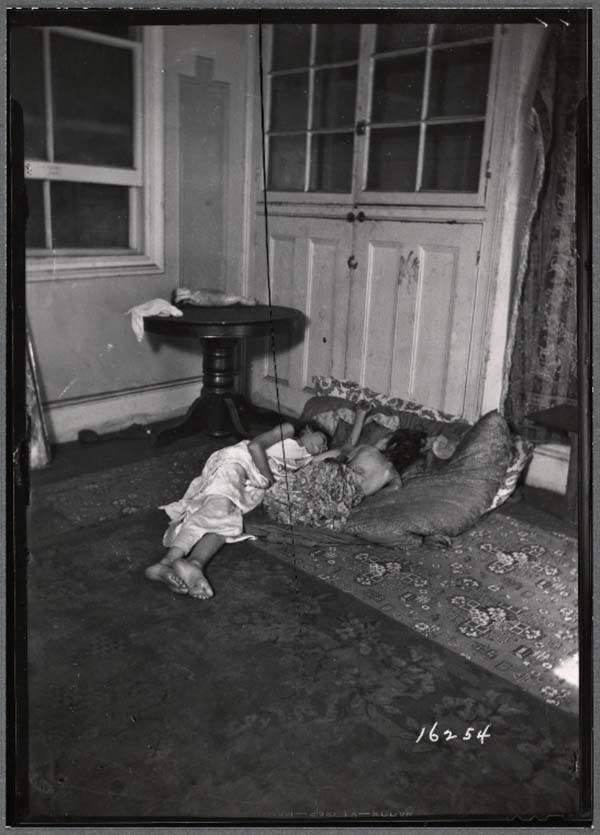
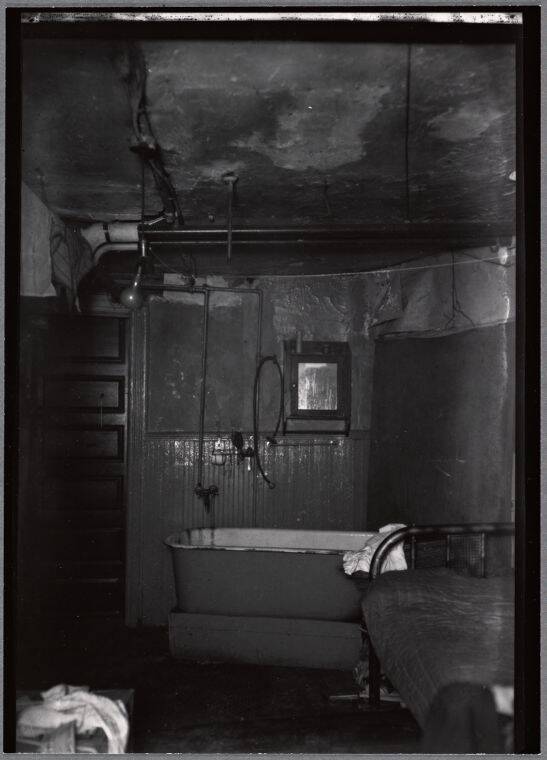
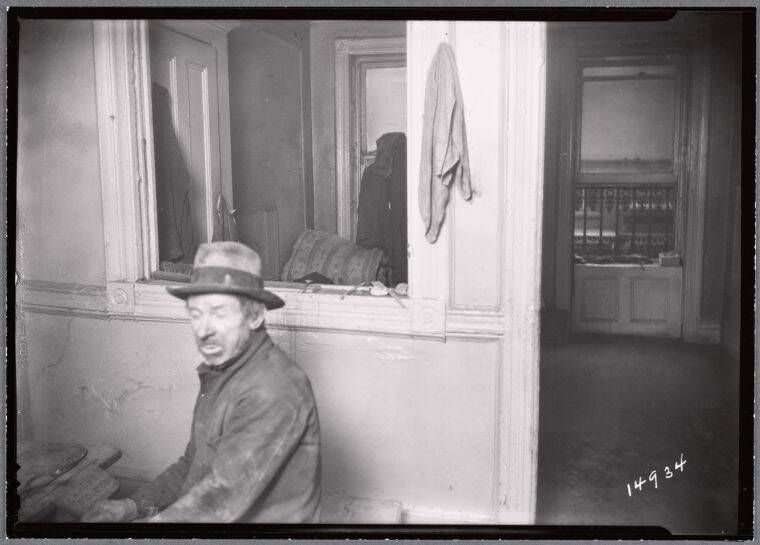
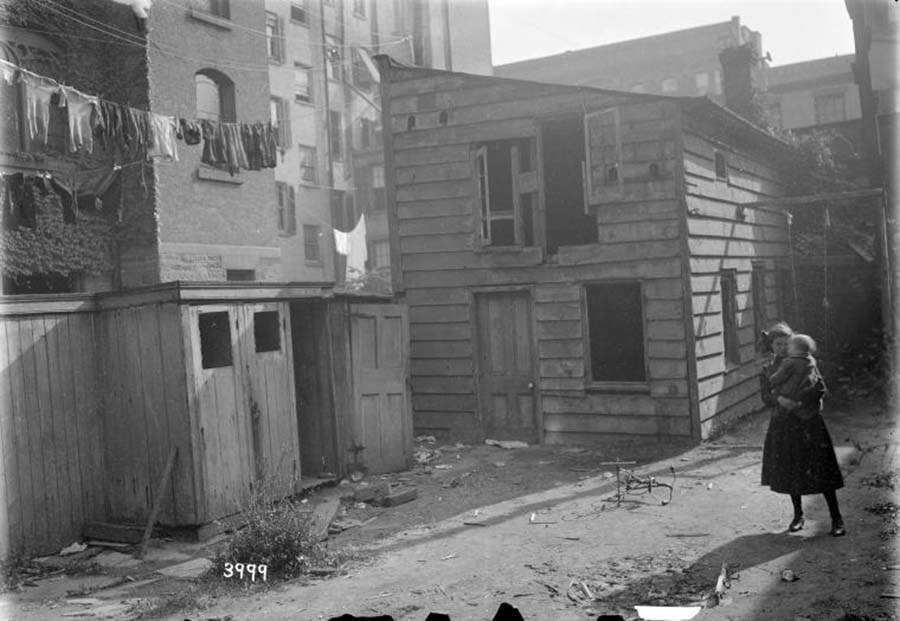
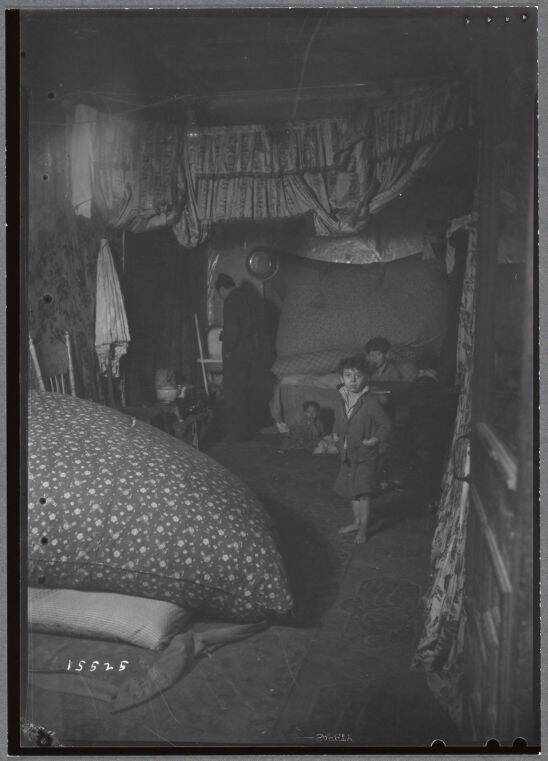
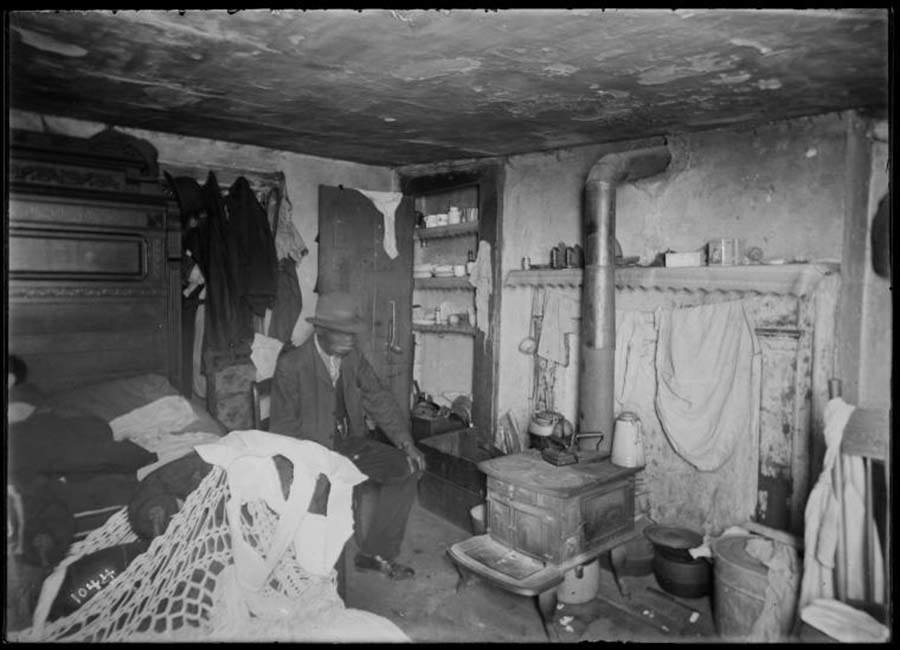
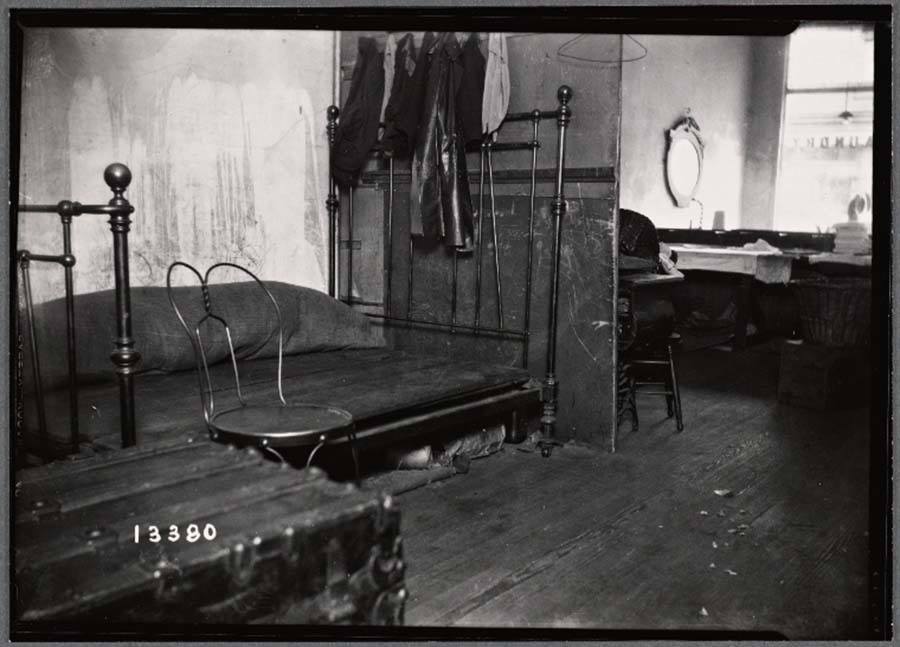
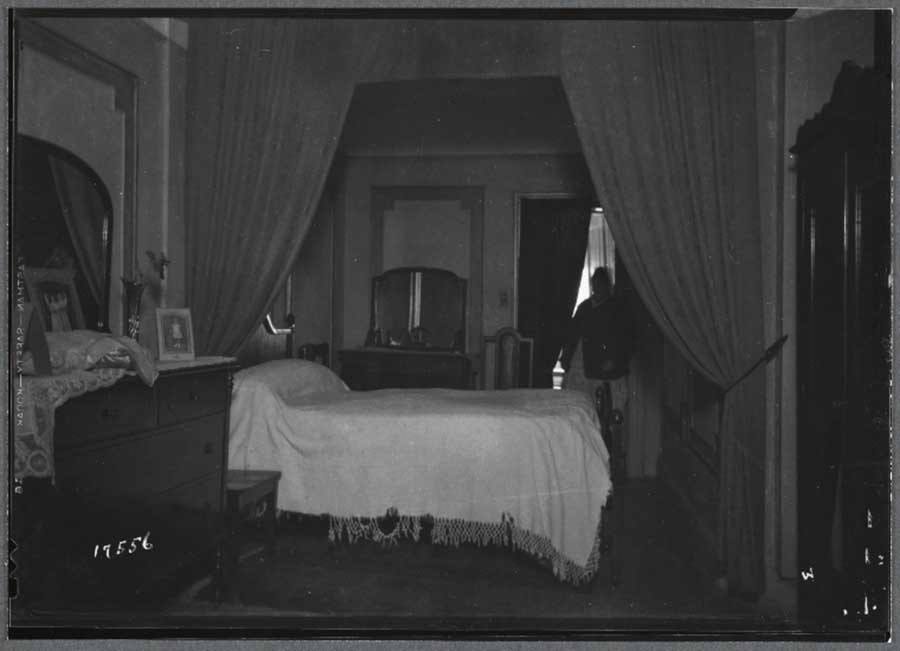
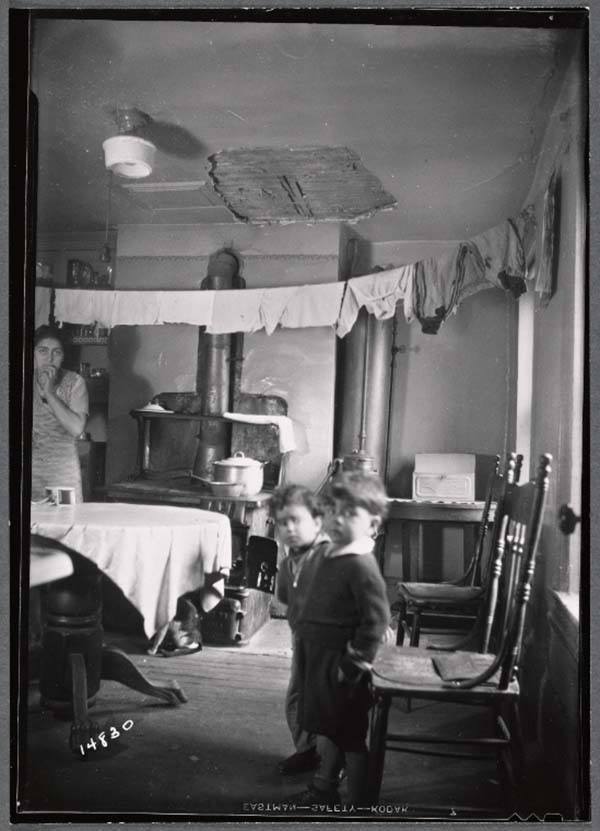
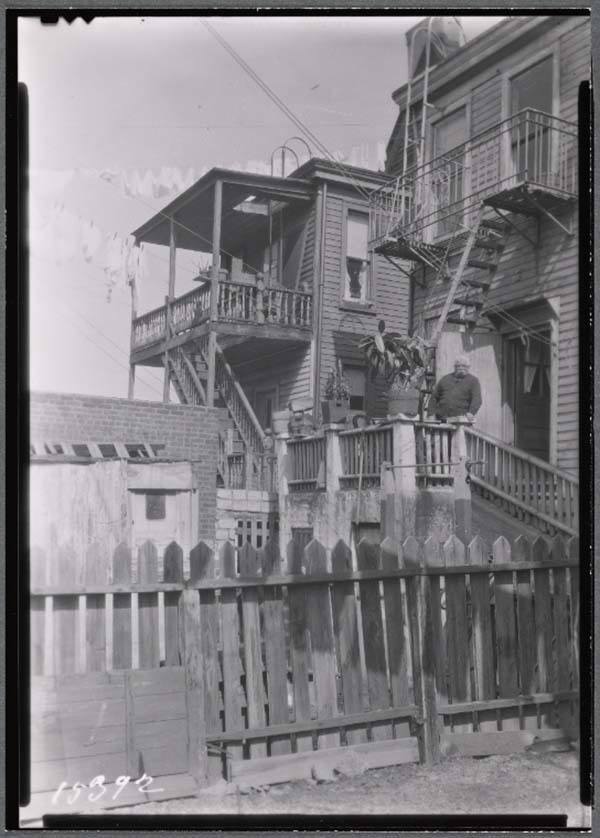
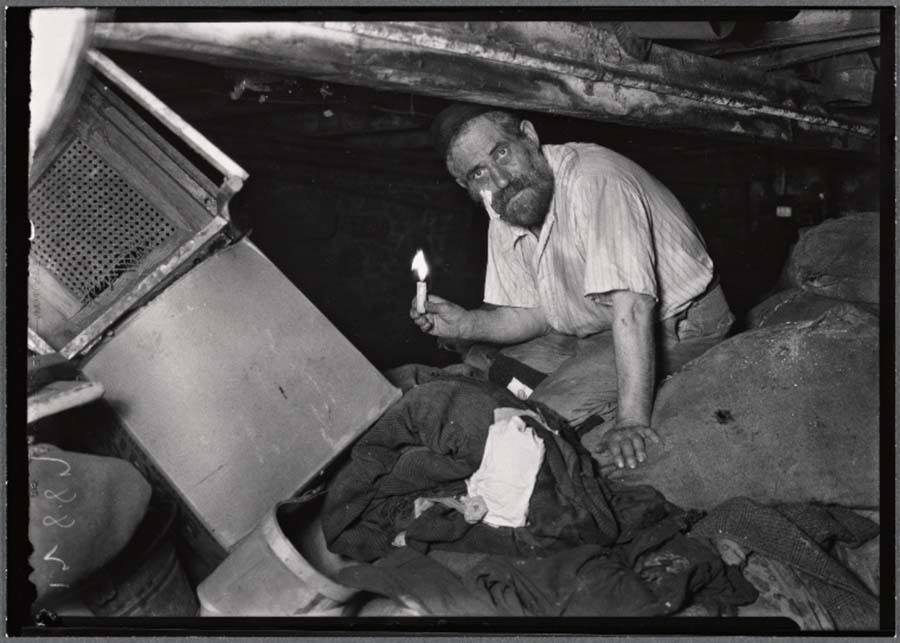
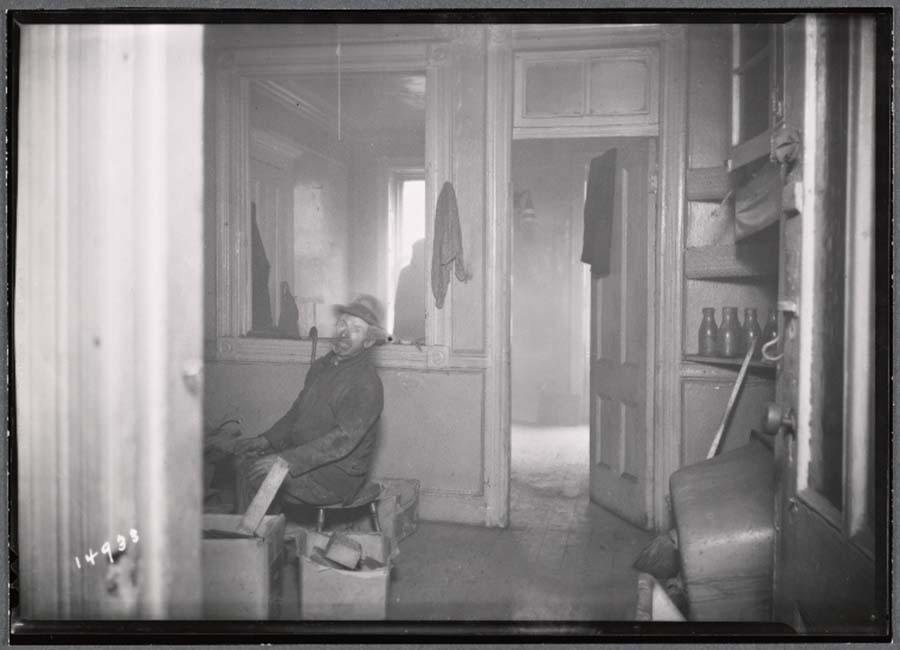
These apartments were small, sometimes just 325 square feet, and yet could contain as many as 10 people. What’s more, tenement dwellers often didn’t have access to running water, and frequently shared just a few outdoor toilets. Tenements weren’t legally required to have windows for decades, and these cramped conditions lead to the proliferation of disease.
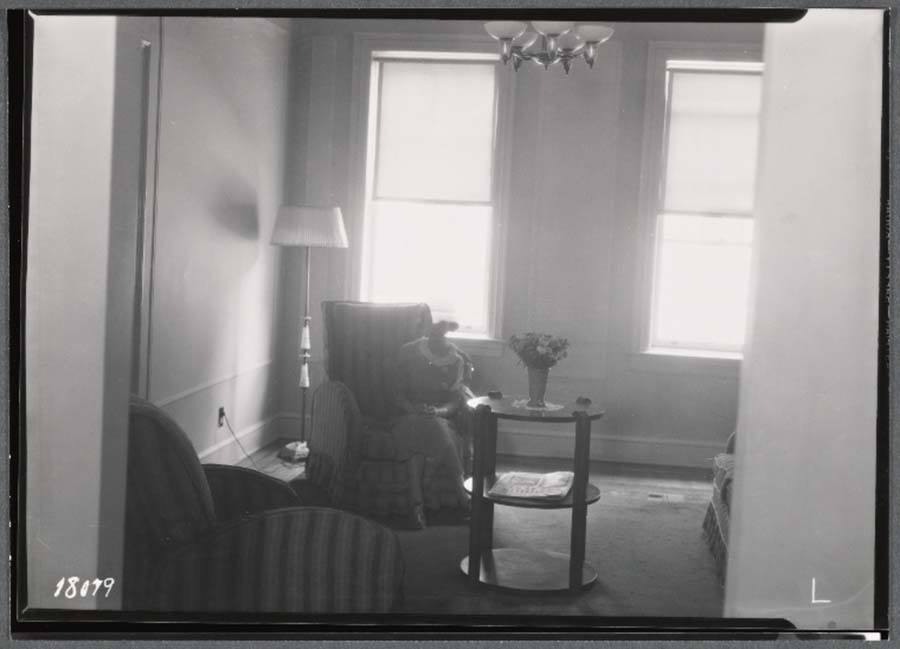
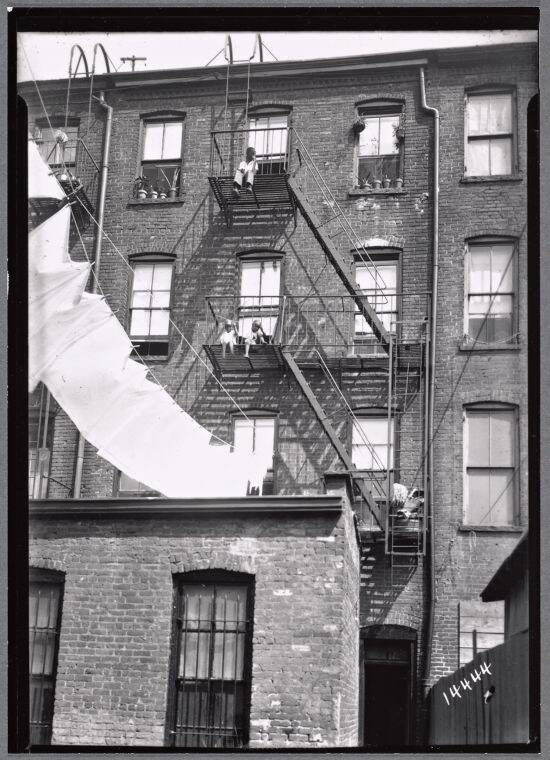
By 1900, 2.3 million people, a full two thirds of New York City’s population, lived in tenement housing. Take a look in the gallery below to see what life was like in New York’s tenements, then read on to learn more.







And if you liked this post, be sure to check out these popular posts:

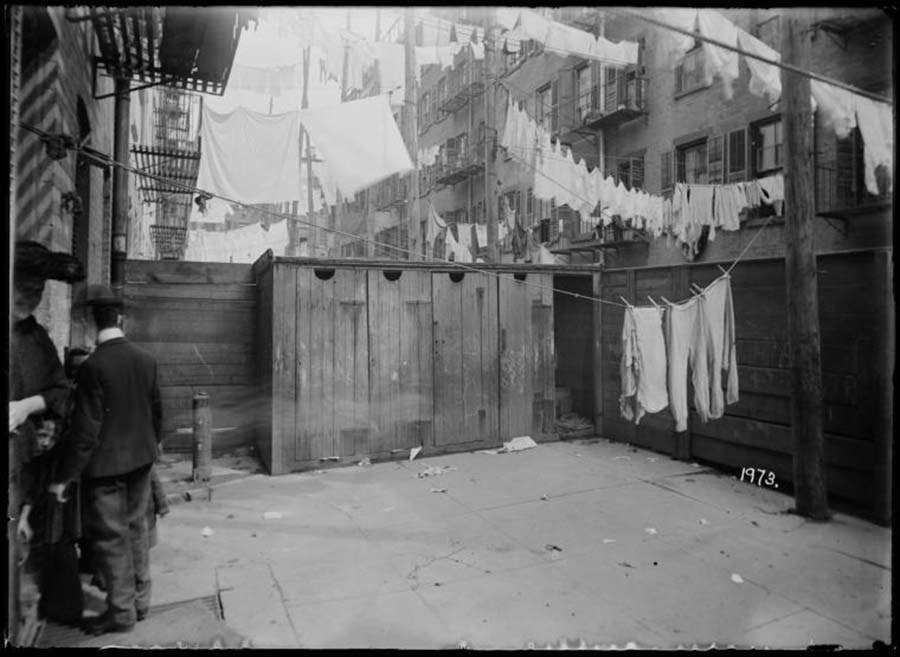
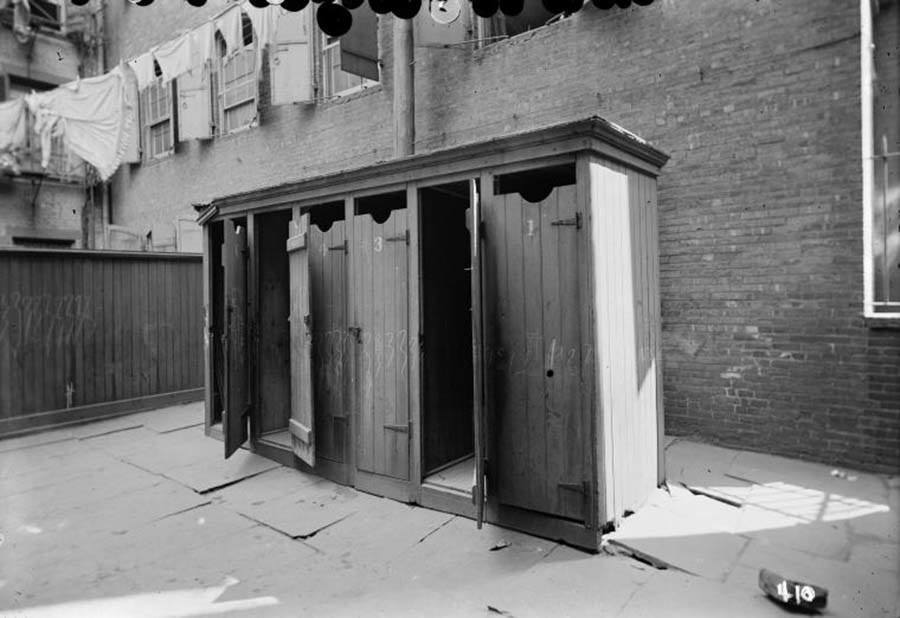
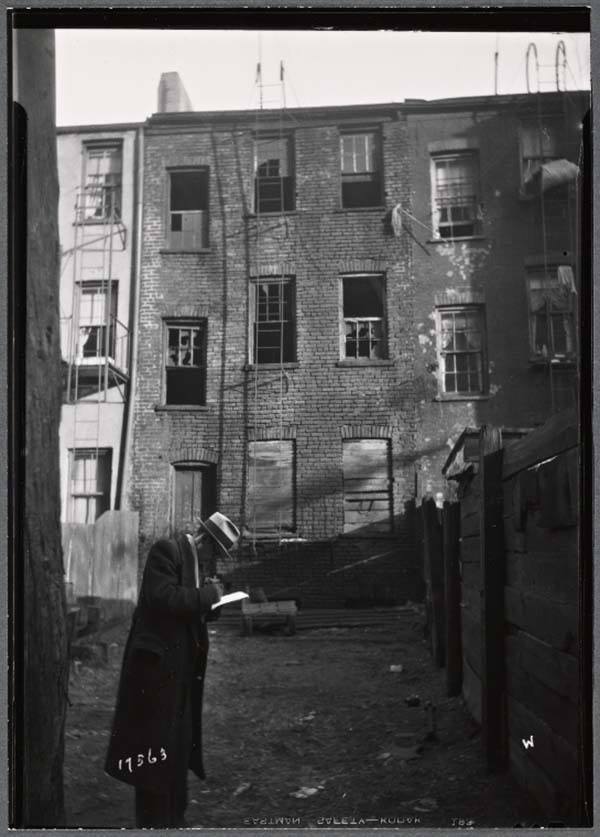
The Tenement House Act of 1867 required that tenement buildings have one outhouse for every 20 people living there.New York Public Library
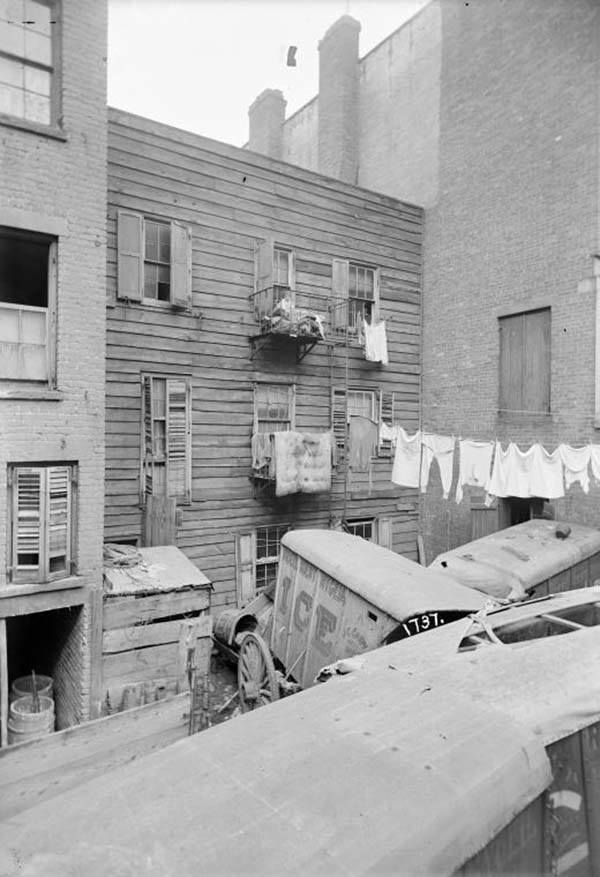
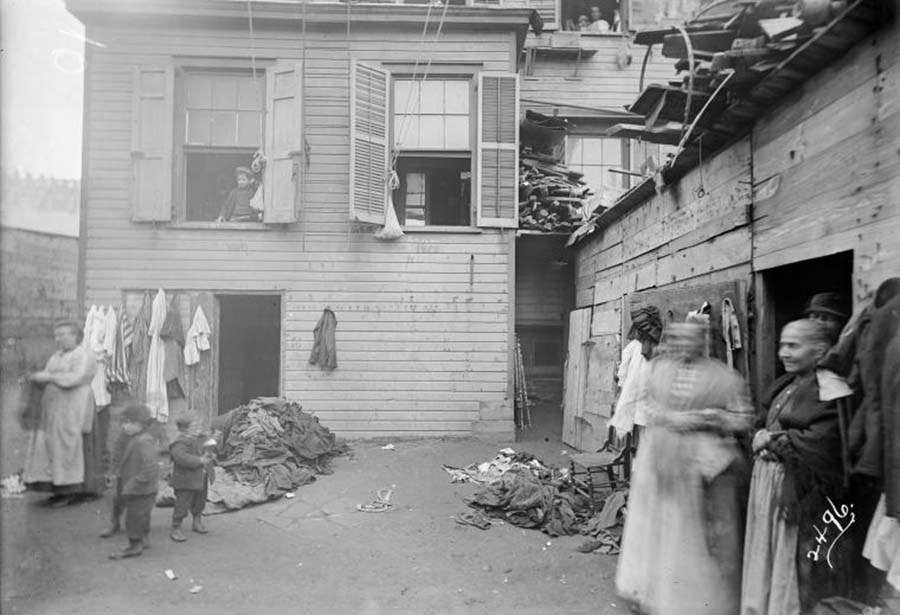
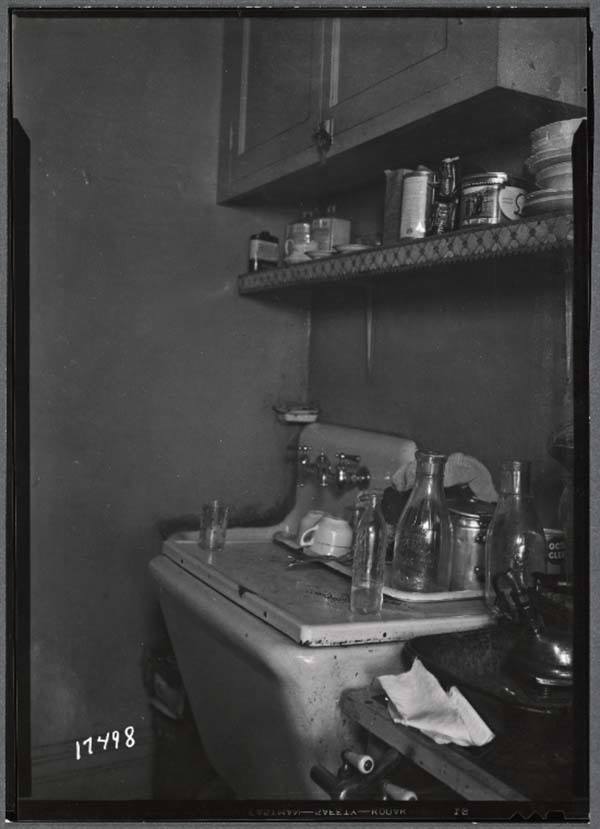
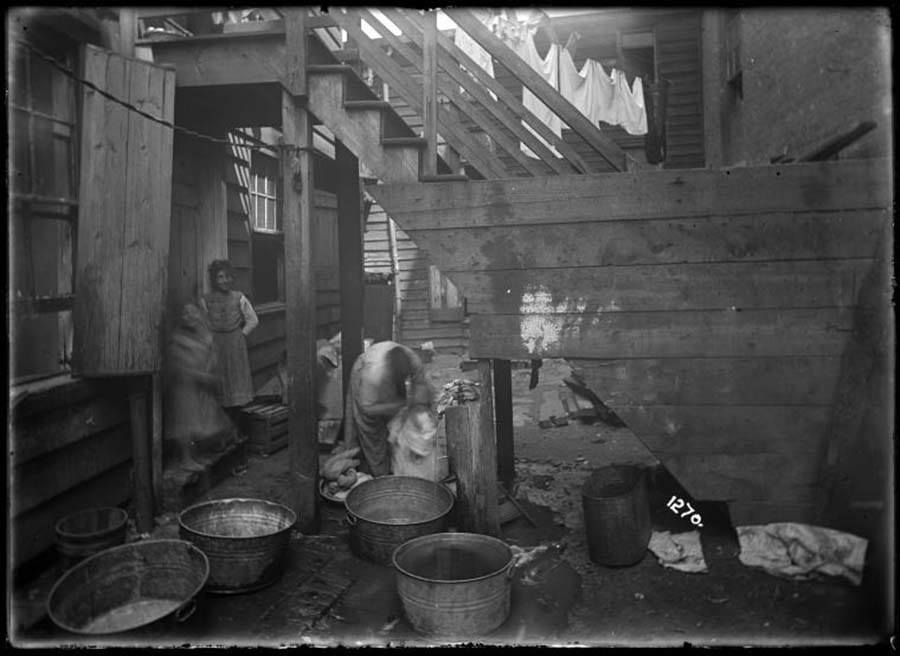
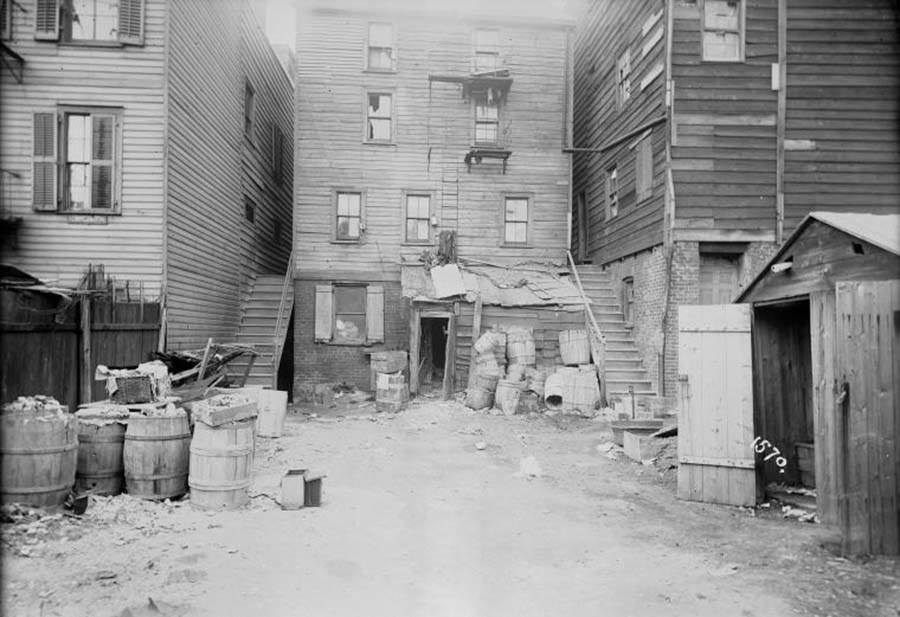
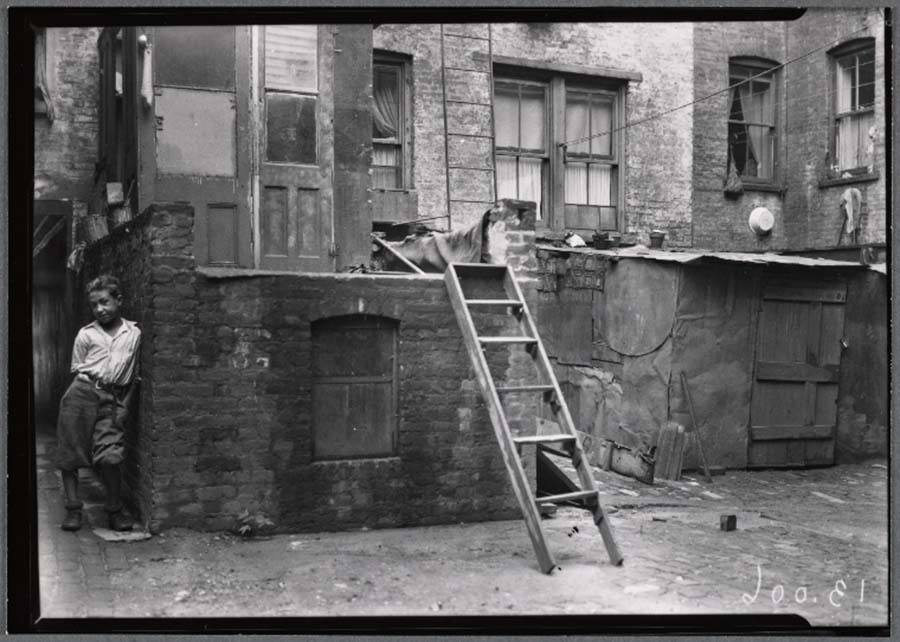
Many tenements did not have running water, and their inhabitants shared a water source in their backyards.New York Public Library
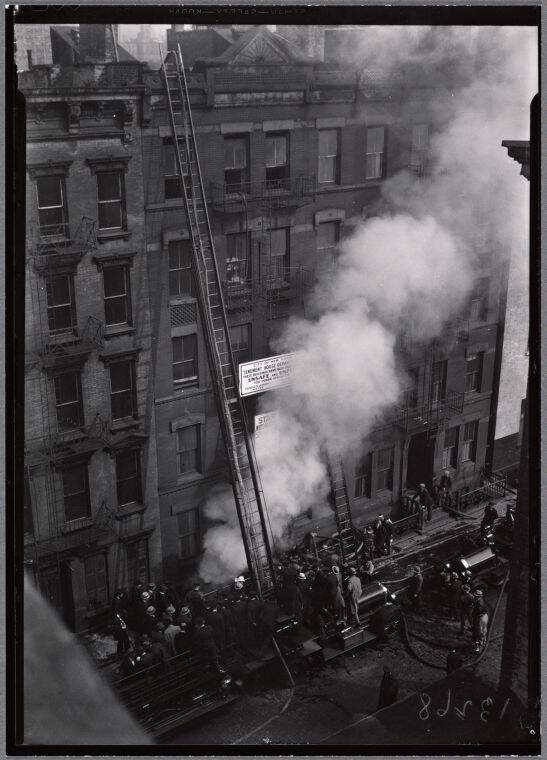
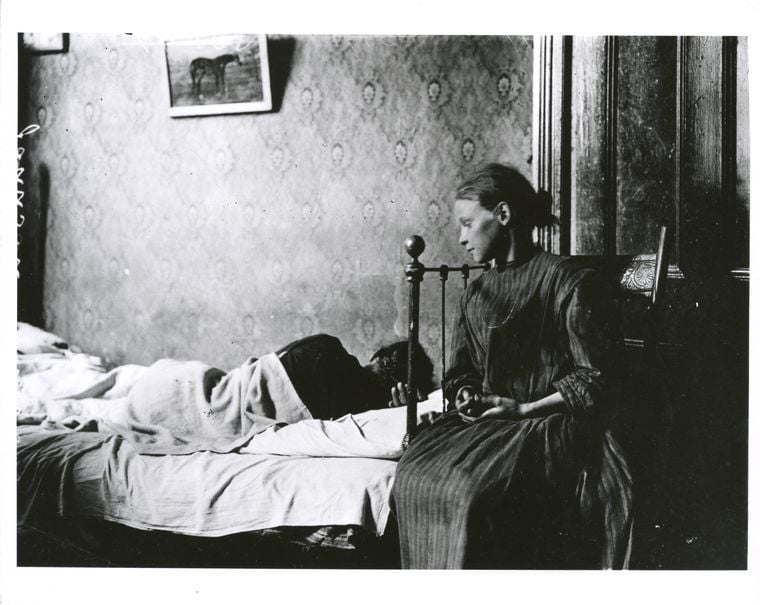
Disease spread easily in tenements; an 1849 cholera epidemic killed 5,000 people, many of them impoverished immigrants. New York Public Library


The Spread Of New York City Tenements
Between 1800 to 1880, the population of New York City doubled every 20 years. In the 1840s, it grew by 60 percent, from 312,710 inhabitants to 515,547 inhabitants. In the 1850s, it soared up to 813,669 inhabitants, per PBS.
Most of this growth was driven by immigration. Irish citizens fleeing the Irish Potato Famine came to New York in great numbers, as did German immigrants fleeing the Revolution of 1848. (In fact, so many German immigrants arrived in New York in the mid-19th century that a swath of the East Village became known as Kleindeutschland, or "Little Germany.")
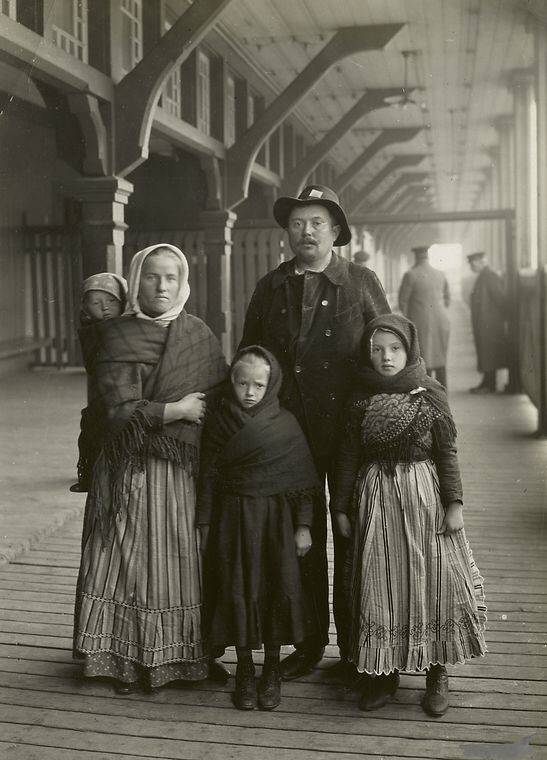
German Consulate General New York/FacebookA family of German immigrants arriving in New York City circa 1860.
Indeed, many of these immigrants settled in the Lower East Side, just as the affluent New Yorkers who had dwelt there before began to move further uptown. Immigrants (and poor New Yorkers) moved into housing that had been built for single families, but which was quickly modified to contain as many people as possible. Walls were put up to create new rooms, extra stories were added, and "rear tenements" were even built into backyards.
This created cramped, dark, dense conditions rife with disease. Yet millions of people would live in New York's tenement housing into the 20th century.
Life Inside New York City's Tenement Housing
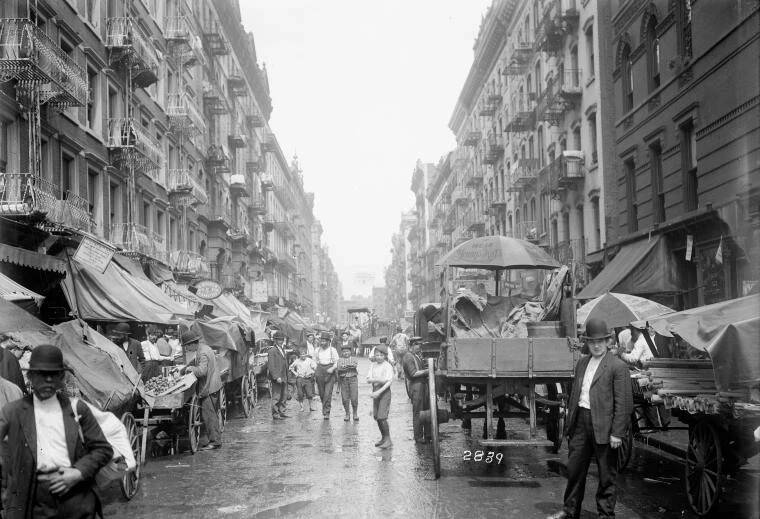
New York Public LibraryA bustling scene on Orchard Street in the Lower East Side, taken by the New York City Tenement House Department. Circa 1902-1914.
By 1900, some 2.3 million people — two-thirds of New York City's population at the time — were living in tenement housing, mainly concentrated in Manhattan's Lower East Side. According to the Tenement Museum, it was common for a family of 10 people to live in a space of just 325 square feet — or an apartment roughly half the size of a subway car.
Rents in tenement housing could vary. The Tenement Museum also reports that a ground-floor unit in one tenement in 1900 was rented for $12 to $13 a month (roughly $500 today), whereas a fourth-floor unit in the same building was rented for $9.50 to $10 a month (roughly $400 today). Back then, street-level apartments were the most desireable and thus charged more.
Regardless of the rent or level, however, many tenements were unpleasant places to live.
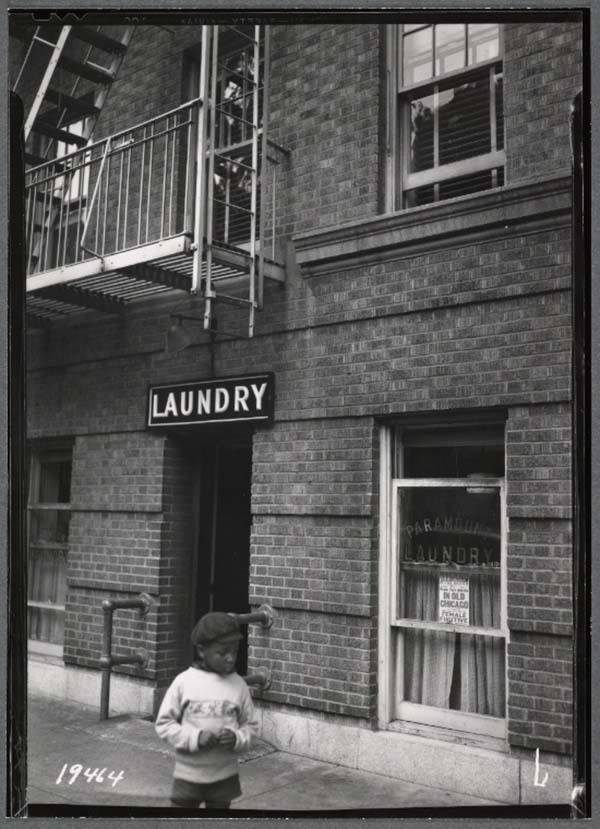
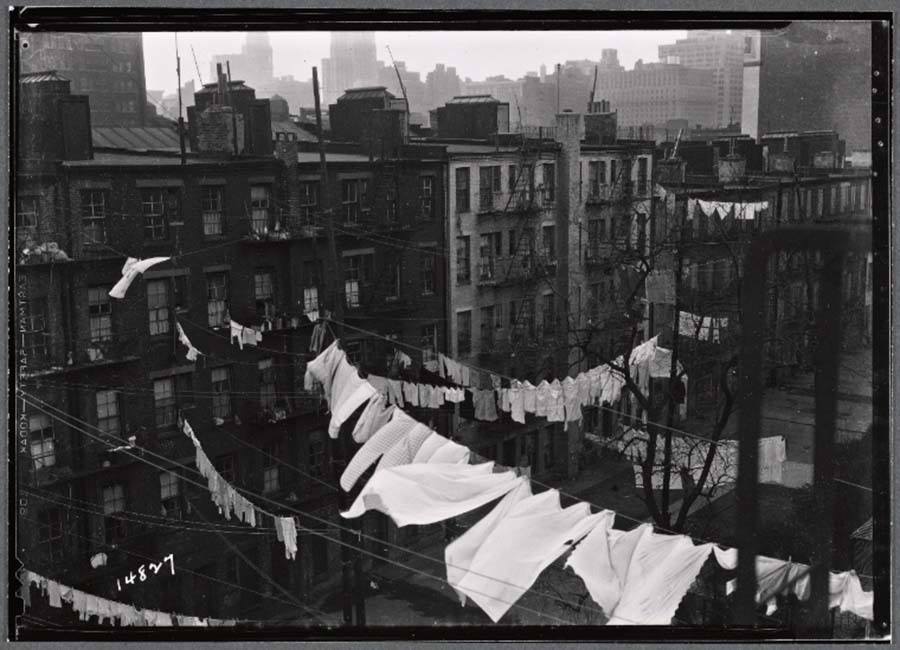
Not only were inhabitants crowded into tiny, shared spaces, but many tenement buildings lacked windows or access to fresh air. What's more, tenement dwellers had no private toilets or running water; they often shared outhouses and spigots in their building's backyard. This, of course, made it challenging for tenants to cook, do laundry, and clean. And it made it easy for diseases like cholera, typhoid, and tuberculosis to spread.
Indeed, it was no secret that life in the tenements was grim. In 1843, the Association for Improving the Conditions of the Poor described tenements as, "generally defective in size, arrangement, supplies of water, warmth, and ventilation; also the yards, sinks, and sewage are in bad conditions."
But it would take time for significant reform.
The Reform Of Tenement Housing In New York
In 1865, the "Report of the Council of hygiene and public health of the Citizens' Association of New York upon the sanitary condition of the city" was published. According to the New York Public Library, it found that more than 65 percent of the city's population lived in "substandard" housing conditions.
Indeed, some 500,000 people were estimated to live in New York tenements that year, a huge swath of the city's roughly 900,000 residents.
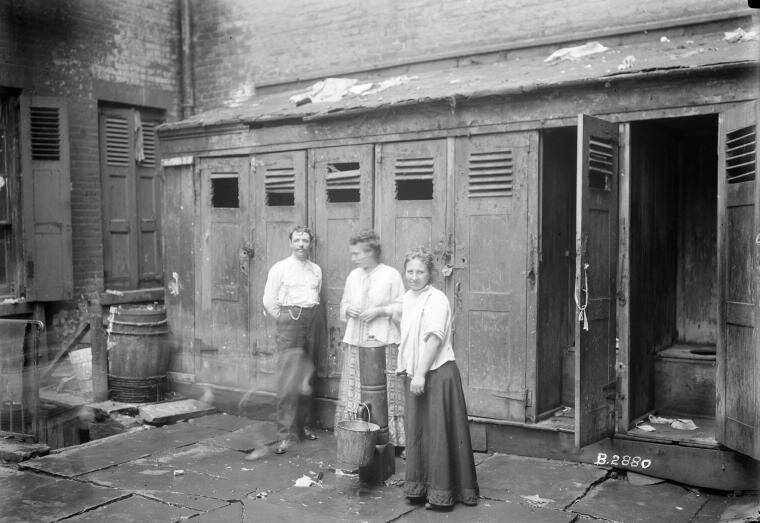
New York Public LibraryThree people, one of whom seems to be collecting water, stand in front of a row of outhouses in a tenement backyard. Circa 1902-1914.
The report was followed by the Tenement House Act of 1867, which declared that tenement buildings must be equipped with fire escapes, and that tenements needed to have windows in each room. It also mandated that one toilet must be provided for every 20 residents.
However, these regulations were not immediately enforced.
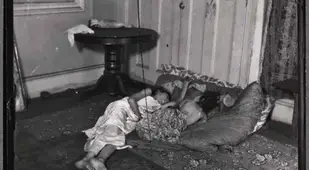
Meanwhile, the conditions in the tenements had also caught the eye of writer and photographer Jacob Riis. While working as a police reporter, Riis had frequently encountered the grim conditions of New York tenements. He photographed what he saw, and published his pictures in "How the Other Half Lives" in 1890.
His photos were especially stark, given that the upper echelons of the city were enjoying the affluence of the Gilded Age.
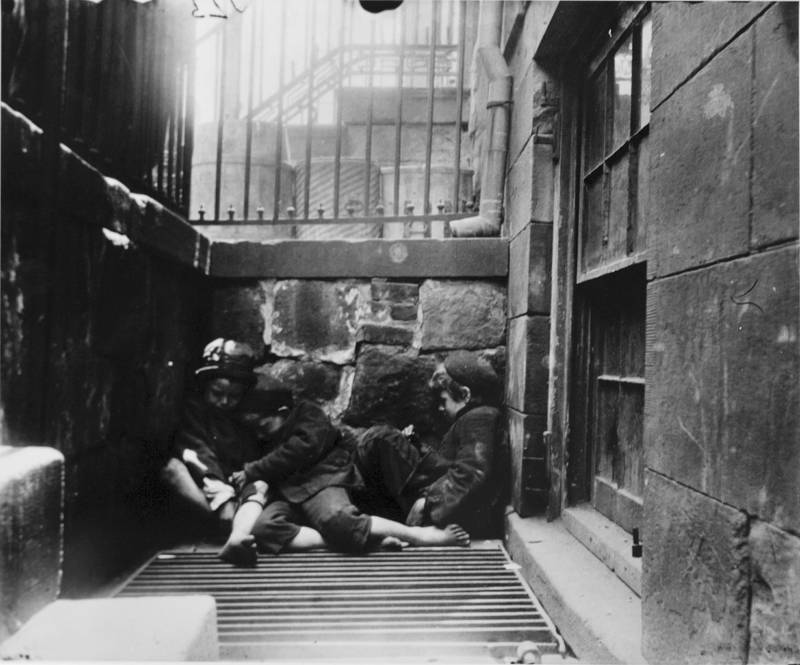
Jacob Riis/Wikimedia CommonsStreet children sleeping on a grate for warmth on Mulberry Street. Circa 1890-1895.
More and more attention was being paid to tenements, and further reforms followed. The Tenement House Act of 1901 pushed hard for improved sanitary conditions, fire escapes, and access to light, and more or less banned the practice of building tenements on tiny, cramped 25-foot lots. In the aftermath, "old" tenements were updated, and "new" tenements were built with these new building codes in mind.
Ultimately, things in the city began to change. "Slum clearance" policies in the 20th century eventually tore down many tenements, just as the government began introducing "public housing" projects. The first of these housing projects in New York City opened in 1935, in the East Village, where developers first destroyed a set of old tenement housing.
As any New Yorker will tell you, housing continues to be a challenge in the city today. But thanks to 20th century reforms, apartments in New York City have more windows (and more toilets), and are generally safer, brighter, and healthier places to live. Such conditions were out of reach for many people living in tenements in much of the 19th and 20th century.
After learning about the New York City tenements of 19th and 20th centuries, take a look at some striking Ellis Island immigration photos. Then, read up on the Bloody Angle, the spot right in the heart of New York's tenement zone that also became one of the deadliest streets in the city.