The prehistoric fossils of a giant tortoise and a lion-sized armadillo that were found in an underground stream are unlike anything that's ever been uncovered in Central Texas before.
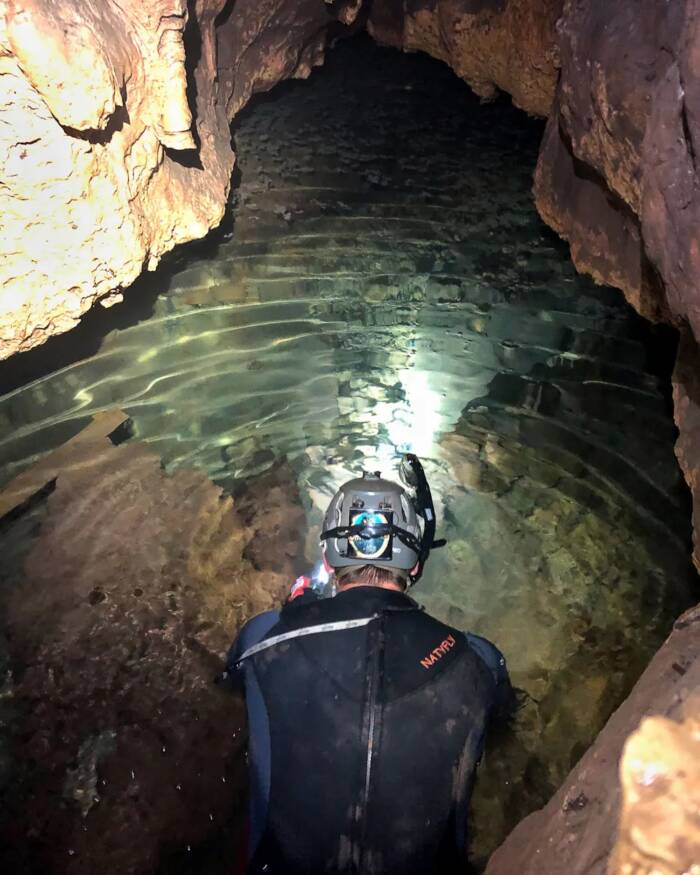
John MorettiJohn Moretti and John Young collected rare Ice Age fossils from Bender’s Cave between 2023 and 2024.
In 2023, paleontologist John Moretti received photos of fossils from a local spelunker named John Young who’d stumbled upon them while snorkeling in a subterranean stream near San Antonio. Young simply wanted to know what types of bones he’d found, but Moretti was stunned by the number of fossils in the cave and wanted to see them for himself.
Between March 2023 and November 2024, Moretti visited the site with Young six times, carrying out the first paleontological study of a Texas water cave. Their findings were recently published in the journal Quaternary Research. Now, these discoveries — including fossils from a giant tortoise and a massive relative of the modern armadillo — are rewriting the ecological history of Central Texas during the last Ice Age.
The Ice Age Fossils Unexpectedly Found In A Cave In Central Texas
When John Moretti first entered Bender’s Cave, located just north of San Antonio, he couldn’t believe what he was seeing. “There were fossils everywhere, just everywhere, in a way that I haven’t seen in any other cave,” he said in a statement from the University of Texas at Austin. “It was just bones all over the floor.”
Most of the fossils were sitting directly on the bottom of a shallow stream inside the cave, so Moretti and Young donned goggles and snorkels and set to work collecting them. They came across many specimens from creatures known to have lived in Central Texas during the Ice Age, such as the claw of a ground sloth and bones from saber-toothed cats and mammoth-like mastodons.

Quaternary Research, Moretti and Young (2026)A fossilized plate from the armor of a pampathere that was found in the cave.
Then, they found fossils that were completely unexpected: shell fragments from a giant tortoise and the armor of a pampathere, an armadillo relative that was the size of a lion. No evidence of either of these animals had ever been uncovered in Central Texas before.
For much of the Ice Age, the region was covered in dry grasslands that were home to grazing creatures. This habitat wouldn’t have been conducive to tortoises and pampatheres — so how did their remains end up in Bender’s Cave?
New Evidence Of A Changing Climate During The Last Ice Age
Researchers are having trouble dating the fossils found in the cave, as the mineral-rich stream water has eroded the collagen proteins typically used to determine age. However, Moretti says there is evidence that the specimens may be from an interglacial period that occurred roughly 100,000 years ago.
During this time, global temperatures temporarily warmed, which seemingly created an environment that was more favorable for animals like the giant tortoise and the pampathere. After they died and were subsequently fossilized, their remains were swept into the cave through sinkholes during flooding events and have sat in this subterranean stream ever since.
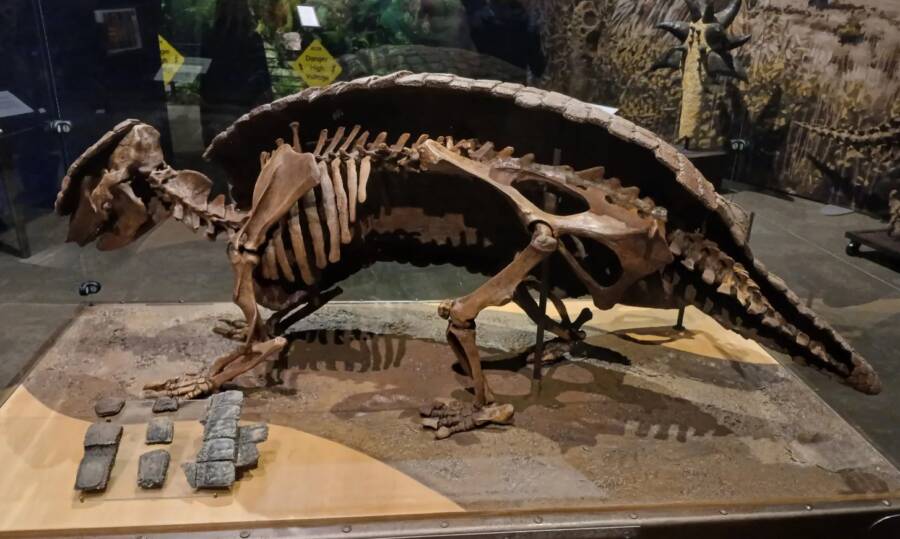
A Cynical Idealist/Wikimedia CommonsThe skeleton of a pampathere, an armadillo relative that could grow to be the size of a lion.
While it may not be possible to precisely date their fossils, Moretti and his colleagues are now attempting to analyze the calcite crusts that formed on these prehistoric remains. This would at least tell them when the fossils entered the cave, providing an absolute minimum age for the creatures.
Despite these challenges, Moretti and Young’s discoveries are changing what experts know about Texas during the Ice Age.
“We’re looking at a picture that’s different than the one in textbooks,” Moretti told Texas Monthly. “We’re opening a new window into the natural history of Central Texas.”
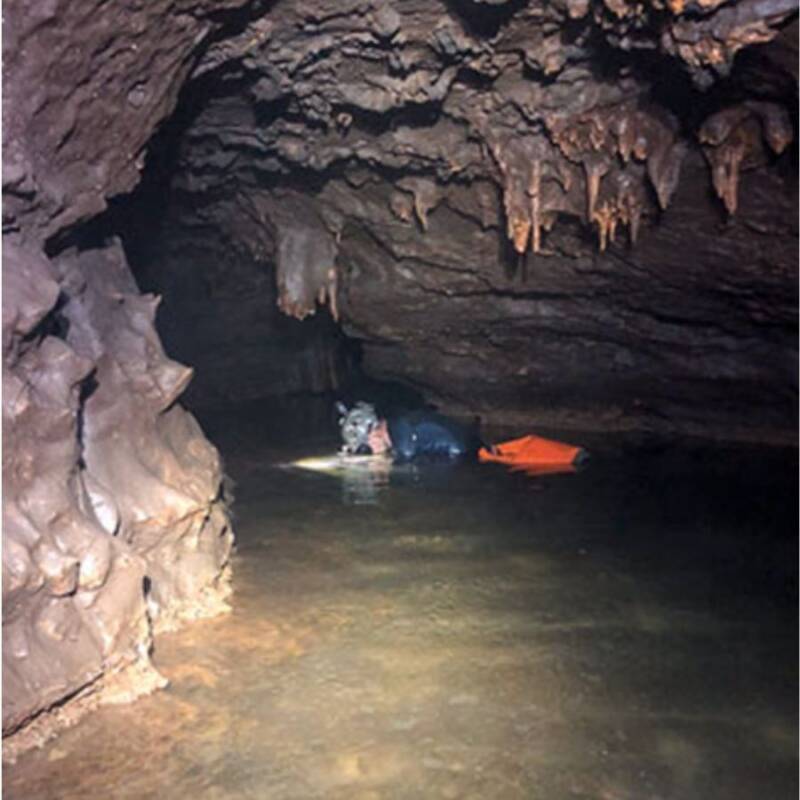
Quaternary Research, Moretti and Young (2026)Moretti and Young collected fossils from 21 areas in Bender’s Cave.
David Ledesma, another scientist who wasn’t involved in the study, also emphasized the importance of these finds. As he stated in the University of Texas at Austin’s statement, “Some of the fossils that John has come across are species that we didn’t think would occur in this part of Texas. That we’re still learning new things and finding new things is quite exciting.”
For now, Moretti is focusing on dating the fossils and determining whether the tortoise and pampathere lived in the region at the same time as other Ice Age creatures or thousands of years earlier. “If it is interglacial in age,” Moretti stated, “it’s a new window into the past and into a landscape, environment, and animal community that we haven’t observed in this part of Texas before.”
After reading about the unprecedented Ice Age fossils found in Central Texas, learn about 11 of Earth’s most incredible prehistoric animals. Then, discover the surprising truth about when woolly mammoths went extinct.