Amy Winehouse
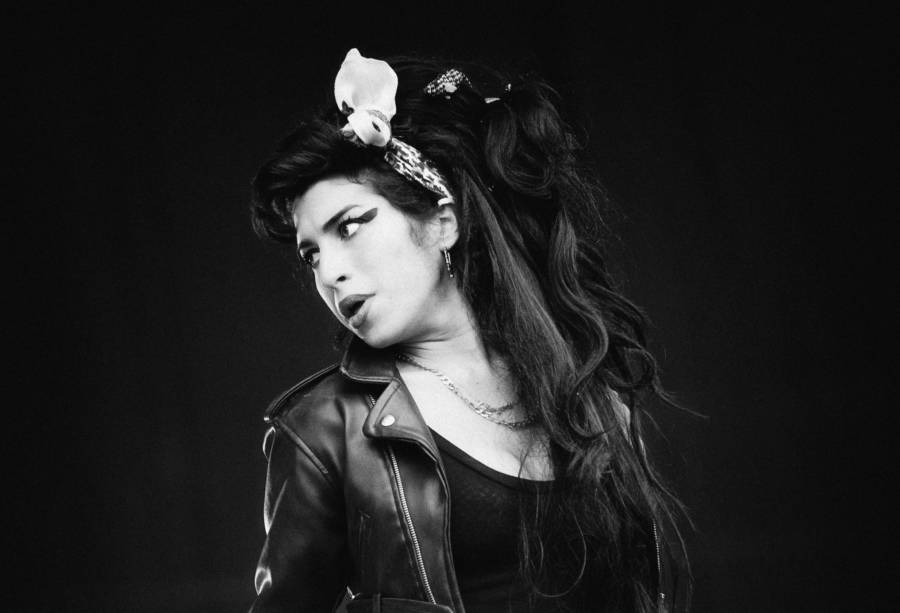
Ross Gilmore/RedfernsAmy Winehouse performs at T in The Park on July 13, 2008 in Balado, Scotland.
Amy Jade Winehouse was born in the London suburb of Southgate on September 14, 1983. Music, especially jazz, was a prominent fixture in the house and many of her uncles were jazz musicians. But Winehouse’s childhood was not marked only by music, but also by defiance. At age 16, she was kicked out of a prestigious theater school for piercing her nose and failing to apply herself.
But she was applying herself to her singing and a close friend, singer Tyler James, gave Winehouse’s demo tape to his label and a record deal followed suit. Her first album, 2003’s Frank, was a hit, but she also fell into a haze of drugs and alcohol.
Nevertheless, she was able to keep herself together well enough to produce her even more successful second album, 2006’s Back to Black, which scored a hit single in “Rehab” and earned her five Grammy awards. She was at the top of her career with a distinctive voice that Rolling Stone described as “husky and sultry and sad, like a broken heart marinating in whiskey and cigarette smoke.”
And, sadly, her voice mirrored her life. Winehouse’s self-destructive battle with alcohol and drugs (coupled with bulimia) landed her in the hospital several times and forced her to cancel concerts in the late 2000s. She was spiraling out of control.

Gary Miller/FilmMagicAmy Winehouse at Coachella in Indio, California.
It was four o’clock in the afternoon when the ambulance arrived at Winehouse’s northwest London apartment on July 23, 2011. Her bodyguard, who lived with her, said he heard Winehouse “laughing, listening to music and watching TV” in her room on Friday evening. When it got to be after 3 p.m. on Saturday, he checked on her.
“She was lying on the bed … I went over to her to check if she was OK. I realized she wasn’t breathing, and there was no pulse.”
Amy Winehouse had drunk herself to death. Like so many others in the 27 Club, her addictions had done her in.
The town square was already swarmed with fans when the authorities carried her body out. On a makeshift shrine to their idol, they left flowers and notes — and, with them, the odd stray cigarettes.
Robert Johnson
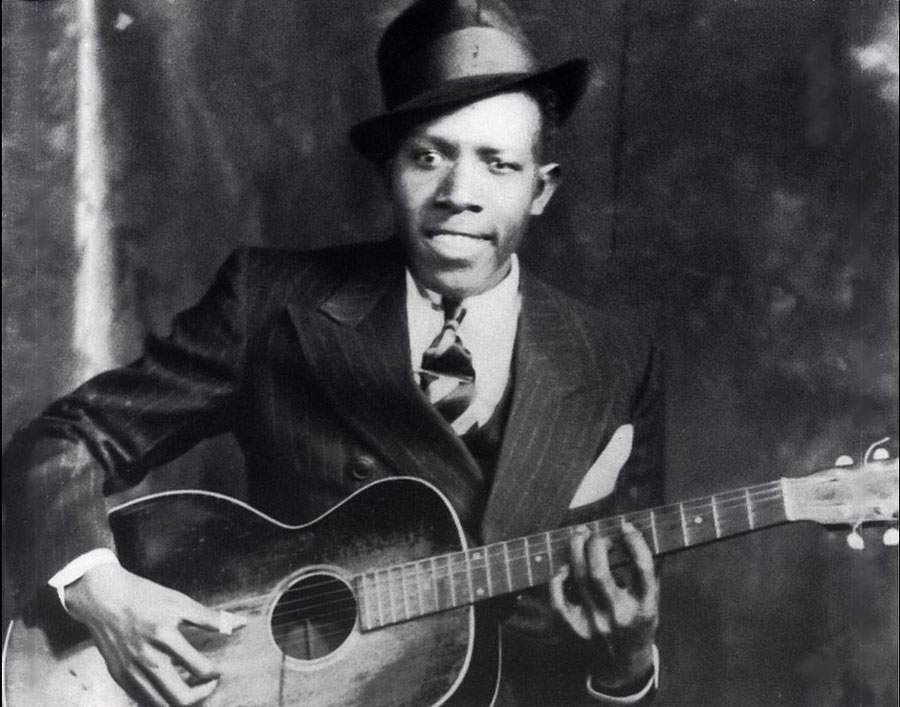
Wikimedia CommonsOne of just a couple known photos of Robert Leroy Johnson, the original member of the 27 Club.
Robert Johnson is actually the original member of the 27 Club. They called him the “King of the Delta Blues,” a man with fingers so fast that folks said he’d sold his soul to the devil in exchange for his talents on the guitar.
He was born on May 8, 1911 in Hazelhurst, Mississippi. And he left this world 27 short years later, leaving little more behind than two or three photos that show his face and a single full-length record that wouldn’t be released until 1961. That’s about all we know for sure. Almost everything else about him is shrouded in mystery.
The impact his short life had on music, though, was tremendous. Led Zeppelin borrowed his lyrics. Eric Clapton called him “the most important blues musician who ever lived.” And Bob Dylan wrote that if it wasn’t for Johnson’s songwriting, “there probably would have been hundreds of lines of mine … that I wouldn’t have felt free or upraised enough to write.”
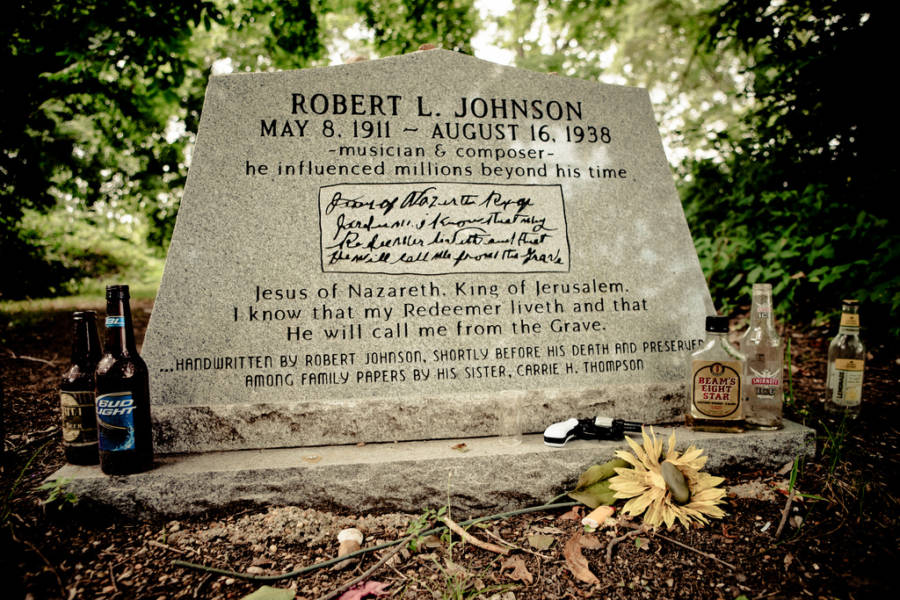
seandavis/FlickrOne of three grave markers dedicated to Robert Johnson (his actual burial site is unknown) at Little Zion Baptist Church outside Greenwood, Miss.
His death on August 16, 1938, was every bit as mysterious as his life. Everyone has a different story about how it happened. His death certificate suggests he died from syphilis, but his fans say he was murdered, poisoned by the jealous husband of one of his many lovers. And some researchers today claim that, while he was indeed poisoned, the poison failed to kill him. Instead, it was pneumonia that finished him off, attacking his compromised immune system.
And those who believe the myth say that the devil came back and took what he was due. And that young man lost too soon started the 27 Club on the other side.