Janis Joplin
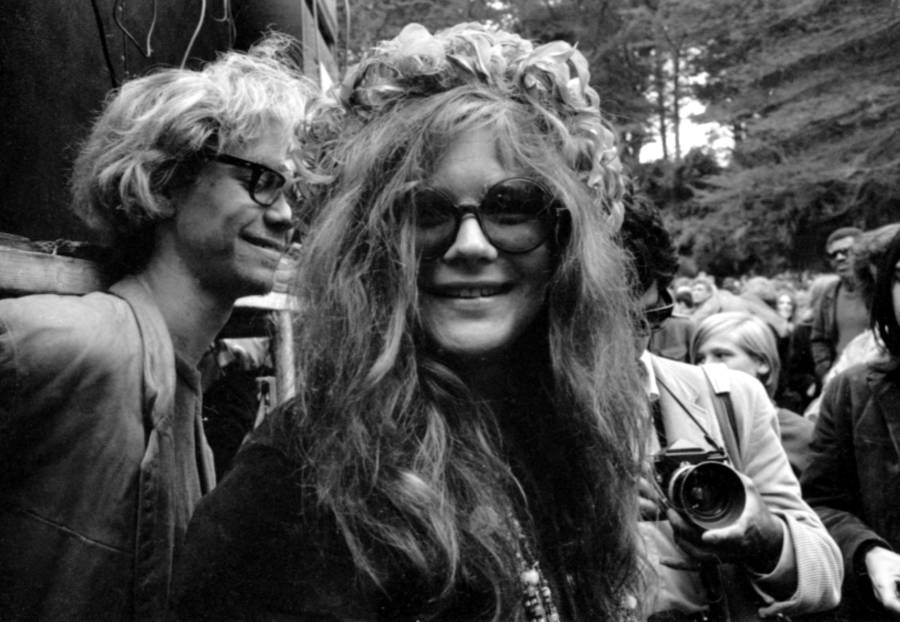
Malcolm Lubliner/Michael Ochs Archives/Getty ImagesJanis Joplin at the New Year’s Wail in Golden Gate Park on January 1, 1967 in San Francisco, California.
Born in the oil-refinery town of Port Arthur, Texas in 1943, the gutsy powerhouse known as Janis Lyn Joplin went from church choir singer to a tough-talking drinker before leaving her hometown for Los Angeles in 1961. After floundering back and forth between California and Texas for a few years, a friend recruited her to audition for his new rock band Big Brother and the Holding Company in 1966.
The band accepted Joplin without hesitation. After an acclaimed performance at the Monterey Pop Festival in 1967, Columbia records bought Big Brother and the Holding Company out of their fledgling contract and released the giant hit album Cheap Thrills.
The dynamic, drug-fueled Joplin soon overshadowed her bandmates. Most of the praise was showered on her raw, sexualized vocal stylings. She broke off on her own in December 1968, with her first solo album dropping in September.
But despite her success, she couldn’t keep things together long. Janis Joplin joined the 27 Club inside The Landmark Motor Hotel, a huge orange stucco building close to Sunset Boulevard in Los Angeles.
When Janis didn’t show up at the studio on Sunday, Oct. 4, 1970, her producer Paul Rothchild began to worry. “She’d been late lots of times” he remembered. “It was usually that she stopped to buy a pair of pants or some chick thing like that.” He sent her road manager John Cooke to the hotel to check on her.
No answer came from a knock at the door, even though Joplin’s car was parked in the lot.
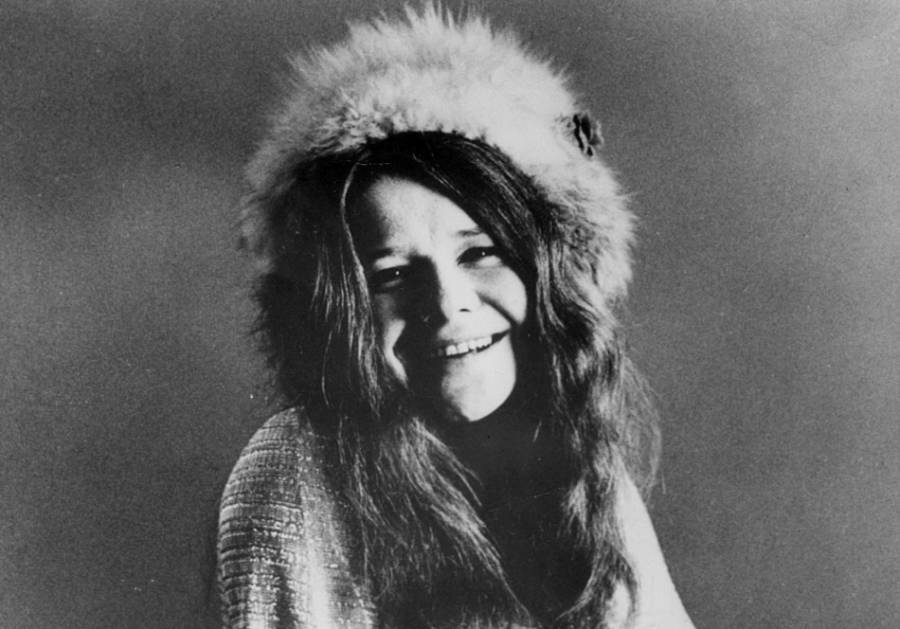
Wikimedia CommonsJanis Joplin. 1970.
The hotel manager agreed to open the room for Cooke. They found her face down between the nightstand and the bed. She had fresh needle marks on her arm. Her nose was broken, probably from the fall. She clutched in her hand four dollars and 50 cents. What or whom the money was for remains a mystery. Potent heroin was pinned as the cause of death; others in the area with the same dealer also died that week.
Whatever the cause, Janis Joplin was cremated, with a closed service at an undisclosed location for only the immediate family. Her ashes were scattered at sea.
Alan “Blind Owl” Wilson
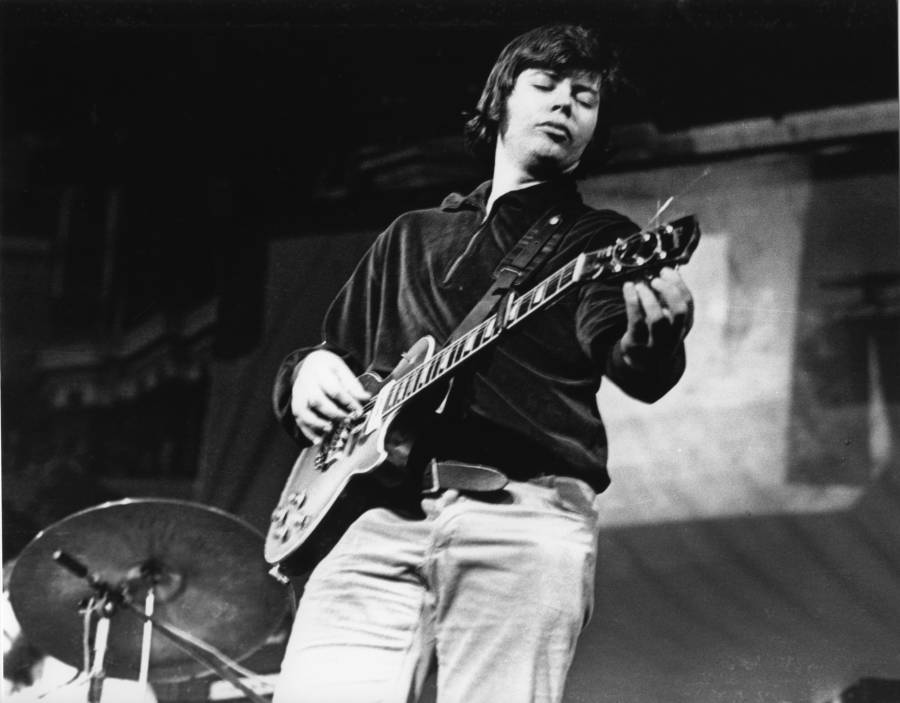
Susie Macdonald/RedfernsAlan “Blind Owl” Wilson of Canned Heat on stage at the Royal Albert Hall in London. Circa 1970.
Alan Christie Wilson, born on the 4th of July in 1943, had two loves: nature and blues music. As the founding member of Canned Heat, the guitarist and songwriter from Arlington, Mass. was able to indulge one of his passions. The other one might have played a role in his death.
Called “Blind Owl” because of his extreme nearsightedness and scholarly nature, Wilson performed at both Woodstock and the Monterey Pop Festival, the latter of which would launch his band Canned Heat into stardom — despite Wilson’s non-rock-star looks.
The band’s drummer, Fito de la Parra, recalled the first time he saw Wilson: “His glasses were held together with Scotch tape. But then all this beautiful music came out of him.”
The introverted Wilson was indeed an unlikely rock star; instead of partying he went to museums. He lived a life of solitude, choosing to sleep outdoors most nights behind the home of fellow band member Bob “The Bear” Hite due to his love of nature.
But Wilson’s ever-growing concern over pollution and the reckless harvesting of the California Redwoods soon sent him into a serious depression.
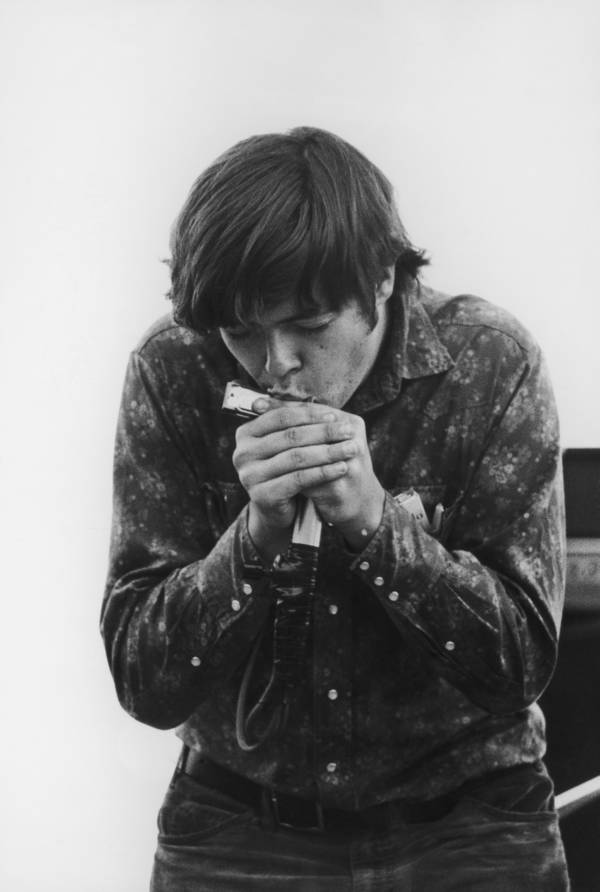
Tucker Ranson/Pictorial Parade/Hulton Archive/Getty ImagesAlan Wilson at Woodstock. August 1969.
The band was leaving on a European tour in September 1970 and nobody had been able to locate Wilson in the couple days beforehand. Finally, they were forced to leave without him. Manager Skip Taylor soon found Wilson’s body out behind Hite’s property inside a sleeping bag, a bottle of the barbiturate Seconal nearby.
“He was smiling and looking at the sky,” Taylor later said. “He looked happy”.
Officially, the cause of death was an accidental overdose of barbiturates — but De la Parra thinks the overdose was no accident. Wilson had been clinically depressed; just a few months before, he’d been hospitalized after trying to kill himself by driving off of a Los Angeles freeway. As De la Parra believes Alan Wilson’s death was a suicide, his entry into the 27 Club may have been a way out of a painful life.
And with his death, one more young star burned out before they’d had time to fade away.
After this look at the 27 Club, see photos from Jimi Hendrix’s last performance in England at the Isle of Wight festival. Then, and then read about Lori Maddox, rock and roll’s most notorious — and underage — groupie.