“The Unsinkable Molly Brown”
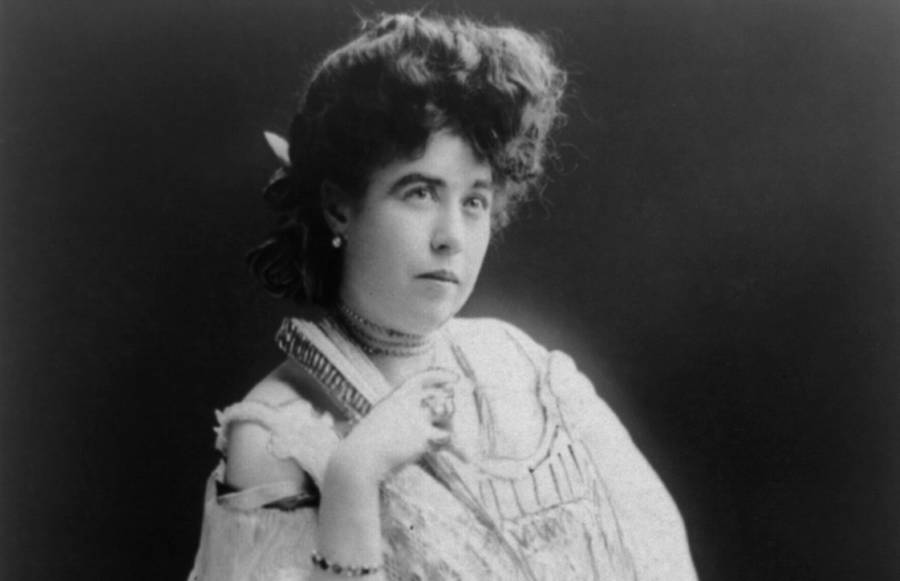
Wikimedia CommonsMargaret “Mollie” Brown, Titanic survivor.
Margaret Brown, famously known as “The Unsinkable Molly Brown” after she survived the wreck of the Titanic, earned her nickname by effectively taking over one of the ship’s lifeboats and threatening to throw the quartermaster overboard.
Her mission was to turn back to look for more Titanic survivors, and though history is a little foggy on whether or not she succeeded in forcing the boat back into the flotsam, she is remembered for her courage — and not only on that day.
Margaret Brown grew up poor and chose to marry for love — a decision she thought was likely to keep her poor for the rest of her life. But her husband beat the odds and made good, and with her newfound wealth she became a traveler, socialite, and philanthropist who was never afraid to roll up her sleeves and get to work.
She was on the Titanic because it was the fastest available transport to the United States, where a sick grandchild had caused her to cut short her travels in Egypt. When the ship sank, she fought to get as many passengers as she could onto the lifeboats and was said to have taken up an oar herself.
She put the fame her role in the Titanic disaster brought her to good use: she publicly campaigned for women’s rights and education for the poor. She even ran for the Senate in 1914, a campaign she only halted when World War I intervened. She went to help rebuild France instead.
Brown’s remarkable story gave rise to both a Broadway musical and a film adaptation of her life.
Titanic Survivors: Eliza “Millvina” Dean
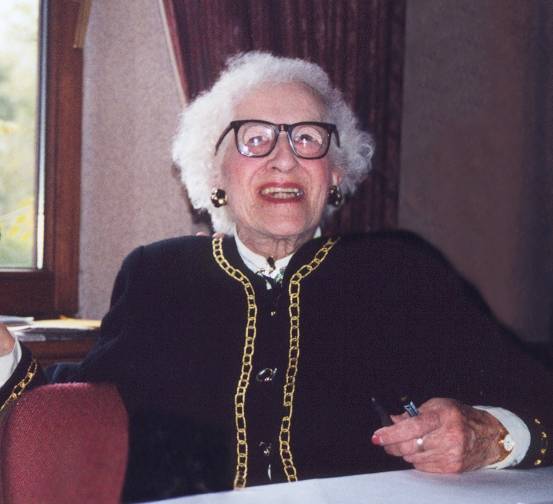
Wikimedia CommonsEliza “Millvina” Dean, Titanic survivor. 1999.
Eliza Gladys “Millvina” Dean holds the special honor of having been both the youngest passenger on board the Titanic when it sank as well as the last living person to have survived the disaster. When the ship went down in April of 1912, she was just two months old.
Dean and her family never intended to board the Titanic: they had initially booked passage to the United States on another ship, but a strike forced them onto the luxury liner instead.
They were third-class passengers, and because they were emigrating to Kansas, everything they owned was in their luggage.
It was Dean’s father who saved them. He had been on deck at the time of the collision, and he knew something was wrong. He rushed to help his wife dress the children and get them on deck — quick thinking that put them at the front of a growing queue of people scrambling for lifeboats.
As third-class passengers, they were at a disadvantage. But Millvina Dean, her brother, and her mother got on board. Dean’s father never made it off the ship.
After that, there seemed little point in going to Kansas, so the shattered family joined a number of other heartbroken Titanic survivors aboard the RMS Adriatic, bound once more for England.
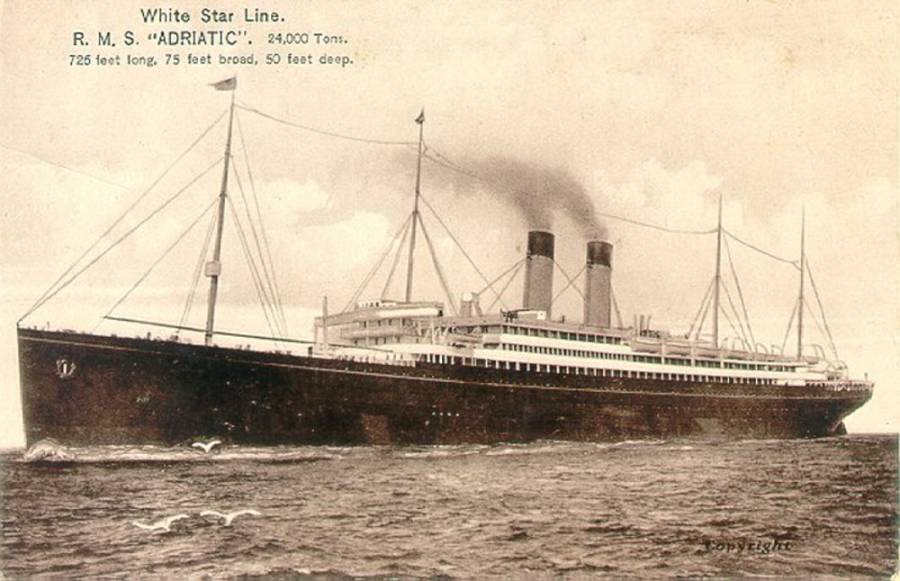
Wikimedia CommonsAn old postcard depicting the RMS Adriatic.
On that gloomy voyage, the young Dean became a minor celebrity. She was a symbol of hope; other survivors were pleased to see that the baby had been saved and the crew took turns holding her. Many took photographs with her that later appeared in newspapers.
Dean lived the rest of her life quietly, but in old age, her Titanic fame caught up with her again. As the number of other survivors shrank, she was once more in the limelight. She received countless invitations to interviews, conventions, and commemorating events.
Dean died in 2009, and her ashes were scattered at the docks in Southampton, the berth from which the Titanic set sail almost 100 years earlier.