Charles Lightoller, The Officer Who Went Down With The Ship — Before Fate Intervened
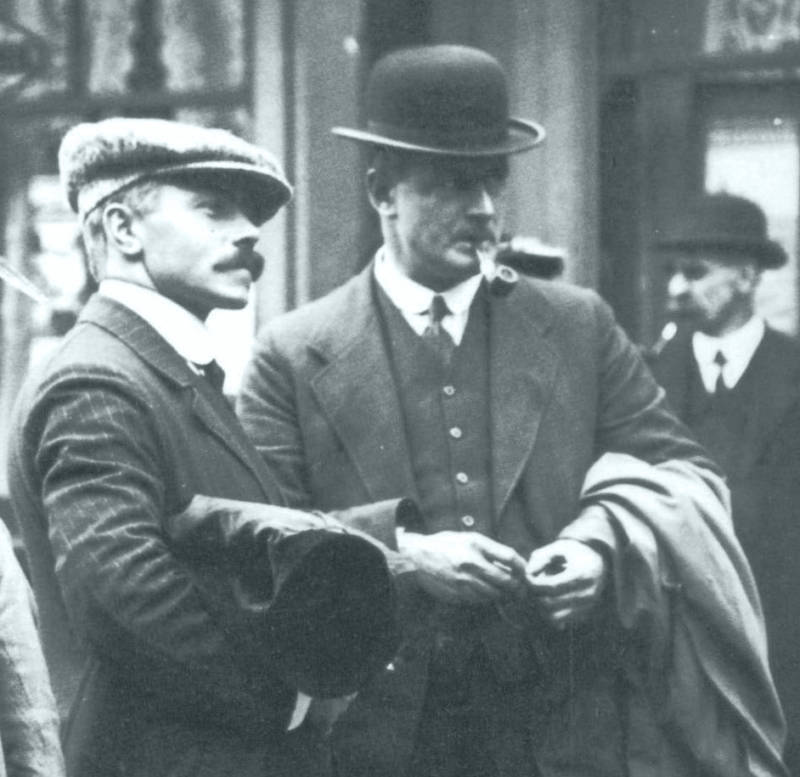
Wikimedia CommonsCharles Lightoller (right).
As the lifeboats were launched, second officer Charles Lightoller observed the “women and children first” rule so aggressively that he sometimes let lifeboats go into the water with empty seats rather than let any men occupy them.
But whatever people said about Lightoller in the tragedy’s aftermath, they couldn’t call him a hypocrite. The second officer intended to go down with the ship — and very nearly did.
He was on the Titanic as it slipped underwater, at the bitter end, when there were no lifeboats left. Feet below the surface, he was trapped against a grate when the ship’s boiler exploded, sending up a blast of air that carried him to the surface.
Afterward, he swam to an overturned collapsible boat where 30 or so people clung to life. He joined them and showed them how to shift their weight to prevent the big swells from the sinking ship from swamping their small craft.
Together, they survived the night, and Lightoller was the last survivor to set foot on the rescue ship that reached them at dawn.
In the inquiries that followed the tragedy, it emerged that Lightoller’s lifeboat policy wasn’t as hard-nosed as it seemed. Doubting the strength of the lifeboats’ davits, he intended to fill the remaining slots on the ships once they had safely reached the waterline.
But the men assigned to the task drowned before they could open the lower doors — meaning some lifeboats sailed away with empty seats.
In the aftermath of the sinking, Lightoller made a number of recommendations for better safety measures and tighter regulations that could prevent similar disasters in the future. Many of his suggestions are now maritime law.
Titanic Survivors: Harold Bride
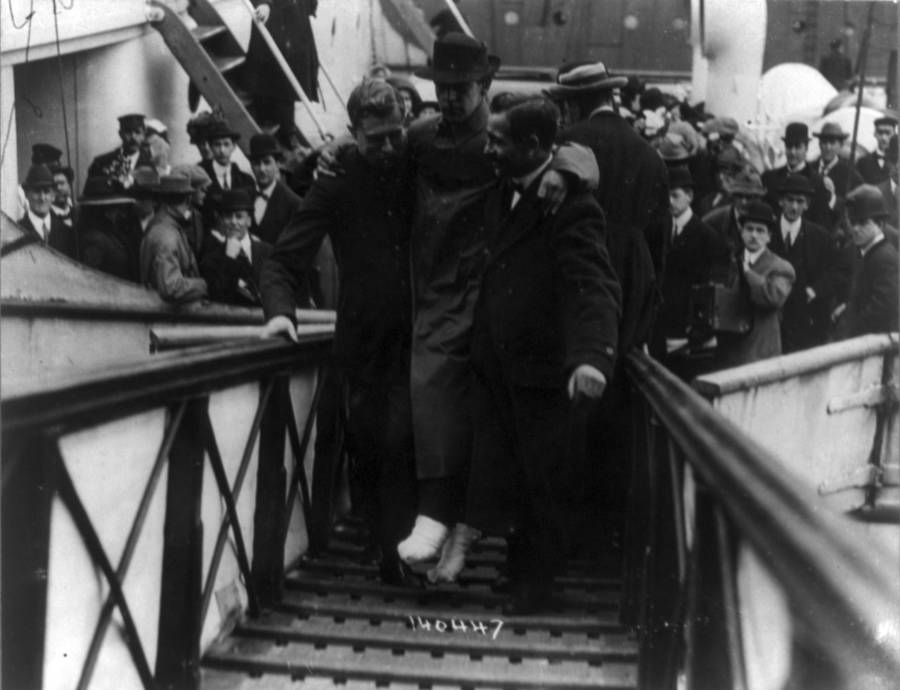
Wikimedia CommonsHarold Bride (center).
A junior wireless officer aboard the Titanic, Harold Bride was one of the two people responsible for sending SOS messages to nearby ships, thus allowing the RMS Carpathia to rescue the Titanic survivors.
He and another man on duty, Jack Phillips, raced to send distress signals to nearby ships — but as the communications specialists, they knew that the closest, the Carpathia, would likely not arrive until after the Titanic sank.
They worked frantically until Captain Edward Smith came and told them they were relieved of duty; the ship had nearly lost power, and only two lifeboats remained.
They made a run for Collapsible B and were just getting it into the water when a wave swept across the deck, tumbling both Harold Bride and the upturned boat into the ocean.
Bride and 15 others scrambled onto the waterlogged, sinking collapsible and survived until other lifeboats collected them and conveyed them to the Carpathia.
Once aboard the Carpathia, Bride got back to work and began helping the ship’s wireless officer send messages from the other Titanic survivors.
When the Carpathia made land, Bride had to be carried ashore: he had sprained one foot in the plunge into the ocean, and the other was frostbitten after a night in the Atlantic’s frigid waters.