What happened on this day in history: France recognizes American independence, Babe Ruth is born, and more events from February 6th in decades past.
1778: France Recognizes U.S. Independence
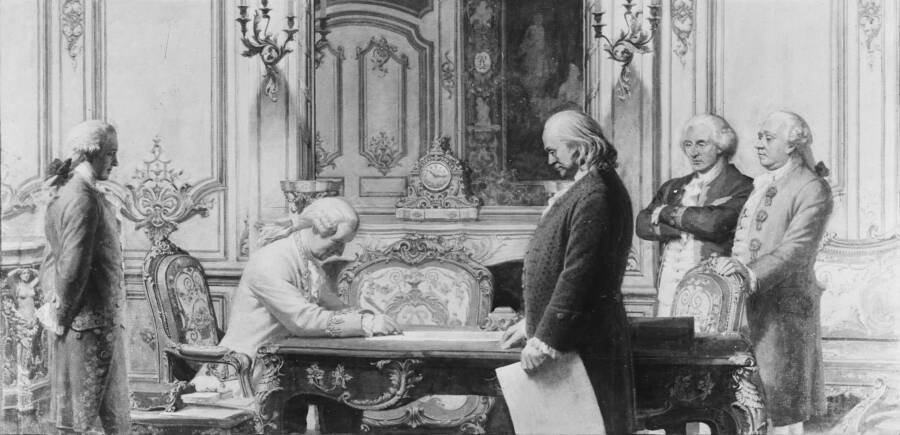
Public DomainA depiction of the signing of the Treaty of Amity and Commerce. Benjamin Franklin stands in the center of the frame.
France recognizes the independence of the United States from Great Britain. The Treaty of Amity and Commerce, signed by American delegates including Benjamin Franklin, also promoted trade between France and the U.S. and created a military alliance between the countries against Great Britain. Over the course of the Revolutionary War, France sent an estimated 12,000 soldiers and 32,000 sailors in support of American independence.
1891: The Dalton Gang Commits Its First Train Robbery
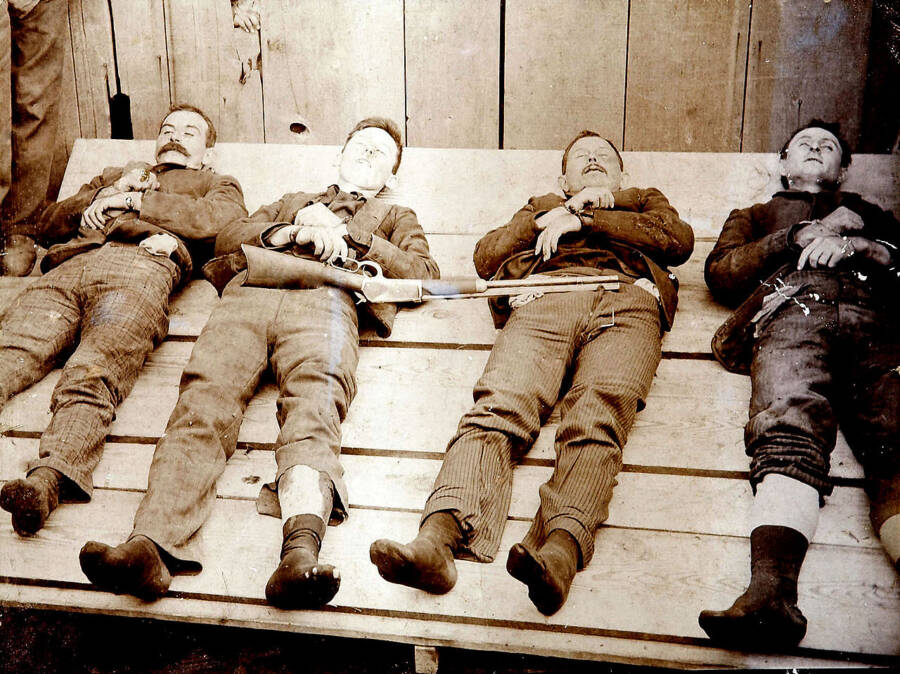
Wikimedia CommonsThe dead bodies of the Dalton Gang following their demise in the shootout during the 1892 Coffeyville bank robbery.
The Dalton Gang attempts to rob a Southern Pacific train near Alila, California. The three brothers — Bob, Grat, and Bill — were forced to flee after a security guard opened fire on them. Though they continued to pursue a life as Wild West outlaws, their crime spree came to an end a year later when the gang tried to rob two banks in Coffeyville, Kansas and were resisted by townspeople who killed Bob, Grat, and two other Dalton Gang members.
1895: Babe Ruth Is Born
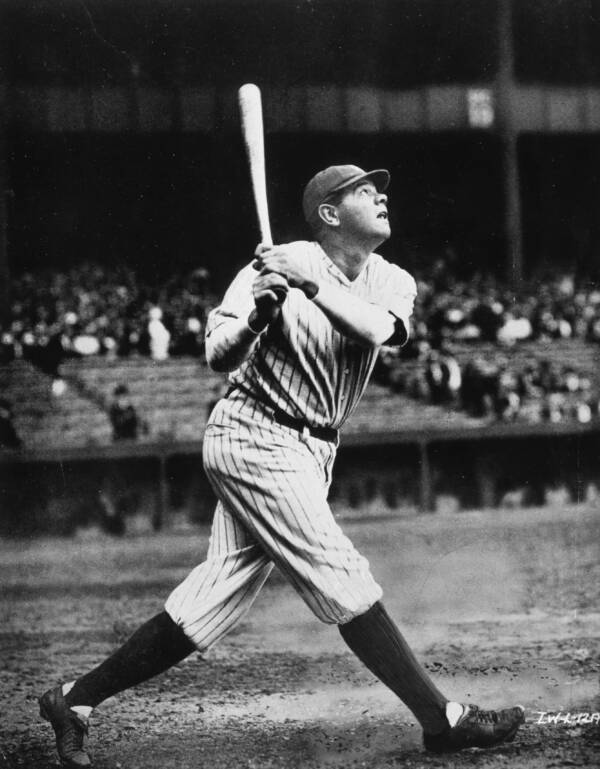
Mark Rucker/Transcendental Graphics/Getty ImagesBabe Ruth during batting practice at Yankee Stadium in 1923.
George Herman “Babe” Ruth is born in Baltimore, Maryland. Regarded by some as the greatest baseball player of all time, Ruth made history by hitting a career total of 714 home runs. His record stood for decades until it was broken in 1974 by Hank Aaron, who eventually hit 755 home runs.
1919: The Weimar Republic Is Formed
The Weimar Republic is formed in Germany. Following Germany’s defeat in World War I, Emperor William II abdicated the throne. The national assembly met in Weimar, Germany to discuss the new government. The assembly would eventually create a new constitution, preserving the country’s federal structure and strengthening the central government’s power. It provided Germany with a foundation for democracy, but came with several problems. The Weimar Republic would eventually collapse with the rise of the Nazis in 1933.
1952: King George VI Dies And Elizabeth II Becomes Queen
King George VI dies in his sleep at the age of 56 following a long battle with cancer. He had reigned for 15 years and steered the country through World War II, after serving in the Royal Air Force during World War I. His death elevated his 25-year-old daughter Elizabeth to the throne. Her lavish coronation would follow on June 2, 1953.
1980: John Wayne Gacy Goes To Trial
The trial of serial killer John Wayne Gacy begins in Chicago — with a whopping 33 murders on the list of charges. After police found dozens of bodies inside the crawl space of his home, the local media coverage was so intense that the jury had to be selected from a city about 100 miles away in hopes that people living there would be less aware of the case. And once the trial began, it was turbulent from the first day to the last.
Gacy’s lawyers began by arguing that he was not guilty by reason of insanity and that he had four personalities, including the Pogo the Clown persona for which he soon became infamous as well as another named “Bad Jack” who was the one that had actually committed all the crimes. Meanwhile, the prosecution fought that argument by pointing out how methodical both Gacy’s crimes and his efforts to avoid detection had been.
Then prosecutors brought in three of his surviving victims, with one getting so upset that he vomited on the stand and another so disturbed that he couldn’t even begin his testimony and was simply excused. And though Gacy’s lawyers then tried to claim that all 33 deaths had been the result of accidental erotic asphyxiation, the jury wasn’t buying it and quickly convicted him on all counts — at the time, the highest murder total in American history.