The Terror Of Operation Wandering Soul
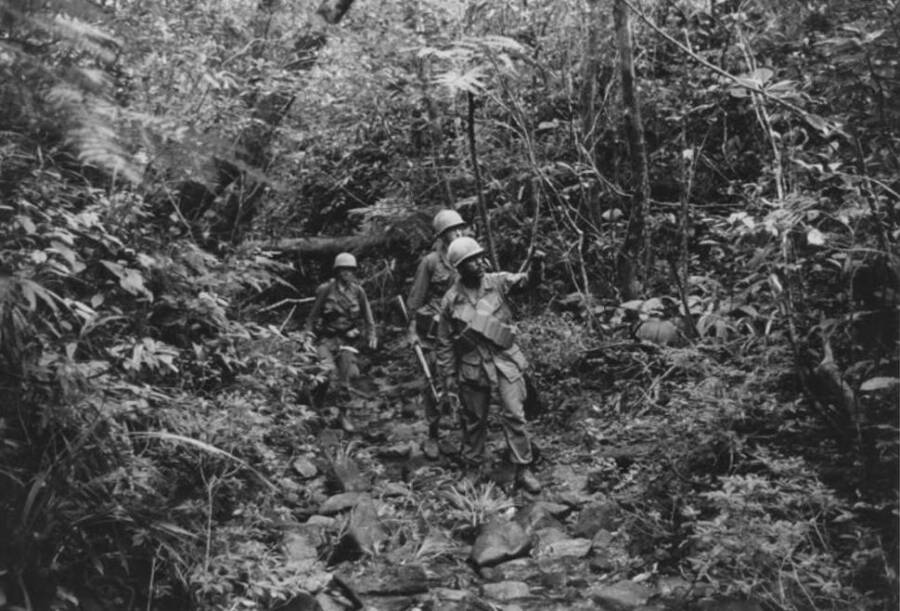
Wikimedia CommonsU.S. troops in Vietnam would blast ghost sounds on loudspeakers as they fought their way through the jungle.
If there’s anything more effective than physical weapons to defeat enemy soldiers in a war, it’s psychological terror. That’s just what U.S. troops employed during their invasion in the Vietnam War.
In Vietnamese culture, giving a proper burial to a loved one in their birthplace ensures their contentment in the afterlife. If not, it is believed the deceased’s soul will wander aimlessly as it tries to find its way home.
U.S. forces in the Vietnam War were aware of this belief and took advantage of it to cause terror. Knowing that the Vietnamese people were worried many of their soldiers would die far from home and unable to be properly buried, U.S. forces employed a freaky psychological scare tactic known as “Operation Wandering Soul.”
The 6th Psychological Operations Battalion (6th PSYOP) of the U.S. Army broadcasted disturbing moans of disembodied voices throughout the Vietnam jungle where the battles took place. These fake tapes were played on a series of loudspeakers or dispatched from overhead planes.
For many Vietnamese soldiers, hearing the cries of supposedly lost souls piercing through the dark was nothing short of terrifying.
The scare tactic was inspired by the “Ghost Army” of World War II, a unit of inflatable tanks and personnel carriers used to fool German intelligence forces into thinking the Allies had more troops and tanks than they actually did.
These hair-raising messages that played in the Vietnam battlefield successfully convinced many nervous Vietnamese soldiers that their fallen comrades were skulking invisibly among them. Many of the fake ghost messages recorded were created with the help of South Vietnamese allies and voiced pleas to the soldiers to give up the fight:
“My friends, I have come back to let you know that I am dead… I am dead!”
“Don’t end up like me. Go home, friends, before it’s too late!”
The tapes were convincing enough to send hundreds of men fleeing from the mountains. Of course, not all Vietnamese soldiers fell for this spooky psychological operation.
But even in the midst of a war, it still struck a chord. The soldiers who remained fired in the direction of the eerie voices, reminding them of the very real possibility of death that awaited them if defeated.
The Tucker Telephone Torture Device
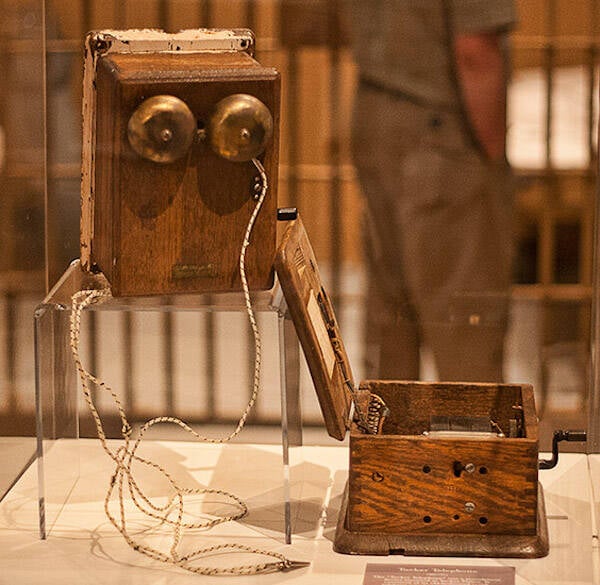
Encyclopedia of ArkansasThe creepy story of the Tucker Phone became so controversial that it was depicted in numerous films, including Brubaker, starring Robert Redford.
Of all the true scary stories about life inside America’s jails, the Tucker Telephone is surely the most awful. And for inmates doing time at the Tucker State Prison Farm in Arkansas in the early 1960s, there was nothing more terrifying than the Tucker Telephone.
The Tucker Telephone was a sadistic method of punishment frequently used on prisoners at the state prison which is now the Tucker Unit of the Arkansas Department of Correction. The torture device was the brainchild of prison physician Dr. A.E. Rollins and prison superintendent Jim Bruton.
On its face, the device looks like an old crank telephone. But with the addition of an electric generator and two dry cell batteries, it became one of the most notorious torture machines in the history of U.S. incarceration.
Hooked up to a source of immense electric power, the Tucker Telephone functioned as an electric shock device attached to the private parts of victims. Inmates sent to the “hospital room” were strapped down to a table with two wires applied to their skin. The ground wire was wrapped around their big toe while the hot wire — which the electricity ran through — was strapped to the inmate’s genitals.
Once the doctors turned the crank on the Tucker Telephone, their victims were brutally shocked by torrents of electricity. Sometimes these torture sessions dragged on for long periods, known as “long-distance calls.”
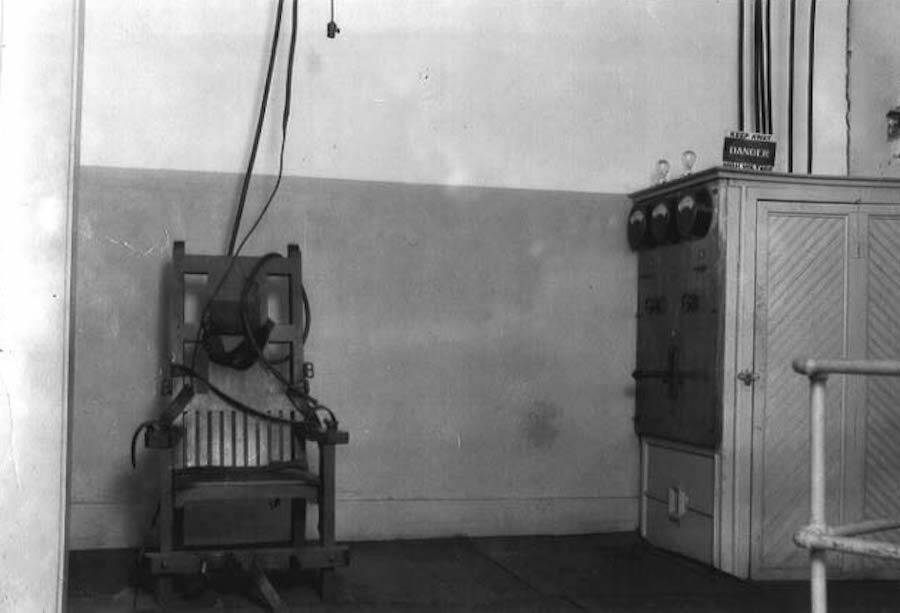
Wikimedia Commons The Tucker Prison Farm also whipped inmates, beat them with five-foot paddles, put needles under their fingernails, and executed them using “Old Sparky,” an electric chair that was used 104 times.
The sheer barbarism of this punishment method was described in Tom Murton’s shocking 1970 book Accomplices to the Crime: The Arkansas Prison Scandal:
“In ‘long distance calls’ several charges were inflicted — of a duration designed to stop just short of the inmate’s fainting. Sometimes the ‘telephone’ operator’s skill was so defective and the sustained current not only caused the inmate to lose consciousness but resulted in irreparable damage to his testicles.”
Tragically, many of the prisoners not only ended up with permanent organ damage but also suffered from mental illness following the torture.
But the Tucker Telephone wasn’t an isolated incident. A Newsweek report from 1967 revealed that prisoners were routinely beaten with paddles, had needles stuck under their fingernails, tortured with pliers, and punished using an electric chair. The brutality of the prison became so famous that the Tucker Telephone eventually found itself depicted in the 1980 film Brubaker.
Unfortunately, even after the torture device was no longer deployed against inmates, the Tucker Telephone was repurposed by the Chicago violent crime unit under Lieutenant Jon Burge to torture suspects in the 1980s. American interrogators abroad have also reportedly used the device to torture their captives.