James II Of Scotland, Who Died From A Backfiring Cannon
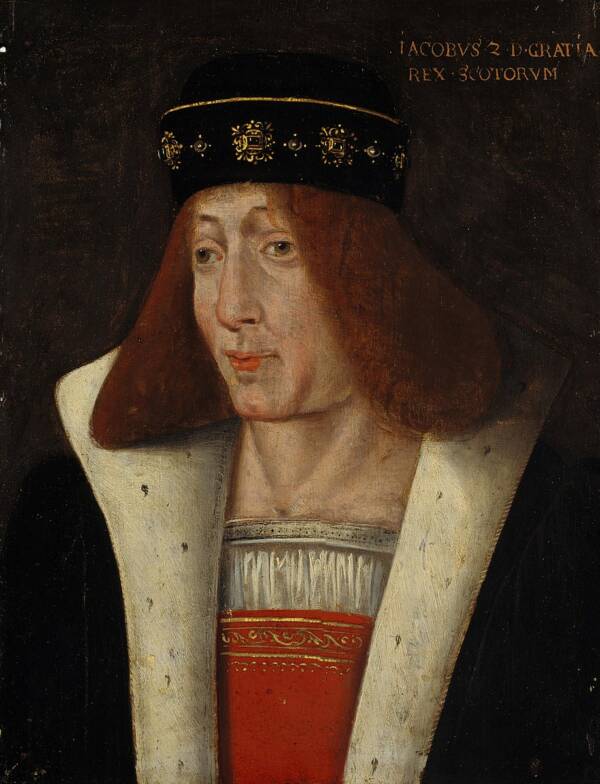
Public DomainJames II, King of Scots, had a fatal fascination with cannons.
As the King of Scotland, James II was known for his fiery temper, equally fiery facial birthmark, and his interest in weapons of war. But as he prepared to besiege the English-held Roxburgh Castle in 1460, the 29-year-old king’s passion for weaponry proved fatal when a cannon exploded and killed him.
Called “James of the fiery face” because of a birthmark, James II led a short and violent life. According to Undiscovered Scotland, he assumed the throne at the age of six following the murder of his father, James I, and allegedly stabbed a defiant noble to death in his early 20s.
He deeply desired to expand Scotland’s power and, in 1460, decided to lay siege to the English-held Roxburgh Castle, just as his father had done more than 20 years earlier. To ensure his success, James II ordered some special new cannons from Flanders.
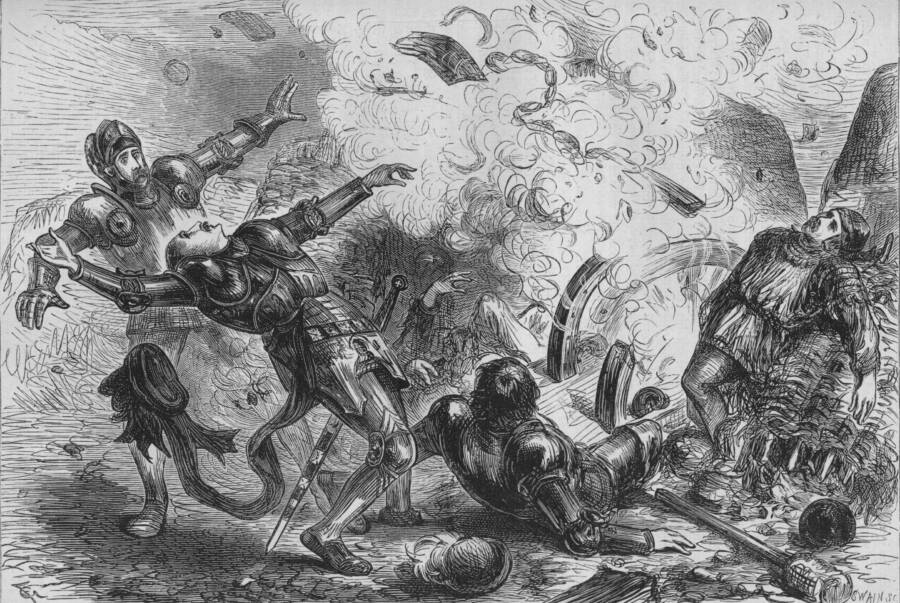
Print Collector/Getty ImagesA depiction of the royal death of James II.
As the king stood with his troops on August 3, 1460, he ordered one of the cannons, called the “the Lion,” to be fired. According to the Medievalists, James II may have simply wanted to show off his new weapon, or he may have wanted to salute the arrival of his wife, Queen Mary. In any case, the cannon went off — and then exploded.
As the Medievalists reports, the firing of the cannon loosened one of the wedges that held its iron rings in place. As a result, the cannon’s barrel broke loose, sailed through the air, and smashed into the king’s leg, effectively snapping his thigh in two. James II collapsed, bled out, and died quickly.
His royal death remains one of the most explosive in human history.
The Royal Death Of Charles II of Navarre, The King Who Was Accidentally Burned Alive
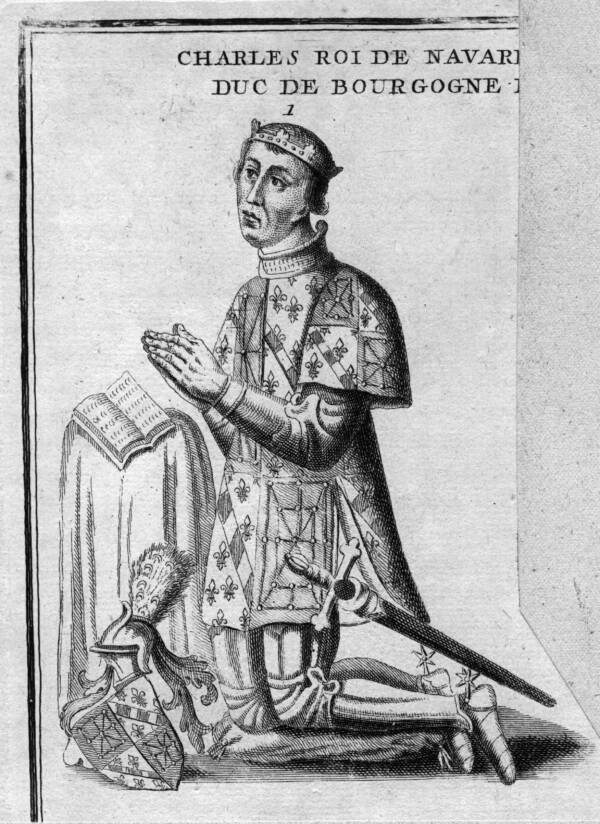
Hulton Archive/Getty ImagesCharles II suffered an especially gruesome royal death.
Charles II of Navarre developed such a reputation that he became known as “Charles the Bad.” But a more appropriate name might be “Charles the Burned,” since in 1387, the French monarch was accidentally burned alive.
The grandson of French King Louis X, Charles adamantly believed that he should inherit the French throne. But his ambitions were thwarted by others who declared that, since Charles’ link to the monarchy came through his mother, he didn’t have the strongest claim. The throne instead passed to his mother’s uncle, Philip de Valois, and then to Philip’s son, John the Good.
Charles the Bad spent most of the rest of his life scheming to usurp John the Good. He plotted with the English, the Spanish, and his fellow Frenchmen. But by 1387, the royal had fallen ill.
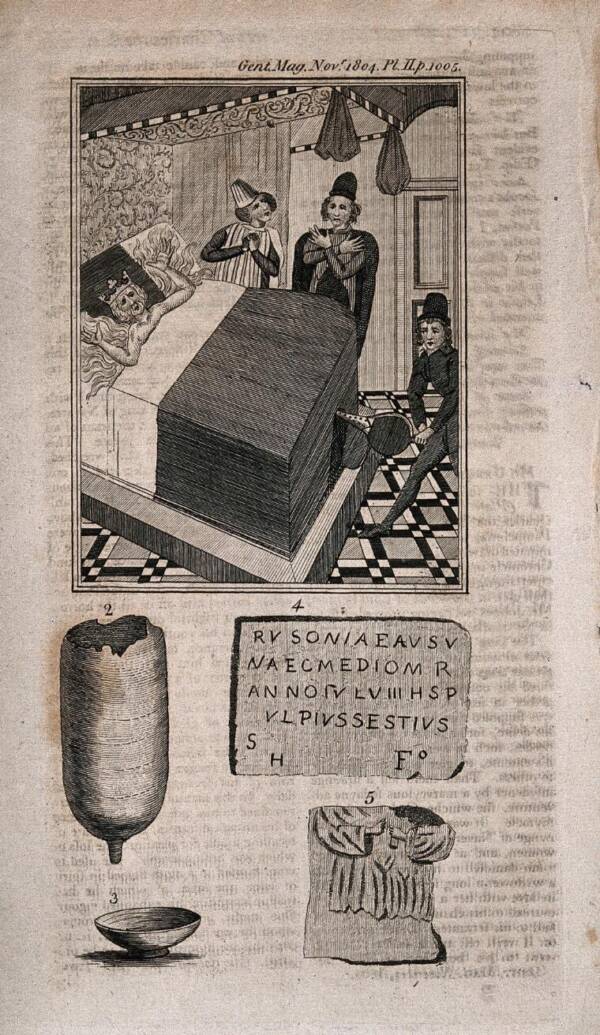
Public Domain/Wellcome CollectionCharles II of Navarre was burned alive in a bizarre accident.
As History Collection reports, doctors attempted to treat Charles II’s illness by wrapping him in linen soaked in brandy, aqua vita (ethanol), and wine. To ensure that this treatment worked, they ordered that the King of Navarre would be stitched into the linens every night.
But on January 1, something went wrong. Having sewn Charles II into his linens, one of his servants searched for scissors to cut off a loose thread. When she couldn’t find any, she decided to burn off the loose thread with a nearby candlestick — and set the ailing king on fire.
As medieval author and historian Jean Froissart wrote of the incident, “[B]y the pleasure of God, or of the devil, the fire caught to his sheets, and from that to his person, swathed as it was in matter highly inflammable.”