Legend has it that King Adolf Frederick of Sweden dropped dead after eating a feast of lobster, caviar, sauerkraut, and 14 sweet buns, but he likely perished from an unrelated stroke.
King Adolf Frederick ruled Sweden from 1751 to 1771, but he’s better remembered for his legendary death than for his 20-year reign.
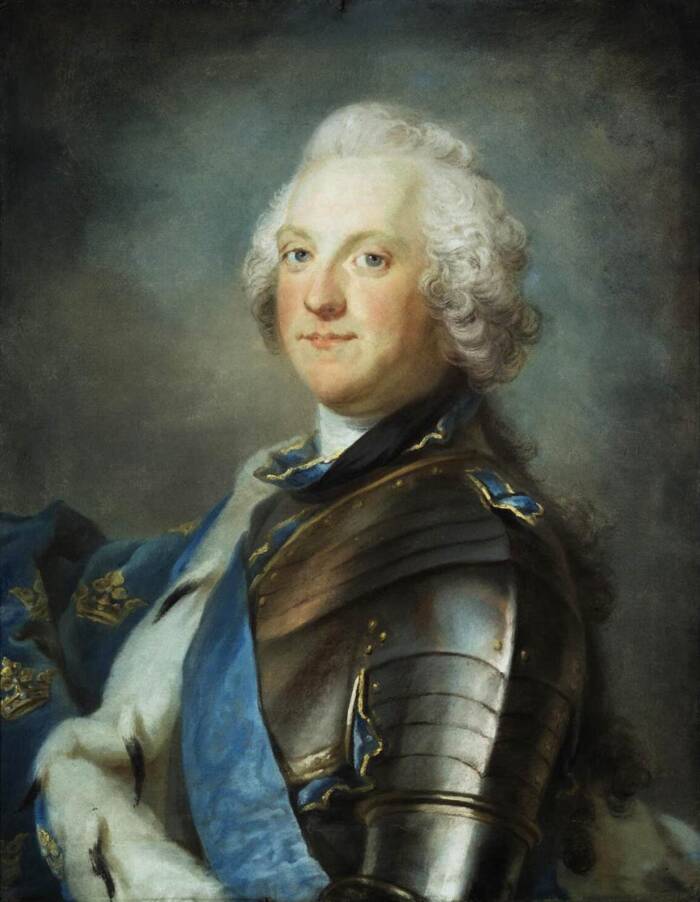
Public DomainAdolf Frederick was the king of Sweden from 1751 until his death in 1771.
The 60-year-old monarch suddenly fell ill on Feb. 12, 1771, after attending a feast for Fettisdagen, the Swedish equivalent of Fat Tuesday. He’d been in poor health for years and likely perished from heart failure or a stroke. However, rumors quickly began flying that he had eaten himself to death.
As the story goes, Adolf Frederick polished off his meal of lobster, caviar, and sauerkraut with 14 cream-filled buns called semlor. His intense stomach cramps started soon after, and he was dead within hours.
While there is no real evidence that King Adolf Frederick gorged himself into his deathbed, the legend persists to this day, and the Swedish royal will forever be associated with semlor.
The Uneventful Reign Of King Adolf Frederick
Born in the Duchy of Schleswig (located near the present-day border of Germany and Denmark) in 1710, Adolf Frederick was never meant to be king. His paternal grandfather was a duke, but his father’s older brother had inherited the title. Adolf Frederick himself had several older siblings, further separating him from any major positions of power. He ruled over a small fief, but he was nowhere near the throne — particularly not for a country he didn’t even live in.
However, Adolf Frederick’s mother descended from Swedish royalty. And his first cousin on his father’s side, Charles Frederick, married Grand Duchess Anna Petrovna of Russia, the daughter of Peter the Great. When Anna died in 1728 and Charles followed in 1739, a decade after Anna, Adolf Frederick became the administrator for their underage son, Charles Peter Ulrich.
Then, in 1741, Anna’s younger sister Elizabeth became the empress of Russia and appointed Peter Ulrich her heir. Around the same time, the Russo-Swedish War broke out. Russia ultimately emerged victorious, and Elizabeth wanted to ensure that an ally ruled Sweden. So, she essentially forced the Swedish government to appoint Adolf Frederick as the heir to the country’s throne by threatening to annex Finland if they didn’t.
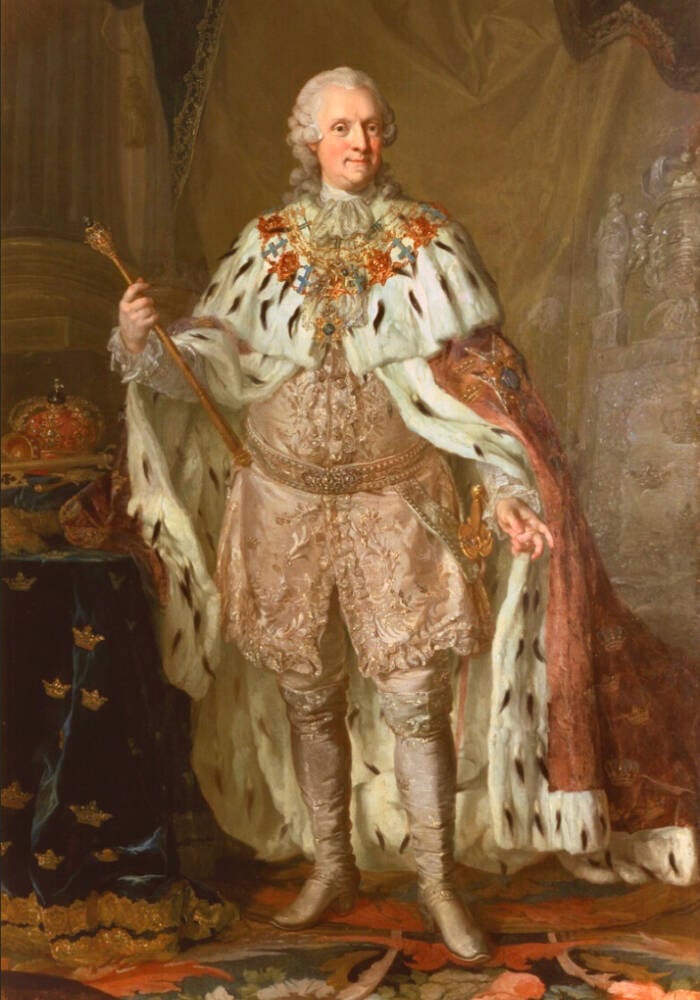
Nationalmuseum SwedenAn 18th-century portrait of King Adolf Frederick by Swedish artist Lorens Pasch the Younger.
Thus, when Frederick I died in 1751, Adolf Frederick became the king of Sweden.
Despite his title, however, Adolf Frederick was more of a symbolic figurehead. The actual ruling was done by the Riksdag, Sweden’s Parliament. He did try to overthrow the institution on two occasions, but he never completely succeeded.
Otherwise, King Adolf Frederick’s reign was largely uneventful — at least until his death.
The Fat Tuesday Feast That May Have Killed A King
In 1771, Ash Wednesday fell on Feb. 13, marking the beginning of Lent. That meant that Feb. 12 was Fettisdagen, which translates literally to “Fat Tuesday.” There was a feast at Stockholm Palace to celebrate the occasion, and King Adolf Frederick purportedly dined on seafood, duck, and a variety of vegetables, washing it all down with champagne.
Then, he turned to what’s said to have been his favorite dessert: semlor, also called hetvägg when soaked in hot milk. The sweet buns are filled with cream and traditionally served as part of the Fettisdagen meal. As the legend goes, Adolf Frederick ate 14 semlor before calling it a night.
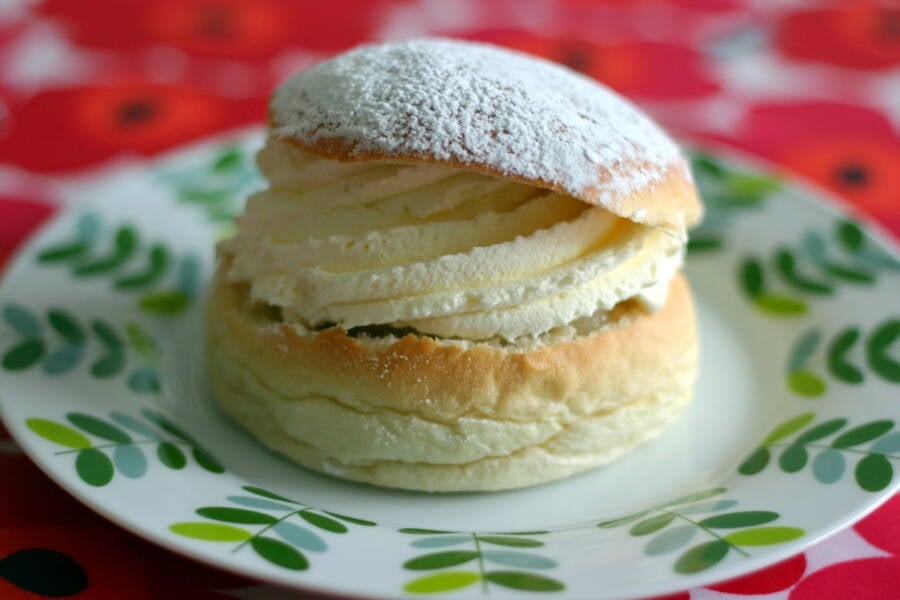
Frugan/Flickr Creative CommonsSemlor are sweet buns flavored with cardamom, filled with an almond paste, and topped with whipped cream and powdered sugar. They are sometimes served in a bowl of warm milk.
Shortly after dinner, the king was gripped by a sharp pain in his stomach. As his postmortem report noted:
“His Majesty little more than three hours after the meal, which was strong and of steady food, was attacked by the most violent colic and spasms in the abdomen, which in haste also moved the head and brain… and thereby squeezed together the parts indispensable to life, and quickly concluded in a killing asphyxia, and perfect apoplexia serosa, to the greatest sorrow and loss of all the inhabitants of the Swedish Kingdom.”
The doctor also observed that the monarch’s stomach held “remains of food, partly melted, partly still in smaller pieces, which had not begun to transform,” and the “large intestines were mostly empty but congested with gases.”
Nothing in the autopsy report suggests that Adolf Frederick ate himself to death. In fact, the doctor noted that the king had been in poor health for years. Back pain, colic, severe migraines, hemorrhoids, constipation, diarrhea, and frequent severe colds all plagued the royal, suggesting there may have been an underlying gastrointestinal disease.
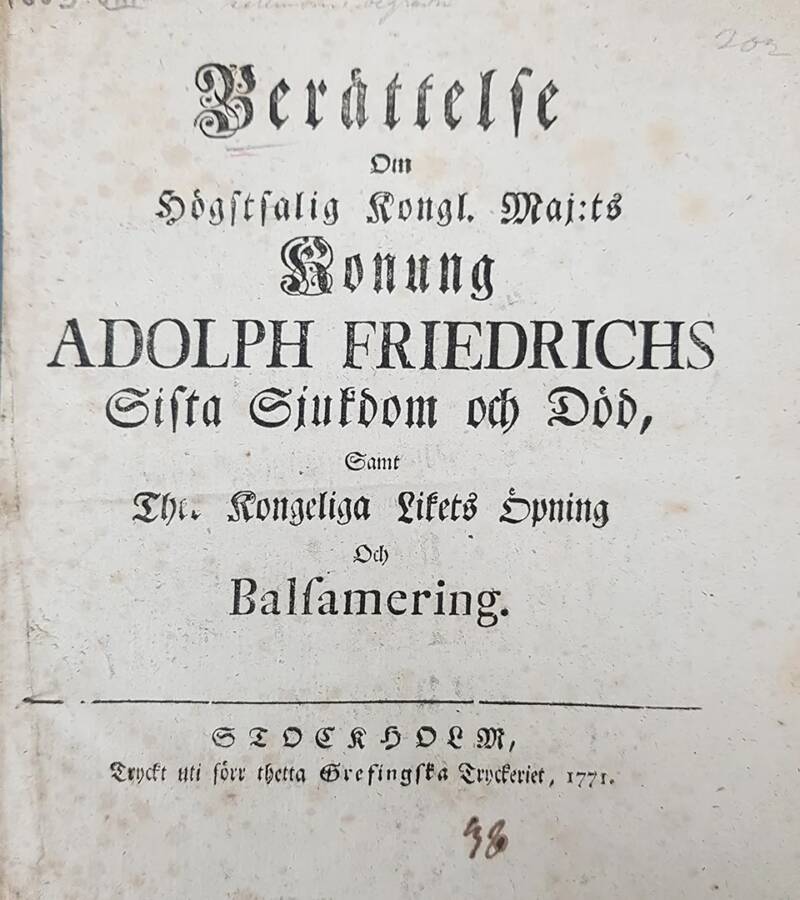
Public DomainThe post-mortem report of King Adolf Frederick.
It’s most likely that King Adolf Frederick died from a stroke or perhaps heart failure. So, why does everyone still believe that he ate himself to death?
How The Rumors About King Adolf Frederick’s Death Began
Shortly after Adolf Frederick’s death on February 12, 1771, Swedish poet Count Johan Gabriel Oxenstierna recorded in his diary, “His Majesty’s death has occurred from indigestion of hetvägg, sauerkraut, meat with turnips, lobster, caviar, duckling, and Champagne wine.”
It’s unclear exactly how the news of the king’s demise was reported to the public, but many modern scholars believe that the story that he gorged himself was spread as propaganda.
Adolf Frederick was buried at Riddarholmen Church in Stockholm alongside many more of Sweden’s monarchs. His son Gustav was in Paris at the time of the king’s death, but he returned to Sweden to address the Riksdag. He then successfully seized power from the Parliament, something his father had never been able to do.
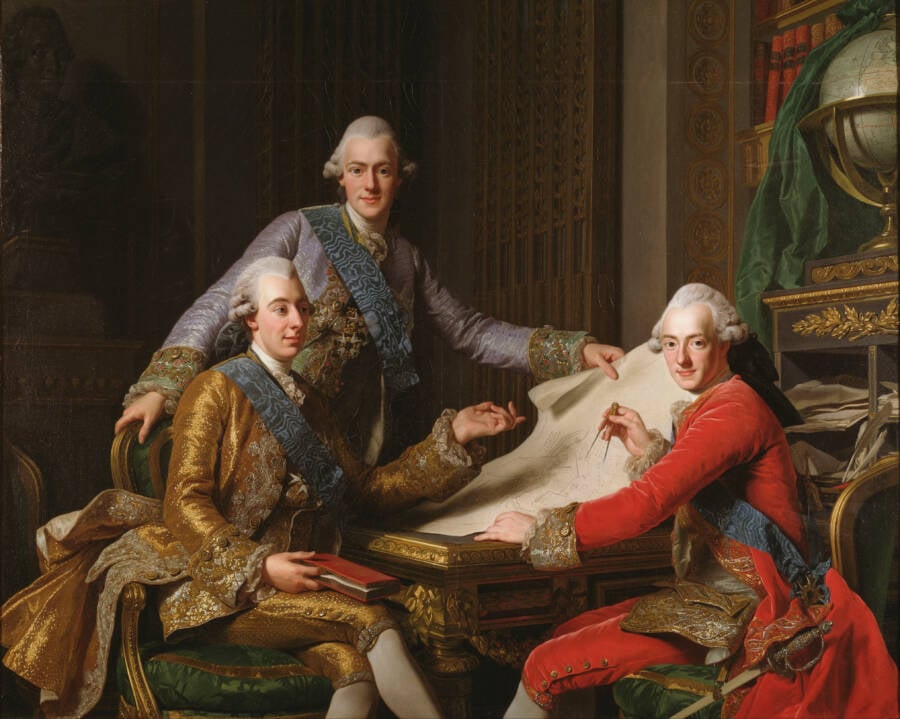
Public DomainThree of Adolf Frederick’s sons, including King Gustav III (left).
This 1772 coup, known as the Swedish Revolution, ended the country’s Age of Liberty and expanded royal power. As King Gustav III, he abolished torture, introduced more religious freedom, and gave commoners the right to hold higher offices that they were previously banned from. Of course, this stirred discontent amongst nobility — and Gustav was killed by a group of disgruntled noblemen in 1792.
So, in the end, King Adolf Frederick’s death probably wasn’t as fascinating as it’s been portrayed — but it did pave the way for a new Sweden.
After reading about the life and death of King Adolf Frederick of Sweden, go inside 10 other weird royal deaths. Then learn the true story of Marie Antoinette’s execution.