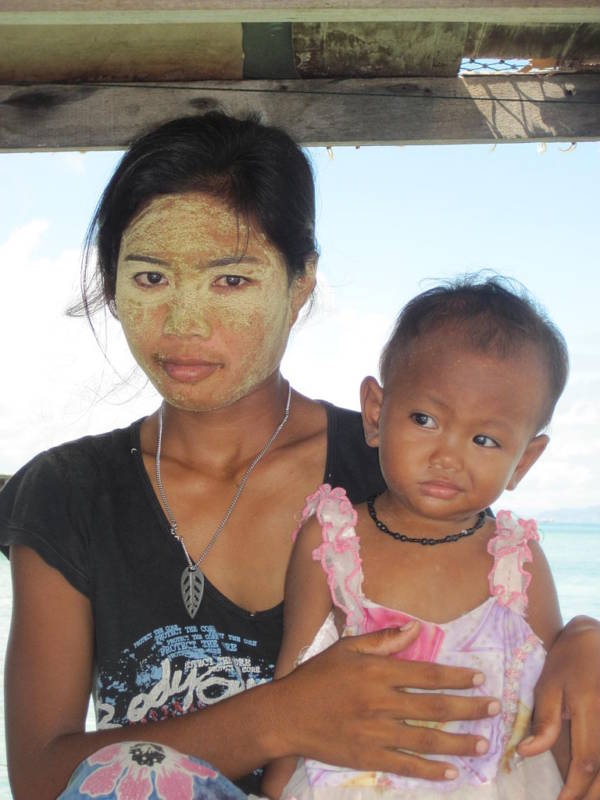
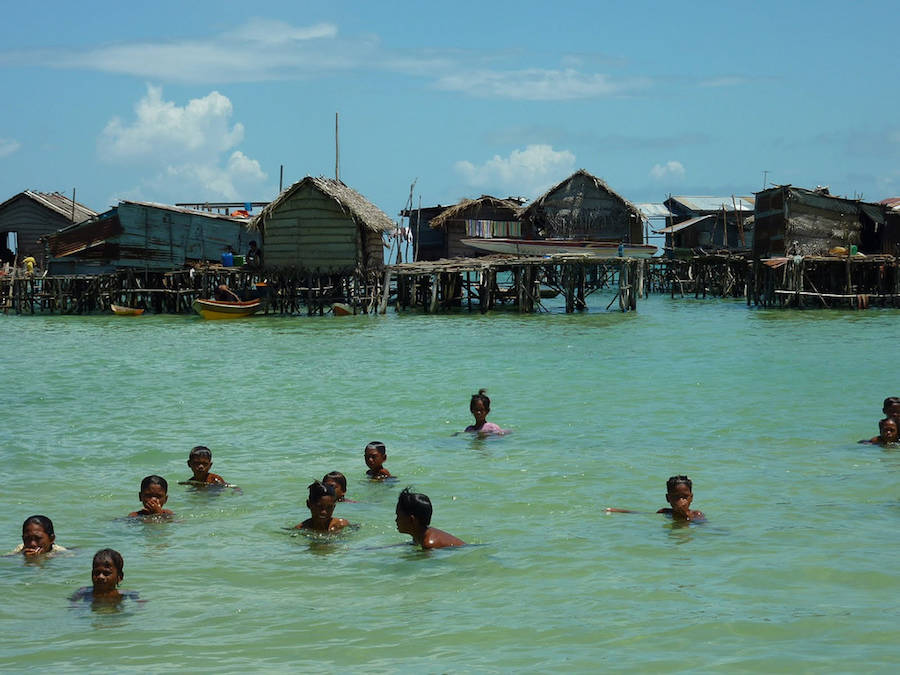
Sometimes referred to as "Sea Nomads," the Bajau people traditionally live on houseboats or in stilted huts above the water — and spend up to eight hours a day fishing and diving.
Southeast Asia is home to hundreds of Indigenous groups, but the Bajau people are unique. Their ancestors didn’t build villages in the jungle or on sandy beaches — they lived on houseboats and spent their days in the water.
Over the generations, they’ve spent so much time diving deep into the ocean for food that they’ve biologically evolved. Their spleens are bigger than the average human’s, allowing them to hold their breath for longer periods of time.



And if you liked this post, be sure to check out these popular posts:

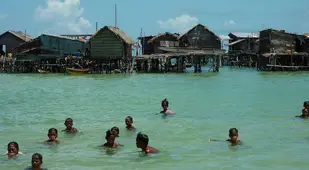


Even today, many Bajau people rely solely on fishing and diving to survive. While some of them have moved from the traditional houseboats to stilted huts built above the sea, they still thrive off the coasts of Malaysia, Indonesia, and the Philippines.
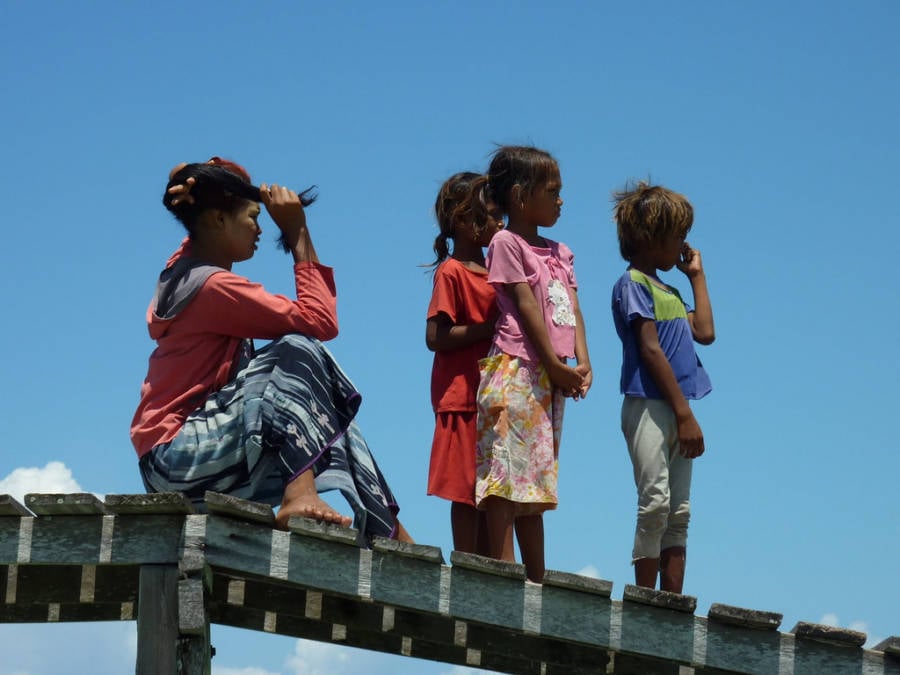
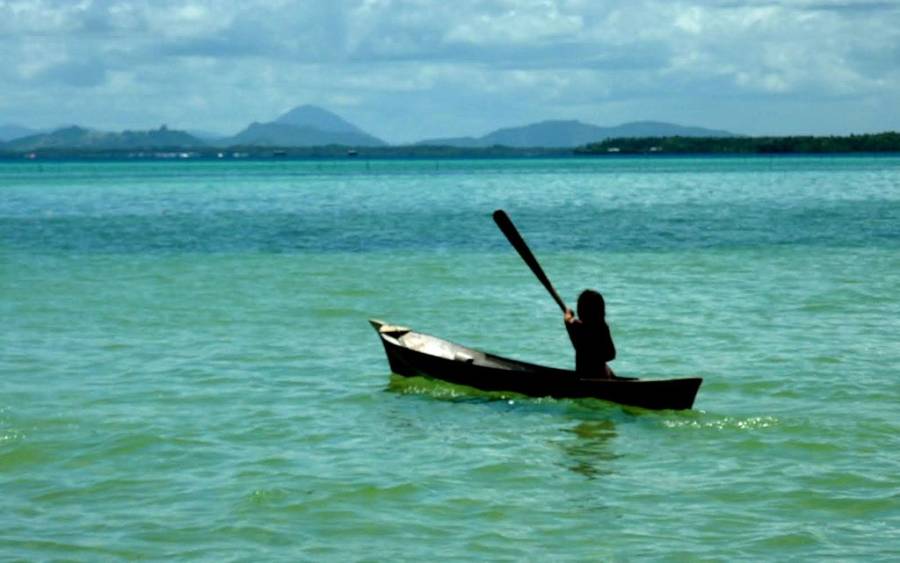
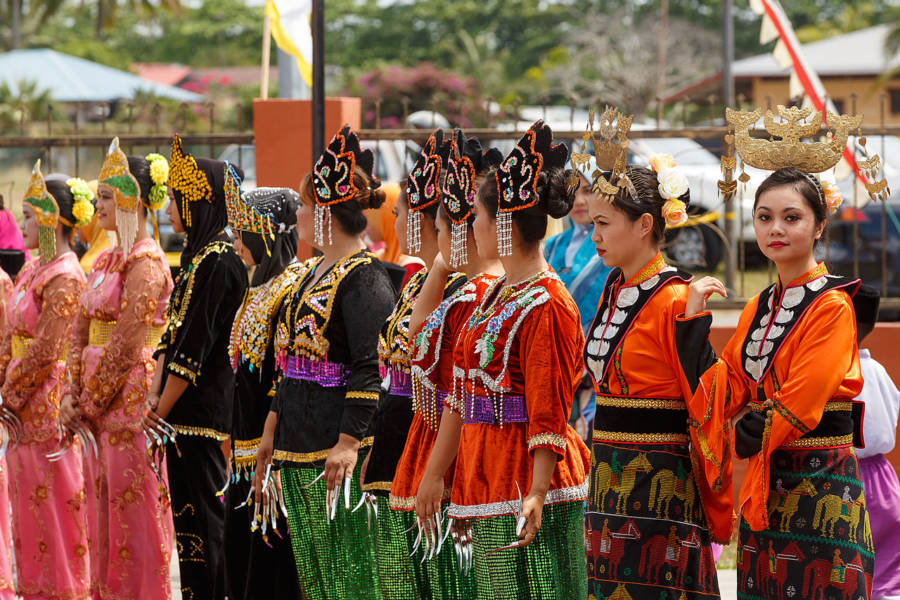
Above, look through 27 incredible photos of the Bajau people. And below, learn more about how these "Sea Nomads" live.
The Unique History Of The Bajau People
It's important to note that the Bajau people aren't a single tribe but rather several Indigenous groups known collectively as the Sama-Bajau. Some refer to themselves as the "Sama," some the "Bajau," and others by their specific tribal names.
The precise origin of the Bajau people is murky, but local oral tradition claims that their ancestors were land-dwellers who took to the seas centuries ago to seek a lost princess. Their king ordered them not to return until they'd found her, but she never turned up, so they remain nomadic to this day.
The oldest account of the society dates back to 840 C.E. An epic poem called the Darangen, written by the Maranao people of the Philippines, describes how a great prince marries a princess of the samar, or the "sea people."

Obsidian Soul/Wikimedia CommonsThe green area depicts the region where the Bajau people are typically found.
European explorers also wrote of the Bajau people in the 16th century. During Ferdinand Magellan's expedition to the Philippines in 1521, his assistant Antonio Pigafetta wrote of inhabitants who "always live in their vessels, and have no houses on shore."
While recent generations of these so-called Sea Nomads have made more permanent homes for themselves, some of them still follow the ways of their ancestors.
The Masters Of The Ocean
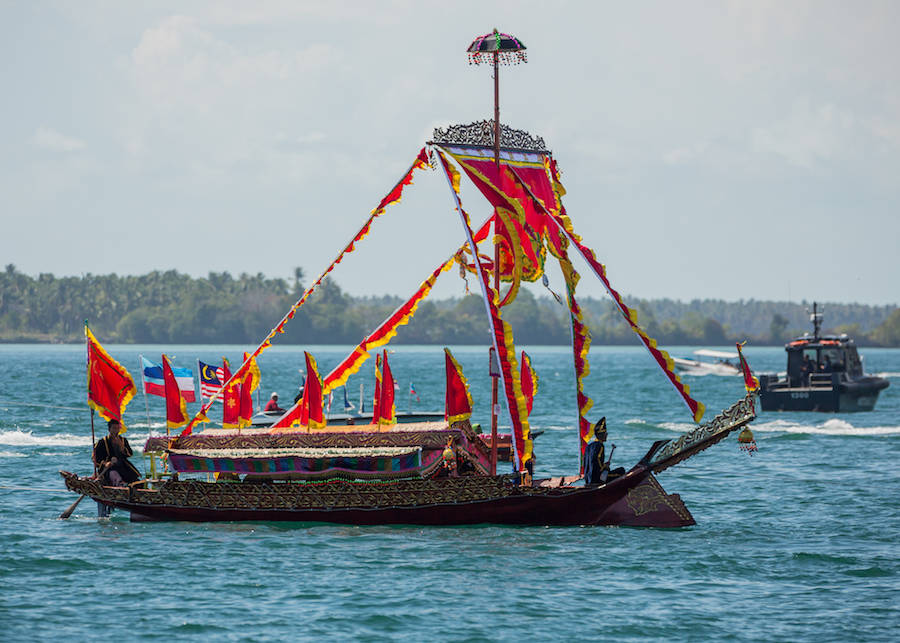
Traditionally, the Bajau people do indeed live solely on wooden houseboats called lepa. The vessels have thatched roofs to protect their occupants from the elements, but otherwise, families eat, sleep, and cook over open flames all while onboard.
When they aren't on the boat, men, women, and children alike spend five to eight hours per day fishing and diving for sea creatures like octopuses, sea urchins, and sea cucumbers. They eat much of their harvest, but they also sell and barter it for food like rice and other goods. Sea cucumbers, in particular, bring in a hefty profit, as they're seen as delicacies in many parts of Asia.
Bajau infants can often swim before they learn how to walk, and children as young as four join their families in the ancestral trade. They often dive into the ocean with just weighted belts and wooden goggles, wielding hand-crafted spears and harpoons.
One Bajau man, Imran Lahassan, told The Guardian in 2010 that his people often intentionally rupture their eardrums to help them dive deeper.
"You bleed from your ears and nose," said Lahassan, "and you have to spend a week lying down because of the dizziness. After that you can dive without pain."
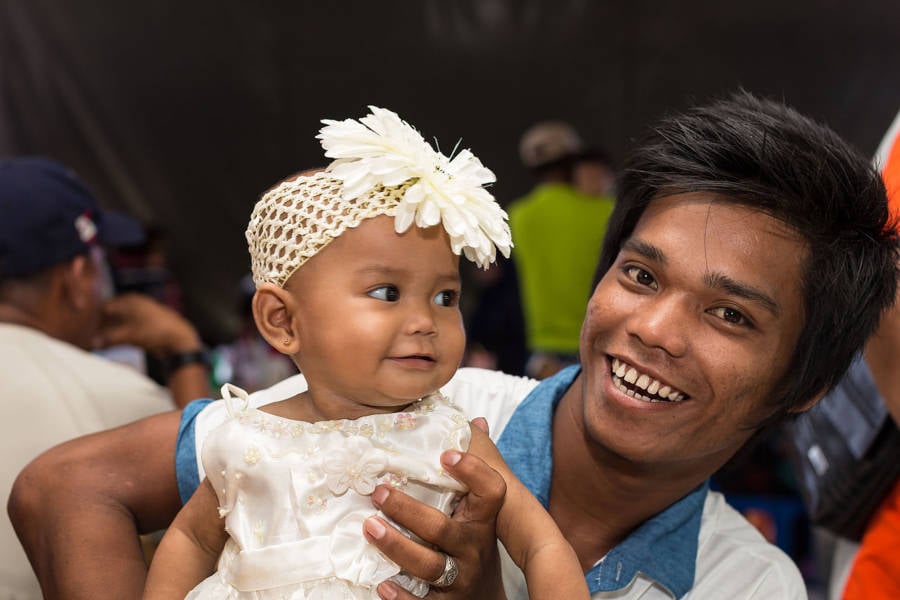
CEphoto/Uwe Aranas/Wikimedia CommonsA modern Bajau man poses with his daughter in Malaysia. 2015.
Indeed, the Bajau people sometimes dive more than 100 feet beneath the water's surface, holding their breath for over five minutes at a time.
Some of this ability comes from practice, but the Bajau have also biologically evolved over the generations. A 2018 study published in the journal Cell found that their spleens are 50 percent larger than the average human's.
The spleen stores red blood cells, which transport oxygen. When someone holds their breath, their spleen releases these cells to boost the amount of oxygen in the body. With bigger spleens, the Bajau people can hold a larger stockpile of these oxygen-rich cells, and thus hold their breath for longer periods — sometimes up to 13 minutes.
Melissa Ilardo, a geneticist who spent several months with the Bajau people, told The Atlantic in 2018, "Underwater, the Bajau are as comfortable as most people are on land. They walk on the seafloor. They have complete control of their breath and body. They spear fish, no problem, first try."
However, more recent generations have slowly been moving away from this traditional lifestyle.
The Lives Of The Bajau People Today
Over the centuries, many Bajau people have given up living on boats to build stilted huts above the sea. In some places, like Omadal Island in Malaysia, dozens of families live in a collection of bungalows connected by narrow bridges.
Some Bajau youth have even tried to make permanent homes and careers on land, but this comes with difficulties. Since they aren't citizens of any country, they don't always have the legal right to settle down anywhere. They've also been stigmatized as "sea gypsies," further contributing to their troubles.
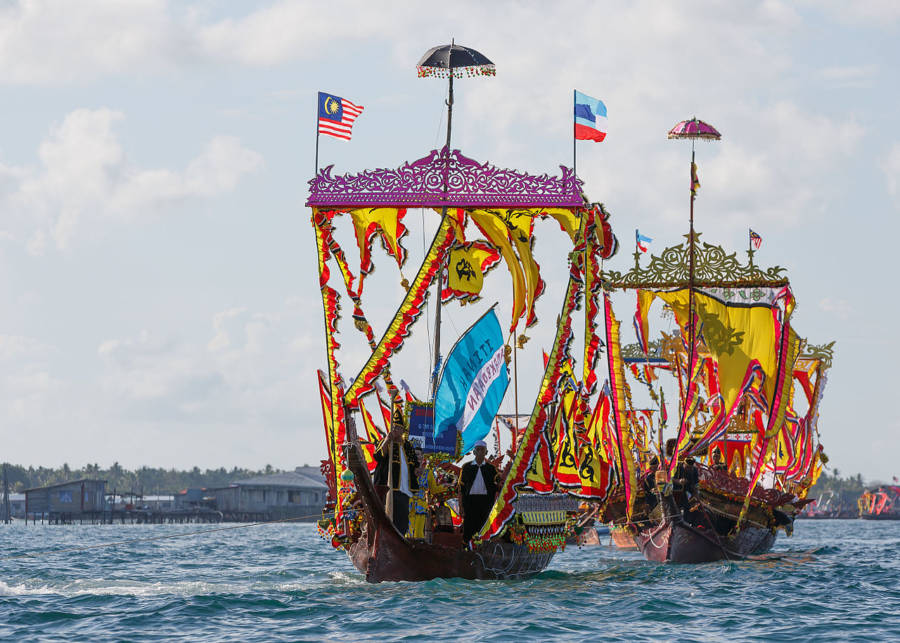
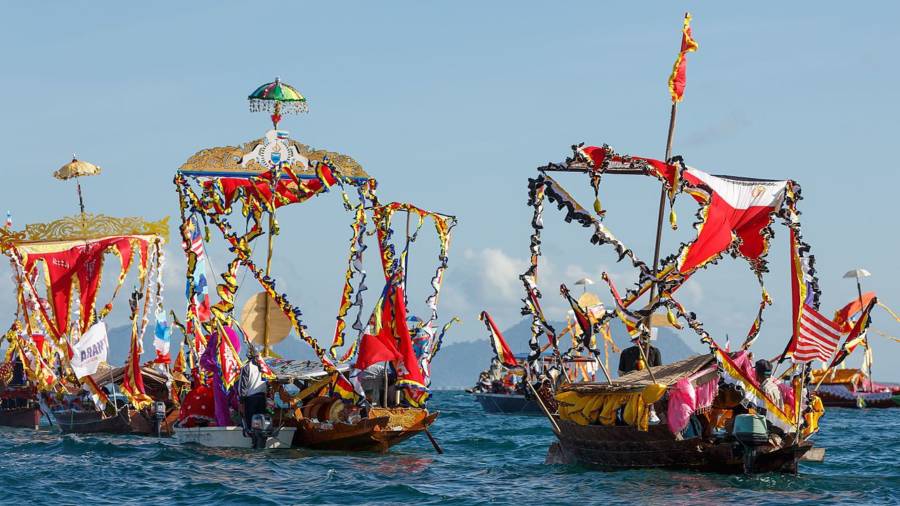
CEphoto/Uwe Aranas/Wikimedia CommonsTwo ornate lepa boats at a regatta in Semporna, Malaysia. 2015.
As such, the Bajau still spend plenty of time on the water, but the ways of their ancestors are slowly dying out. Part of this is due to the growth of the global fishing trade, which has destroyed ecosystems and decimated the population of sea creatures. Bajau fishermen have been pressured to adopt destructive commercial tactics — like using dynamite or poison to kill fish before harvesting them — and add engines to their boats to be more productive.
Still, for the Bajau people, fishing isn't just a trade, and the water isn't just a resource. At the heart of their identity is their relationship with the ocean and its inhabitants. When it comes to conservation, it's not just about conserving the marine life, but their culture as well — and the waters they've called home for centuries.
After this look at the Bajau people, go inside the lives of Mongolia's 21st-century nomads. Then, learn about the Korowai people, the purported cannibal tribe of Indonesia.