Less than three weeks before her 100th birthday, Betty White died from a stroke at her Los Angeles home on December 31, 2021.
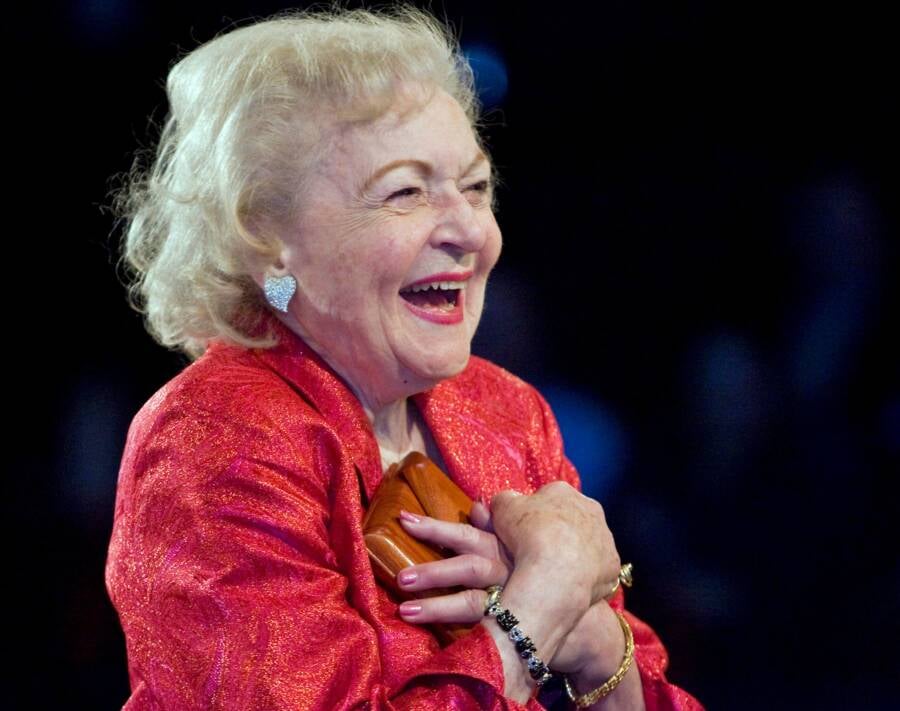
Sipa USA/Alamy Stock PhotoIconic actress Betty White suffered a stroke six days before her death at the age of 99.
Betty White was one of America’s most beloved celebrities. Known for starring in The Golden Girls and The Mary Tyler Moore Show, she was a legendary actress and comedian. She also successfully reinvented herself time and time again throughout her long life, winning the hearts of generations around the world. As she approached the age of 100, it seemed like she might be adding “centenarian” to her long list of accomplishments.
Sadly, just weeks before her 100th birthday, Betty White suffered a stroke on Christmas Day that would ultimately claim her life six days later, on Dec. 31, 2021. She reportedly had no other illnesses leading up to her death, and while she was physically frail, her agent and friend Jeff Witjas said that she was still “all there” mentally, and “her sense of humor was there.”
She died peacefully in her sleep at her Los Angeles home, and the last thing she reportedly said attests to a life that was full of love: “Allen,” the name of her late husband Allen Ludden, who had succumbed to cancer in 1981. Despite her heartbreaking loss, her own lifelong optimism helped turn what would otherwise be considered a tragedy into a celebration of life instead.
White also had a remarkably positive view on aging. As she famously wrote in her memoir, If You Ask Me (And of Course You Won’t), “If one is lucky enough to be blessed with good health, growing older shouldn’t be something to complain about. It’s not a surprise, we knew it was coming — make the most of it.” And make the most of it she did.
The Early Life Of Betty White
Long before she graced television screens across the nation, Betty Marion White was a young girl living in Oak Park, Illinois. Born on Jan. 17, 1922 to Horace and Tess White, Betty would only spend the first two years of her life in Oak Park, before the family packed their bags and set out for Los Angeles.
Here, the young Betty White first dreamed of one day becoming a zookeeper or a park ranger. Then, she fell in love with performing.
Throughout her school years, she appeared in various school plays, reflecting once to NPR that the “show biz bug” had already bitten her by the time she graduated high school in 1939. She had to put any plans on hold, however, when the world was plunged into World War II. Before long, White joined the American Women’s Voluntary Services, driving a delivery truck to support the war effort and lifting the spirits of soldiers as best she could.
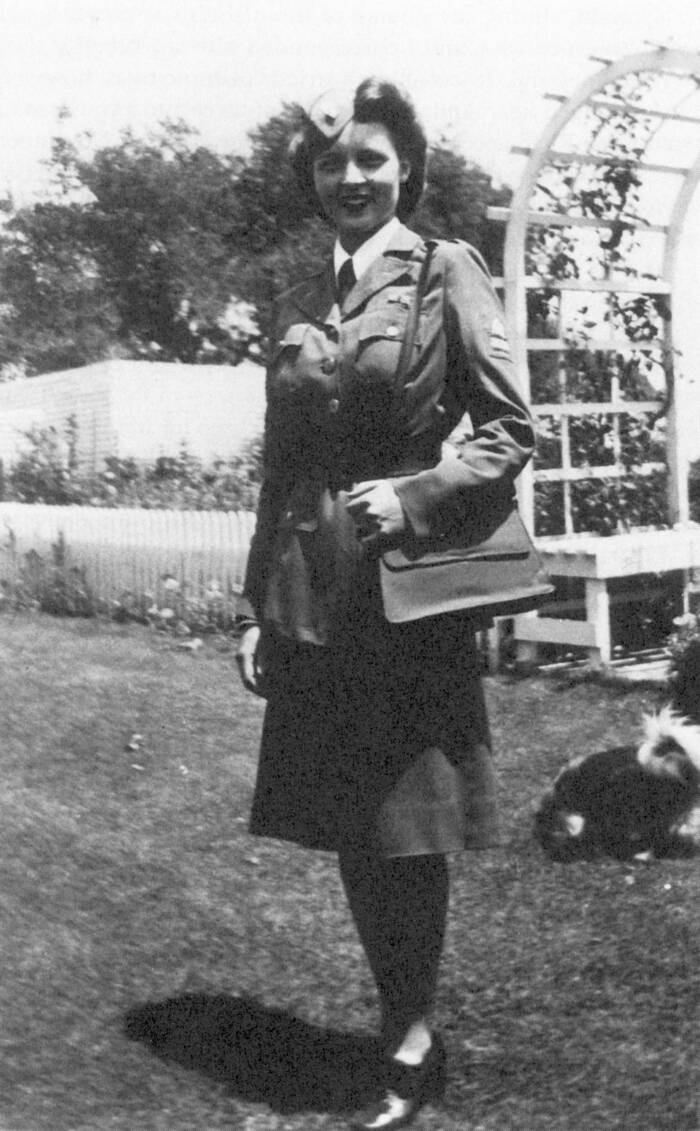
Betty White Ludden TrustBetty White in her American Women’s Voluntary Services uniform.
By the time the war ended, White found herself in drastically different circumstances. She was married now, to an Army pilot and chicken farmer named Dick Barker, and living in Ohio, seemingly set to settle into the life of a Midwestern housewife. Just four months into that marriage, though, she apparently realized that it was not the life she wanted. The couple separated, and White revisited her dream of being a performer.
Her professional career actually didn’t begin in front of the camera, but behind a microphone. Told she wasn’t photogenic enough for on-camera jobs, Betty White instead began working in radio to get her foot in the door.
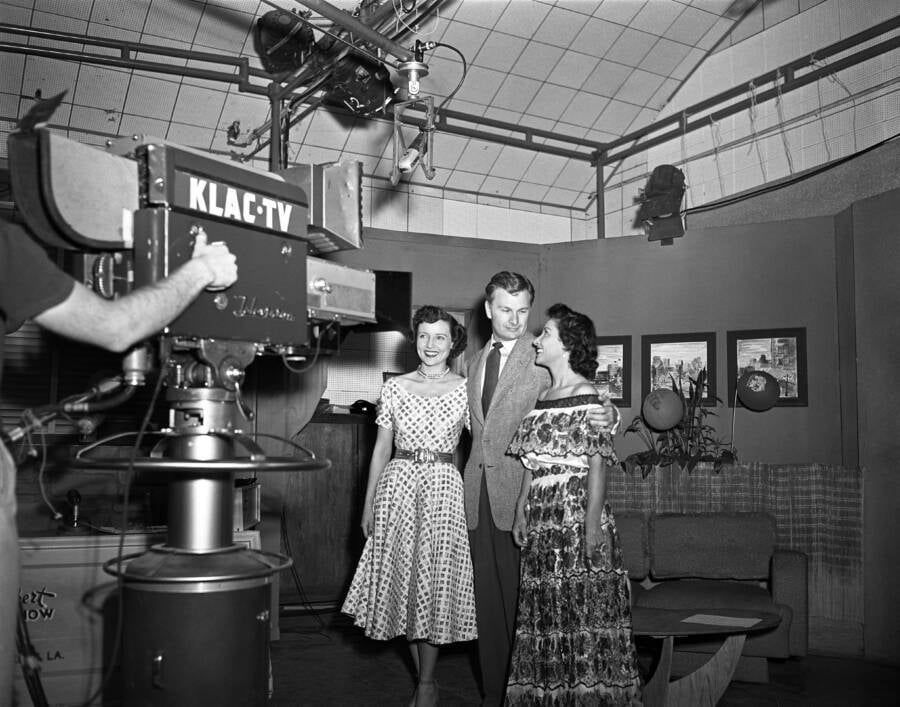
Nigel Dobinson/Getty ImagesBetty White and Eddie Albert on Hollywood on Television in 1952.
It paid off, as by 1949, she was co-hosting the televised talk show Hollywood on Television, which broadcasted live for five and a half hours a day, six days a week. To say it was exhausting would be an understatement, but it also allowed White to sharpen her improvisational skills and comedic timing — assets that would be invaluable for her seven-decade-long career.
Career-Defining Roles In The Mary Tyler Moore Show And The Golden Girls
While Betty White found some early success producing and starring in the live-action sitcom, Life With Elizabeth, during the early 1950s, it was her career pivot that cemented her as an icon. At the age of 51, White was cast as Sue Ann Nivens in The Mary Tyler Moore Show.
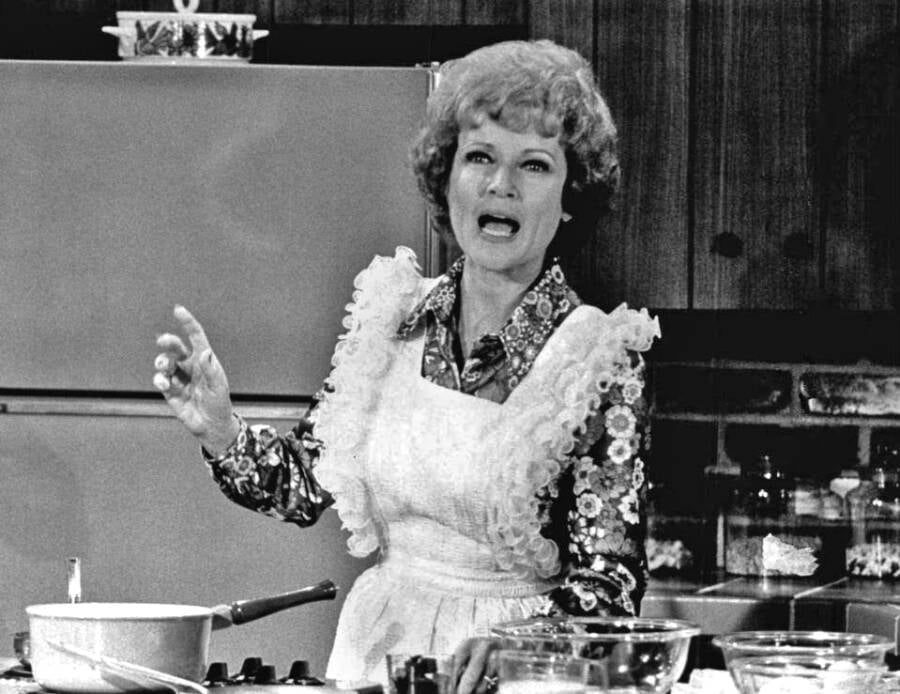
Wikimedia CommonsBetty White as Sue Ann Nivens.
Sue Ann Nivens proved that White could play more than just the “girl next door.” She could be sickly sweet or a man-eating viper. The role proved her skills so well, in fact, that she won two Emmys for her performance.
Of course, White would later take on another career-defining role: Rose Nylund in The Golden Girls. Portraying a different character, who was sweet yet scatterbrained, White once again struck gold. The chemistry between White, Bea Arthur, Rue McClanahan, and Estelle Getty established the show as a cultural touchstone, even decades after its finale. Betty White was the last of the show’s stars to die, and she spoke about missing her friends.
“I’m the last of the old broads,” she said in 2010, “and I miss them very, very much. But [The Golden Girls] was such a great experience. We loved each other, it was that simple.”
That same year also saw a massive resurgence of White’s career. As she said, she was the last Golden Girl alive at that point, but it was clear that she was still sharp as ever. And at 88 years old, she witnessed a level of interest in her as an actress that few others had ever experienced.
Betty White’s Final Reinvention
Betty White’s “third act,” so to speak, began partly due to her memorable appearance in a Super Bowl commercial for Snickers.
In the ad, she played a character named “Mike” who looks like an older lady when he’s hungry, but once the character eats a Snickers bar, “Mike” looks like a young man once more. It was part of the brand’s “You’re not you when you’re hungry” campaign, which was a huge success.
The commercial was so popular that it prompted a Facebook campaign titled, “Betty White to Host SNL (please?),” which garnered signatures from hundreds of thousands of fans. Lorne Michaels listened, and on May 8, 2010, White became the oldest person to ever host Saturday Night Live, a performance that earned her a seventh Emmy Award.
“When I first heard about the campaign to get me to host Saturday Night Live, I didn’t know what Facebook was, and now that I do know what it is, I have to say, it sounds like a huge waste of time,” she quipped.
Her career resurgence wasn’t just a brief flicker, either. It led to a starring role in the sitcom Hot in Cleveland, which ran for six seasons. White was working harder in her 90s than some actors do in their prime. Her energetic demeanor gave the impression that nothing could stop Betty White — except for death.
Inside Betty White’s Heartbreaking Death
As Betty White’s 100th birthday approached, many were sure that she would be around to celebrate the milestone. People magazine, for instance, was so confident that White would live to reach 100 that it prematurely published a cover celebrating her birthday just a few days before her death.
Even White herself seemed confident about her health. Just 11 days before her death, she had recorded a video message for her fans, which was intended to be shared on her 100th birthday. In the clip, she appeared clear-eyed and radiant, saying, “I just want to thank you all for your love and support over the years. Thank you so much — and stick around!”
But on Christmas, White suffered a “mild stroke” at her home, as one source told People. Mild or not, it was more than White was able to handle. Six days later, on Dec. 31, 2021, Betty White died in her sleep.
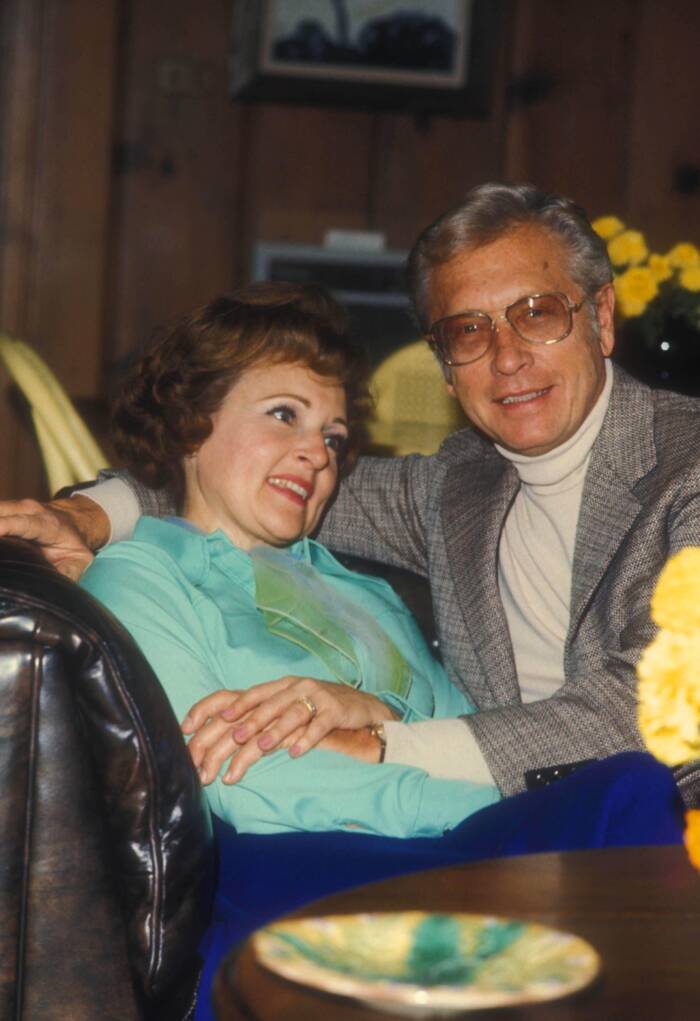
ZUMA Press, Inc./Alamy Stock PhotoBetty White with her third and last husband, Allen Ludden.
“Even though Betty was about to be 100, I thought she would live forever,” her agent and friend Jeff Witjas said. “I will miss her terribly… I don’t think Betty ever feared passing because she always wanted to be with her most beloved husband Allen Ludden. She believed she would be with him again.”
Allen Ludden, who was married to Betty White for 18 years, tragically died from stomach cancer in 1981. White never remarried, and as Business Insider reported, Betty White’s assistant had told Carol Burnett shortly after White’s death that the last word out of her mouth was “Allen.”
It’s difficult to know for certain if that was true, but given that White had always referred to Ludden as the love of her life, perhaps she truly was ready to reunite with him at the end.
One thing that we do know for sure is that Betty White once said she had “no fear or dread of death” and praised her mother’s approach to dying: “She said, ‘We know we have managed to find out almost anything that exists, but nobody knows… what happens at that moment when it’s over.’ And she said, ‘It’s the one secret that we don’t know.’ So whenever we would lose somebody very close and very dear, she would always say, ‘Well, now he knows the secret.’ And it took the curse off of it somehow.”
After reading about Betty White’s life and death, read about the death of actor Luke Perry. Or, learn how Hollywood icon Audrey Hepburn died.