By the time the SS Daniel J. Morrell sank in Lake Huron on November 29, 1966, it had become known as the "Queen of the Lakes" due to its unparalleled duration of service.

Historic Collections of the Great Lakes/Bowling Green State UniversityThe SS Daniel J. Morrell, the Great Lakes freighter that sank in Lake Huron in 1966.
Six years before the Edmund Fitzgerald sank in Lake Superior, inspiring the song “The Wreck of the Edmund Fitzgerald,” another ship met a grisly end in the Great Lakes. The SS Daniel J. Morrell was on its last trip of the season when a storm in Lake Huron tore it apart in November 1966.
Unlike the sinking of the Edmund Fitzgerald, in which the ship’s entire crew perished, the sinking of the Daniel J. Morrell left one survivor. He later gave a harrowing account of the ship’s final moments, and offered a surprising reason for why he may have survived while the rest of the crew died.
This is the story of the SS Daniel J. Morrell, the doomed Great Lakes freighter that catastrophically sank into the icy waters of Lake Huron on November 29, 1966.
Before Its Final Voyage, The SS Daniel J. Morrell Was “Queen Of The Lakes”
By the time it set out on what would become its final voyage, the SS Daniel J. Morrell was already legendary as the “Queen of the Lakes.”
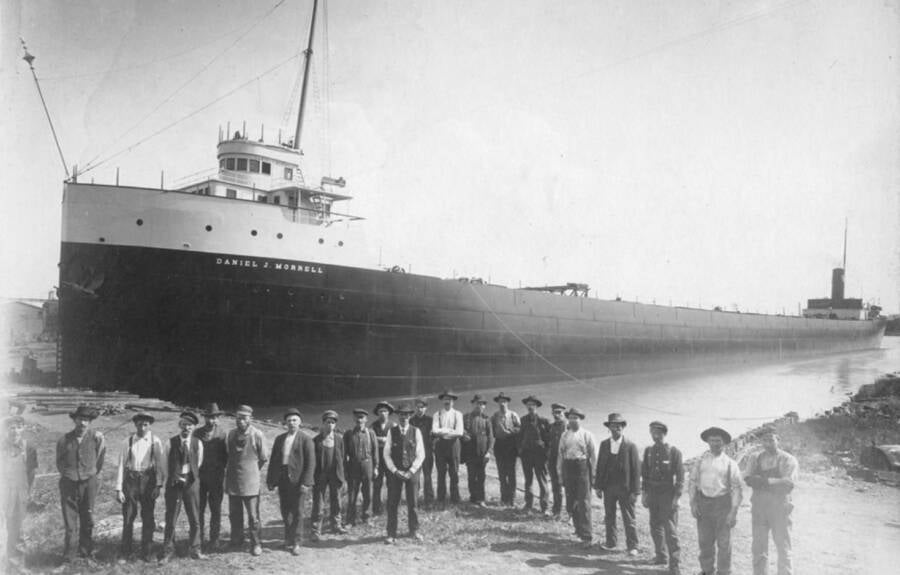
Wikimedia CommonsThe SS Daniel J. Morrell just after construction was completed in 1906.
Built by the West Bay City Ship Building Company and launched in 1906, the Daniel J. Morrell was a 600-foot, 12,000-ton Great Lakes cargo freighter.
It was named for Daniel Johnson Morrell, a Republican congressman who is perhaps best known for his prescient warning about the danger of the South Fork Dam in South Fork, Pennsylvania. Four years after Morrell’s death in 1885, the dam failed and killed more than 2,000 people in neighboring Johnstown.
The ship that bore Morrell’s name, however, sailed without incident for many years. It carried bulk cargo like steel in the Great Lakes and, by November 1966, was preparing to end its season before the start of winter.
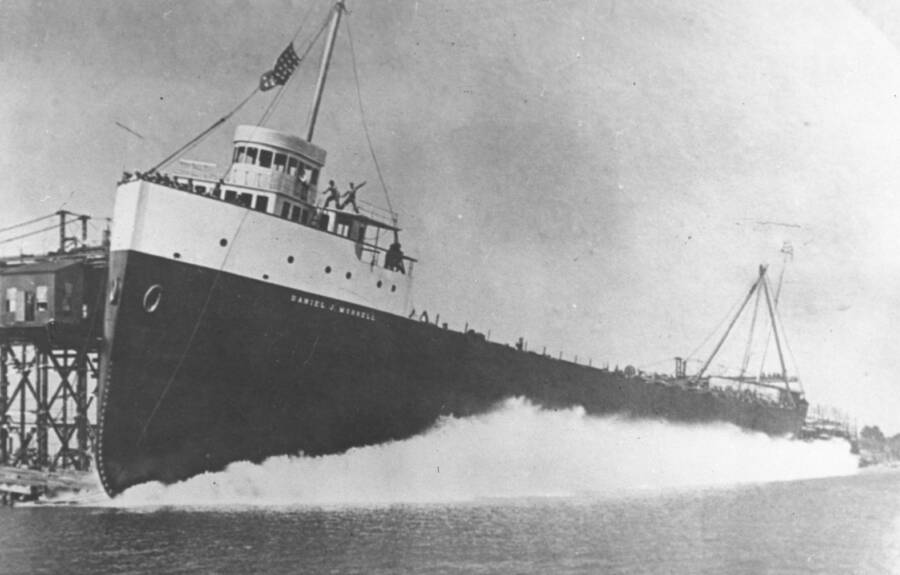
Public DomainThe launching of the Daniel J. Morrell in 1906.
But the Daniel J. Morrell was tapped for one more journey after another vessel experienced mechanical problems. As the Detroit Free Press reports, the ship set out on November 26, 1966 for its last trip of the season. It sailed from Buffalo, New York toward Taconite Harbor, Minnesota, in order to pick up a shipment of ore.
But the Daniel J. Morrell would never make it there.
The Sinking Of The Daniel J. Morrell In 1966
As the Huron Daily Tribune reports, the Daniel J. Morrell was accompanied by its sister ship, the Edward Y. Townsend. But as a winter storm began to gather, the Edward Y. Townsend sought shelter in the St. Clair River. The Daniel J. Morrell, however, continued north into Lake Huron.
In the early morning hours of November 29, 1966, the Daniel J. Morrell found itself battered by 70 mph winds, snow, and waves that soared up to 35 feet into the air. The ship was tossed like a child’s toy in the icy waters.
Its final moments were later memorialized by Dennis Hale, the only survivor of the sinking, who was then a 26-year-old watchman.

Library of CongressLike the Titanic, the Daniel J. Morrell split in two, then sank into icy waters.
“A little before 2 a.m. on the 29th I was awakened by a loud bang, which I first thought was the bow anchor shifting in its mounting,” Hale recalled, according to the National Museum of the Great Lakes. “Walking in the darkness I made my way aft to the spar deck… It was immediately evident the ship was breaking apart in the middle.”
Hale, wearing only his shorts, rushed back to his cabin to get dressed, but was only able to find a peacoat to slip over his life jacket. Then he and the rest of the 29-man crew then tried to make it to the lifeboats, but before they could, the Daniel J. Morrell cracked and broke apart.
“The raft was supposed to float off as the ship sank, but our entry into the water was to be anything but gentle,” Hale recounted. “Sitting on the raft I watched with horror as the deck cracked and tore open from starboard to port behind us. The gaping maw of the empty cargo hold became visible as the weight of the engines in the stern almost lifted it out of the water… At one point I was sure that the stern was going to drive up over us and kill us all, so I closed my eyes and awaited the inevitable.”
The crew was plunged into the water; only Hale and three others made it to the life raft. When they did, they thought salvation had come in the form of a passing ship — only to realize it was the floating stern of their own vessel, still drifting in the water “like a great wounded beast with its head shot off.”
Furthermore, the men hadn’t had time to send a distress signal. As Hale later told NPR, the ship sank just eight minutes after it sounded its alarm. No one knew that it had gone down, and no one knew to look for them.
Stuck in the middle of the lake, battered by freezing wind and water, the other three crewmen died. Hale nearly died too — but miraculously, he was spotted by a Coast Guard helicopter and rescued 38 hours later. He was surrounded by his comrades’ corpses and was himself so close to death that a priest gave him last rites.
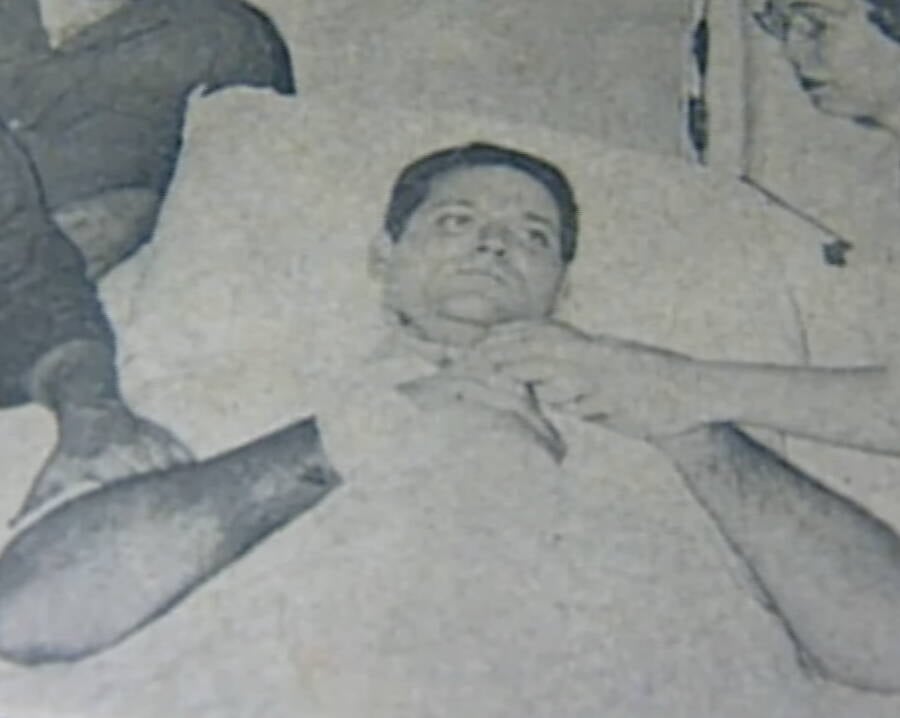
Great Lakes Shipwreck Museum/FacebookDennis Hale, the only survivor of the Daniel J. Morrell, in the hospital.
He believes that he survived because of how little clothing he wore. Unlike the others, he wasn’t encased inside garments that had become encrusted with ice.
Why The Doomed Cargo Freighter Sank In Lake Huron That Cold November Night
The Daniel J. Morrell had sunk in 145 feet of water, 20 miles northeast of Harbor Beach, Michigan. Its wreck was discovered by shipwreck hunters in 1979, broken in two pieces like the Titanic. Clocks inside the two halves recorded that the stern of the vessel sank three hours before the bow did.
According to Shipwreck Explorers, the sunken stern of the ship is frozen in time. Divers can see lifeboats still attached to its side, a life ring on the stairs, and even the crew’s dishes still in the galley.
But why did the Daniel J. Morrell sink?
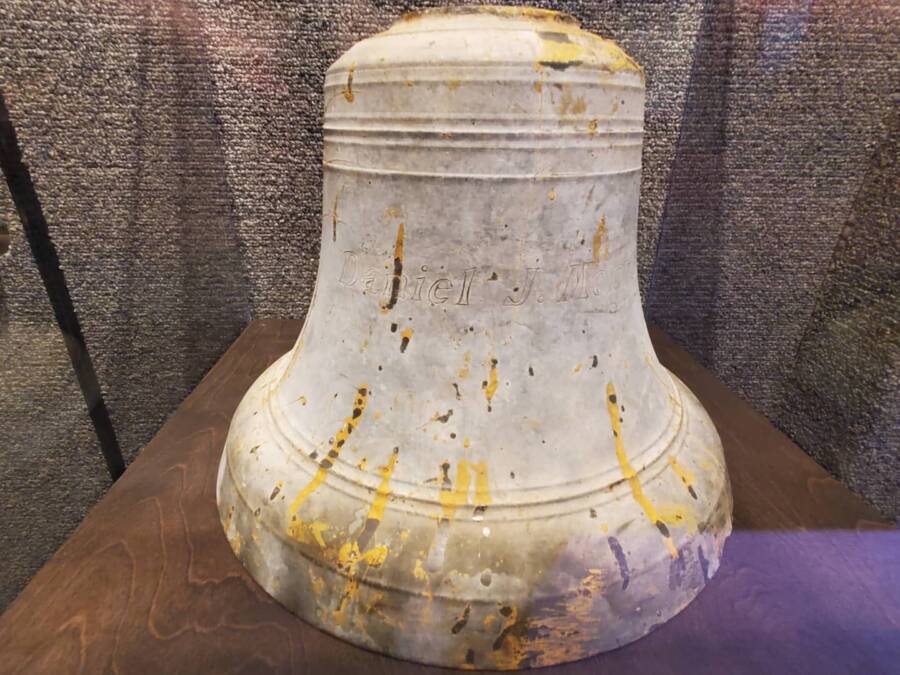
Great Lakes Shipwreck Museum/FacebookThe bell from the Daniel J. Morrell.
As the Huron Daily Tribune notes, ships built before the late 1940s were built with steel that had a high sulfur content. By the mid-20th century, this would be resolved. But ships like the Daniel J. Morrell that were built in the first half of the 20th century, were vulnerable to cold temperatures. The high sulfur in the steel became brittle in the cold, which could be catastrophic if the ship then encountered rough waters.
On November 29, 1966, that’s what happened to the Daniel J. Morrell.
But though the shipwreck is not as famous as the sinking of the Edmund Fitzgerald, which took place six years later and was immortalized in song by Gordon Lightfoot, one man always remembered it. Dennis Hale, who died in 2015, mourned the loss of the ship and its crew, and struggled with survivor’s guilt in the years that followed.
“I was glad to be alive but questioned why I had lived when all my shipmates perished,” he said. “The Morrell crew was the closest thing to a real family I had ever known, and I mourned their loss deeply.”
After reading about the Daniel J. Morrell, the Great Lakes freighter that sank in 1966, discover the stories behind some of history’s most harrowing shipwrecks. Then, go inside the chilling legends of some of history’s eeriest ghost ships.