Perhaps the Union's most important spy, Elizabeth Van Lew freed prisoners and passed along crucial information gathered at the Confederate capital of Richmond.
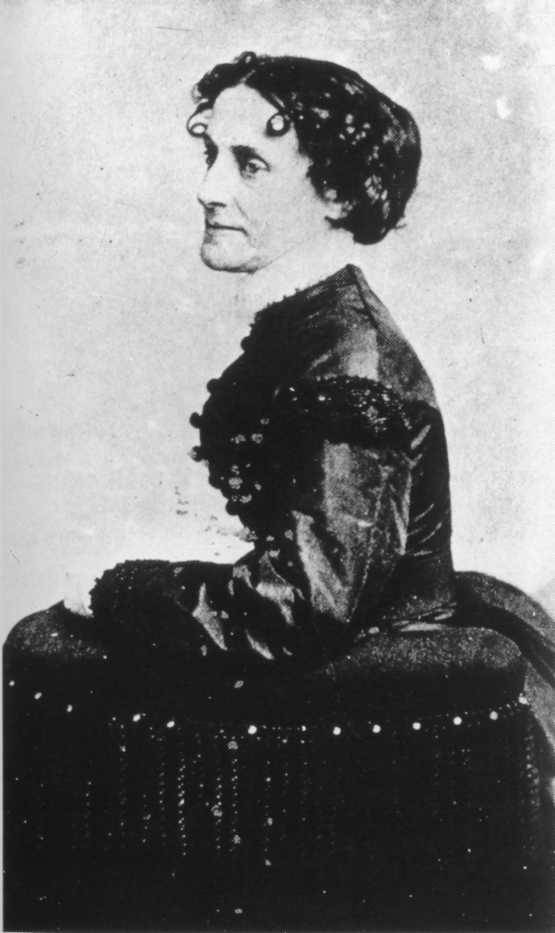
Wikimedia CommonsThe daughter of a wealthy Virginia slaveholder, Elizabeth Van Lew rejected the trappings of her upbringing and instead pursued a path of fierce abolitionism.
Spies played a crucial part on both sides of the conflict during the American Civil War. And because everyone involved was American, it was easier than it might have been during a foreign engagement to successfully plant spies who were able to blend in with the locals and relay important information to their commanders.
To further allay suspicions, these incognito agents might sometimes come in unexpected forms. Being a woman, for example, could often be a great boon to a wartime spy. Women were simply viewed with less suspicion and men would be less guarded with what was said in their presence.
Perhaps the most famous of these female Civil War spies, Belle Boyd used her feminine charms to the fullest extent while acting as a spy for the Confederacy.
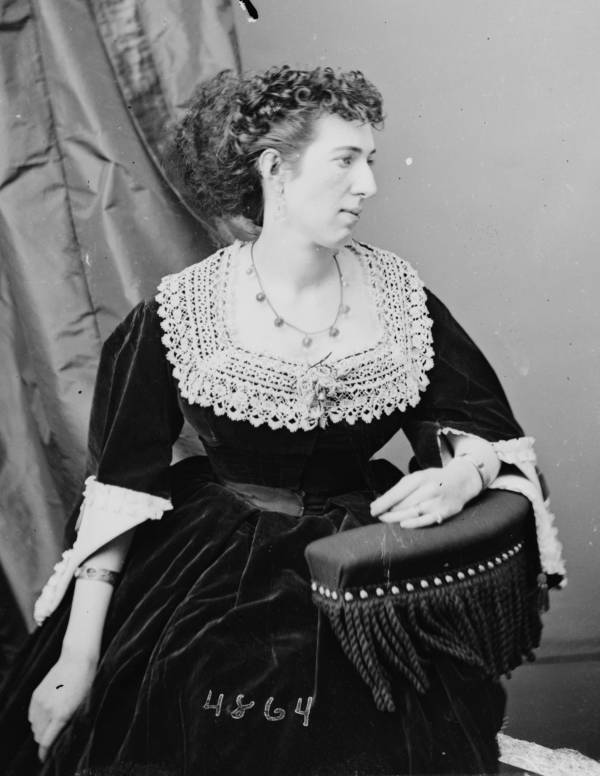
Wikimedia CommonsBelle Boyd, another of the most famous female spies of the Civil War.
This debutante daughter of a slaveholder, known as the “Siren of Shenandoah,” Boyd lived in Union-occupied Martinsburg, Virginia and flirted with the occupying soldiers in order to extract information while also smuggling weapons to Confederate generals stationed nearby.
And just as fascinating as Boyd’s story is that of one of her most famous Union counterparts, operating right nearby in Virginia: Elizabeth Van Lew.
Though she was born into a slaveholding family, Elizabeth Van Lew rejected her upbringing and became a fierce abolitionist. And when the Civil War broke out, she sprang into action as a spy for the Union, pulling off daring missions ranging from freeing prisoners to gathering crucial intelligence inside the Confederate capital.
This is the story of Elizabeth Van Lew.
Elizabeth Van Lew’s Early Life In A Family Of Virginia Slaveholders
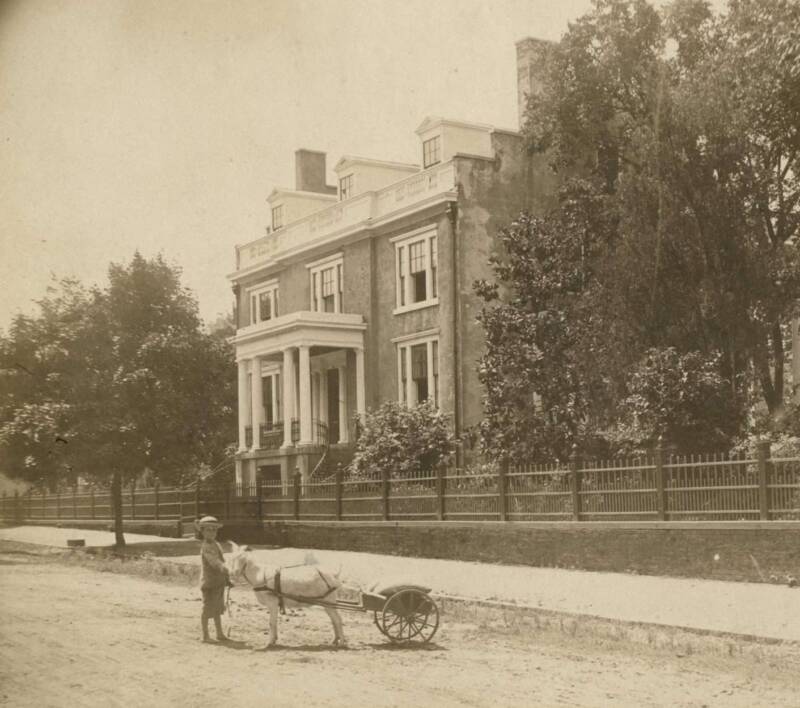
Encyclopedia VirginiaThe Van Lew house in Richmond, Virginia.
Like Boyd, Elizabeth Van Lew — born October 15 or 25, 1818; sources vary — was the daughter of a wealthy Virginia slaveholder. However, instead of attending a fancy finishing school as Boyd had, Van Lew was educated per her family’s wishes at a Quaker school in Philadelphia, which introduced her to fiercely abolitionist ideas. When her father passed away in 1843, Van Lew promptly freed all of the slaves she had inherited, then used the rest of the $10,000 that had been left to her to buy their family members and free them too.
But Elizabeth Van Lew’s ideas were generally unwelcome in her home city of Richmond, which served as the Confederate capital for the majority of the Civil War.
Although Van Lew tried to avoid suspicion and described herself as just “a good Southerner who opposed slavery,” many locals didn’t trust her — particularly after she and her mother declined to join the other wealthy ladies of Richmond in making clothes for Confederate soldiers.
Soon, however, Elizabeth Van Lew’s resistance to the Confederacy shifted from a passive variety to a more active one.
Elizabeth Van Lew Becomes A Union Spy
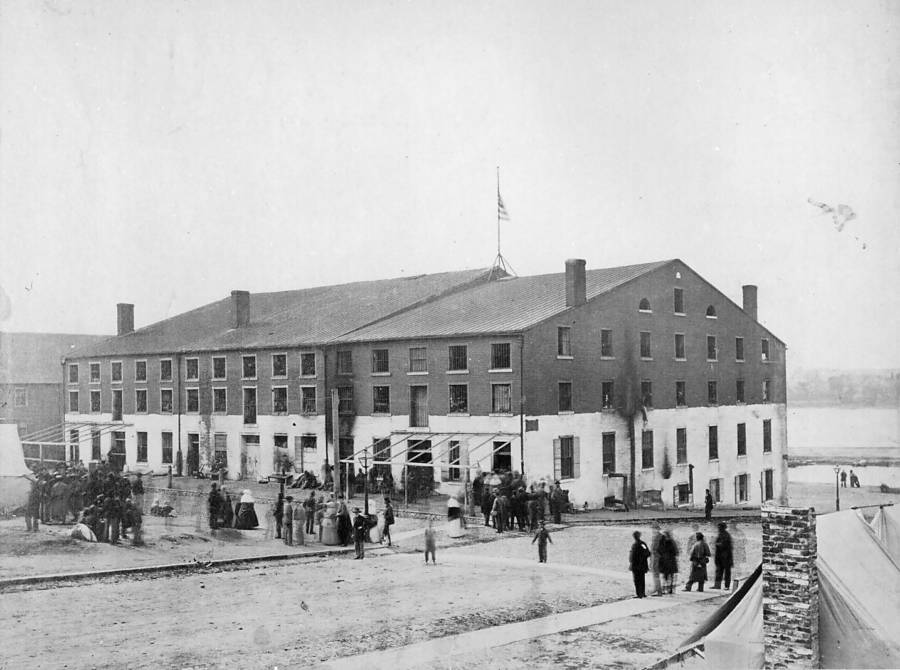
Wikimedia CommonsElizabeth Van Lew smuggled messages from Union soldiers kept in Richmond’s Libby Prison, pictured here in 1865.
Elizabeth Van Lew made her first foray into the world of Civil War espionage when she began visiting Union soldiers in Richmond’s Libby Prison during the summer of 1861. Under the guise of bringing them blankets and books, she would smuggle out information that the prisoners had overheard from their captors and send it along to Union generals using a cipher code that she herself had invented.
In addition to information about the Confederate Army, the Union prisoners also gave her carved jewelry made of bones or buttons as tokens of their appreciation. The jewelry is kept at the New York Public Library in its Van Lew Papers collection, along with her cipher and personal diary entries.
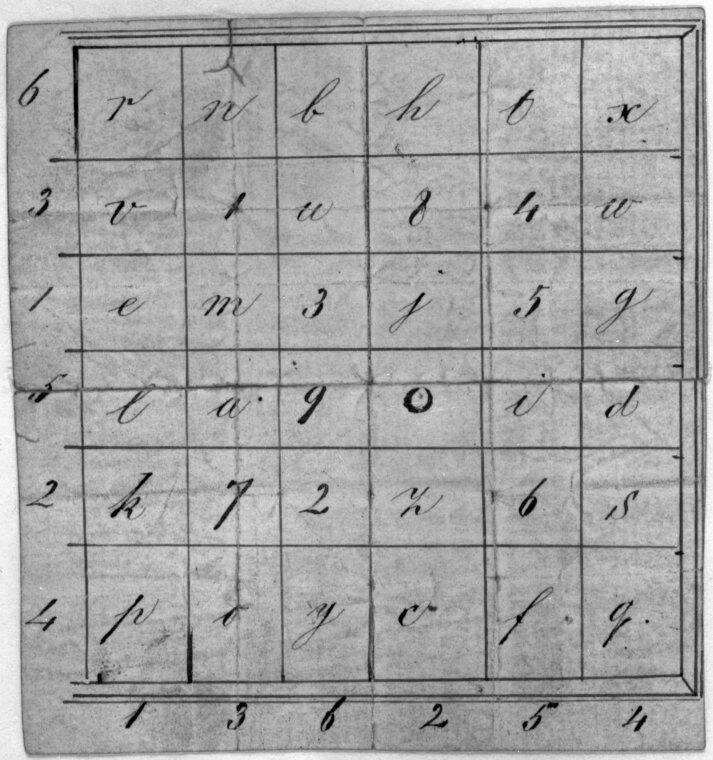
New York Public LibraryThe cipher used by Elizabeth Van Lew to communicate with Union prisoners.
In 1861, Van Lew met and aided Paul Joseph Revere, the grandson of the more famous Revolutionary War rider Paul Revere, when he was a Union prisoner in the Henrico County Jail. Van Lew stayed in touch with the Revere family into her old age, relying on the money they sent her regularly as compensation for her aid throughout the war.
As the war carried on and everyone became more and more suspicious, Van Lew decided to fully embrace the nickname she had long ago been given: “Crazy Bet.” Purposefully muttering to herself in the streets and looking constantly disheveled, Van Lew appeared to the rest of society as a mere crackpot spinster who harbored some outlandish ideas about slavery.
This ruse deflected suspicion away from Van Lew as she helped Union prisoners escape right out from under the Confederates’ noses. She would use her connections as a longtime, wealthy resident of the area to get Union sympathizers appointed to the prison staff. These staffers would help set prisoners free while Van Lew provided information about safe houses and even used her own mansion to hide a few fugitives.
The Van Lew Spy Network Goes To Work In The Confederate Capital
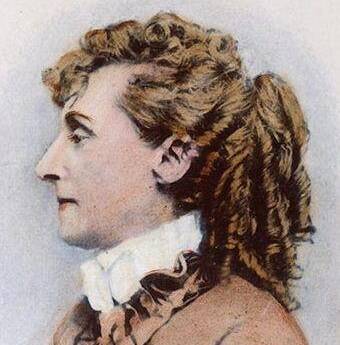
NPSPerhaps the Civil War’s most important spy, Elizabeth Van Lew did everything from freeing Union prisoners to delivering encoded messages containing critical intelligence to planting operatives inside the Confederate capital.
Furthermore, Van Lew often used her Black household servants to gather information in the Confederate capital.
Wearing shoes with tiny storage spaces concealed in the soles or carrying a crate containing hollowed-out eggs to hide notes, these servants would write down and then relay information overheard inside Confederate buildings, all while appearing to go about their normal business.
One of the servants that Van Lew recruited into her spy ring was her father’s former enslaved worker, Mary Bowser, who she had freed upon his death. Van Lew even succeeded in getting Bowser a position in the house of Jefferson Davis, the President of the Confederacy himself.
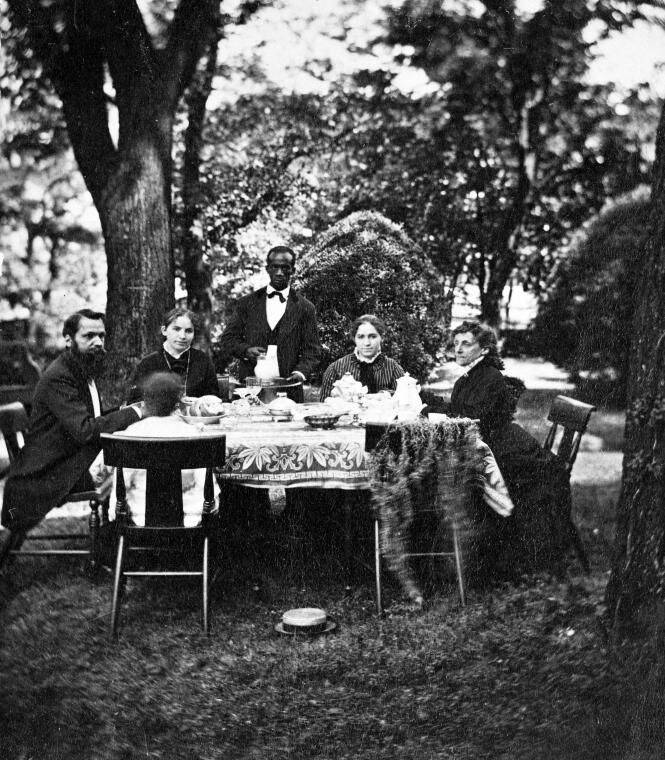
New York Public LibraryElizabeth Van Lew with her brother John, nieces, and servant on her mansion property.
Assuming Bowser was illiterate like many other Southern Blacks, Davis and his associates carelessly left documents containing important information out in plain sight when she was around. Little did they know that the educated Bowser would report the details of what she had seen to the rest of Van Lew’s spy ring, who in turn passed it along to the Union Army.
When the spy system set up by Bowser broke down (Bowser somehow became a target of suspicion, though it’s not known why), Bowser was forced to flee the capital in the last days of the war. As a final act of rebellion, Bowser attempted to burn down the Confederate White House, but didn’t succeed.
By the time the surging Union Army was approaching Richmond in 1865, Van Lew’s spy ring was held in such high regard that she was regularly communicating with Union General Ulysses S. Grant himself.
Elizabeth Van Lew’s Legacy In The Wake Of The War
And as Grant’s troops took the city in April, Elizabeth Van Lew finally (and literally) revealed her true colors when she raised an American flag over her house. She even managed to disperse the angry mob that had gathered in response by shouting, “General Grant will be here in town in an hour. You do one thing to my home and all of yours will be burned before noon!”
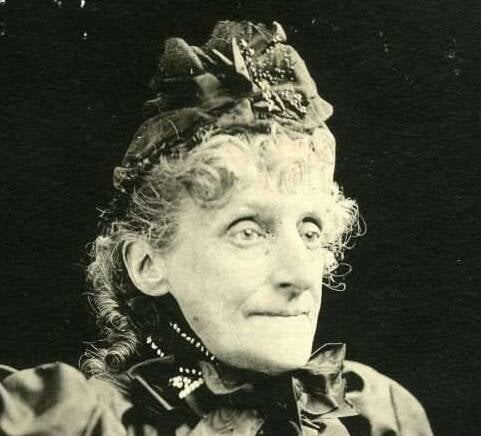
Encyclopedia VirginiaAfter the war, Elizabeth Van Lew’s fellow Southerners continued to shun her.
When the grateful general did arrive, he stopped for tea with the delighted spy-mistress, who he would later tell, “You have sent me the most valuable information received from Richmond during the war.” In 1869, Grant appointed Van Lew to be postmaster of Richmond, a position she held until she lost her job in 1877 when Rutherford B. Hayes assumed the presidency.
Despite this position in Richmond society, Van Lew remained an outcast after the Civil War came to an end. She was held in contempt by her fellow Richmonders and deprived of the social standing that had allowed her to access key military information in the first place. Until her death at age 81 on September 25, 1900, Van Lew lived off the money sent to her by families of soldiers she aided during the war.
Van Lew was inducted into the Military Intelligence Hall of Fame in 1993. Indeed, without Elizabeth Van Lew, the Union efforts in Virginia, and the course of the Civil War itself, might very well have played out a little differently.
After this look at Elizabeth Van Lew, read up on the Civil War’s most pivotal battles. Then, see some of the most powerful photographs taken during the Civil War.