Schlitzie — The Sideshow Performer Made Famous In ‘Freaks’
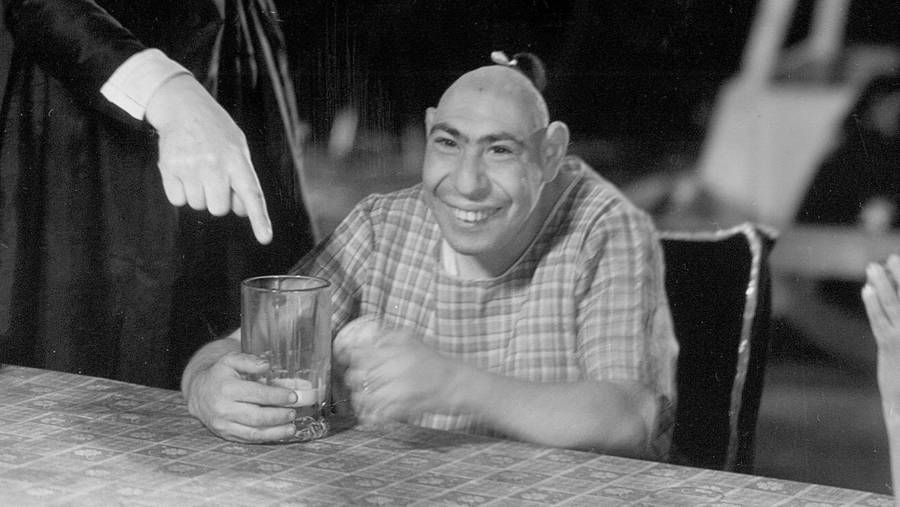
MGMSchlitzie, whose real name was possibly Simon Metz.
One of the most prolific sideshow performers of the 20th century, “Schlitzie” appeared in most major circuses of the day, including the Dobrich International Circus, Ringling Bros. and Barnum & Bailey Circus, and the Tom Mix Circus.
He was born around 1901 with a condition called microcephaly. This condition causes a small brain, skull, and head, as well as an underdeveloped body. Schlitzie, whose real name may have been Simon Metz, entered sideshow life at a young age. According to the Brooklyn Daily Eagle, his parents sold him at the age of eight to a traveling sideshow.
There, Schlitzie charmed his fellow performers with his childlike innocence. With the mental capacity of a three or four-year-old, he could only speak in short sentences and phrases. But Schlitzie also endured the taunts of jeering audiences, who called him a “freak,” “cretin,” and “moron.”
In 1932, Schlitzie got something of a big break when he was cast in the film Freaks. Though the movie was panned — The Hollywood Reporter called it an “outrageous onslaught upon the feelings, the senses, the brains and the stomachs of an audience” — it briefly made Schlitzie a star.
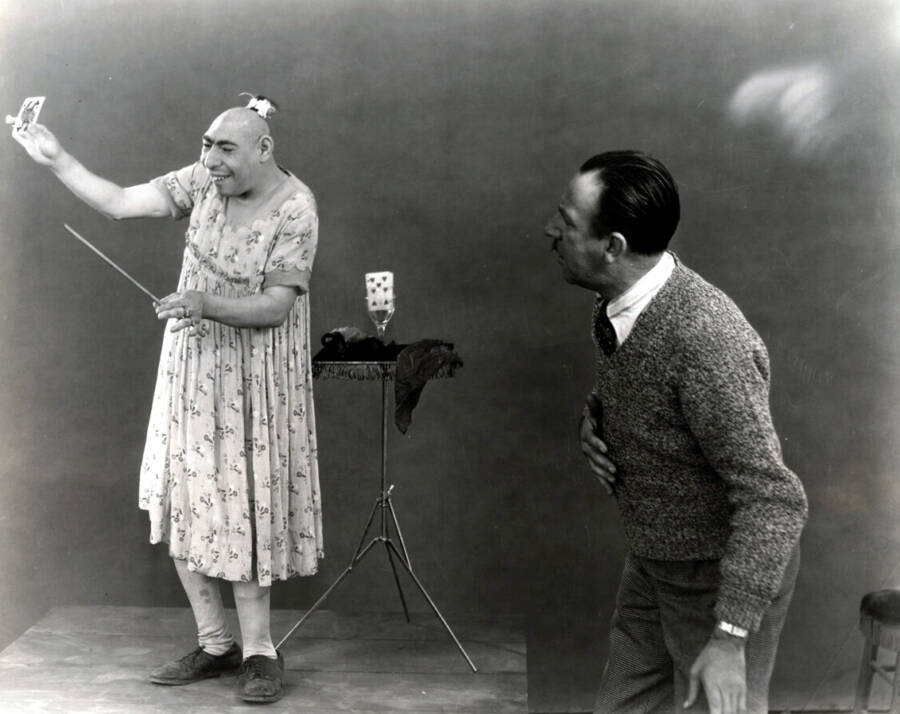
MGMSchlitzie in a scene in Freaks.
However, even fame couldn’t save Schlitzie from the harsh world of circus life. Though a chimp trainer named George Surtees took Schlitzie under his wing and cared for him like a son, Surtees died in 1965. Surtees’ daughter then decided to send Schlitzie to a mental institution in Los Angeles.
Schlitzie spent several lonely years there before a sideshow sword swallower named Bill Unks recognized him during a performance at the hospital. Unks became Schlitzie’s caretaker and brought him back on the road.
Schlitzie spent the last few years of his life performing, before retiring in Los Angeles. In 1971, Schlitzie died and was buried in an unmarked grave.
It wasn’t until 2007 that a fan raised enough money to place a black headstone on Schlitzie’s resting place, a sign of respect and acknowledgment that the sideshow performer so lacked during his life.
After learning about the tragic stories of sideshow performers, learn about Robert Wadlow, the tallest person in history. Then, see some unbelievable photographs of Andre the Giant.