Expected to fetch as much as $4 million, this original manuscript pauses for neither paragraph breaks nor chapter titles, instead presenting its epic tale of Beat Generation misadventures in one unbroken stream.
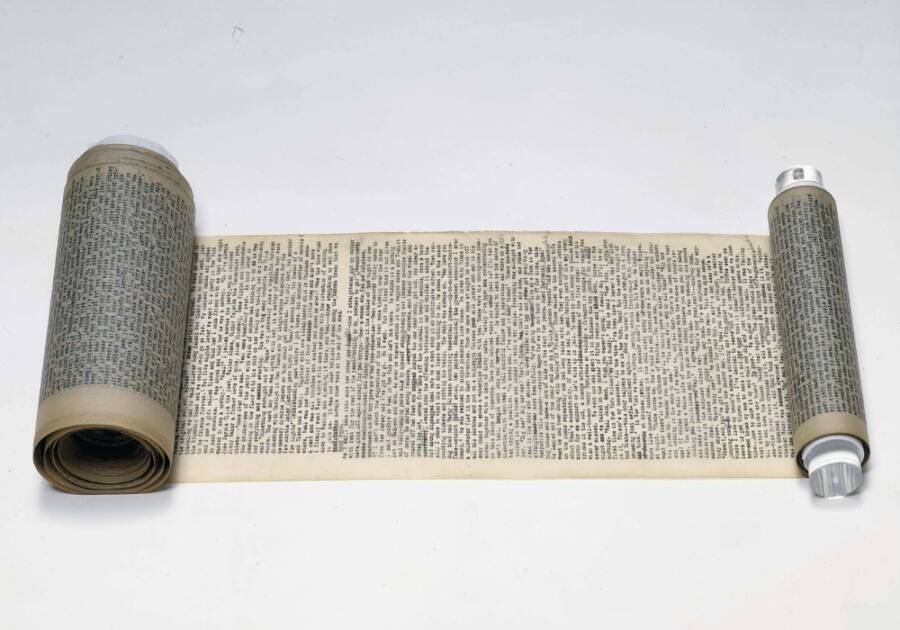
Christie’sThe scroll containing Jack Kerouac’s first draft of On the Road is 121 feet long.
In April 1951, Jack Kerouac feverishly typed out the first complete draft of his masterpiece On the Road over just a three-week period. He famously taped sheets of paper together into a makeshift scroll so that he didn’t have to stop writing in order to switch out the pages in his typewriter. Now, this original manuscript of the novel that defined the Beat Generation is heading to auction.
The scroll is expected to fetch up to $4 million at an upcoming sale of music, literature, and sports memorabilia once owned by Jim Irsay, the former owner of the Indianapolis Colts who died in 2025. The auction will also feature instruments played by The Beatles, the saddle that Secretariat wore when he won the Triple Crown in 1973, and a journal belonging to Jim Morrison, but Kerouac’s draft stands right alongside these celebrated artifacts as “one of the most important literary documents still in private hands.”
Jack Kerouac’s Scroll: The Famous First Draft Of On The Road
To this day, Jack Kerouac remains one of the defining writers of the Beat Generation, a postwar literary movement focused on anti-materialism, sexual liberation, and a refusal to conform to the conventional idea of the “American Dream.”
In the late 1940s, Kerouac began jotting down passages in his journal that would eventually become On the Road, a semi-autobiographical novel that follows the restless cross-country road trips of Sal Paradise (representing Kerouac) and his friend Dean Moriarty (based on Neal Cassady). The men travel the United States searching for freedom and meaning against a backdrop of jazz, drugs, and rebellion against American cultural norms.
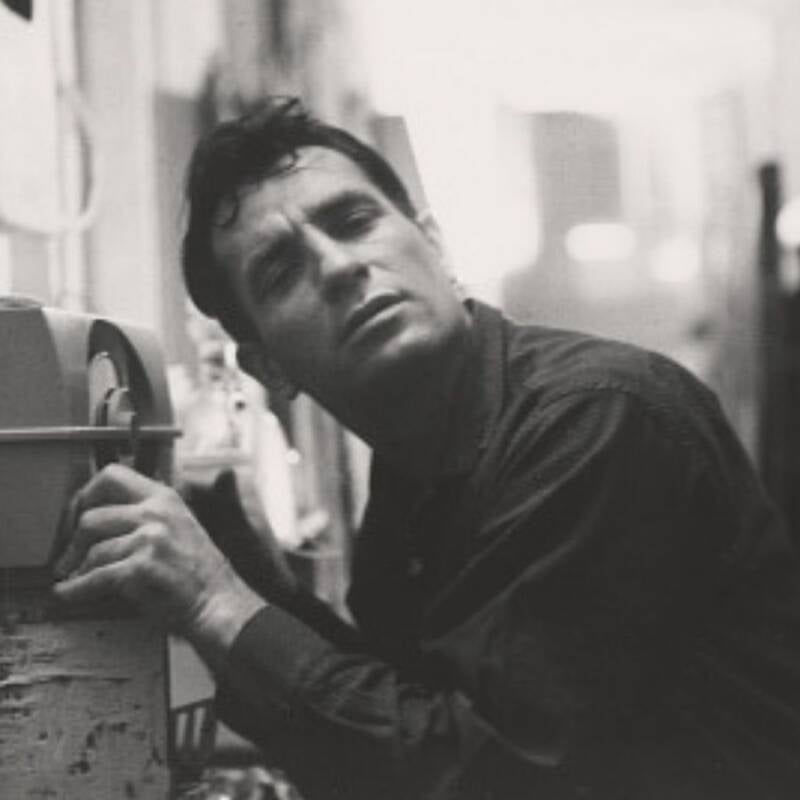
John Cohen, courtesy L. Parker Stephenson Photographs/National Portrait Gallery, Smithsonian InstitutionJack Kerouac in 1959, two years after On the Road was published.
Then, over three frenetic weeks in April 1951, Kerouac sat down to type out the entire book. He taped together sheets of tracing paper before he began so that he wouldn’t have to pause to change out pages in his typewriter. The final result was a 121-foot-long scroll.
Heather Weintraub, a books and manuscripts specialist at Christie’s, told The Guardian, “This is the original and only scroll for the first draft of Kerouac’s masterpiece. It’s widely considered to be the most iconic artifact of the Beat Generation, [and] one of the most celebrated artifacts in American literature… When you roll it out it actually looks like a road.”
The scroll hadn’t been broken into chapters or even paragraphs, and publishers wanted Kerouac to change the names of the characters, as he’d used the real names of the people they were based on in the draft. Some of the more salacious sex scenes were also cut or heavily edited. After these changes were made, it wasn’t until 1957 that Kerouac’s novel was finally published.
Once the book finally hit shelves, it achieved immediate success despite its mixed critical reviews. And today, it remains a cultural phenomenon — which makes it unsurprising that Kerouac’s original scroll is expected to sell for up to $4 million when it goes to auction next month.
The Iconic Cultural Artifacts Of The Jim Irsay Collection
Christie’s recently announced that the collections of the late Jim Irsay will be sold across four auctions in March 2026. Irsay, who died in 2025, was a businessman and philanthropist who became the general manager of the Indianapolis Colts in 1984 and the primary owner of the team in 1997.
Irsay had an extensive collection of historic Americana and memorabilia from musicians, authors, and athletes. According to a statement by Christie’s, Irsay’s “unparalleled collection weaves together some of the most significant people, literature and events of recent history.”
Kerouac’s scroll will be sold alongside instruments played by The Beatles, Eric Clapton, Kurt Cobain, Elton John, Prince, Johnny Cash, and several other world-famous musicians. The auction also includes an Apple II manual signed by Steve Jobs, Paul McCartney’s handwritten “Hey Jude” lyrics, Secretariat’s saddle, the jersey Wayne Gretzky was wearing when he scored his 500th NHL goal, a bat used by Jackie Robinson, the volleyball from the film Castaway, and dozens of other artifacts from modern history.
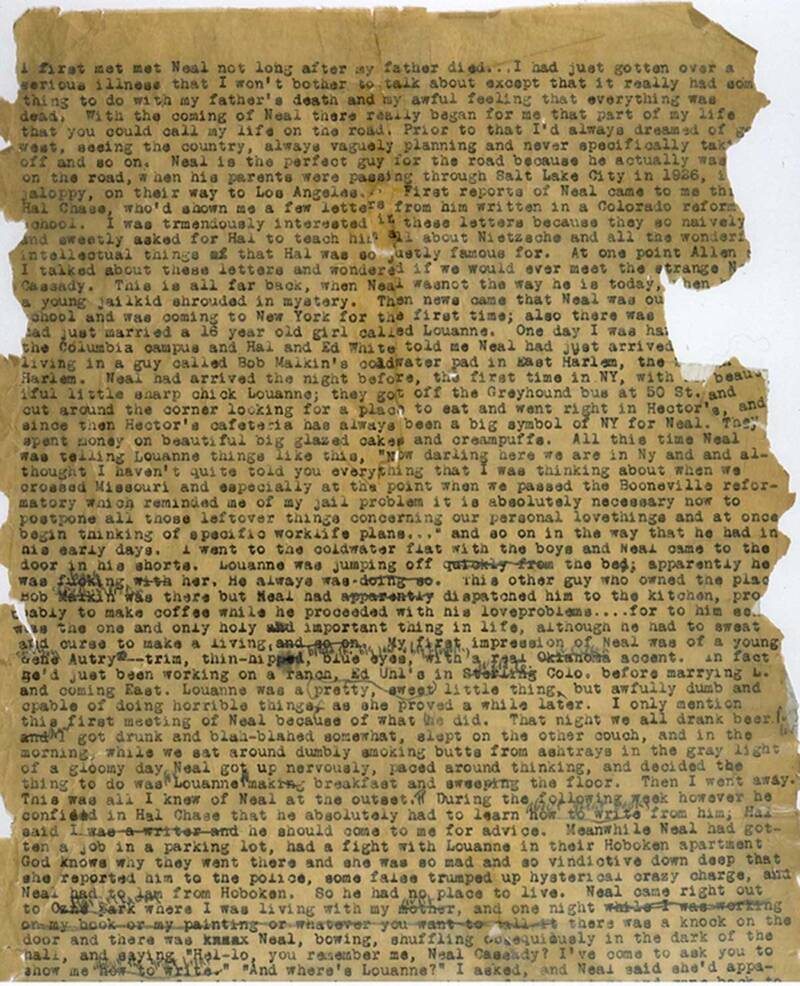
emdot/Wikimedia CommonsA closer look at the beginning of the scroll. Kerouac used “Neal” instead of “Dean” before his publisher had him change the names of the novel’s characters.
A total of 199 items will be offered for sale, but the draft of On the Road is expected to fetch more than almost anything else: Experts estimate that the scroll will sell for between $2.5 and $4 million. Only two guitars — one owned by David Gilmour of Pink Floyd and one played by Kurt Cobain in the “Smells Like Teen Spirit” music video — are expected to bring in more.
The scroll’s sale has sparked some controversy, however. Those who knew Kerouac say he would have wanted his iconic draft to belong to the public. Indeed, Jim Irsay often loaned it out for exhibitions, and it will go on display in New York City ahead of the auction.
“I personally hope that a public institution will buy it,” said Weintraub, “so that it can be seen by everyone.”
After reading about the upcoming sale of Jack Kerouac’s first draft scroll of On the Road, look through 35 photos that capture the heyday of the Beats in New York City. Then, learn about 21 historical figures who suffered from serious mental disorders.