Pablo Escobar's smiling mugshot remains perhaps the most notorious image of the powerful Colombian drug lord, and it was taken just as he began to gain the wealth and power for which he's remembered to this day.
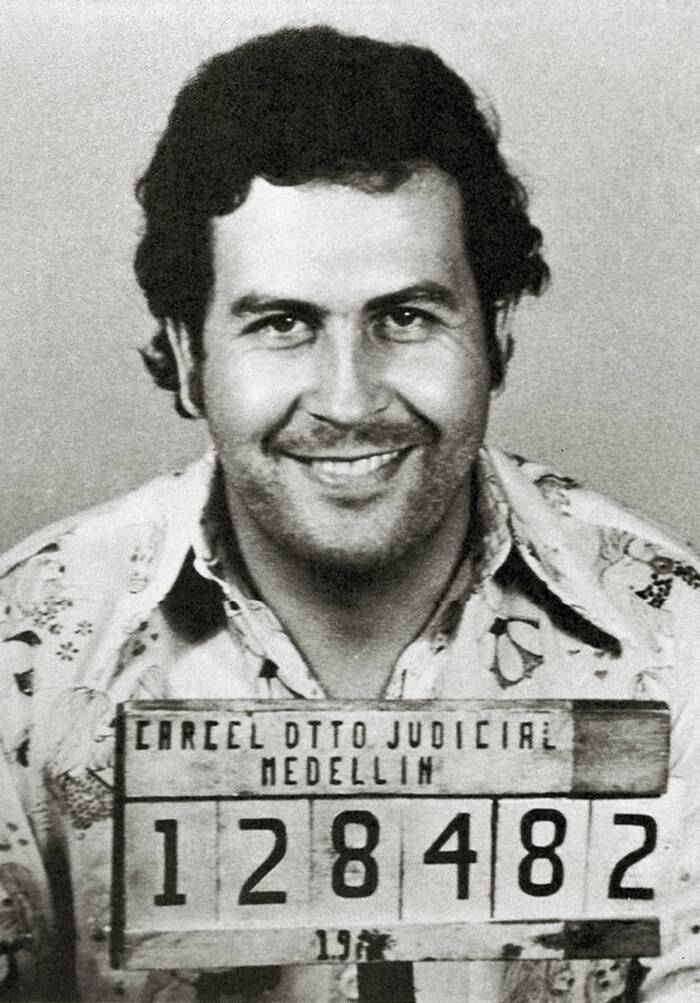
Wikimedia CommonsPablo Escobar’s mugshot, taken in May 1976.
Pablo Escobar’s mugshot has been printed on countless t-shirts and posters, many of which hang in college dorms around the world. But at the time the picture of his mugshot was taken, Escobar was still on the precipice of his infamous rise as Colombia’s biggest drug lord, a rise that would spawn untold violence and unimaginable wealth. Before then, Escobar was just another young drug smuggler looking to make his fortune.
A small-time crook who’d made his bones stealing cars, Escobar had began to run contraband, and after inevitably graduating to smuggling cocaine, Colombian authorities caught him red-handed in 1976. They processed him like any other suspect: photographs, fingerprints — and a mugshot.
Pablo Escobar’s mugshot was just a formality at the time, but has since become one of the most famous photographs in the world. Not because it captured a man capable of having everyone at the police station murdered, but because his defiant and disturbing smile revealed an unbridled confidence that, one day, he would be capable of such bloody feats.
Pablo Escobar has been glorified, celebrated, and mythologized beyond his wildest dreams, and his legacy haunts the darkest nightmares of the families forever destroyed by his crimes. And while it’s certainly only a photo, Pablo Escobar’s mugshot is an evocative image that captures the drug lord’s ruthless ambition — and utter indifference to law and order.
The Early Rise Of Pablo Escobar
Pablo Emilio Escobar Gaviria was born on Dec. 1, 1949, in Rionegro, Colombia. Raised in Medellín, he was the third of seven siblings born into abject poverty. Escobar’s father was a farmer, and while his mother was a teacher, he dropped out of school at the age of 16. Instead of spending time in class, Escobar took to the streets with his cousin Gustavo.
Though Escobar returned to school two years later, and even purportedly dreamed of becoming the president of Colombia, he soon found himself on the other side of the law. Looking to make money, fast, Escobar snuck tombstones out of graveyards so he could resell them, falsified diplomas, and stole cars. Before long, he also started smuggling drugs.
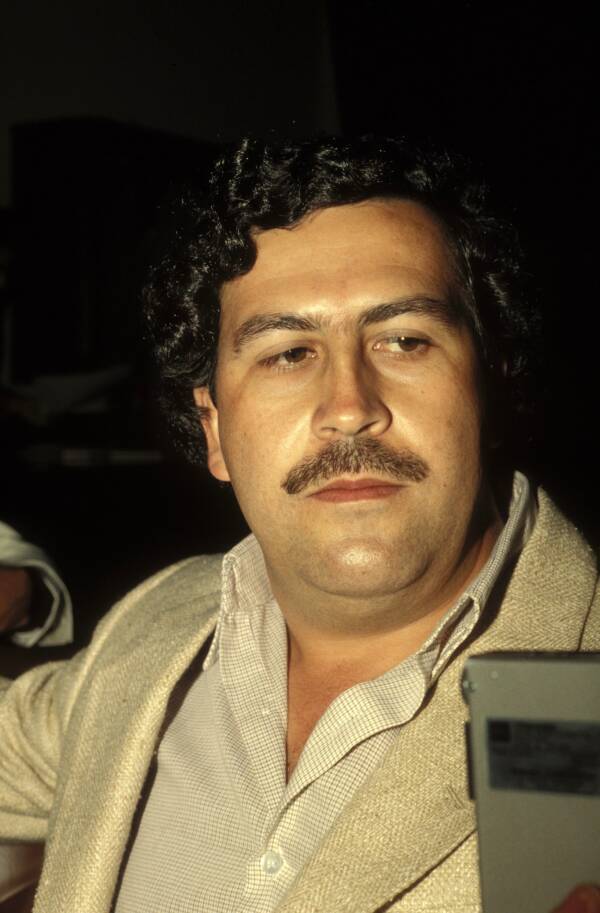
Eric VANDEVILLE/Gamma-Rapho via Getty ImagesPablo Escobar became one of the most powerful drug lords in the world before his death at 44.
By using his preexisting network on the streets of Medellín, Escobar was quickly able to establish himself as a drug dealer. Though Colombia had long been known as a source for marijuana, things were rapidly changing. The demand for cocaine was growing, especially in the United States — and Pablo Escobar was in the perfect position to take advantage of it.
As Escobar’s power grew, 1976 turned out to be an important year for him. He married his wife, Maria Victoria Henao, helped establish the powerful and ruthless Medellín cartel, and was arrested for the first time.
Though his arrest would ultimately have very little impact on his meteoric rise, Pablo Escobar’s mugshot would become one of the most famous photographs of the drug lord ever taken.
The Story Behind Pablo Escobar’s Mugshot
By 1976, Escobar had successfully created his own system of producers, transporters and distributors, and business was palpably booming. But as Escobar and his men returned from a drug smuggling trip to Ecuador in May, they were stopped by the Departamento Administrativo de Seguridad (DAS) — who found 85 pounds of cocaine in Escobar’s vehicle.
In the TV show Narcos, Escobar is seen getting out of an arrest by using his mantra of “plata o plomo,” which translates to “silver or lead (bullets).” As the show suggests, he was often able to escape sticky situations by using violence or bribery. But Escobar had been caught carrying a great deal of drugs in 1976, and the authorities who pulled him over could not be swayed.
The drug lord was arrested; Pablo Escobar’s mugshot was taken.
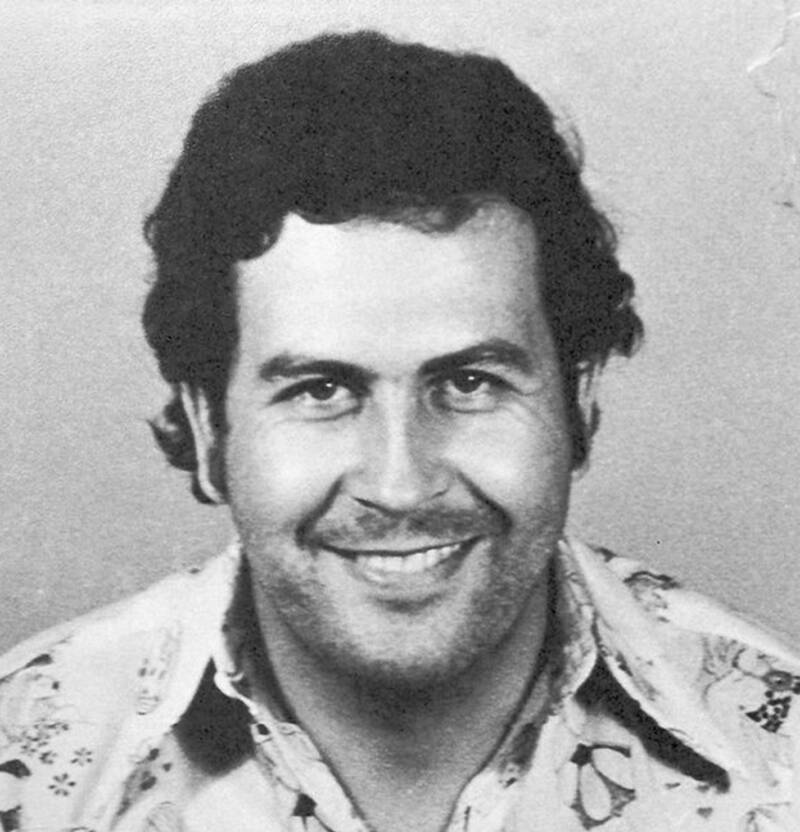
Wikimedia CommonsA closer look at Pablo Escobar’s mugshot, in which the drug lord gives a confident grin.
Escobar was wearing a simple collared shirt that day. His posture was relaxed, with no visible tension in his shoulders. He looks straight into the camera, and though the image was just another requisite element of a police file, Pablo Escobar’s mugshot would soon become world famous.
It’s easy to see why. In it, Escobar shows no stress, no fear, no anger. Instead, he looked confident, at ease, even smug. It was as if he knew of the fame and riches that were waiting for him just around the corner.
Or maybe he knew just how easily he would be able to escape any charges.
The Aftermath Of Pablo Escobar’s Mugshot
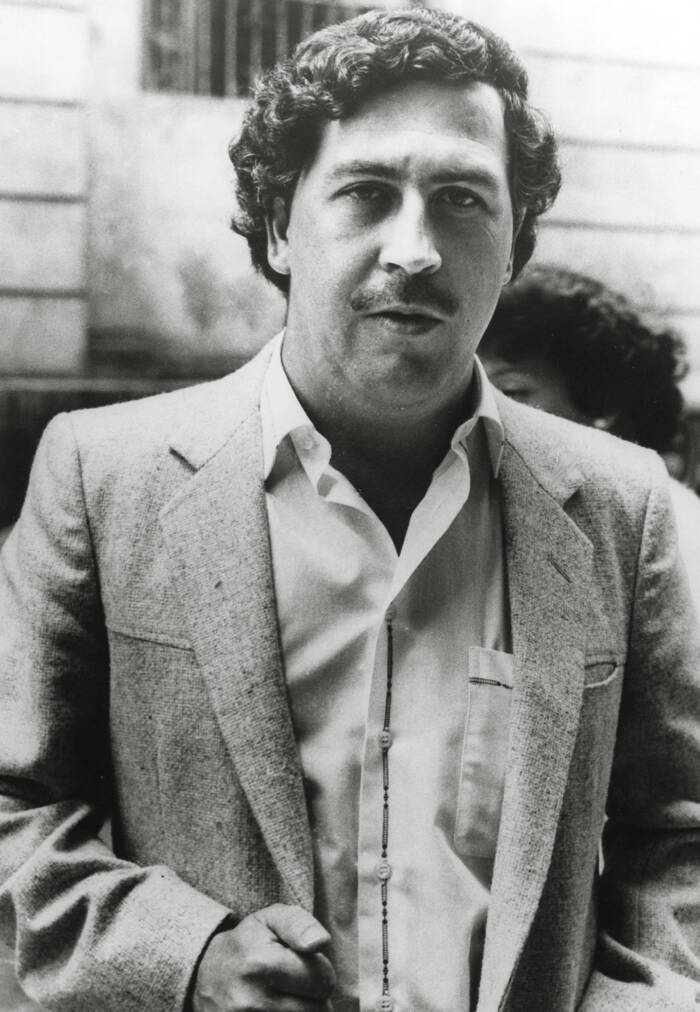
PictureLux / The Hollywood Archive / Alamy Stock PhotoAfter his arrest, Pablo Escobar would become one of the richest and most powerful drug lords in the world.
Pablo Escobar was smart enough to know that the case against him was solid: he’d been caught red-handed transporting drugs. Escaping the charges would take creativity on his part — as well as some “plata o plomo.”
In the end, Escobar was able to bribe his judge, and the two agents that arrested him were mysteriously murdered, according to Killing Pablo: The Hunt for the World’s Greatest Outlaw by Mark Bowden.
There was no conviction, fine, or civil suit to follow. All that remained was Pablo Escobar’s mugshot — with his knowing gaze and ominous smile.
The rest of his story is history: Escobar expanded his operations at a staggering pace, and ultimately controlled 80 percent of the world’s cocaine supply. While Escobar’s exact net worth is unknown, it’s thought to have been between $30 and $60 billion during his lifetime.
But Pablo Escobar’s power would not last. The drug lord’s reign came to an end on Dec. 2, 1993, when Escobar was killed by Colombian authorities while trying to flee across the rooftops of the Los Olivos barrio in Medellín.
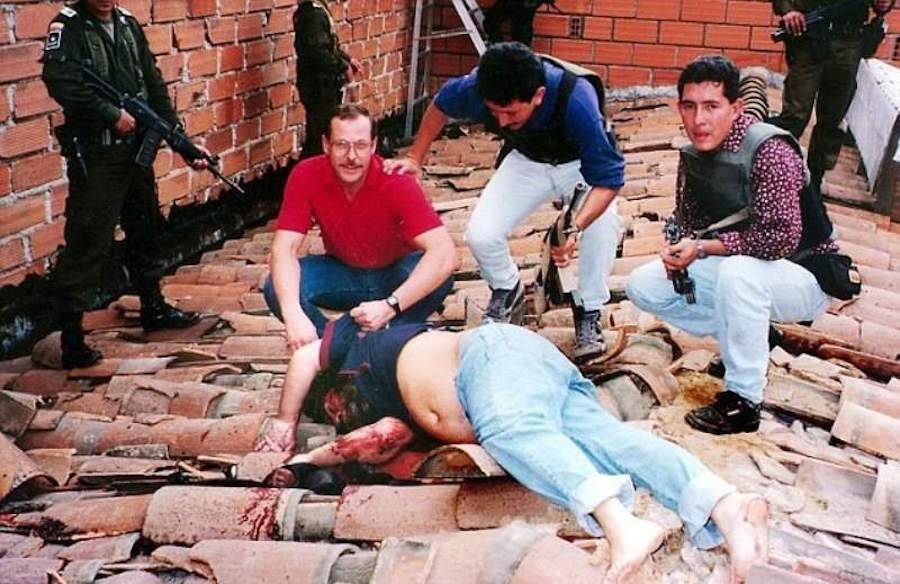
Wikimedia CommonsPablo Escobar was killed on Dec. 2, 1993.
Pablo Escobar’s mugshot, meanwhile, has stood the test of time. Imitated by actor Wagner Moura in the hit Netflix series Narcos, and printed on fridge magnets, t-shirts, and posters, the image has become an iconic part of Escobar’s legacy — while those whose lives were actually affected by Escobar are far less enthralled by its continuing popularity.
Indeed, though Escobar would present himself as a Robin Hood figure who built hospitals and housing for the poor, he and his cartel killed police, politicians, journalists, and ordinary citizens. In 1989, the cartel was even accused of planting a bomb on a domestic passenger flight, killing over 100.
His mugshot, taken before the height of his power and the depth of his depravity, captures a man who already felt bigger than the law. And while the police who took the picture couldn’t have guessed that Escobar would become one of the most powerful drug lords of all time, Escobar’s smile suggests that he already saw that future for himself.
After learning about Pablo Escobar’s mugshot, discover the little-known story of Pablo Escobar’s daughter, Manuela. Then, learn the surprising true story behind Pablo Escobar’s photo at the White House.