1 of 75
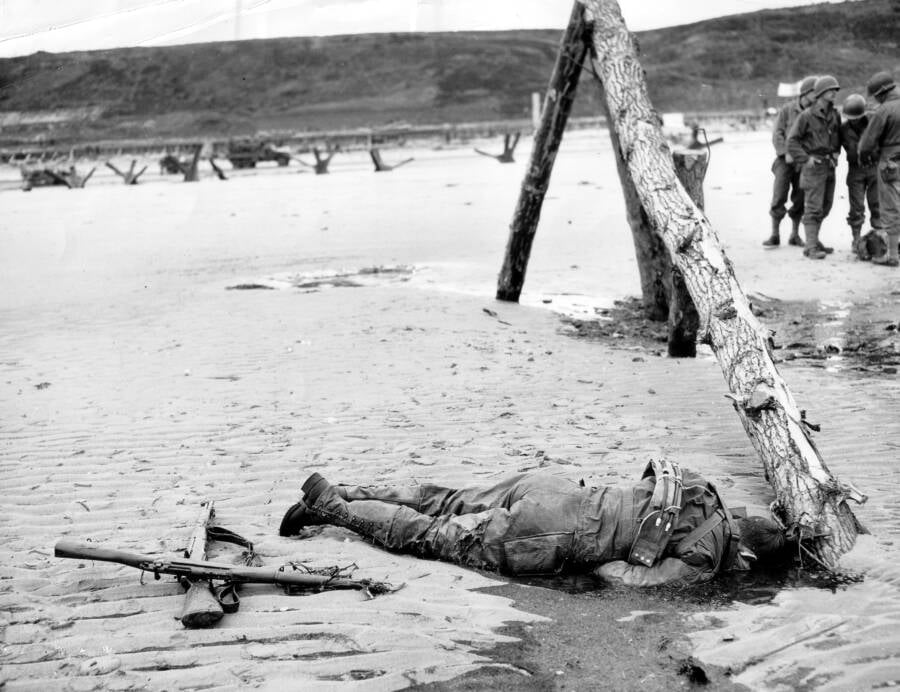
An American casualty lies on Omaha Beach following the invasion of Normandy. More than 4,400 Allied troops were killed on D-Day, and Omaha Beach saw the highest number of casualties.Public Domain 2 of 75
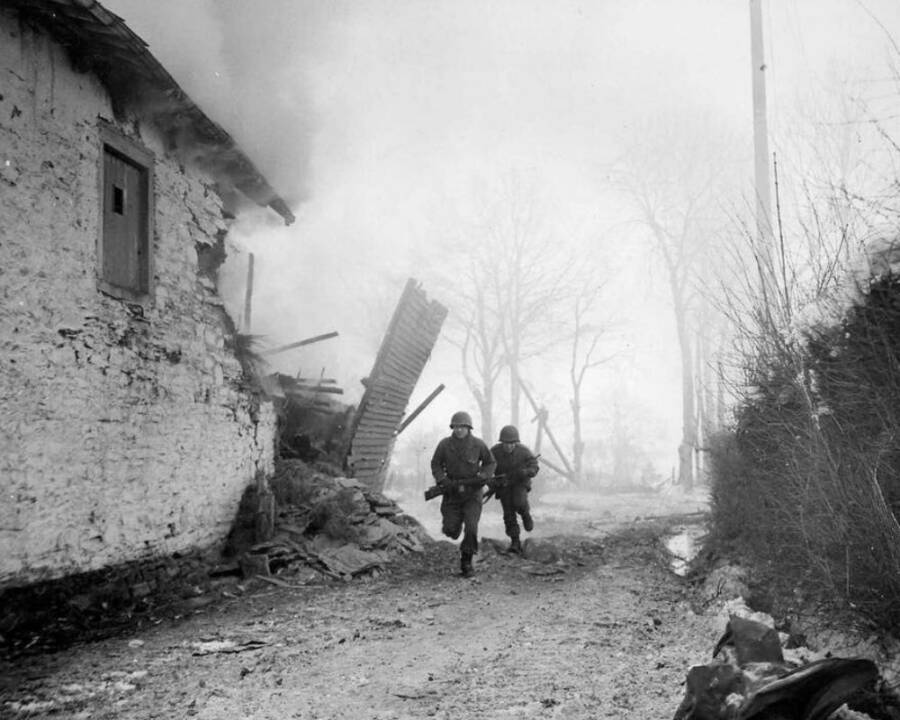
Two U.S. soldiers run through gunfire in Montleban, Belgium. Jan. 13, 1945.Public Domain
3 of 75
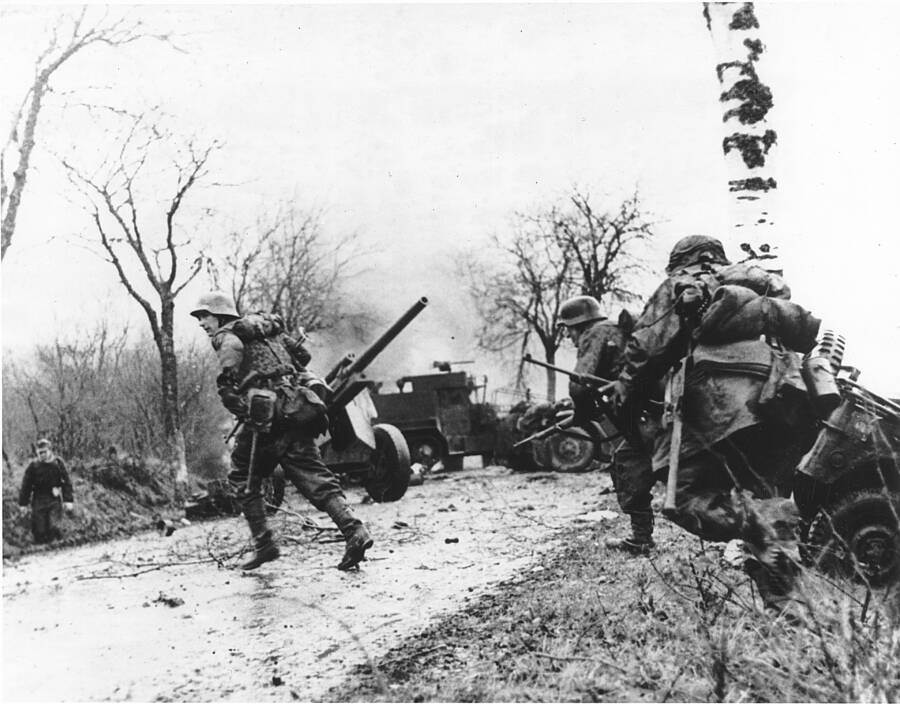
German troops in action during the Battle of the Bulge. Dec. 18, 1944.
The Battle of the Bulge — which took place in the Ardennes Forest of Belgium, Luxembourg, and Germany — was the bloodiest battle U.S. troops fought during World War II.Imperial War Museums 4 of 75
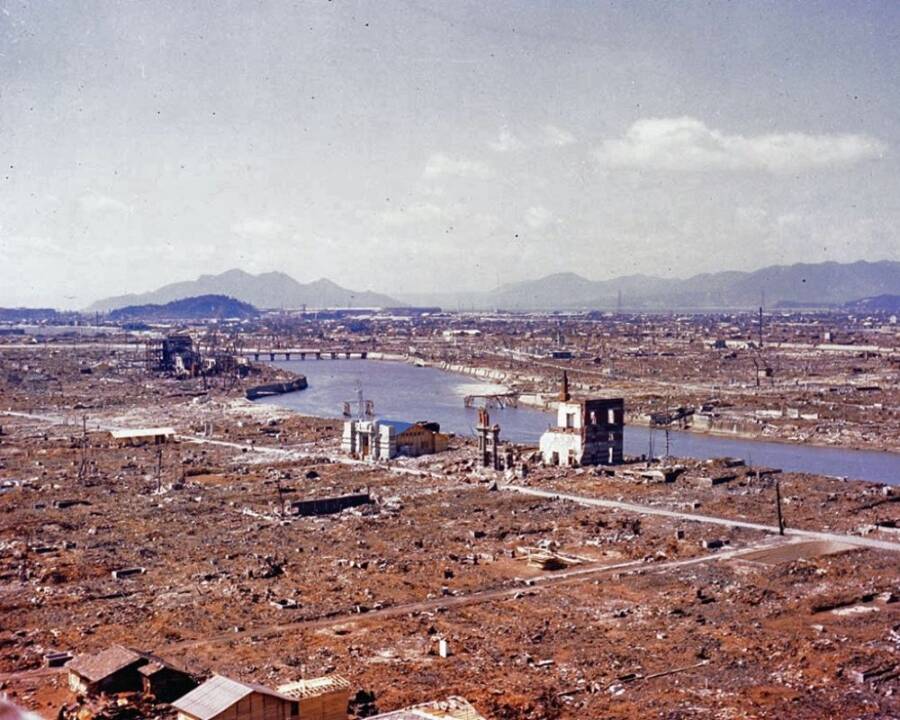
The ruins of Hiroshima in March 1946, seven months after the U.S. dropped an atomic bomb on the city.Public Domain
5 of 75
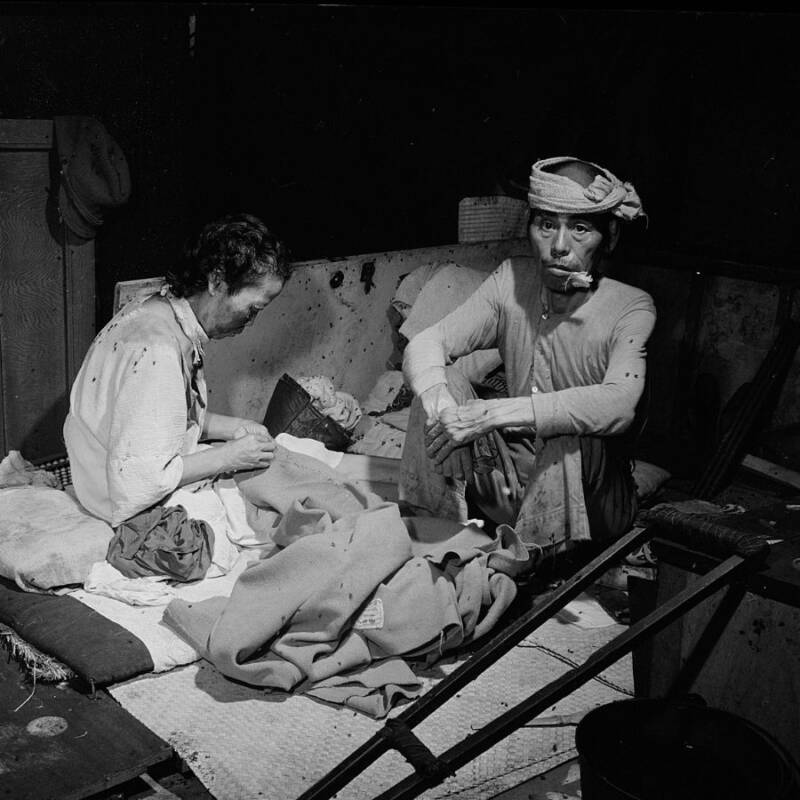
Two survivors of the atomic bomb dropped on Hiroshima in September 1945, several weeks after the attack. They were living in a makeshift hospital inside a bank building that wasn't completely destroyed by the blast.U.S. National Archives
6 of 75
Joseph Goebbels greets 16-year-old Hitler Youth soldier Willi Hübner, who was awarded an Iron Cross for his service. March 1945.German Federal Archives 7 of 75
The imprint of a kamikaze plane on the hull of the HMS Sussex. In the final months of World War II, the desperate Japanese Army resorted to suicide attacks in an attempt to destroy Allied ships.Public Domain 8 of 75
Liberated British prisoners of war drink tea and read the Daily Express in Singapore after their release from a POW camp in Sumatra.Imperial War Museums 9 of 75
A mushroom cloud rises over Nagasaki after the U.S. military dropped an atomic bomb on the Japanese city. August 9, 1945.
10 of 75
Allied prisoners of war celebrate their release from Keijo Camp in Seoul. 1945.State Library Victoria
11 of 75
U.S. troops greet each other during the Battle of the Bulge. January 1945.
During the month-long battle, the U.S. suffered more than 80,000 casualties, while an estimated 100,000 German troops were killed or wounded.Public Domain
12 of 75
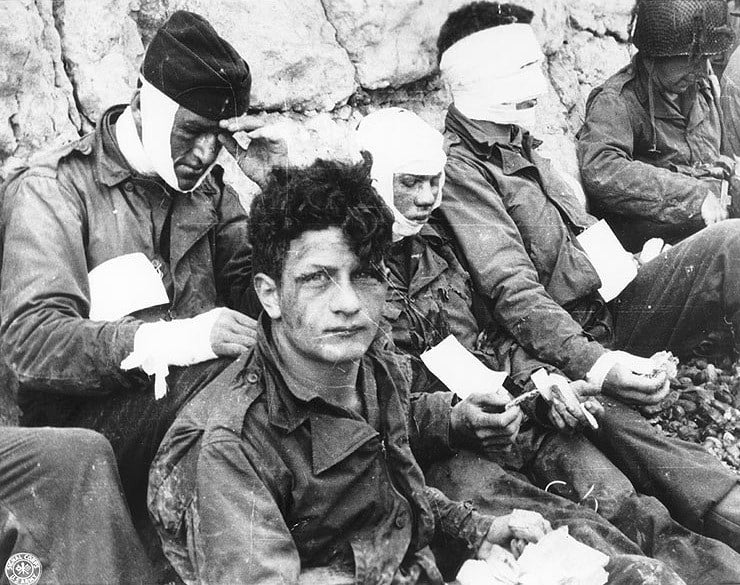
American soldiers, injured while storming Omaha Beach on D-Day, recover just after the landings in Normandy, France, on June 6, 1944.Public Domain
13 of 75
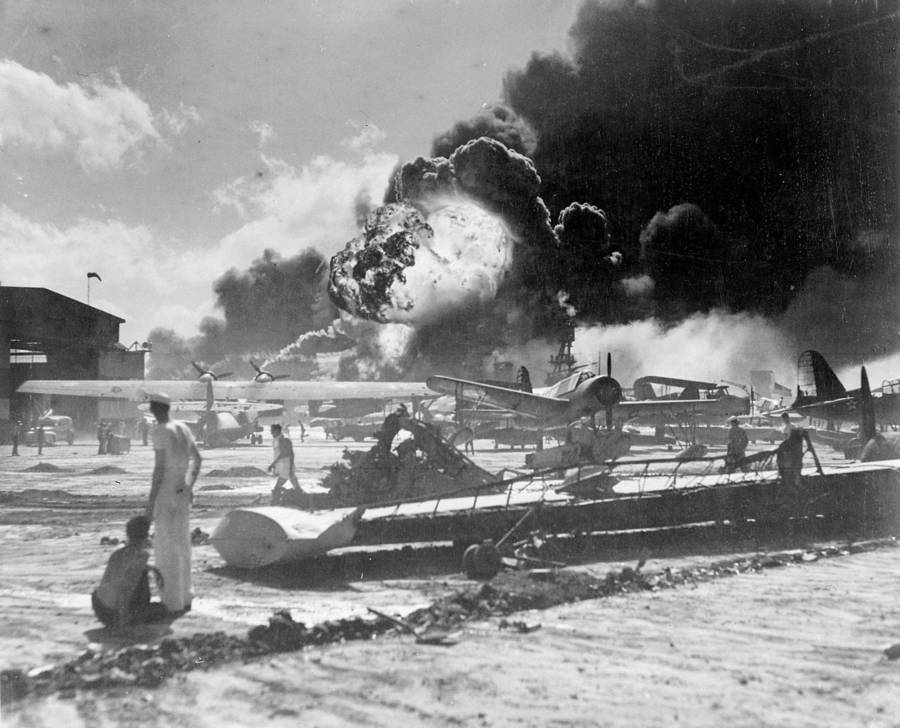
American sailors stand amid wrecked planes at the Ford Island seaplane base, watching as the USS Shaw explodes in the center background during the Japanese raid on Pearl Harbor, Hawaii, on Dec. 7, 1941.U.S. Navy 14 of 75
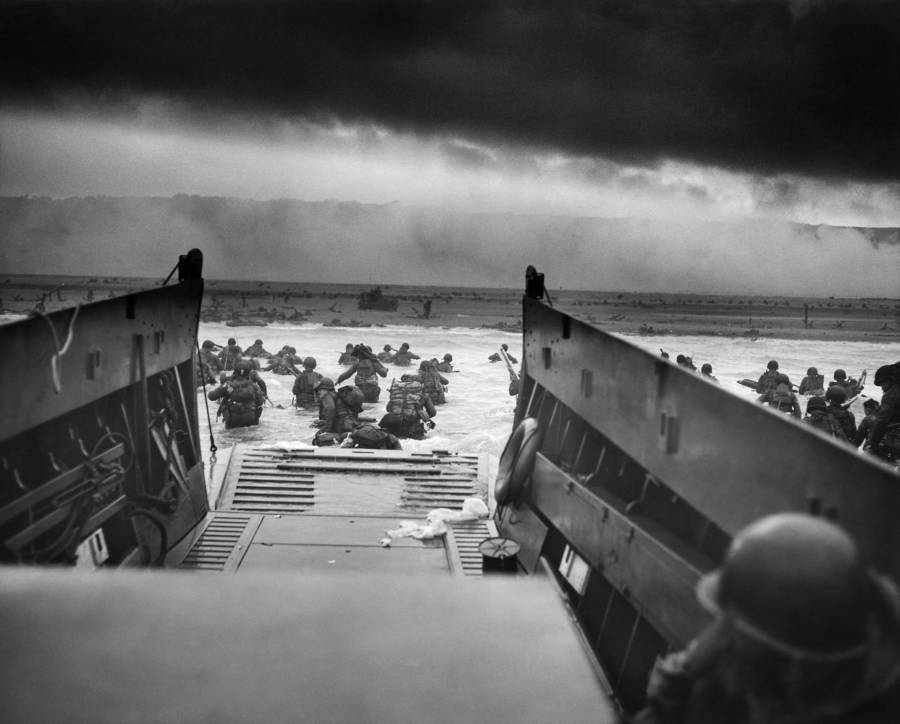
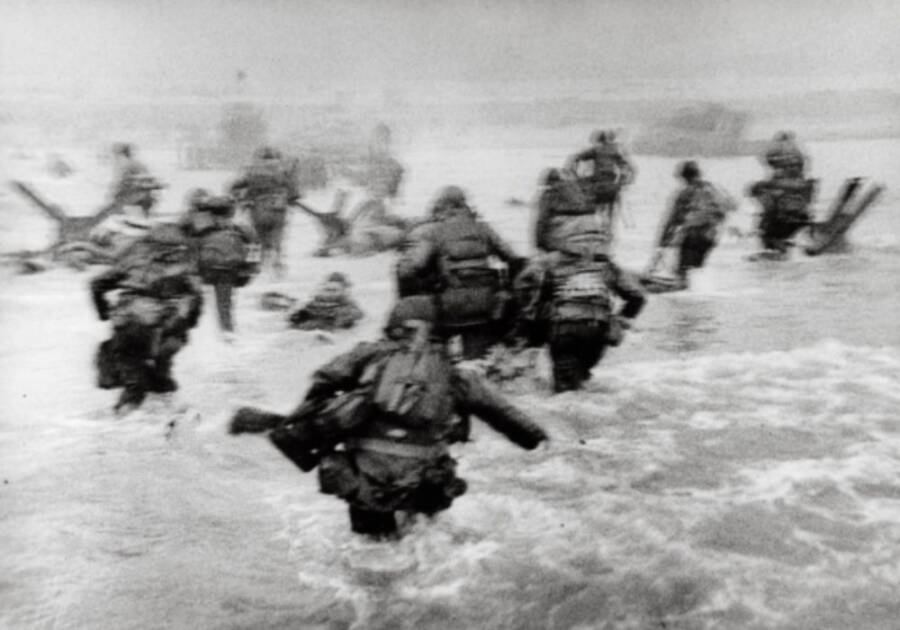
"Into the Jaws of Death — U.S. Troops wading through water and Nazi gunfire."
A U.S. landing craft approaches Omaha Beach during the D-Day invasion in Normandy, France, on June 6, 1944.Robert F. Sargent, U.S. Coast Guard/U.S. National Archives
15 of 75
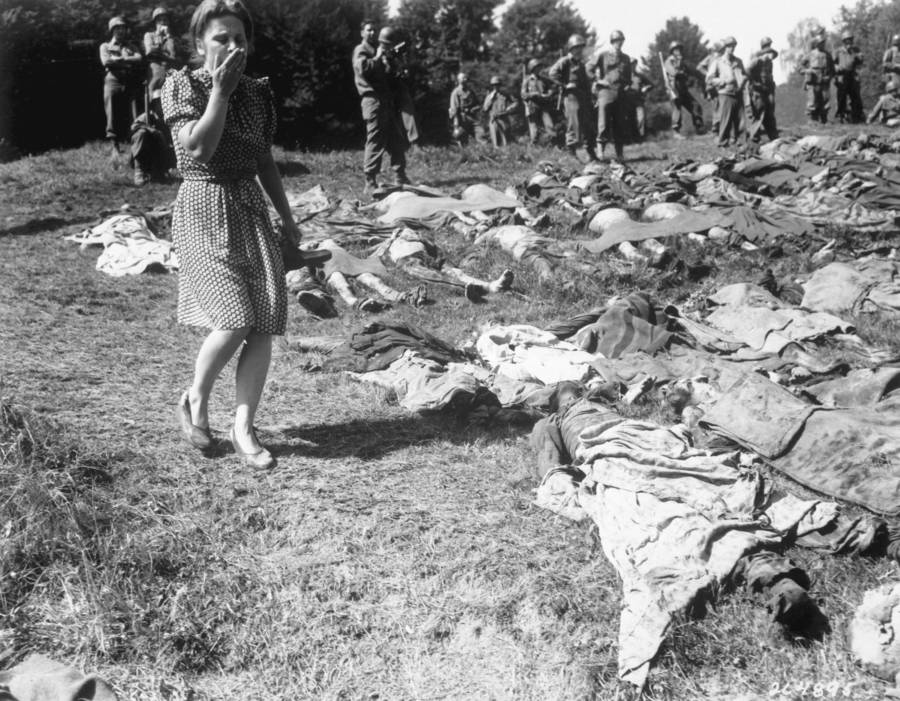
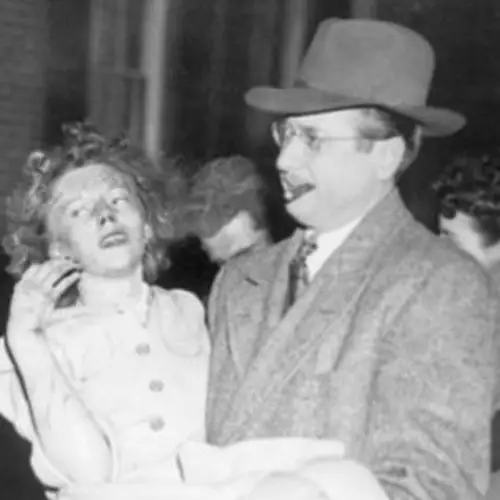
A German woman is overcome with emotion as she walks past the exhumed bodies of some of the 800 Buchenwald concentration camp prisoners murdered by SS guards near Nammering, Germany. U.S. troops forced the guards to uncover the mass grave and lay the corpses out so that townspeople could view the crimes of their Nazi leaders. May 17, 1945.Cpl. Edward Belfer, U.S. Army/U.S. National Archives
16 of 75
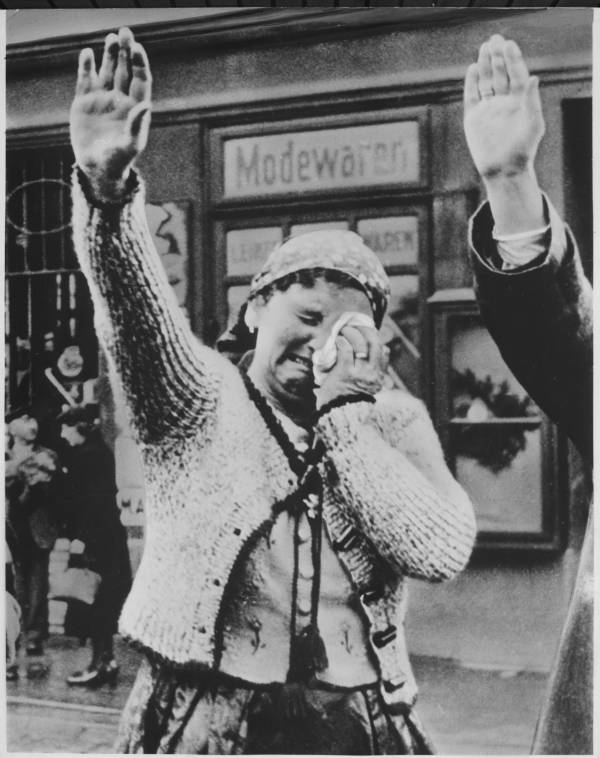
A Sudeten woman from the area that is now the Czech Republic salutes the conquering German forces while crying at the fall of her people to the Nazis. Circa 1938.Office of War Information/U.S. National Archives
17 of 75
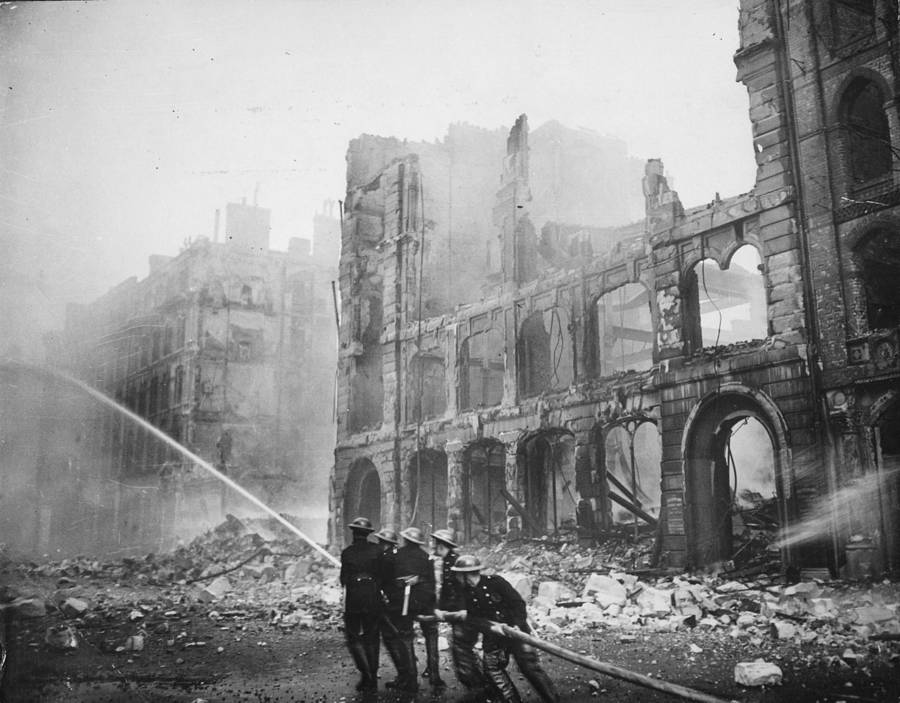
Firefighters put out a blaze caused by a round of German bombings in London. 1941.Paris Bureau of The New York Times/U.S. National Archives
18 of 75
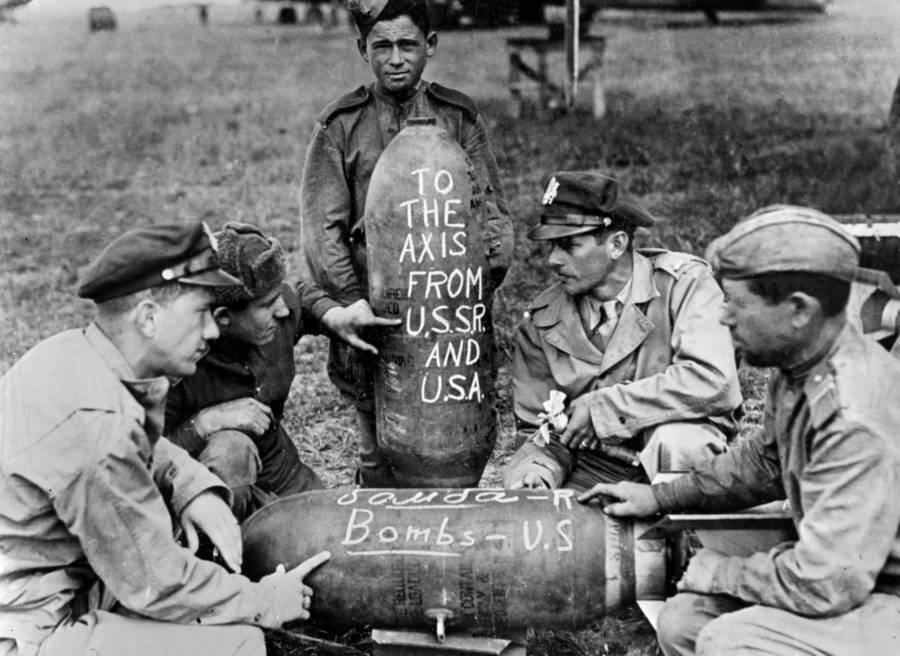
Soviet and American airmen pose with the bombs on which they'd written messages for the Nazis at a Russian air base. June 2, 1944.AFP/AFP/Getty Images
19 of 75
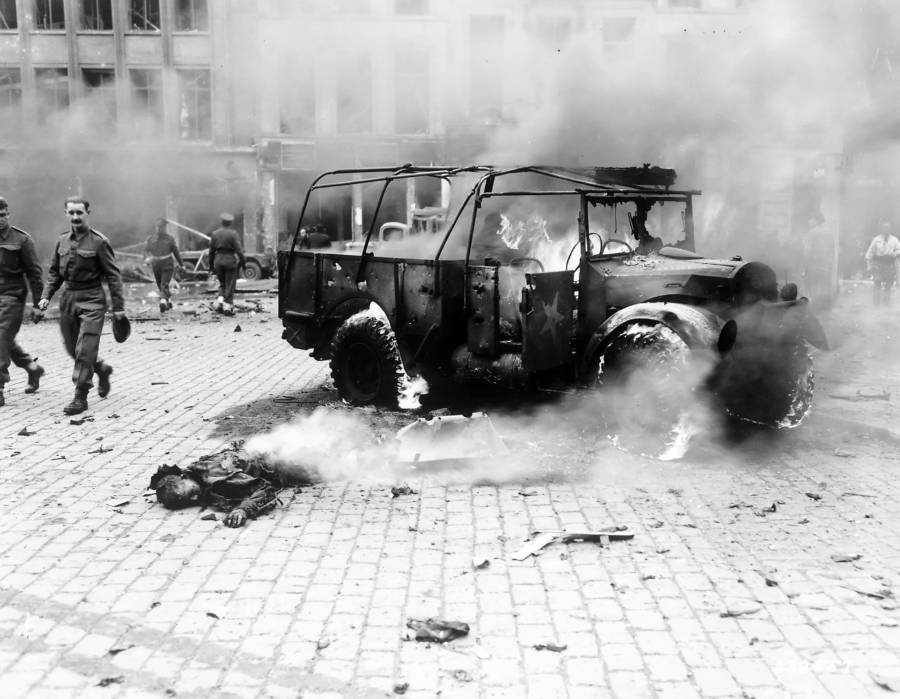
Bystanders look on as a boy's burning corpse lies next to the Jeep he was in, which was struck by a German V-2 rocket in Antwerp, Belgium. Nov. 27, 1944.U.S. National Archives
20 of 75
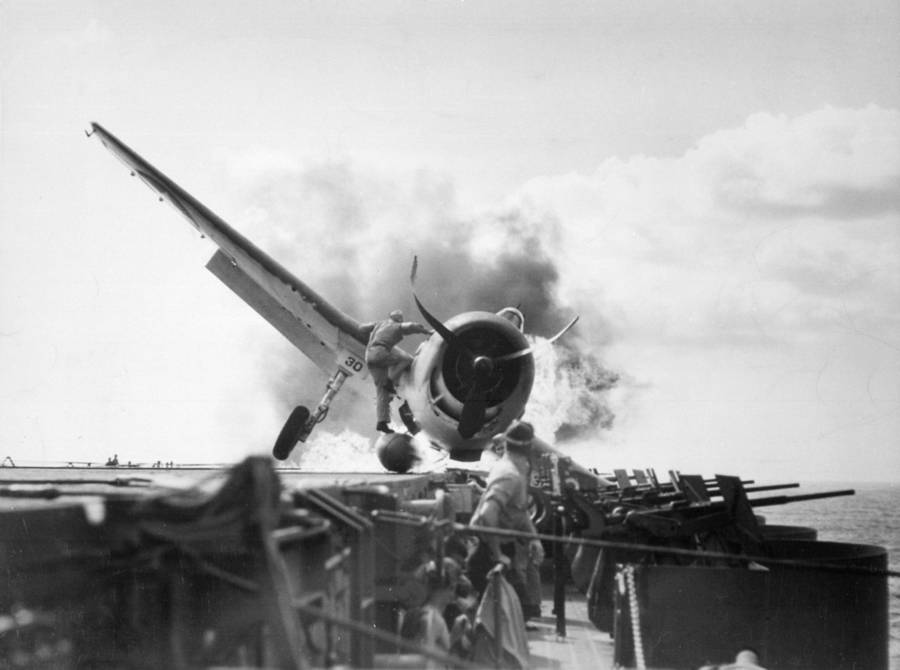
A Grumman F6F Hellcat (VF-2) plane crash lands on the deck of the USS Enterprise as Lt. Walter L. Chewning Jr. climbs up the side of the plane to assist the pilot, Ensign Byron M. Johnson, who escaped without serious injury. The crash landing occurred as the Enterprise was making its way toward Makin Island in the South Pacific on Nov. 10, 1943.Department of Defense/U.S. National Archives
21 of 75
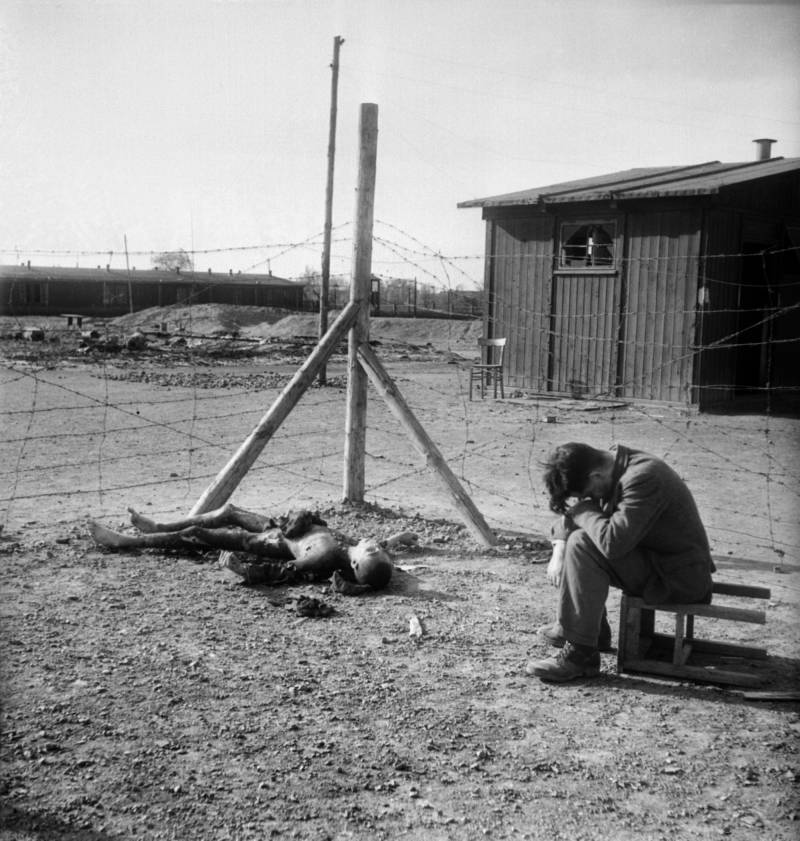
A young man sits on an overturned stool next to a burnt body inside the Thekla concentration subcamp outside Leipzig, Germany, soon after its liberation by U.S. forces in April 1945.ERIC SCHWAB/AFP/Getty Images
22 of 75
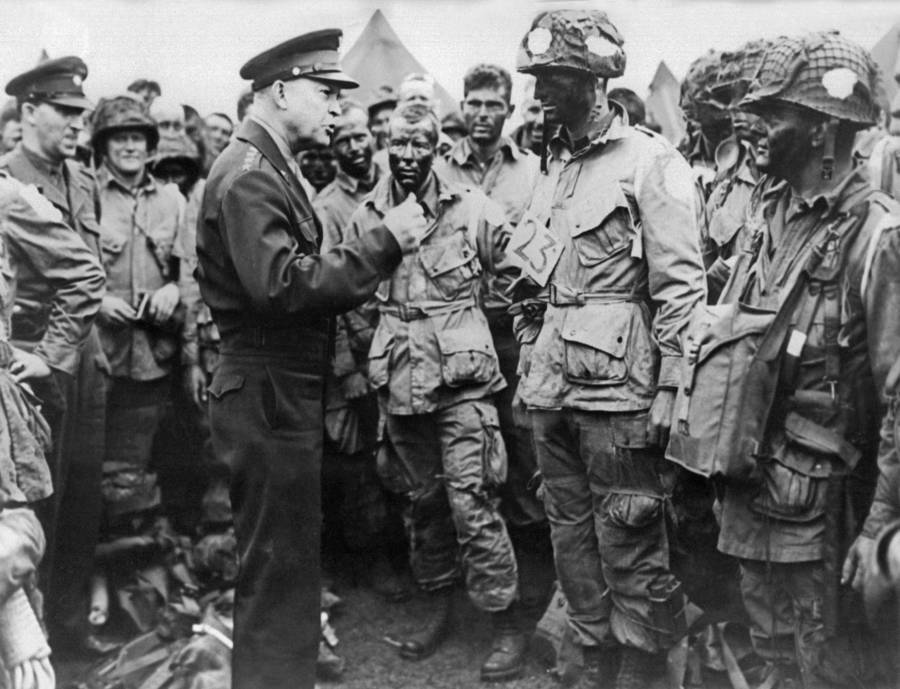
U.S. General Dwight D. Eisenhower gives instructions to paratroopers in England in preparation for the imminent D-Day invasion on June 6, 1944.AFP/AFP/Getty Images
23 of 75
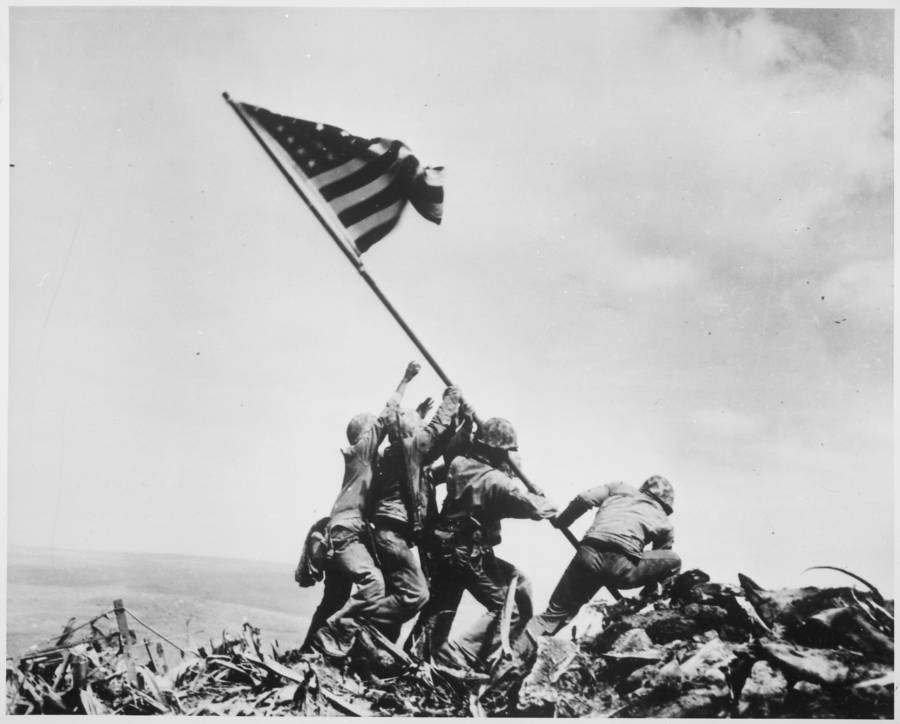
Five U.S. Marines and one sailor raise an American flag over Mount Suribachi during the Battle of Iwo Jima on Feb. 23, 1945.Joe Rosenthal/The Associated Press/U.S. Navy/U.S. National Archives
24 of 75
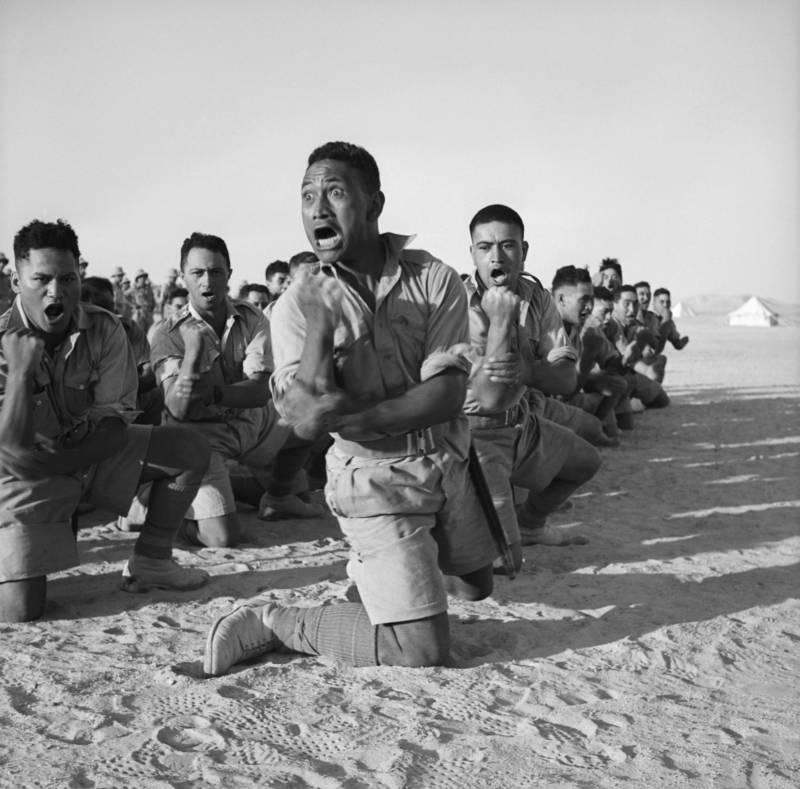
Māori soldiers from New Zealand perform a traditional war cry known as a haka in Helwan, Egypt. June 1941.Imperial War Museums/National Library of New Zealand
25 of 75
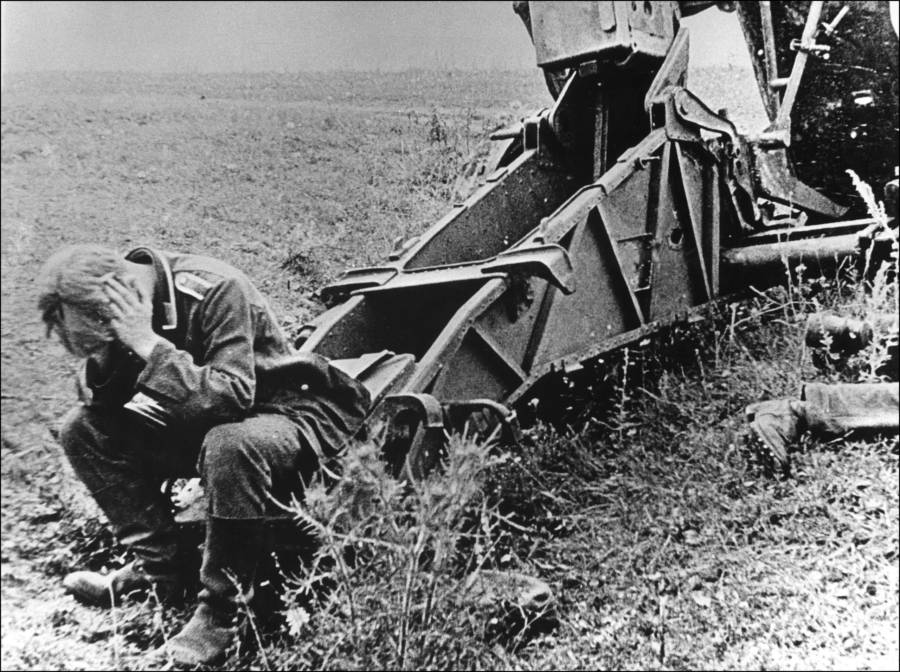
A dejected German soldier taken prisoner by Soviet forces at the Battle of Kursk — one of the largest in history, and the one that marked the turning point against the Nazis on the Eastern Front and the war as a whole — in mid-1943.STF/AFP/GettyImages 26 of 75
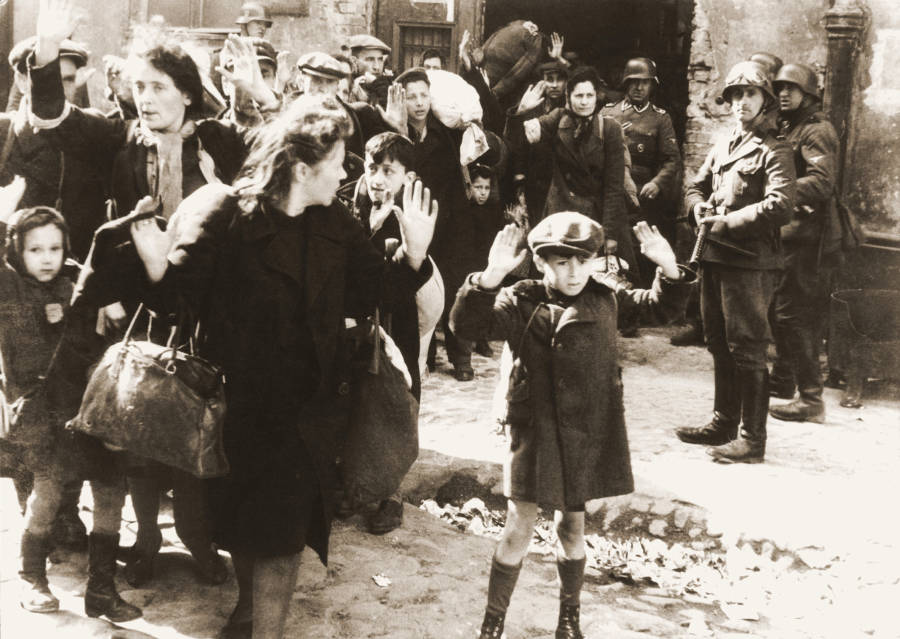
An unidentified boy raises his arms as German soldiers capture Polish Jews during the Warsaw Ghetto Uprising sometime between April 19 and May 16, 1943.United States Holocaust Museum 27 of 75
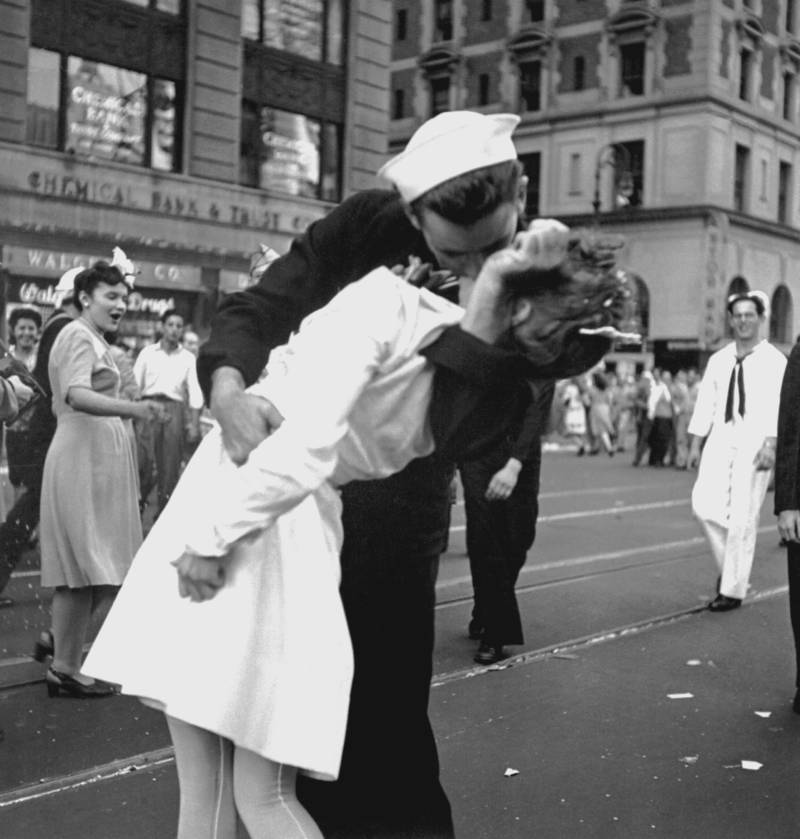
In celebration of Japan's surrender, a U.S. Navy sailor kisses a women during festivities in New York City on August 14, 1945.Lt. Victor Jorgensen, U.S. Navy/U.S. National Archives
28 of 75
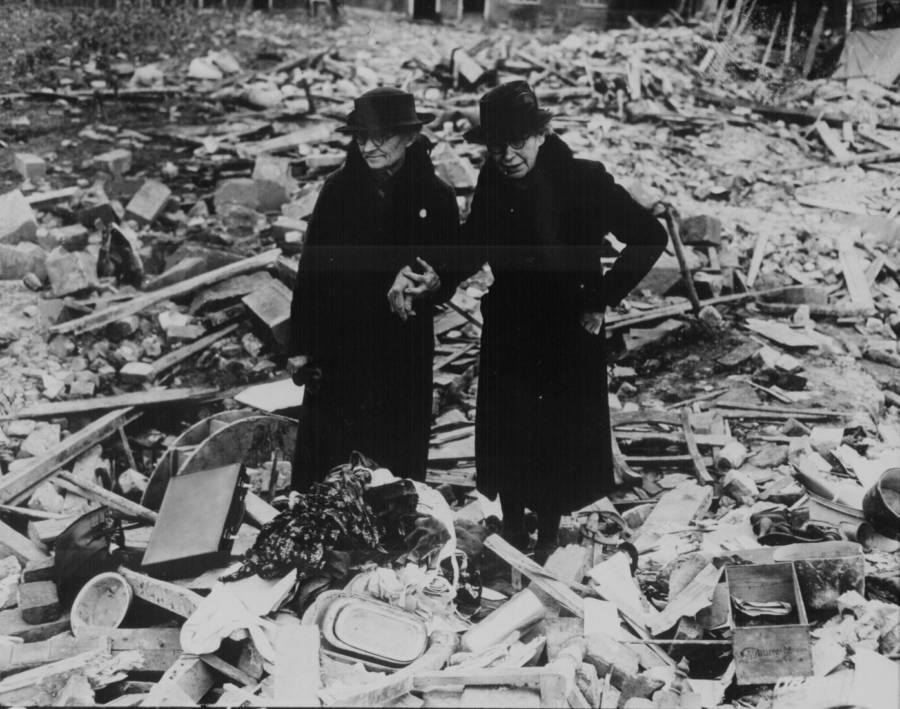
Two women stand amid the leveled ruins of the almshouse that was their home in Newbury, England, before a German bombing raid destroyed it on Feb. 11, 1943.U.S. Army/U.S. National Archives
29 of 75
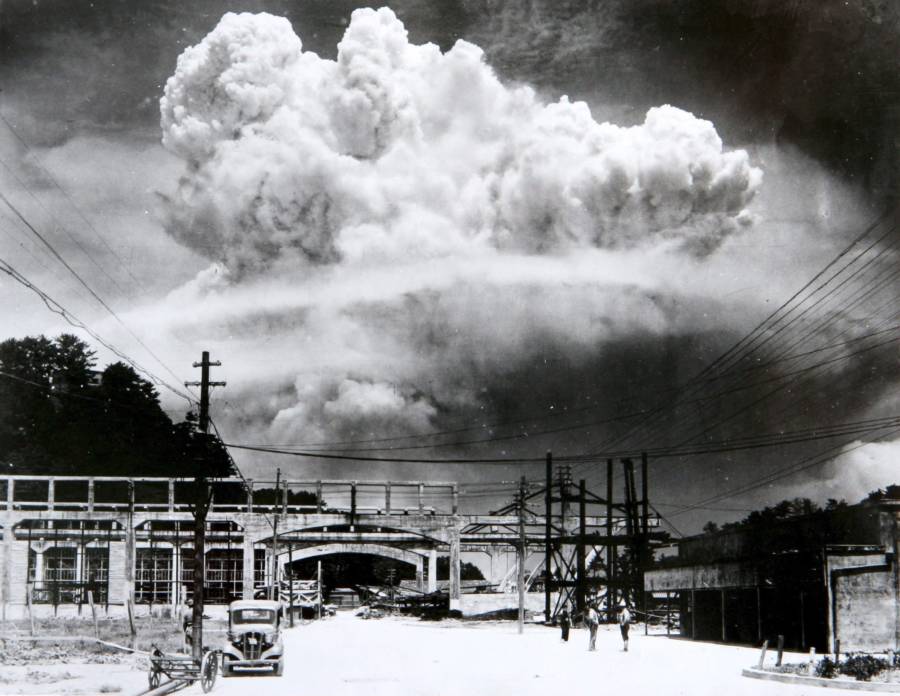
The atomic bombing of Nagasaki, Japan, by the U.S. on August 9, 1945.Hiromichi Matsuda/Nagasaki Atomic Bomb Museum
30 of 75
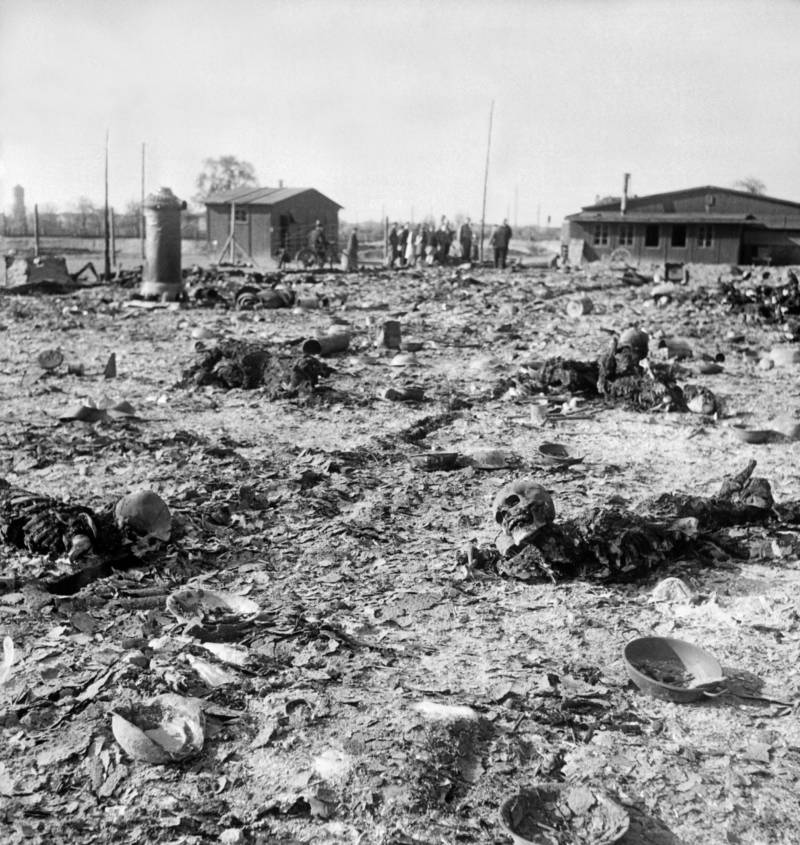
Burnt bodies lie on the grounds of the Thekla concentration subcamp outside Leipzig, Germany. April 1945.ERIC SCHWAB/AFP/Getty Images
31 of 75
Roger Godfrin, the only survivor of a massacre during which Nazi troops locked 643 citizens — including 500 women and children — inside a church and set fire to it on June 10, 1944, in Oradour-sur-Glane, France.AFP/Getty Images
32 of 75
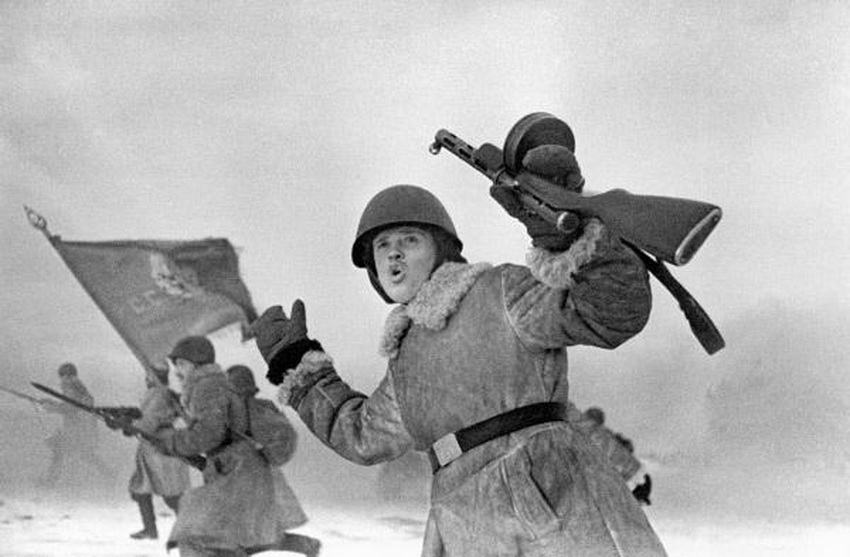
Soviet soldiers charge during the Siege of Leningrad. Jan. 1, 1943.Vsevolod Tarasevich/Russian International News Agency 33 of 75
French women accused of collaborating with the Nazis have their heads shaved by French Resistance fighters in Paris on June 21, 1944.German Federal Archives 34 of 75
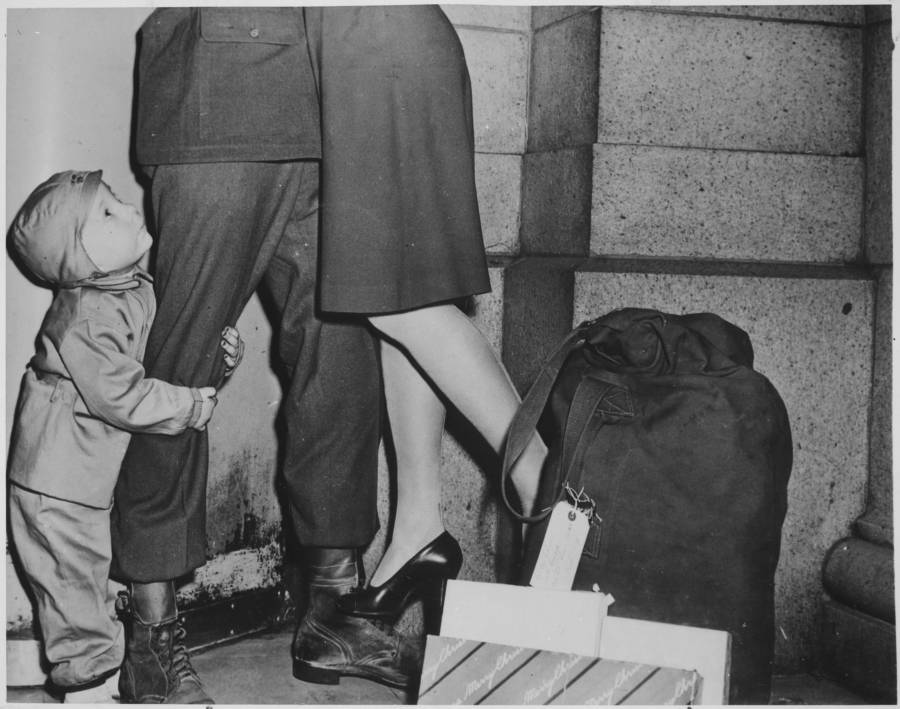
A young boy greets his father, a soldier allowed to return home for Christmas. 1944.Office of War Information/U.S. National Archives
35 of 75
A British plane in Gibraltar prepares for its flight to the United Kingdom as searchlights shine in the background. Date unspecified.Royal Air Force/Imperial War Museum
36 of 75
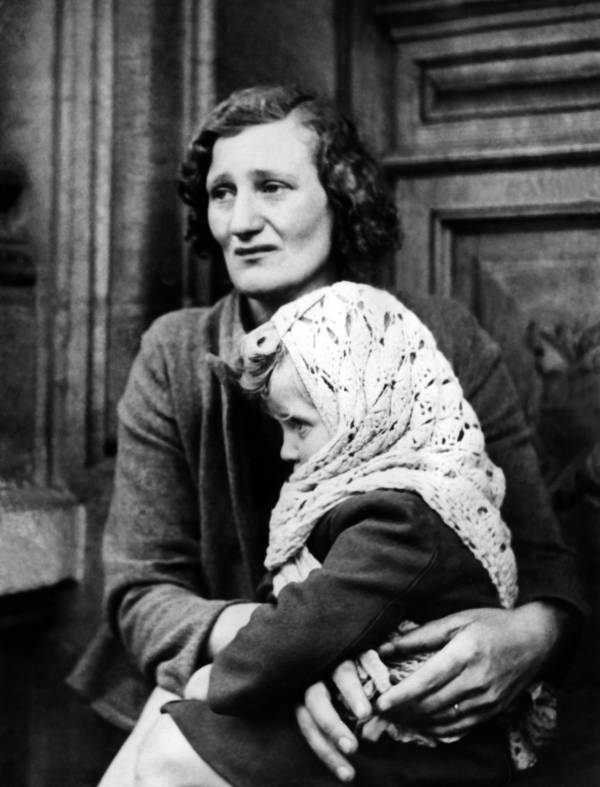
A young French girl clings to her mother as French civilians flee the German Army offensive in the north of France. May 1940.-/AFP/Getty Images
37 of 75
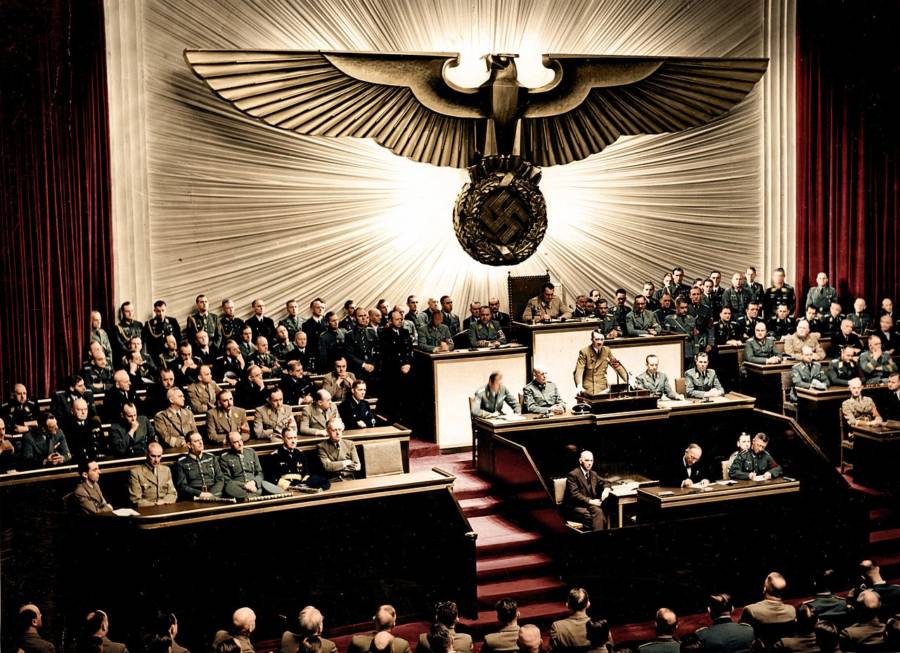
Adolf Hitler (standing, center) declares war on the United States at the Reichstag in Berlin, Germany, on Dec. 11, 1941.German Federal Archives
38 of 75
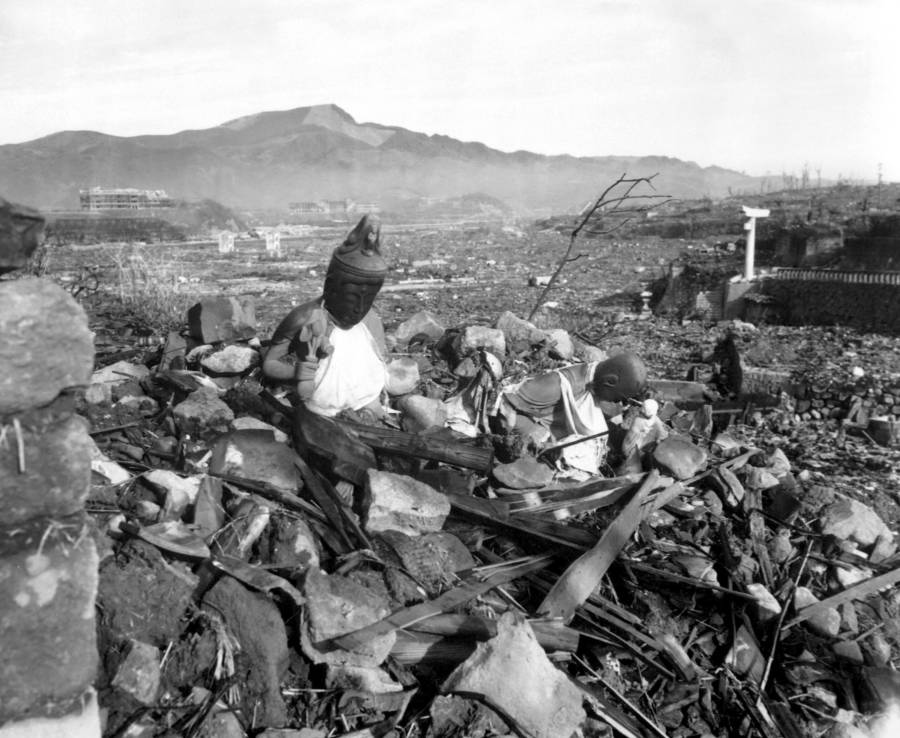
Battered religious figures stand amid the rubble of Nagasaki, Japan, on Sept. 24, 1945, six weeks after the U.S. destroyed the city with an atomic bomb.Cpl. Lynn P. Walker, Jr., U.S. Marine Corps/U.S. National Archives
39 of 75
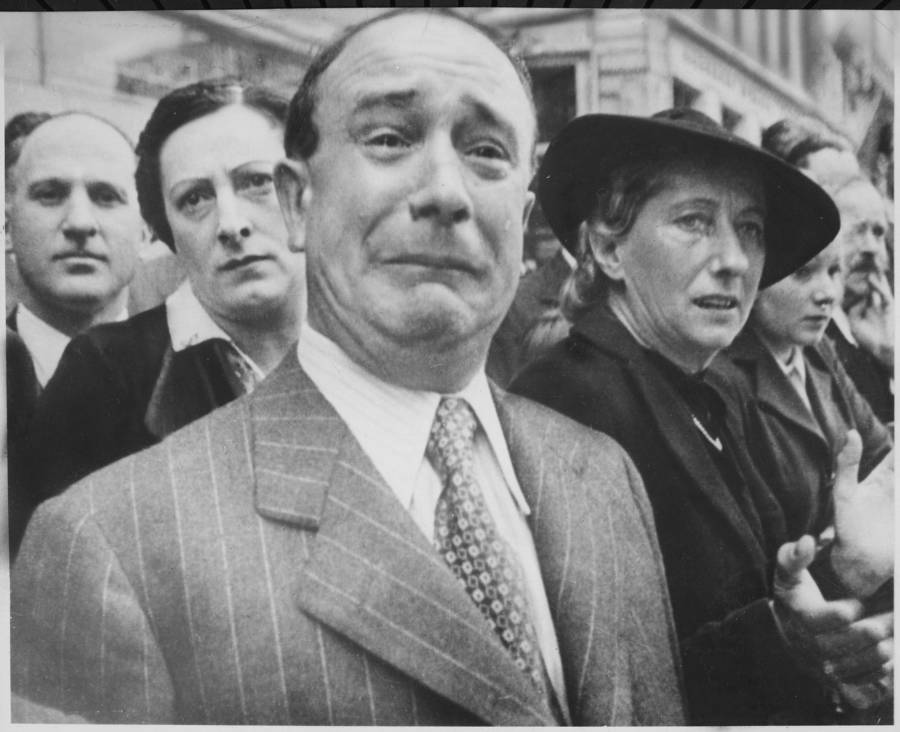
A French man weeps as German soldiers march into Paris on June 14, 1940, after the Allied forces had been driven back across France.Office of War Information/U.S. National Archives
40 of 75
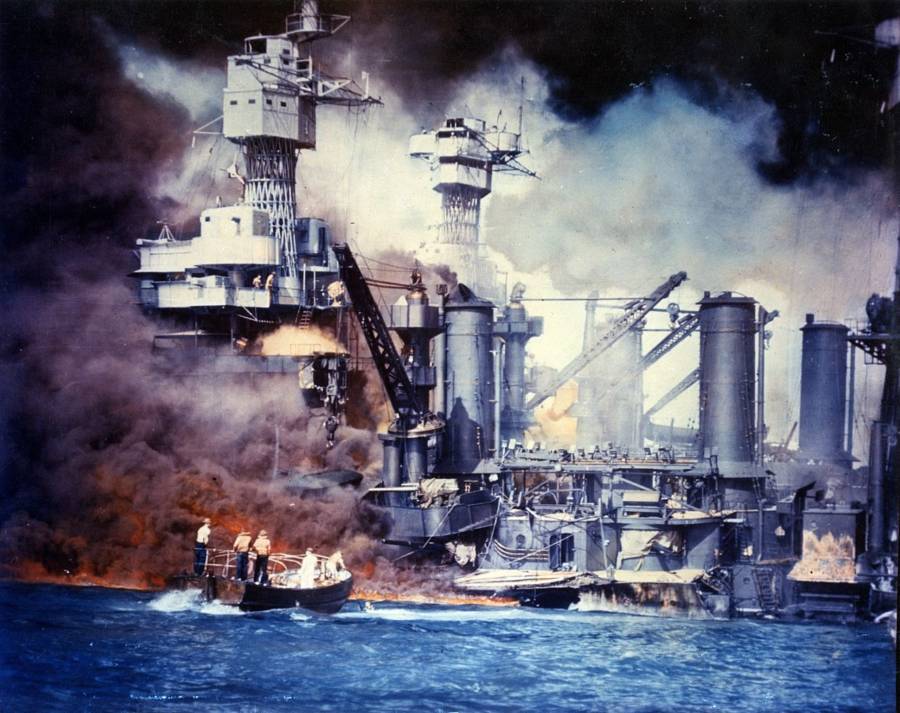
U.S. Navy sailors rescue a survivor from the water alongside the sunken battleship USS West Virginia during the Japanese air raid on Pearl Harbor, Hawaii. Dec. 7, 1941.Army Signal Corps/U.S. National Archives
41 of 75
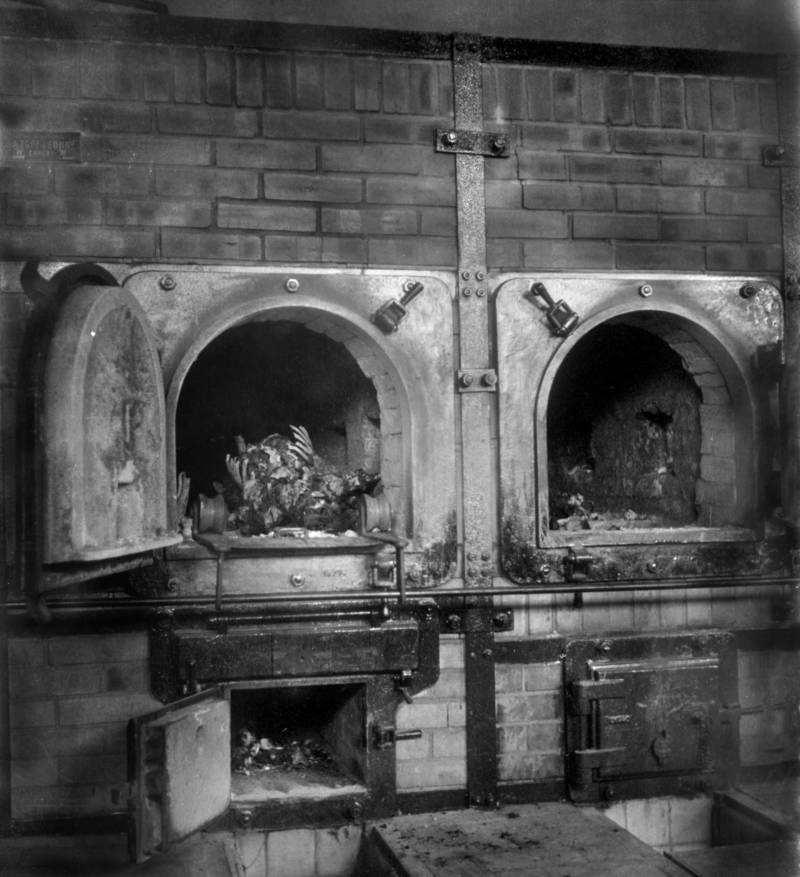
The crematory ovens of the Buchenwald concentration camp. April 1945.ERIC SCHWAB/AFP/Getty Images
42 of 75
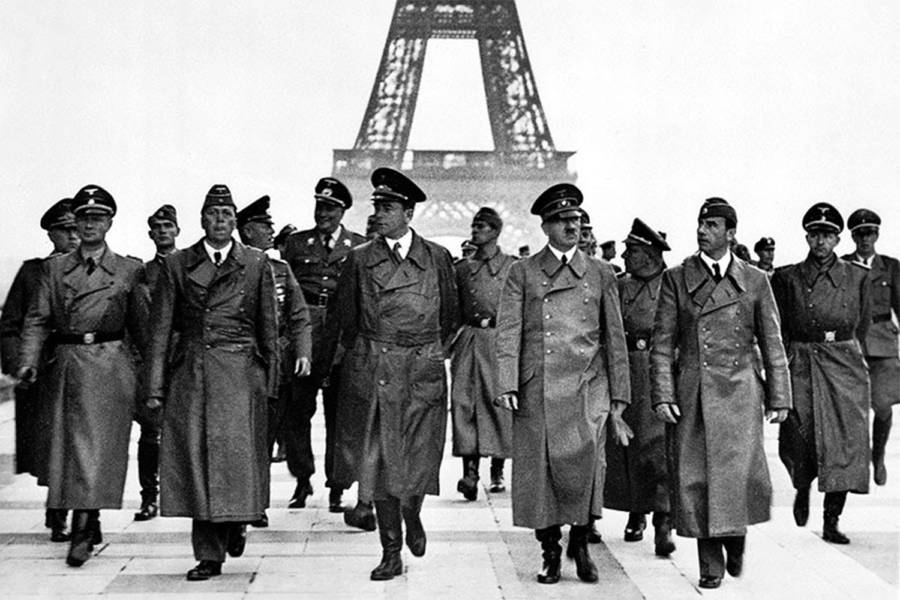
Adolf Hitler and his entourage walk near the Eiffel Tower in Paris on June 23, 1940, following the occupation of France by the Nazis.German Federal Archives
43 of 75
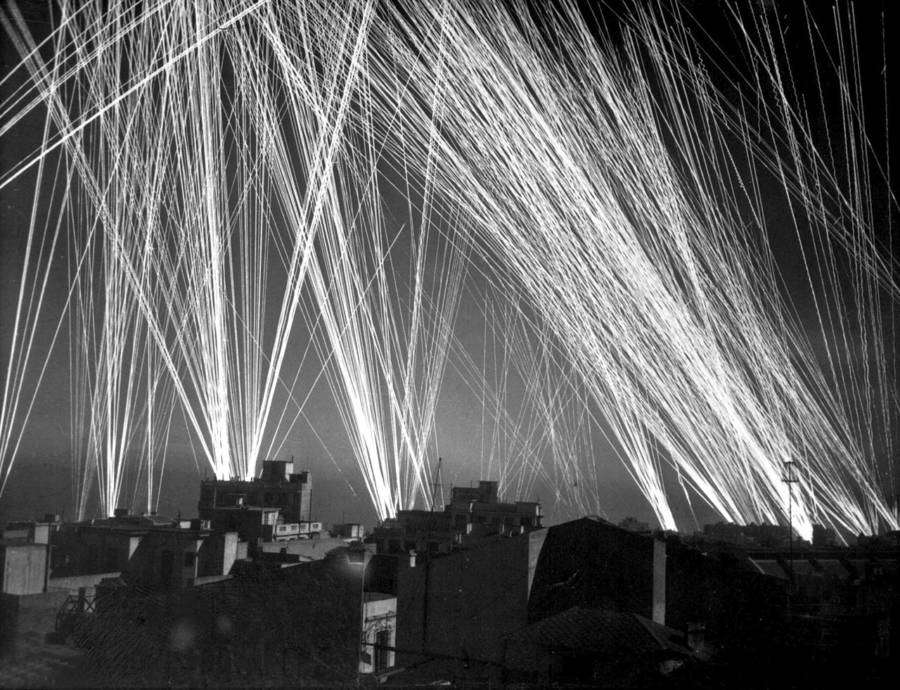
French anti-aircraft fire during a Nazi raid on Algiers. 1943.Lt. W. R. Wilson, U.S. Army/U.S. National Archives
44 of 75
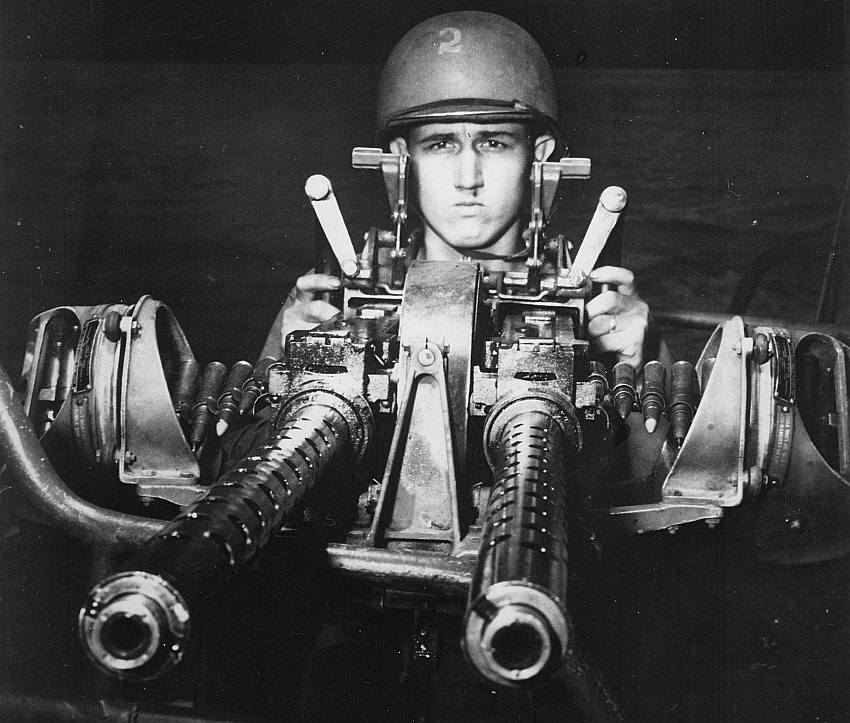
An American torpedo boat marksman behind his machine gun off the coast of New Guinea. July 1943.U.S. Navy/U.S. National Archives
45 of 75
Canadian soldiers land on Courseulles Beach in Normandy during the D-Day invasion. June 6, 1944.STF/AFP/Getty Images
46 of 75
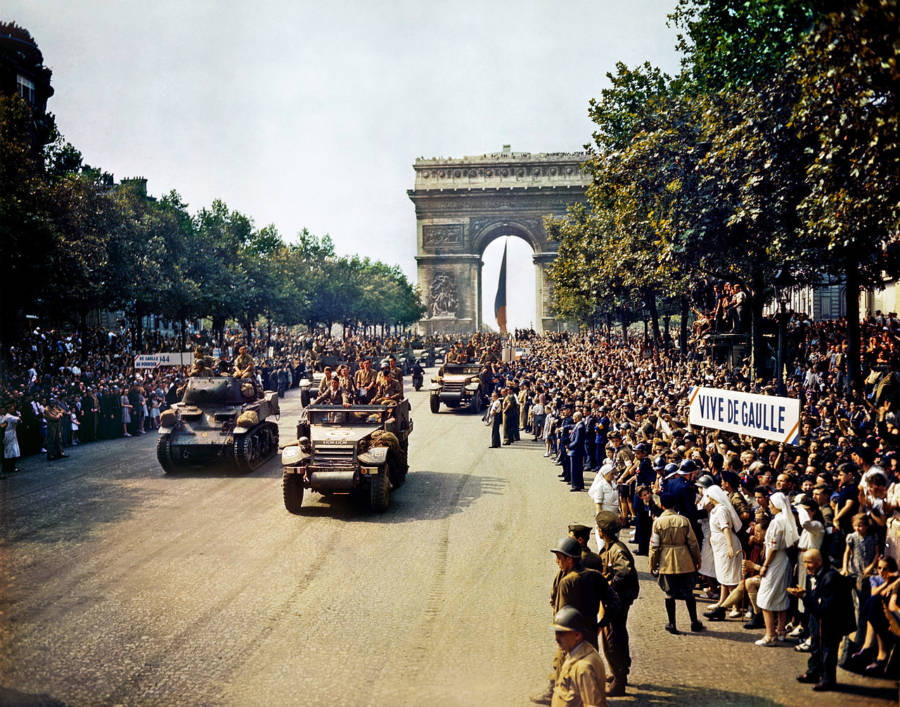
Crowds gather on Paris' Champs-Élysées as French tanks roll past in celebration of the liberation of France. August 26, 1944.Jack Downey, U.S. Office of War Information/Library of Congress 47 of 75
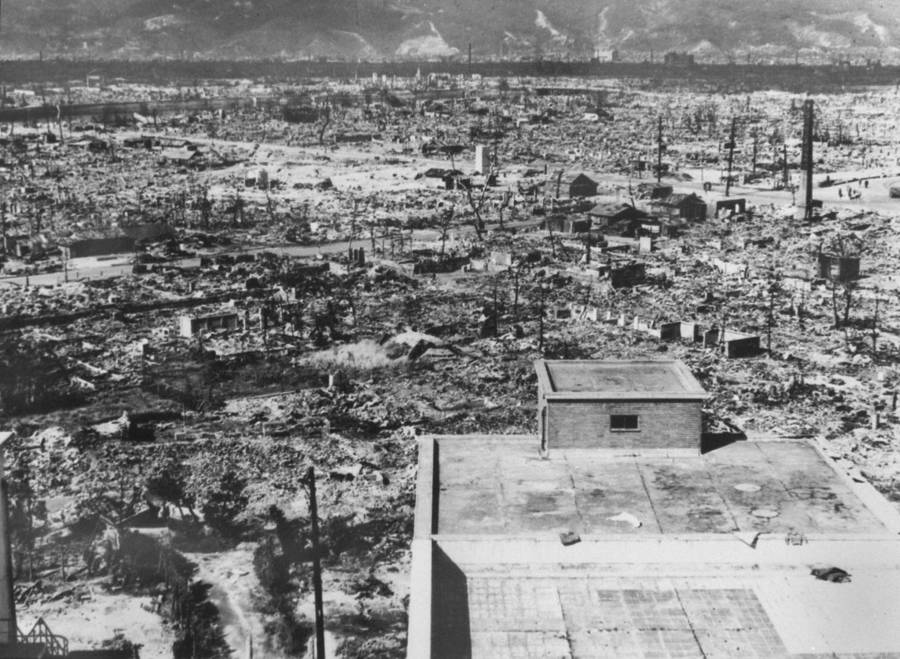
The devastated remains of Hiroshima, Japan, just days after U.S. forces dropped an atomic bomb on the city on August 6, 1945, killing upwards of 140,000 people.AFP/AFP/Getty Images
48 of 75
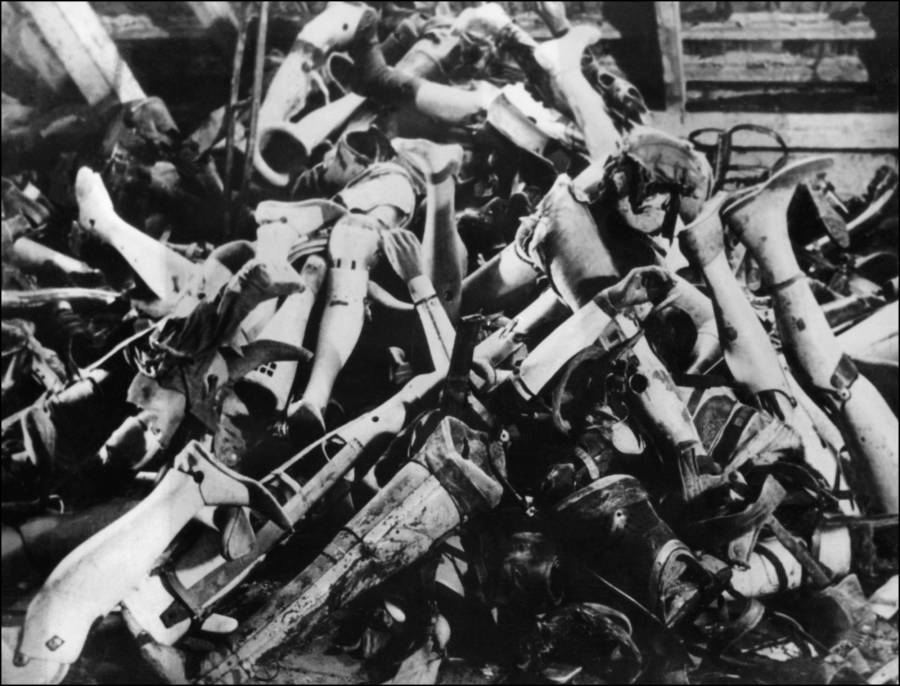
A pile of prostheses belonging to the murdered victims of the Auschwitz concentration camp in Poland photographed following its liberation in January 1945.AFP/Getty Images
49 of 75
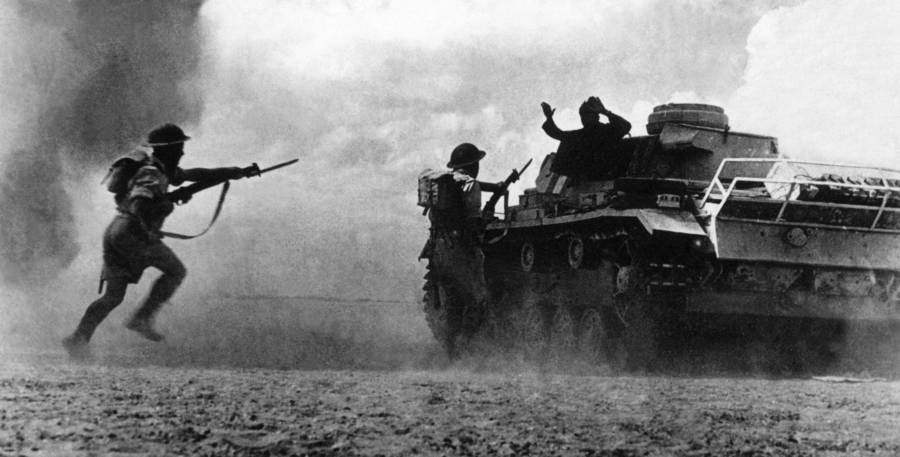
British and American forces charge a German soldier surrendering atop his tank during the Second Battle of El Alamein in Egypt. Oct. 25, 1942.-/AFP/Getty Images
50 of 75
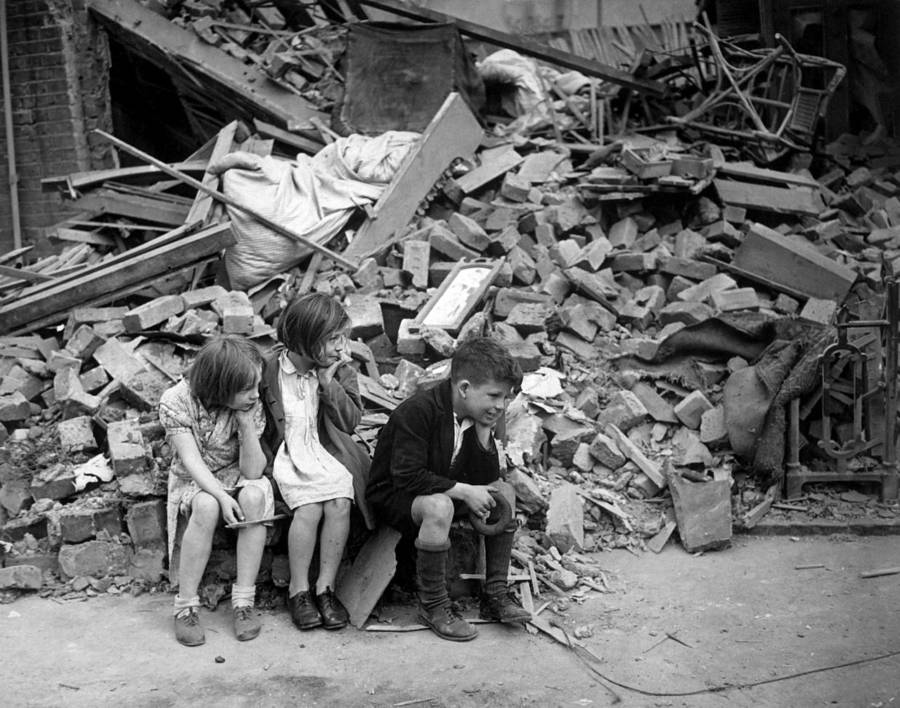
Children of an eastern suburb of London, who have been made homeless by German bombings, sit outside the wreckage of what was their house. September 1940.Paris Bureau of The New York Times/U.S. National Archives
51 of 75
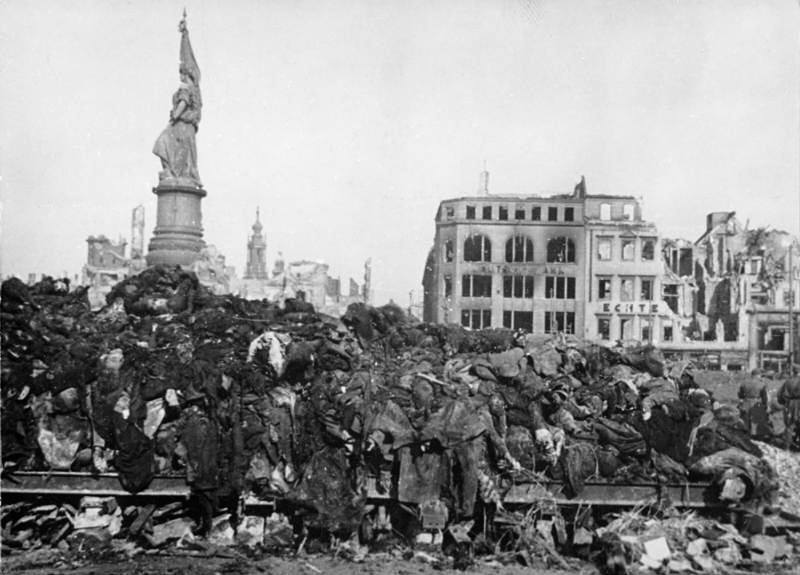
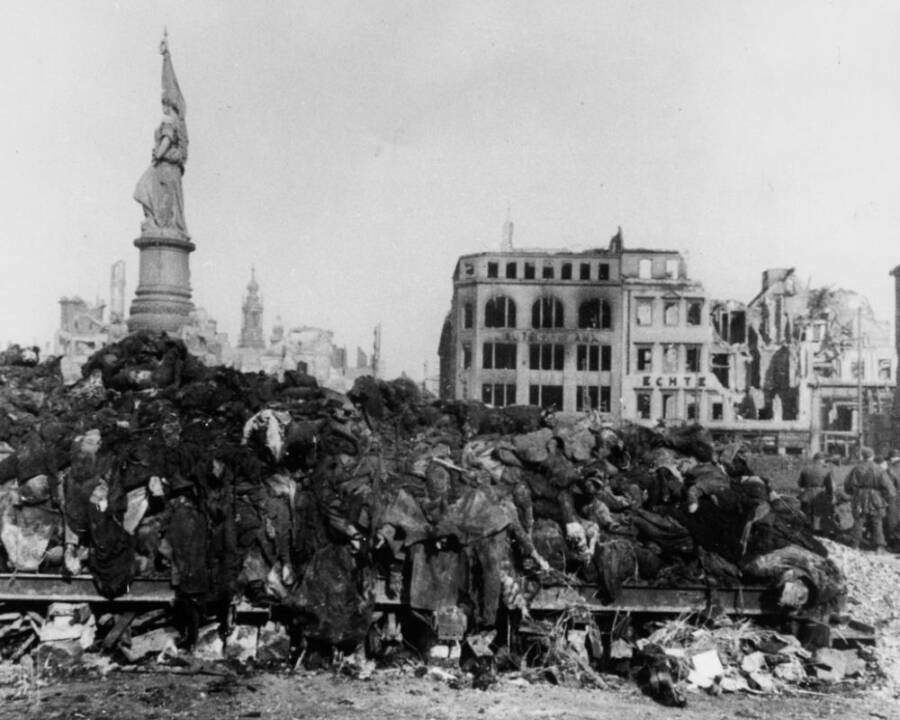
Victims of the massive Allied bombing campaign in Dresden, Germany. February 1945.German Federal Archives
52 of 75
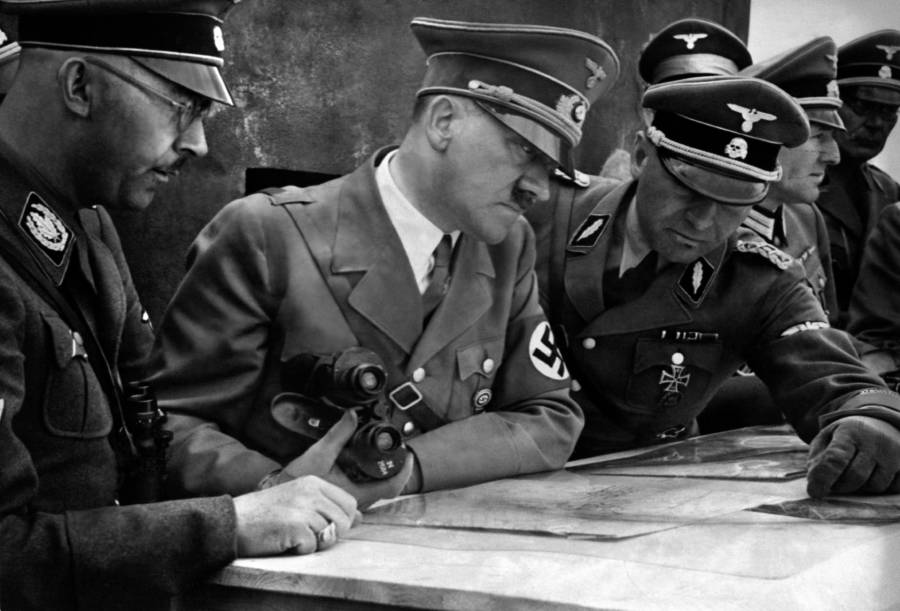
Adolf Hitler joins key advisors Heinrich Himmler (left) and Martin Bormann (right) in surveying a strategic map at an unspecified location. 1939.-/AFP/Getty Images
53 of 75
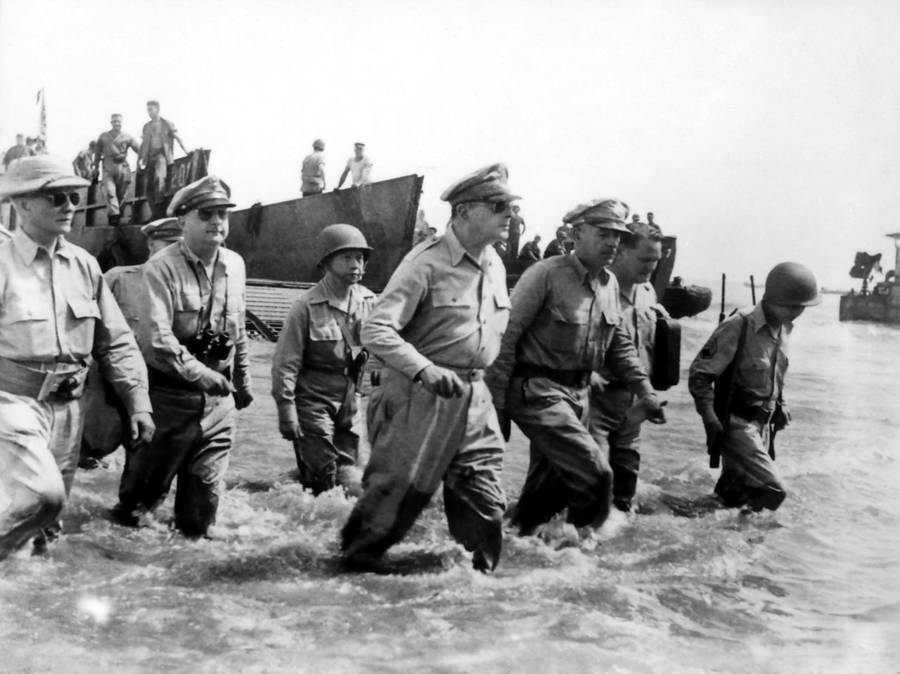
U.S. General Douglas MacArthur wades ashore during the initial landings at Leyte in the Philippines. October 1944.Gaetano Faillace, U.S. Army Signal Corps/U.S. National Archives
54 of 75
German soldiers arrest a Jewish man in Warsaw, Poland, following the ghetto uprising that had recently occurred there. April 1943.AFP/Getty Images
55 of 75
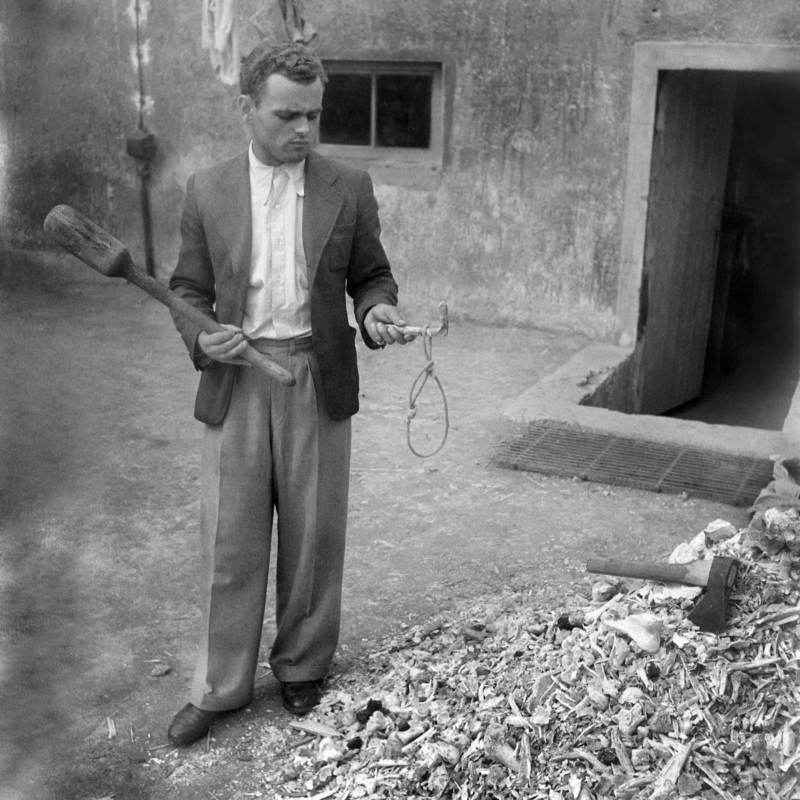
A man holds a noose used for hanging prisoners at the Buchenwald concentration camp following its liberation by U.S. forces in April 1945.ERIC SCHWAB/AFP/Getty Images
56 of 75
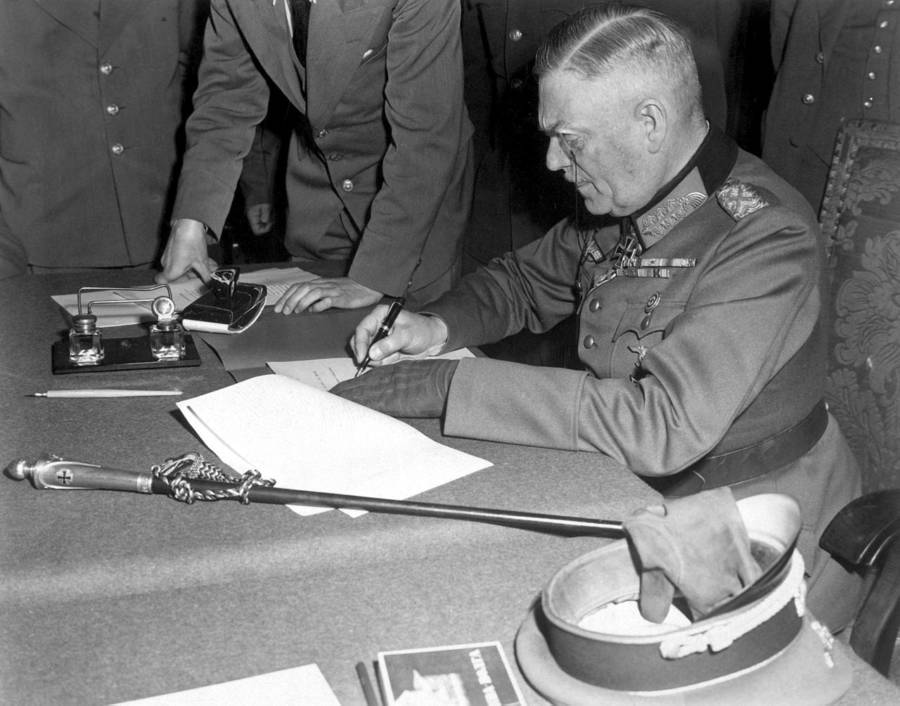
Field Marshal Wilhelm Keitel signs the unconditional surrender of the German Army at the Soviet headquarters in Karlshorst, Berlin. May 8, 1945.Lt. Moore, U.S. Army/U.S. National Archives
57 of 75
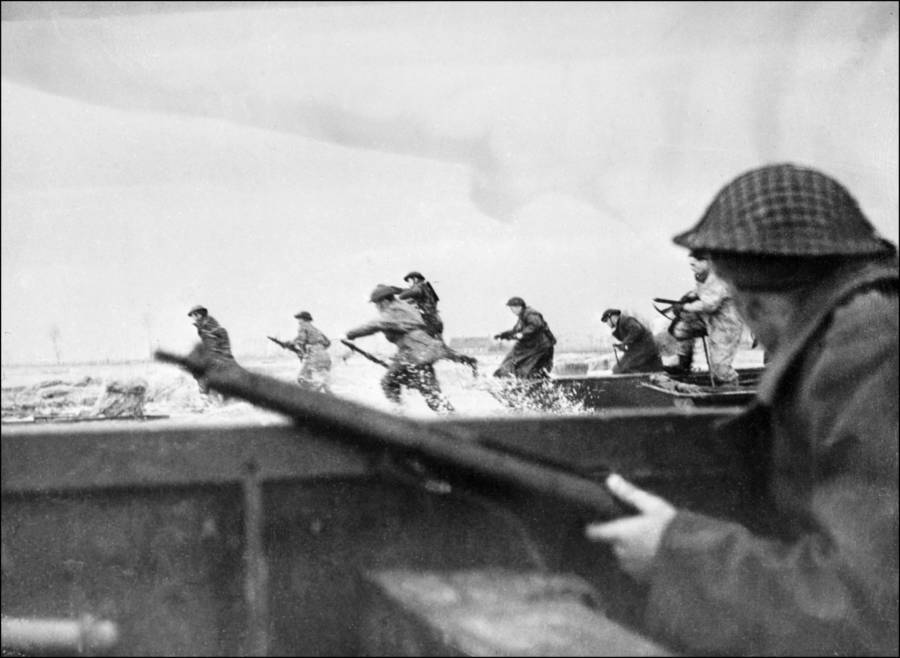
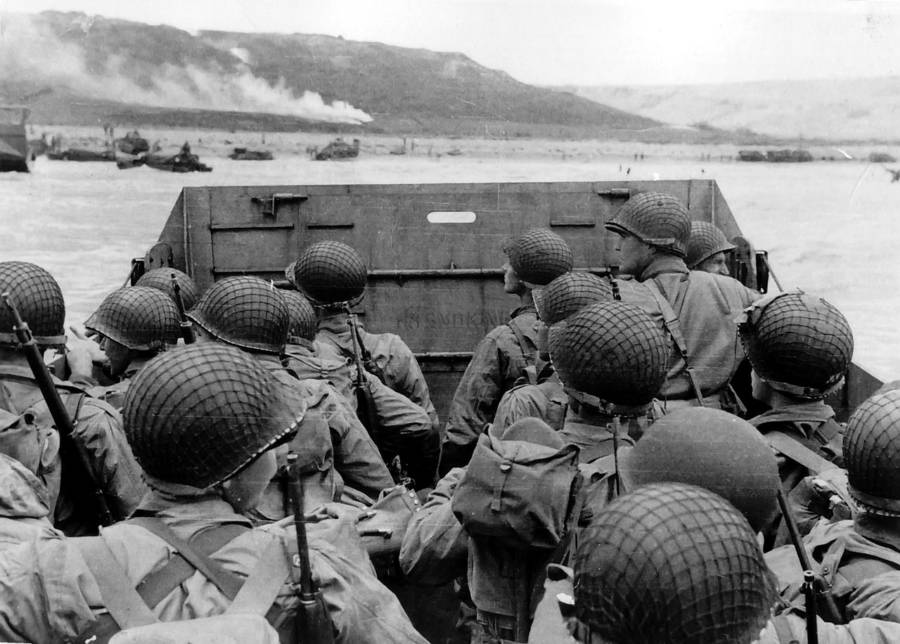
U.S. soldiers wait in a landing craft as it approaches Omaha Beach during the D-Day landings in Normandy, France. June 6, 1944.Public Domain
58 of 75
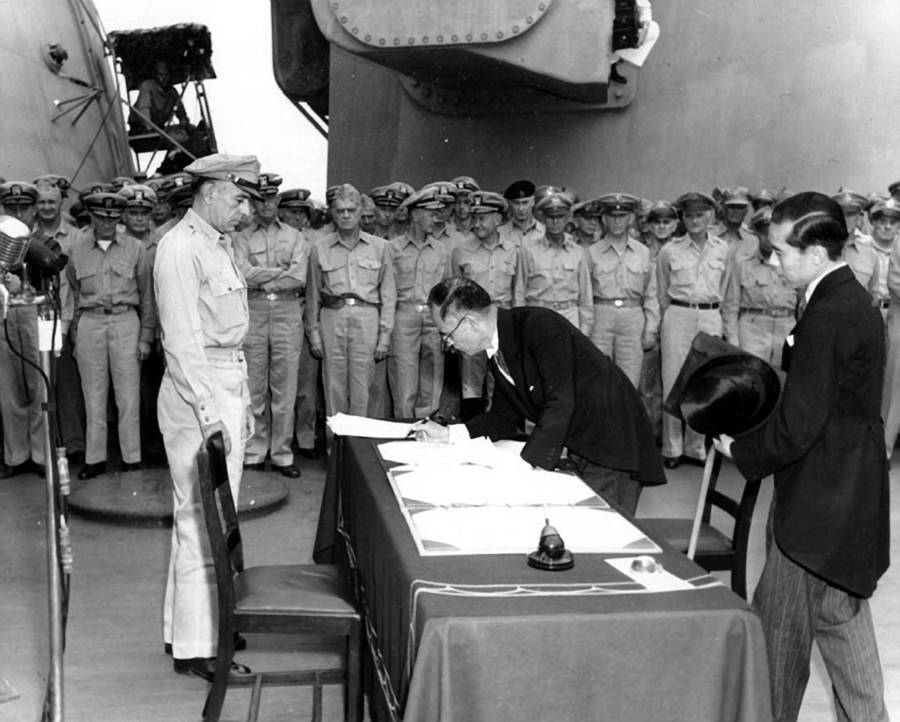
Japanese Foreign Minister Mamoru Shigemitsu signs the Instrument of Surrender on behalf of the Japanese Government onboard the USS Missouri on Sept. 2, 1945, as Lt. Gen. Richard K. Sutherland of the U.S. Army watches from the opposite side of the table.Army Signal Corps
59 of 75
A celebration of Germany's surrender takes place on Paris' Champs-Élysées, as seen from the top of the Arc de Triomphe. May 8, 1945.-/AFP/Getty Images
60 of 75
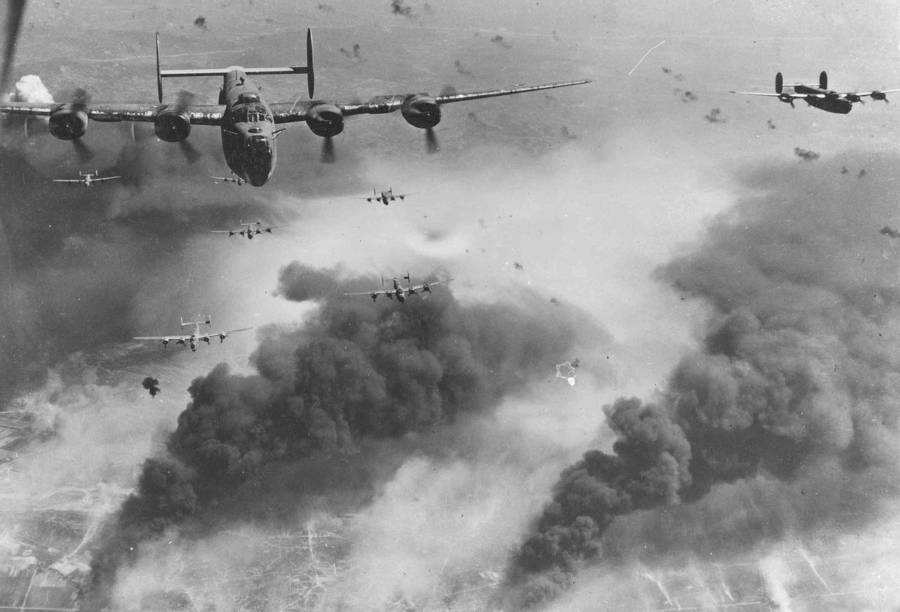
U.S. Air Force bombers fly over Ploiești, Romania, following a raid on August 1, 1943.
Of the 16 cameramen accompanying this mission, the man who took this photo was the only one to survive.Jerry J. Jostwick/U.S. Air Force
61 of 75
U.S. infantrymen move through the destroyed town of Waldenburg, Germany. April 16, 1945.2d Lt. Jacob Harris., U.S. Army/U.S. National Archives
62 of 75
The entrance to Auschwitz concentration camp in Poland soon after its liberation by Soviet troops. January 1945.AFP/AFP/Getty Images 63 of 75
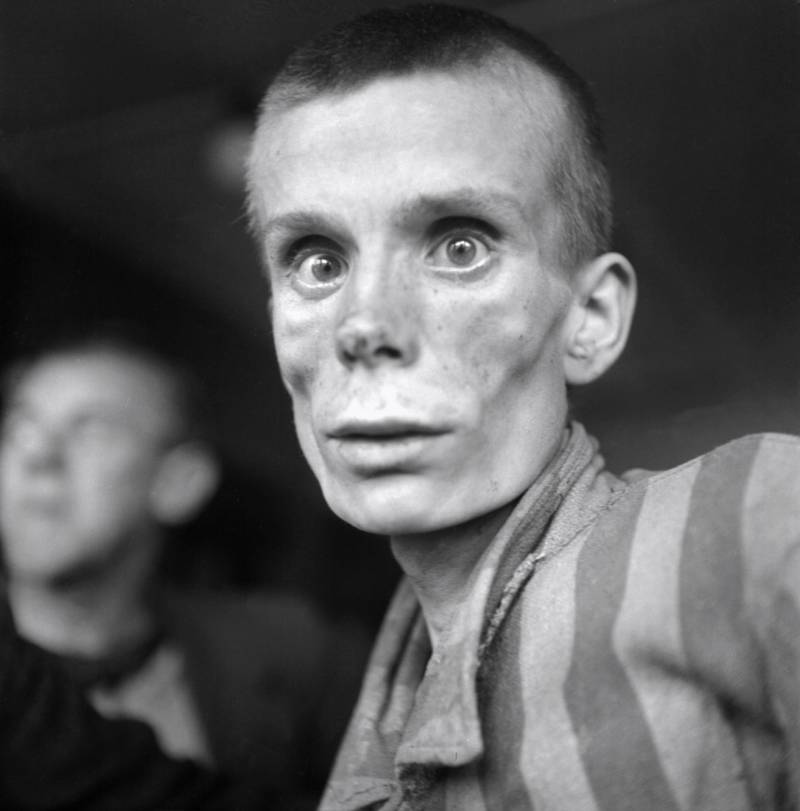
An emaciated 18-year-old woman, a Russian prisoner of Dachau concentration camp, not long after its liberation by U.S. forces on April 29, 1945.ERIC SCHWAB/AFP/Getty Images 64 of 75
The devastated remains of the U.S. Navy destroyer USS Shaw following the Japanese raid on Pearl Harbor, Hawaii on Dec. 7, 1941.U.S. Navy/U.S. National Archives
65 of 75
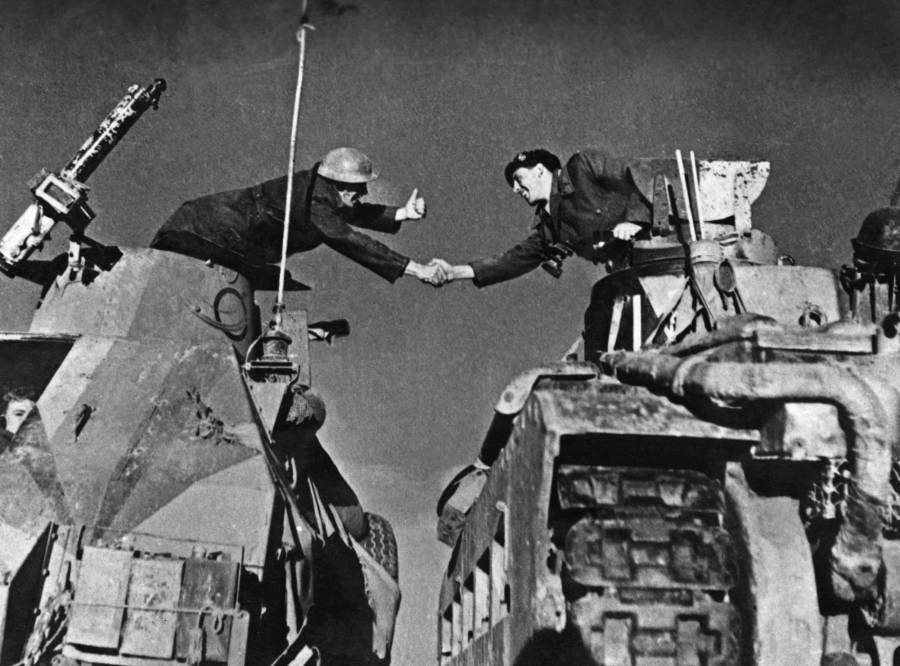
British soldiers shake hands from atop their vehicles in Tobruk, Libya. October 1942.AFP/Getty Images
66 of 75
Some of the 60,000 dead bodies found on the grounds of Bergen-Belsen concentration camp following its liberation by British troops on April 15, 1945.-/AFP/Getty Images 67 of 75
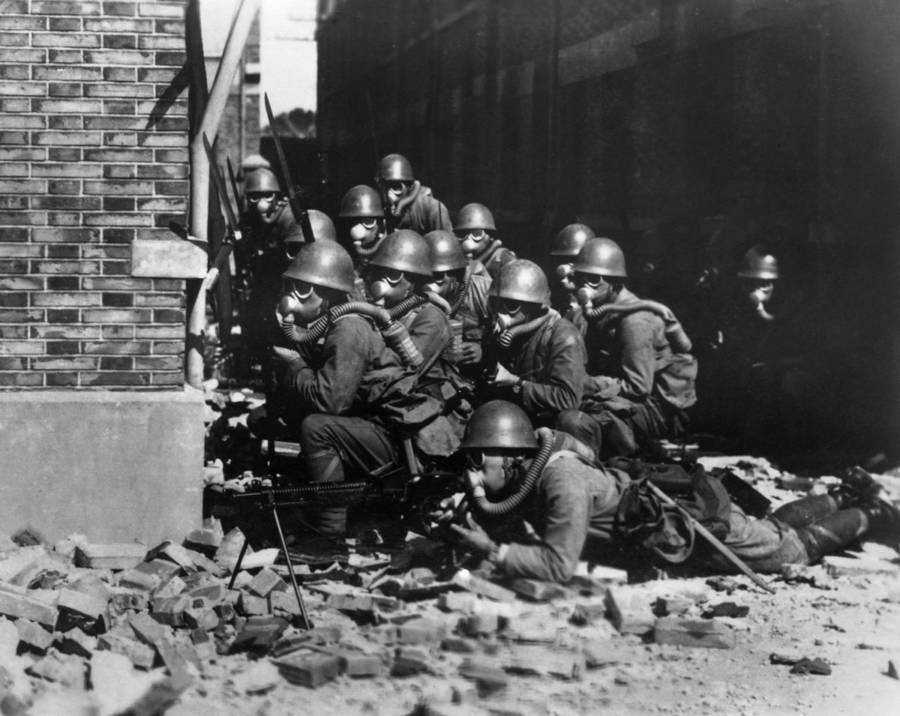
Members of the Imperial Japanese Navy (IJN) Special Naval Landing Forces, outfitted with gas masks, prepare for an advance amid the rubble of Shanghai, China, during the Second Sino-Japanese War, which many historians contend falls under the umbrella of World War II. August 1937.Public Domain 68 of 75
From left, Soviet leader Joseph Stalin, U.S. President Franklin D. Roosevelt, and British Prime Minister Winston Churchill meet at the historic Tehran Conference in Iran on Nov. 28, 1943.STF/AFP/Getty Images
69 of 75
A U.S. fighter plane spins its propellor on the deck of the USS Yorktown in the Pacific. November 1943.U.S. Navy/U.S. National Archives
70 of 75
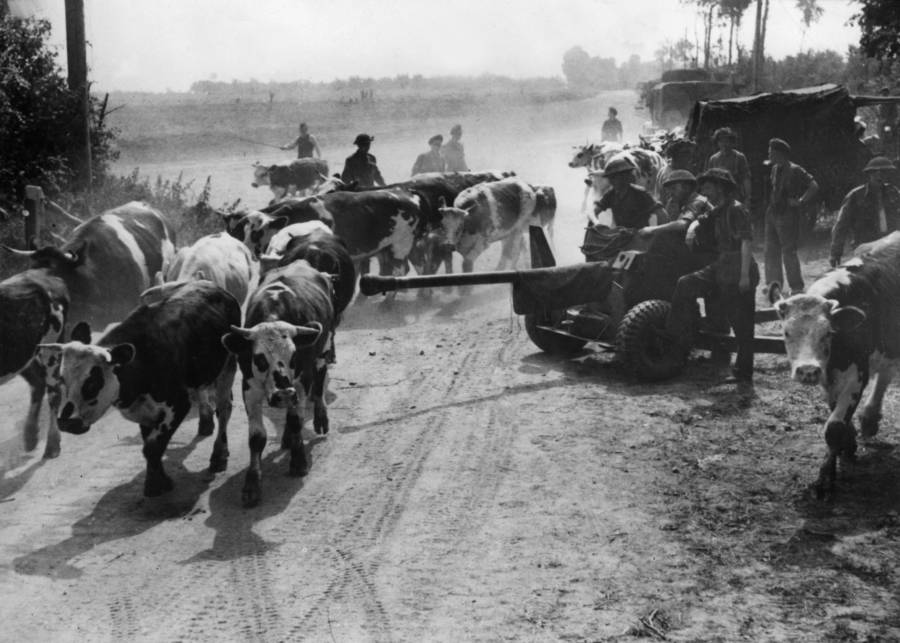
Allied soldiers come across a herd of cows as they make their way through Normandy, France. June 1944.STF/AFP/Getty Images
72 of 75
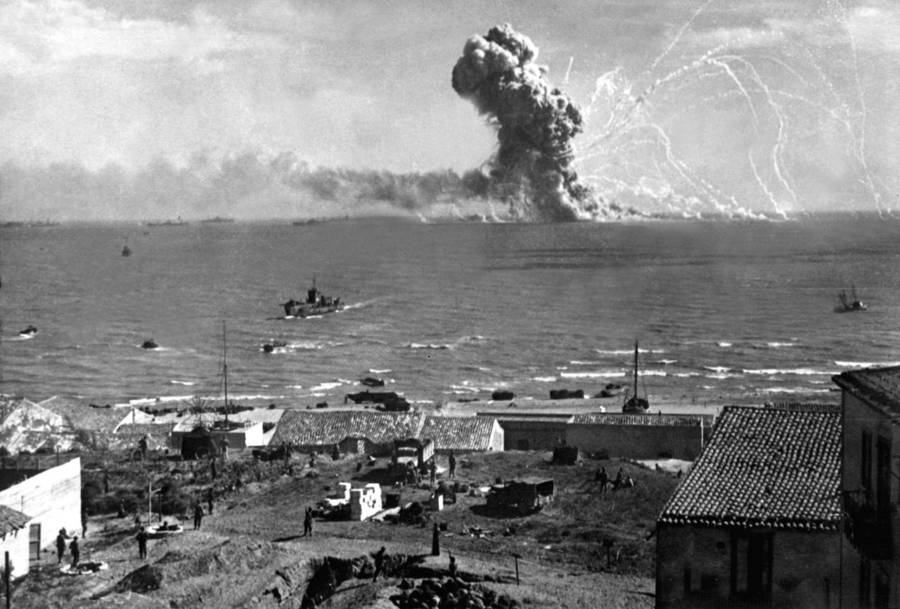
The American ship SS Robert Rowan explodes after being attacked by a German bomber off the coast of Gela, Sicily. July 11, 1943.Lt. Longini, U.S. Army Signal Corps/U.S. National Archives
73 of 75
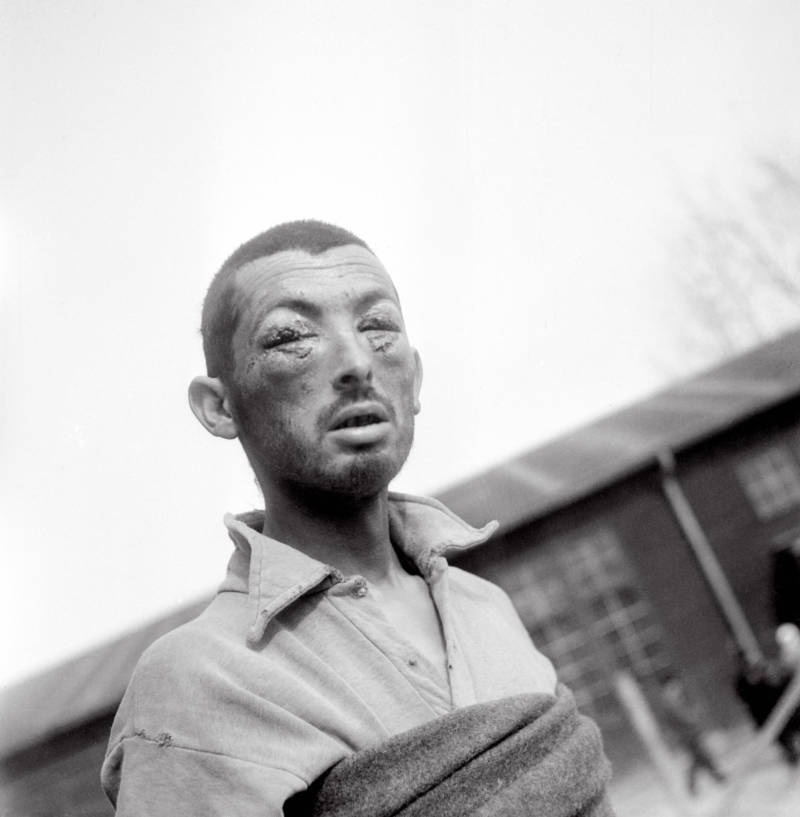
A tortured prisoner of the Buchenwald concentration camp. April 1945.ERIC SCHWAB/AFP/Getty Images
74 of 75
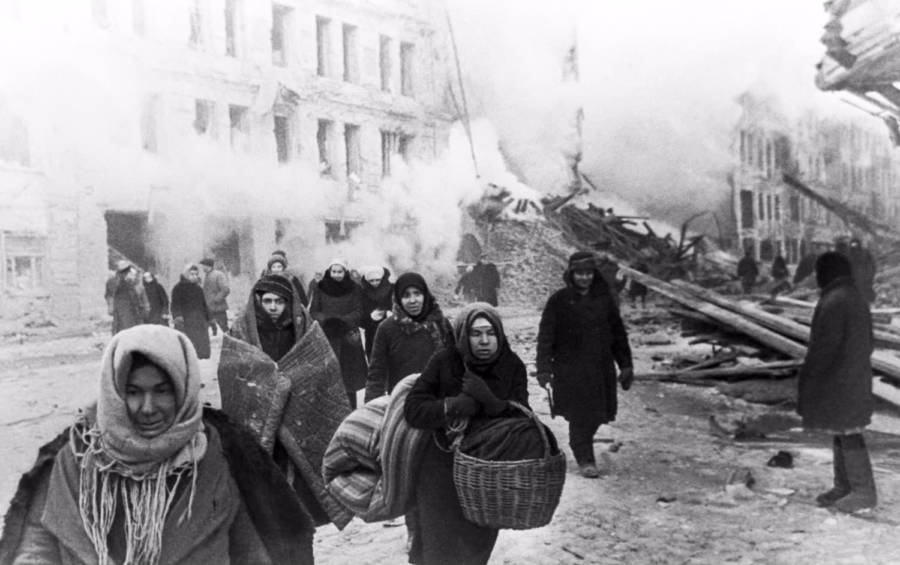
Citizens of Leningrad in the Soviet Union vacate their houses that were destroyed by German bombing. Dec. 10, 1942.Boris Kudoyarov/Russian International News Agency
75 of 75
Like this gallery?
Share it: