Dire Wolves: The Prehistoric Animals Depicted In ‘Game Of Thrones’
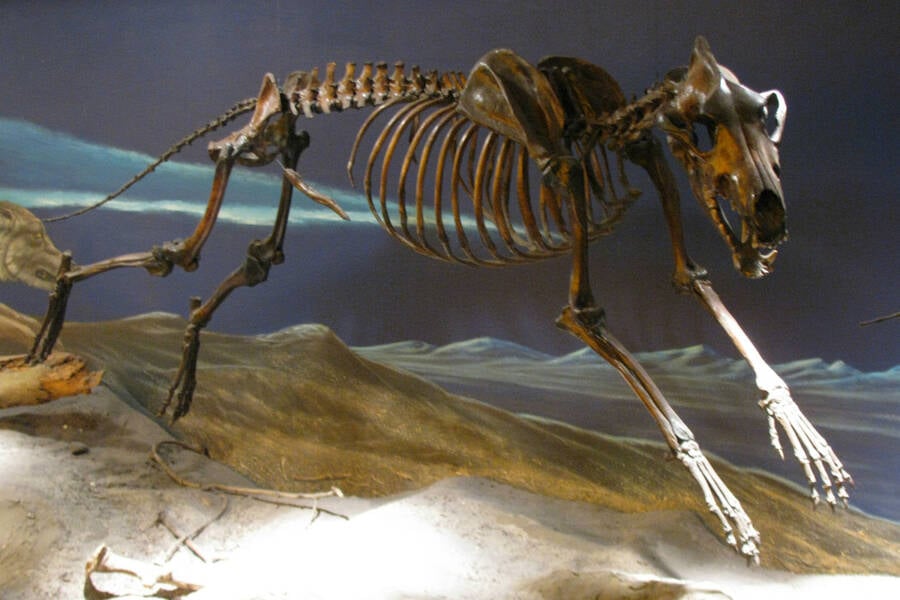
Wikimedia CommonsA skeleton of the fearsome (and very real) dire wolf.
In the TV series Game Of Thrones, a number of characters have a dire wolf companion. On the show, these wolves are depicted as large, fierce, and loyal. Game of Thrones may have taken some liberties, but dire wolves were actual ancient animals.
Real dire wolves — called Canis dirus, or “fearsome dogs” — existed from about 125,000 to 10,000 years ago in present-day North and South America. Though similar to gray wolves, dire wolves are genetically different.
Slightly bigger than gray wolves and with reddish fur, dire wolves weighed around 130 pounds and measured about six feet long. Like the dire wolves of fiction, Canis dirus also had formidable jaws that helped them kill.
The dire wolves went after a variety of prey. They killed horses, bison, and even young mammoths when they could get it. By springing on their prey and latching on with their jaws, dire wolves dragged animals down so that they could kill them. As such, their fossils are often found with neck injuries.
Sometimes, they actually competed with saber-toothed cats to make the kill.
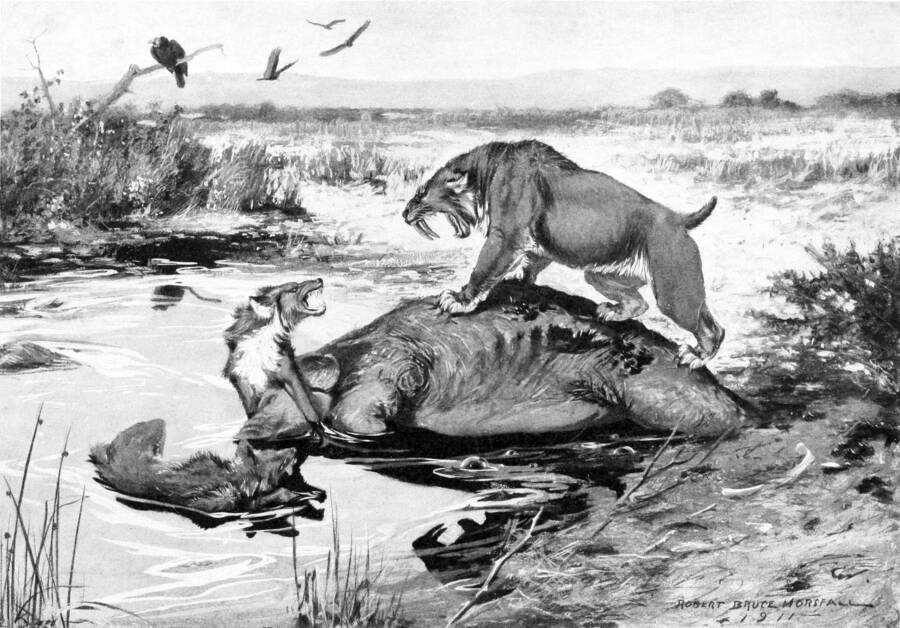
Wikimedia CommonsAn illustration depicting dire wolves and a saber-toothed tiger fighting over prey.
To date, thousands of dire wolf skeletons have been found at the La Brea Tar Pits in California. Like the Smilodon, dire wolves often chased their prey with a bit too much enthusiasm and got caught in the tar.
But it wasn’t the La Brea Tar Pits alone that killed off the last of the dire wolves. It seems likely that these wolves died off because their prey did. Lacking slow-moving animals to kill — and unable to catch up with faster ones — the dire wolves went extinct.
They live on in the world of fiction, however. Dire wolves have enjoyed a renaissance thanks to George R.R. Martin’s book series and the Game Of Thrones TV show.
Gigantopithecus: The Largest Ape That Ever Lived
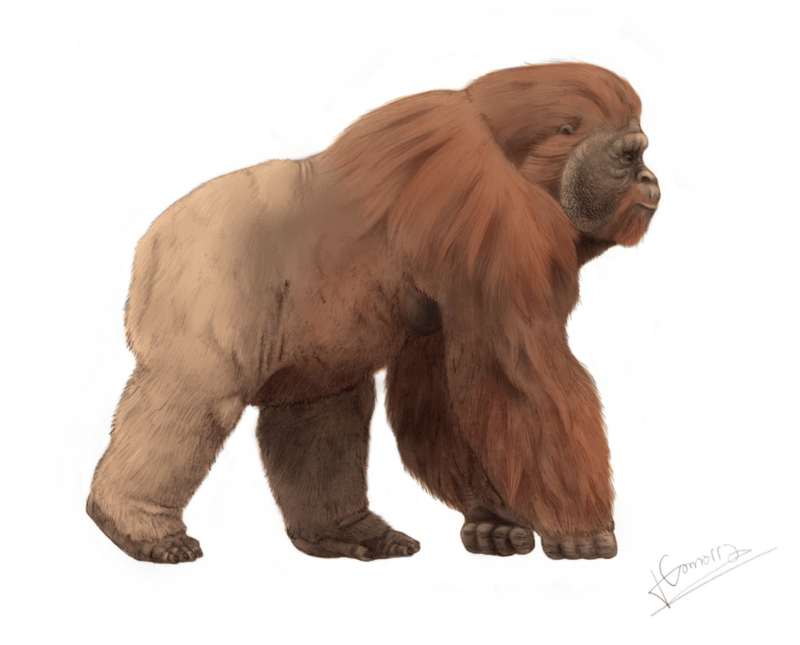
Wikimedia CommonsThe elusive Gigantopithecus blacki could have weighed almost 600 pounds.
Maybe Bigfoot doesn’t exist — or maybe he does. But in any case, a similarly gigantic beast did once walk the earth. Gigantopithecus blacki, a prehistoric giant ape, could give Bigfoot a run for his money.
Like Bigfoot, however, G.blacki is elusive. Scientists have few fossils of them, and the ones they do have are mostly of teeth and pieces of the great ape’s jaw. Even from that, researchers have drawn some stunning conclusions, however.
G.blacki, they believe, stood around 10 feet tall and could weigh almost 600 pounds. A likely ancestor of today’s orangutans, the ape lived in Southeast Asia for about six to nine million years before going extinct some 100,000 years ago.
Based on its teeth — nearly 2,000 large molars, canines, and other teeth have been found — researchers suspect that G.blacki ate a vegetarian diet. These ancient animals likely consumed plants, fruits, seeds, and maybe even bamboo.
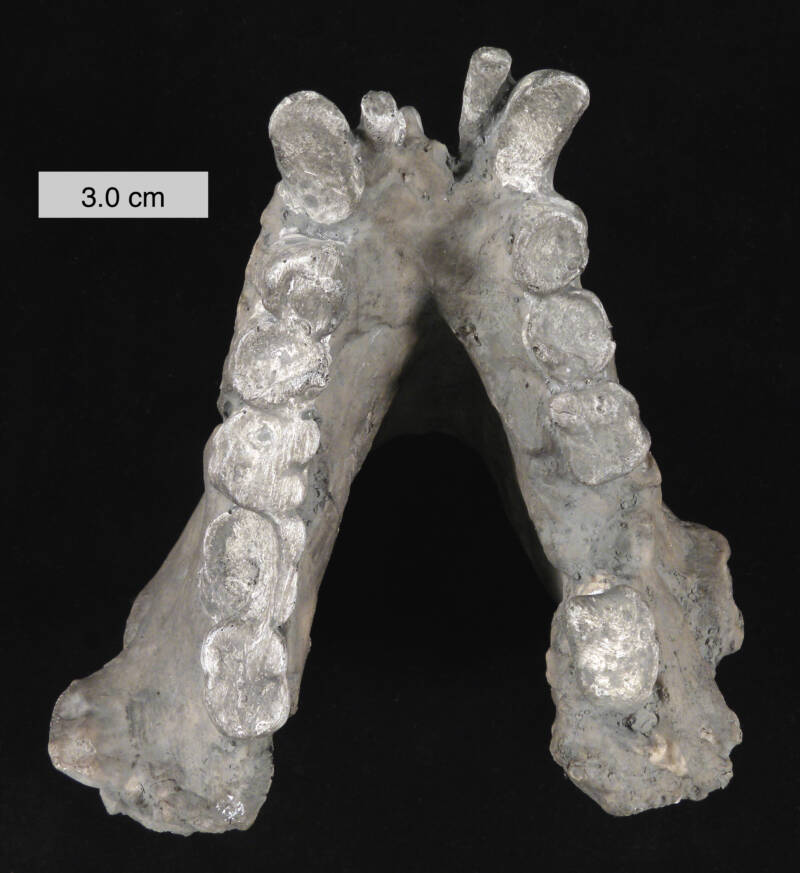
Wikimedia CommonsThough scientists have found few fossils, they have come across a number of the ape’s jaws and teeth.
However, G.blacki‘s diet may have doomed it to extinction. While most prehistoric animals of its time foraged in both the forest and grasslands, the apes stuck to the forests.
As the forests shrank, so did their food supply. Seemingly unable to adapt — and unwilling to leave the safety of the woods — the giant apes died out.
In fact, it wasn’t until 1935 that modern-day humans got a whiff of G.blacki‘s existence. Then, a German paleontologist named Gustav von Koenigswald came across some of the ape’s teeth in China. Sold as “dragon teeth,” they suggested to many scientists that humans had had a giant ancestor.
Instead, they came across the giant ape — and a giant mystery. Hopefully more fossils of G.blacki will be uncovered in the future.