Entelodont: The Prehistoric Animal With Teeth As Thick As A Human Wrist
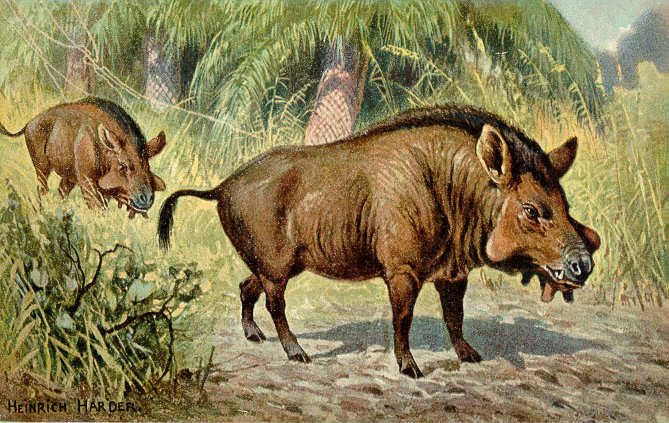
Wikimedia CommonsAn illustration of the entelodont.
The next prehistoric animal looks like it waltzed straight out of hell. Indeed, the entelodont goes by the nickname “hell pigs.”
These beasts had teeth the size of a human wrist, nubby bones in their face for fights with each other or other animals, and cloven hooves. The largest of their genus, called Daeodon — Greek for “hostile teeth” — could weigh up to 2,000 pounds.
Hell pigs charged onto the scene during the Eocene era. From Mongolia, they rapidly spread to Europe and even to North America. Archeologists have found fossils of the entelodont in places like Nebraska, Wyoming, and South Dakota.
However, the entelodont didn’t spend its days preying on other prehistoric animals. Instead, it seems that it used its enormous jaws to dig for roots and chew plants.
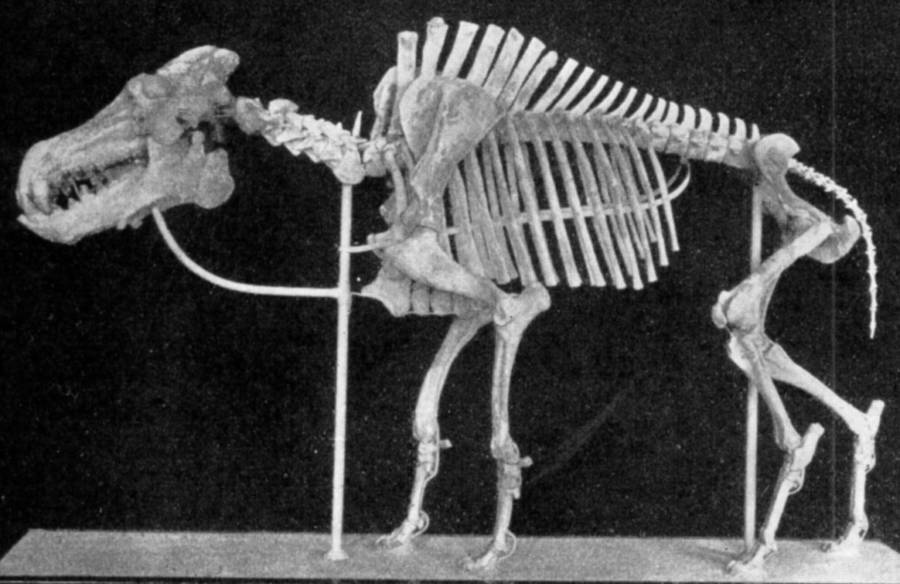
Wikimedia CommonsA skeleton of the daeodon, the largest species of entelodont.
That said, the hell pigs were likely omnivores. Even if they didn’t kill first-hand, they may have just waited for other animals to kill before scaring them off and eating their prey.
The hell pigs probably scared most animals in their environment, even if they didn’t outright kill them to eat. Bite marks left by Daeodon have been found on a number of animals including prehistoric rhinos.
In the end, it took a combination of factors to finally take down the entelodont. As the climate changed, the hell pigs’ beloved forests turned into grassy fields. Forced to travel long distances for food, the pigs likely lost out to animals that moved faster.
Plus, a number of new predators appeared on the horizon during the entelodont’s existence. They soon faced formidable foes like the saber-toothed cat as well as bear dogs.
The last of the entelodont went extinct between 19 and 16 million years ago. Since then, these fearsome ancient animals exist only as fossils in museums — or perhaps as hellish pigs, running through your nightmares.
Smilodon: Sharp-Fanged Saber-Toothed Tigers
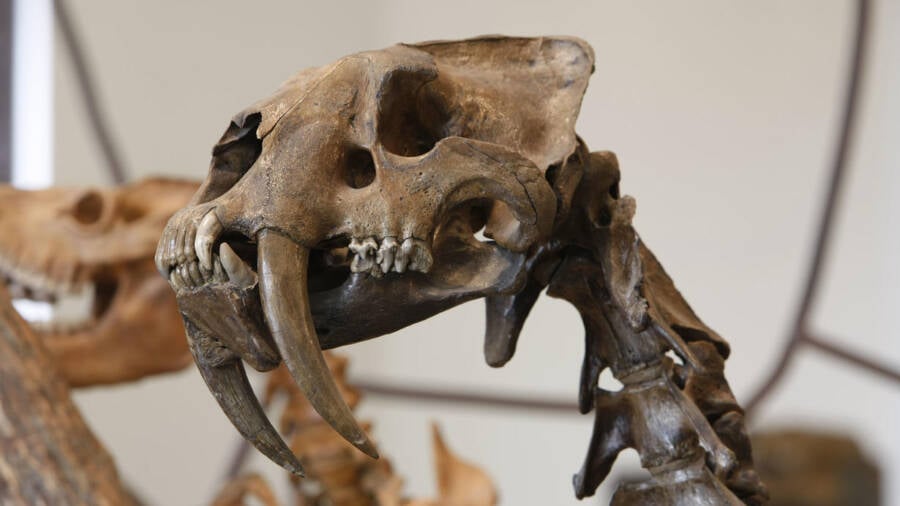
D. Finnin/American Museum of Natural HistoryA saber-toothed tiger, or smilodon.
Perhaps the most famous prehistoric animal on this list is the Smilodon, or saber-toothed cat. Its striking canine teeth give it an especially fearsome appearance.
The Smilodon lived between 2.5 million to 11,700 years ago, and populated the forests of North and South America. The cat varied in size depending on the species. Smilodon gracilis grew to about 150 pounds, Smilodon fatalis at 200 pounds, and Smilodon populator tipped the scales at around 500 pounds.
One recently discovered Smilodon populator fossil, however, suggests that the cat could have been much bigger. Based on the size of its head, scientists think that it could have grown to weigh 1,000 pounds.
Regardless of size, these big cats shared one defining characteristic: their canine teeth. Set on the side of their jaw, these sharp fangs hung menacingly on either side of the cat’s face. To stab their prey, the saber-toothed cats had to open their mouths more than 90 degrees.
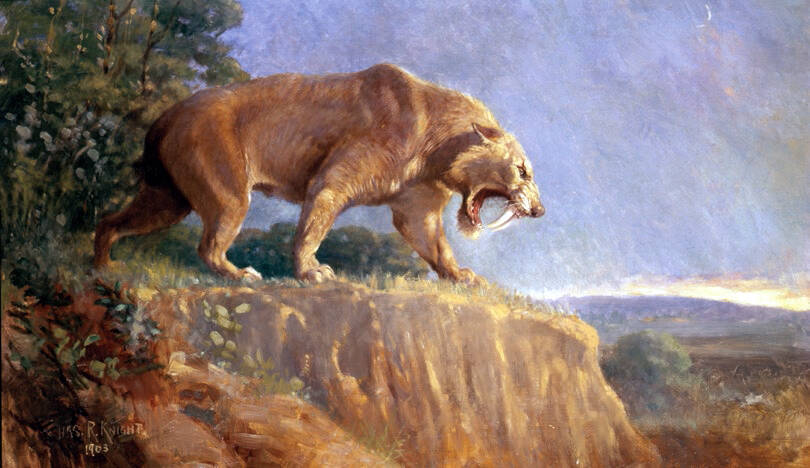
Wikimedia CommonsAn illustration of the ancient animal, Smilodon populator.
Surprisingly, however, the big cats’ teeth were fragile. They sometimes lost them entirely while fighting to subdue their prey. As such, the cats often hunted from the trees. Using the element of surprise, they leaped from the branches and sunk their teeth into unsuspecting animals below.
They were nonetheless effective killers. The saber-toothed cats likely preyed on bison, sloths, mammoths, horses, pigs, and llamas. In other words, they killed whatever they could.
Sometimes, the pursuit of prey proved fatal for the Smilodon. Thousands of saber-toothed cat bones have been extracted from the La Brea Tar Pits in California. There, many Smilodon met a literal sticky end while chasing prey into the pits.
A changing climate — and the ensuing lack of prey — likely spelled the end for these terrifyingly majestic ancient animals.