Ursus Spelaeus: The Ice Age Cave Bears
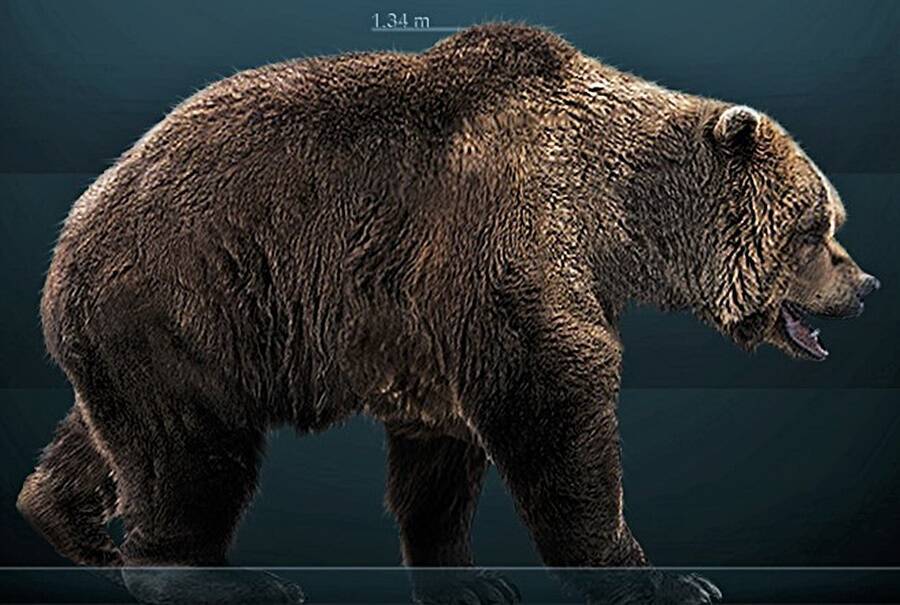
Wikimedia CommonsA modern depiction of an Ice Age cave bear, called Ursus spelaeus.
Standing 11 feet tall and weighing up to 2,200 pounds, the Ice Age cave bear, or Ursus spelaeus, must have struck fear into the hearts of early humans.
But the bear probably wouldn’t have killed — at least not to eat. Scientists think that these prehistoric animals were primarily herbivores and munched on plants, not people.
During the Late Pleistocene era, these bears lived across Europe. Tens of thousands of their fossils have been found in caves across the continent, suggesting that they spent more time in caves than modern-day bears (who often use caves solely for hibernation).
They did, however, seem to venture out enough to cross paths with people. Scientists aren’t sure exactly how early humans interacted with the bears, but they have come across some puzzling clues.
In Drachenloch, Switzerland, for example, researchers found seven cave bear skulls seemingly arranged to face the front of the caves, and six more skulls stuck into cave alcoves.
That head-scratching discovery, however, pales in comparison to the nearly intact cave bear found by reindeer hunters in 2020.
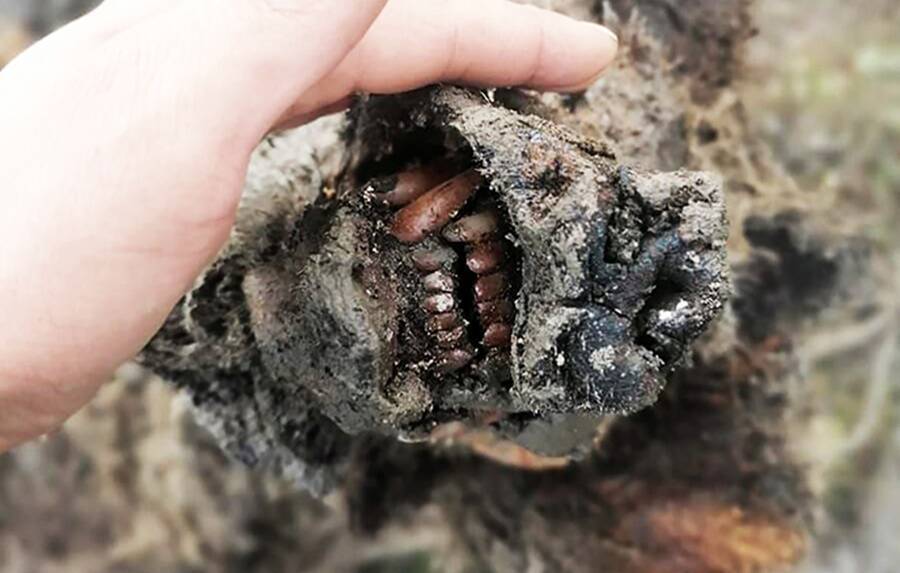
NEFUThe bear was so well-preserved that its nose, fur, and teeth were still intact.
The hunters came across the bear in the melting permafrost of Bolshoy Lyakhovsky Island in Siberia. Likely between 39,500 and 22,000 years old, the frozen tundra kept it in remarkably good shape. The cold preserved even its internal organs.
So, what happened to these Ice Age cave bears? Although their cousins walk the earth today, Ursus spelaeus slowly went extinct starting around 24,000 years ago.
It’s unclear what exactly did them in. Scientists have noticed high rates of disease in cave bear fossils, which could have been a contributing factor. However, changing climate could also have contributed to the extinction of the Ice Age bears.
Megalania Prisca: The World’s Largest Lizard
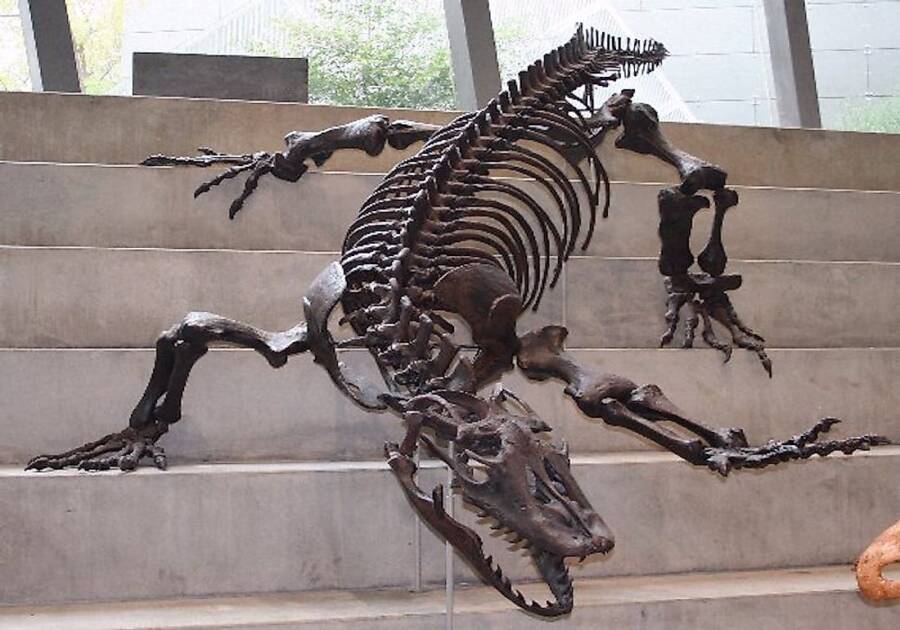
Wikimedia CommonsA skeleton of the enormous megalania.
Today’s Komodo Dragons can weigh up to 150 pounds, but their ancestor, Megalania prisca — also called Varanus priscus or Giant Monitor Lizard — could grow to between 500 and 4,000 pounds. It’s the largest known lizard to have ever walked the Earth.
Between two million and 40,000 years ago, these intimidating creatures easily reigned over present-day eastern Australia. Up to 25 feet long, they likely feasted on a wide variety of animals, including kangaroos, pygmy elephants, and tortoises.
Though they could certainly use their size to subdue and kill prey, the M. prisca also had another tool at their disposal: toxic saliva. Scientists believe that they used venom from glands in their lower jaw to kill.
That said, it’s possible that M. prisca occasionally faced predators of its own. During its life, it shared an environment with The Marsupial Lion (called Thylacoleo) and a 500-pound crocodile (known as the Quinkana). It’s hard to predict if the Giant Monitor Lizard could win a bout with these dangerous prehistoric animals.
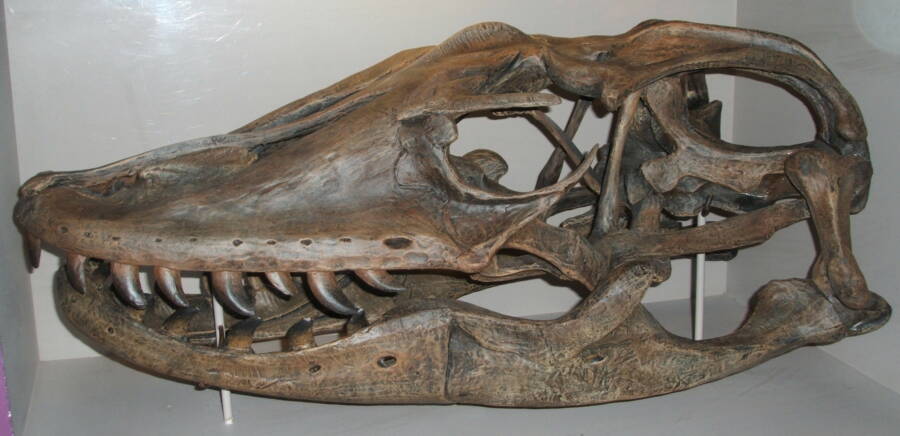
Wikimedia CommonsA skull of the Giant Monitor Lizard.
English naturalist Richard Owen first described M. prisca in 1859. He’s the one who gave it its name (which means giant roamer) but contemporary scientists believe he mislabeled it, which is why it also goes by the name Varanus priscus.
Since Owen’s discovery, however, scientists have found very few fossilized remains of the Giant Monitor Lizard. That means that there’s still a lot to learn about this prehistoric animal.
There are some theories out there about why the M. prisca died out, however. Although humans didn’t seem to hunt it directly, they did hunt animals that the M. prisca relied on as prey. As such, people may have played an indirect role in its extinction.
Then again, as with the giant sloth, some believe that the Great Monitor Lizard never went extinct at all. Rumor has it that the beast simply crept into the Australian wilderness and lives there to this day.