Diana, The Vigilante Femicide Bus Driver Hunter
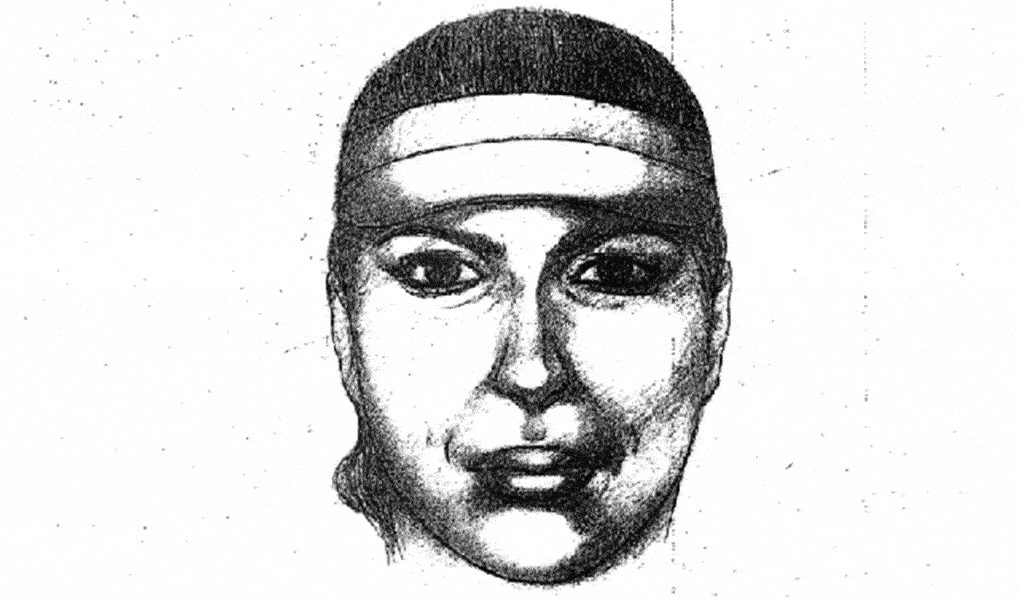
APSketch of “Diana, the Hunter,” the female vigilante who killed bus drivers suspected of aiding in the murder of women.
In recent years, there was a growing pandemic of “femicide” in Mexico, the abduction and killing of women.
It was estimated that six women are murdered every day in the country and, most alarmingly, news reports revealed many of these crimes were aided by local officials and transit officers, including city bus drivers who sometimes doubled as drug dealers.
The worsening conditions spurred a grassroots movement of women rights activists who are bringing wider attention to this horrific trend. But rampant corruption in law enforcement has often forced women to take matters into their own hands — one of these female vigilantes is a woman named Diana.
Nicknamed the “Bus Driver Hunter,” Diana was a disguised vigilante who worked to avenge the more than 800 girls and women allegedly killed or abducted by Ciudad Juárez bus drivers.
After murdering two bus drivers suspected of being accomplices in these crimes against women, Diana sent out a letter to local news outlets explaining her actions:
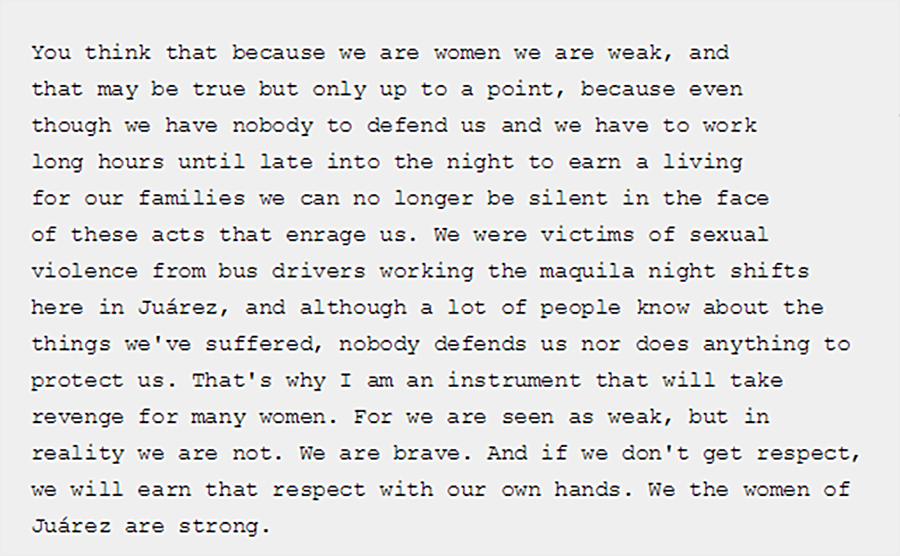
This American LifeThe explanation letter that Diana sent.
Reporter Yuri Herrera, who covered Diana’s story on This American Life, spoke with female public transit users in Ciudad Juárez — where the homicide rate is double that of the entire country — about the armed vigilante. One young mother remarked candidly, “How great that someone’s doing what many of us should have done.”
Another woman commented on her bravery, saying, “I’m not sure what she did is justified… but you’ve got to admit that that woman has guts.” The public’s response to the vigilante fighting for women’s safety clearly stems from the public’s hopelessness in the face of the growing murders.
“First [the police] denied the problem… then they played it down, and finally, they blamed the victims’ lifestyle and their families,” explained Oscar Maynez, a criminologist who has worked on numerous femicide cases in Mexico.
Possibly wearing a bright blonde wig, Diana’s M.O. has been a quick bullet or two to the back of the head from a revolver. It’s unclear how many times Diana has acted but her extreme actions have definitely had the intended effect on conspiratorial men looking to hurt more women.
“We’re terrified,” said one bus driver, complaining of constant headaches due to the strain of looking over his shoulder for fear of Diana’s reprisal. “We’re frightened of our own shadow.”
So far, Diana remains at large and while her revenge against the men who continue to harm and kill Mexican women has not stopped the rising toll of victims, it has provided women some form of comfort that someone is looking out for them.
“Perhaps they will realize that it is not so easy to abuse women now,” one female passenger said with a smile.
Revenge Stories: The Jewish Vigilantes Of Nakam Who Tried To Poison 6 Million Germans
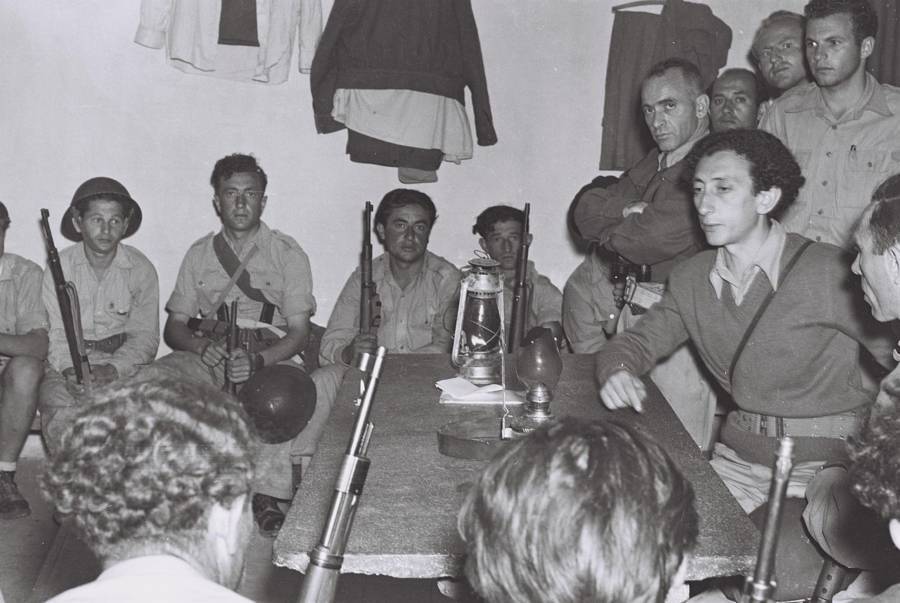
Wikimedia CommonsAbba Kovner (right), who formed the Jewish militia group Nakam, planned to kill 6 million Germans as revenge for the Holocaust.
It’s no surprise that Nazis have been the target of many real-life revenge stories. After the end of World War II, a man named Abba Kovner started a group of Jewish vigilantes under the name Nakam. Their mission: kill as many Germans as possible.
Kovner believed in an Old Testament-style of justice — since the Nazis had wiped out 6 million Jews in the Holocaust, the lives of 6 million Germans should also be taken as fair reparations. An eye for an eye, as it were.
Abba Kovner quickly recruited his fellow Jewish men to form the Nakam militia, a name likely drawn from the Hebrew word nokmim which translates to “avengers.”
“Heaven forbid if after the war we had just gone back to the routine without thinking about paying those bastards back,” said Nakam member Yehuda Maimon of the group’s objective. “It would have been awful not to respond to those animals.”
The group hatched a plan known simply as Plan A, which involved poisoning the water supply of five German cities. The targeted sites were Nuremberg, Weimar, Hamburg, Frankfurt, and Munich; each one heavily-tied to the recently destroyed Nazi regime.
In their revenge plan, Nakam’s 50 or so members infiltrated the water departments in each city disguised as engineers and workers to study the water systems. The next part was to travel to Palestine and obtain moral permission — and poison for the mass murder — from one of Kovner’s friends: Chaim Weizmann, the future president of Israel, who also happened to be a chemist.
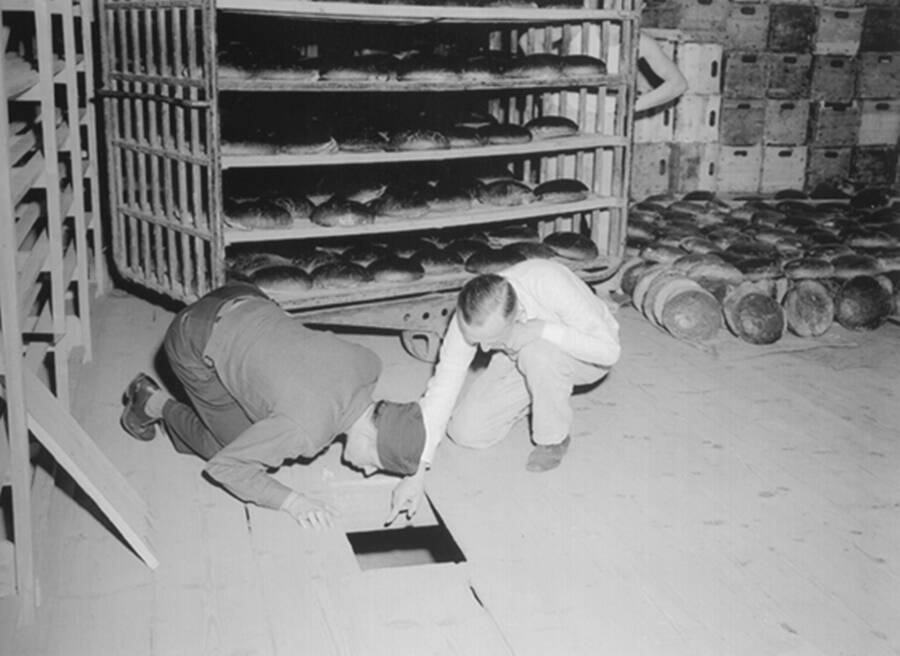
Wikimedia CommonsA U.S. lieutenant (left) and a German detective inspect the Konsum-Genossenschaftsbäckerei (Consumer Cooperative Bakery) in Nuremberg after the Nakam poisoning attempt.
The story goes that Weizmann was on board with the Nakam’s smaller revenge plan to poison Nazi prisoners, but he had no idea that they were targeting the water supply of millions of Germans. When the true nature of Plan A was revealed, Jewish leaders in Palestine contacted the British to stop Kovner during his travel back to Europe.
Having some misgivings himself about Plan A and sensing his imminent arrest, Kovner sent a letter instructing the Nakam to carry out Plan B instead and had the poison he carried with him dumped overboard just before British authorities moved to seize him as he reached Europe.
The new target was Stalag 13, an Allied POW camp in Nuremberg. There, the Nakam avengers intended to kill 12,000 former SS officers being held prisoner.
Under the leadership of Joseph Harmatz, on April 13, 1946, the group spread a mixture of glue and arsenic into 3,000 loaves of bread meant for the Nazi prisoners. By the end of the day, more than 2,000 Nazi prisoners were hospitalized.
Although the revenge plan was carried out successfully, reports following the mass hospitalization at the prisoner’s camp stated no deaths from the poisoning episode. Whether intentional or not, it’s possible the Nakams had spread the poison too thin, thus reducing its potency.
Ultimately, neither Kovner nor any other Nakam member was charged with any crimes in connection with these plots. German prosecutors investigated the matter decades later but didn’t file charges due to the “extraordinary circumstances” of the case.