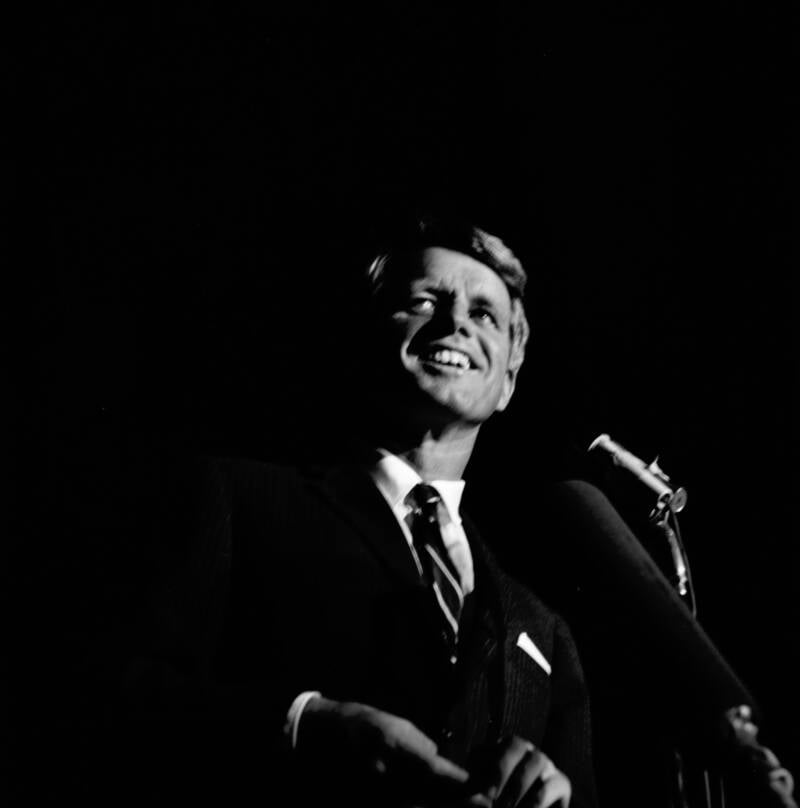
Robert F. Kennedy spent the moments before he was fatally shot by Sirhan Sirhan on June 5, 1968, thanking his supporters after winning California's Democratic presidential primary.
To many Americans, it seemed that June 4, 1968 could change the country forever. That day, Robert F. Kennedy won the South Dakota and California primaries, putting him in a strong position to claim the Democratic nomination for the presidency. Many believed that Kennedy, who had run on an optimistic, idealistic campaign, could not only defeat Richard Nixon, the presumptive Republican nominee, but also fundamentally transform the United States.
Instead, RFK’s assassination changed history in a completely different way.


And if you liked this post, be sure to check out these popular posts:
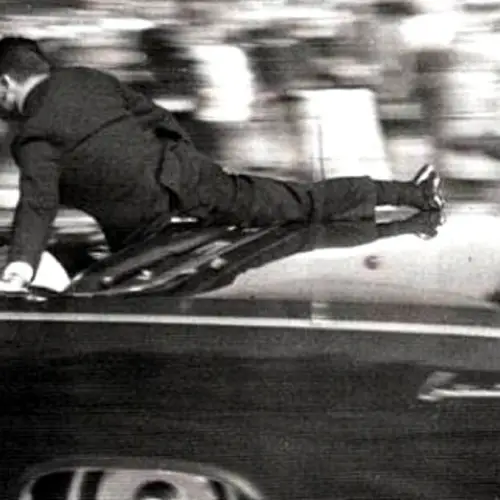
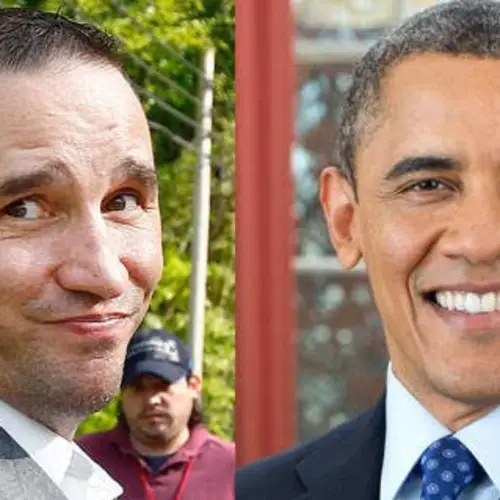
He said, in part: "My brother need not be idealized, or enlarged in death beyond what he was in life; to be remembered simply as a good and decent man, who saw wrong and tried to right it, saw suffering and tried to heal it, saw war and tried to stop it."ABC News/YouTube


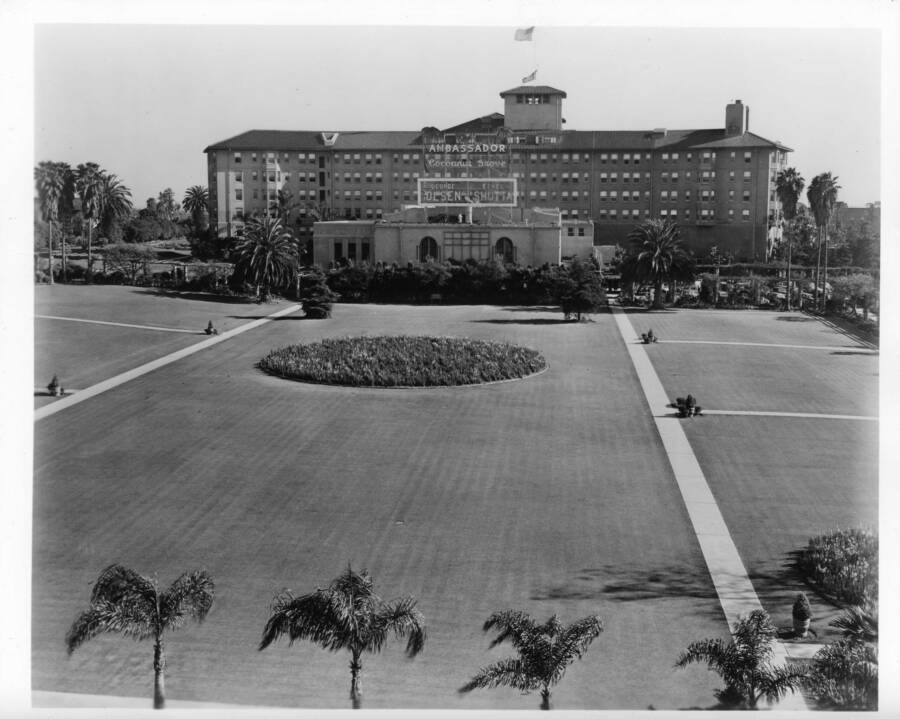
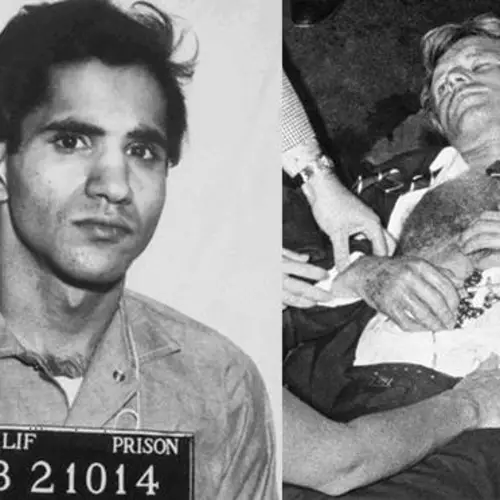
Just after midnight on June 5, Kennedy was shot by a 24-year-old assassin named Sirhan Sirhan at the Ambassador Hotel in Los Angeles. Moments before, he'd triumphantly addressed an ebullient crowd in the hotel ballroom. Upon the conclusion of his speech, Kennedy stopped to greet staff in the hotel's kitchen pantry on his way to a press conference. As he shook hands with a busboy named Juan Romero, Sirhan stepped out of the shadows and fired eight shots, three of which hit Kennedy.
Fatally wounded, the candidate fell to the ground. Romero dropped down with him as the panicked crowd scuffled with, disarmed, and detained RFK's assassin. Amid the commotion, Kennedy purportedly asked Romero if everyone was OK. Romero told him that everyone was fine. Then, Kennedy spoke some of his last words: "Everything's going to be OK."
Robert F. Kennedy died roughly 24 hours later, in the early morning hours of June 6, 1968. With him died the promise of his optimistic campaign. That November, Richard Nixon was elected president.
In the gallery above, discover the story of Robert F. Kennedy's assassination. Then, read on to learn more about the tragic death of the presidential candidate.
The Idealistic Presidential Campaign Of 1968
By the time Robert F. Kennedy decided to run for president in 1968, his family had experienced considerable tragedy. Less than five years earlier, his brother, President John F. Kennedy, had been assassinated in Dallas, Texas.
The nation endured dark times in the years following JFK's death. Not only was the United States reeling from the loss of a president, but the country had also become mired in the Vietnam War. The sitting Democratic president, Lyndon B. Johnson, was deeply unpopular. And so, on March 16, 1968, Senator Robert F. Kennedy of New York announced his intention to run for president against the incumbent of his own party.
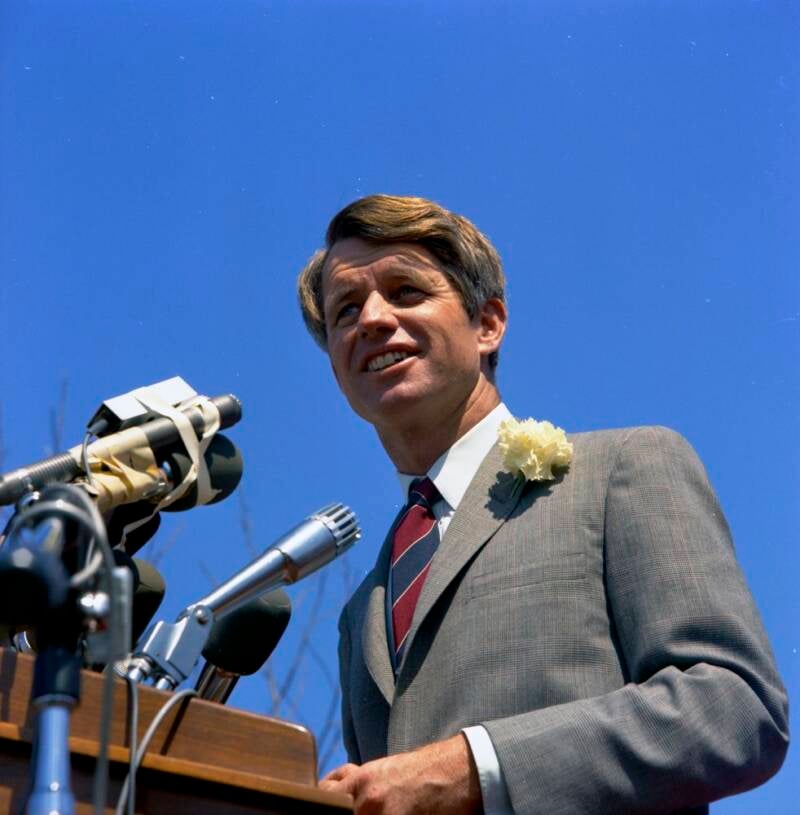
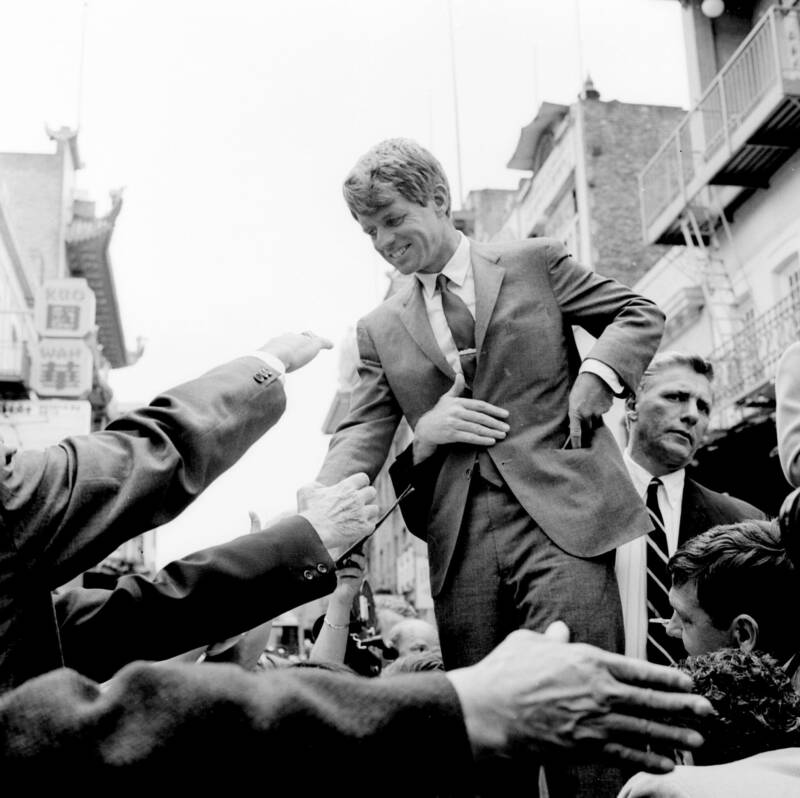
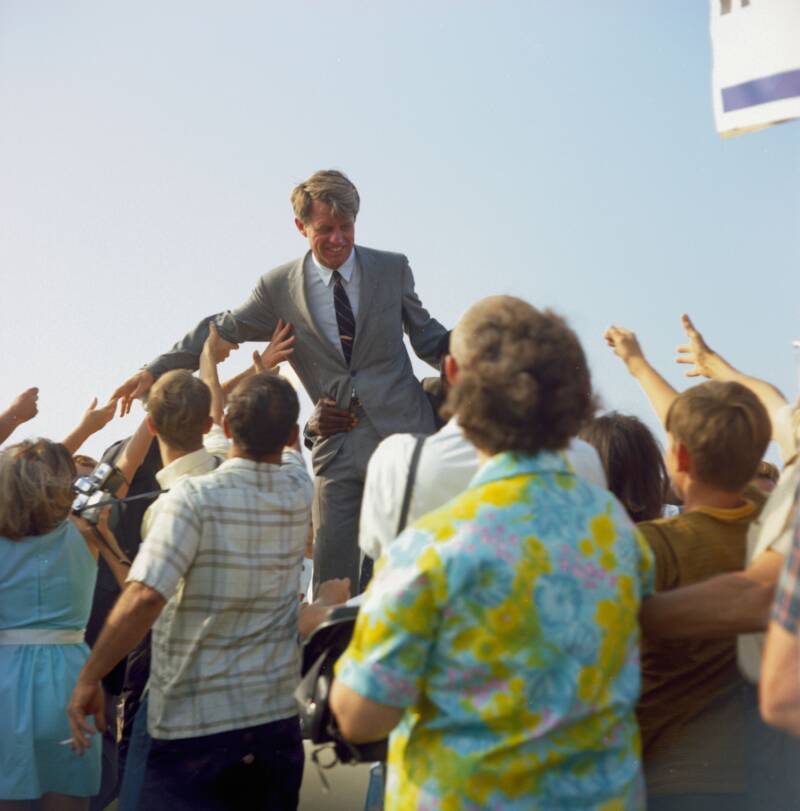
Sven Walnum, The Sven Walnum Photograph Collection/John F. Kennedy Presidential Library and Museum, BostonRobert F. Kennedy speaking at a campaign stop in March 1968.
"I am today announcing my candidacy for the presidency of the United States," Kennedy stated. "I do not run for the presidency merely to oppose any man but to propose new policies. I run because I am convinced that this country is on a perilous course and because I have such strong feelings about what must be done, and I feel that I'm obliged to do all that I can."
Kennedy ran on a campaign that embraced civil rights, promising to unite Americans and end the war in Vietnam. When President Johnson declared just a few weeks after Kennedy's announcement that he would not run for reelection, it seemed more likely than ever that Robert F. Kennedy would be the Democratic nominee for president in 1968.
But that summer, on a night that should have been a celebration, Robert F. Kennedy died after being fatally shot in Los Angeles.
The Death Of RFK: Inside His Assassination At The Ambassador Hotel
Though his campaign was short, Robert F. Kennedy quickly gained momentum. Winning the California and South Dakota primaries on June 5, 1968, all but secured his hold on the Democratic nomination.
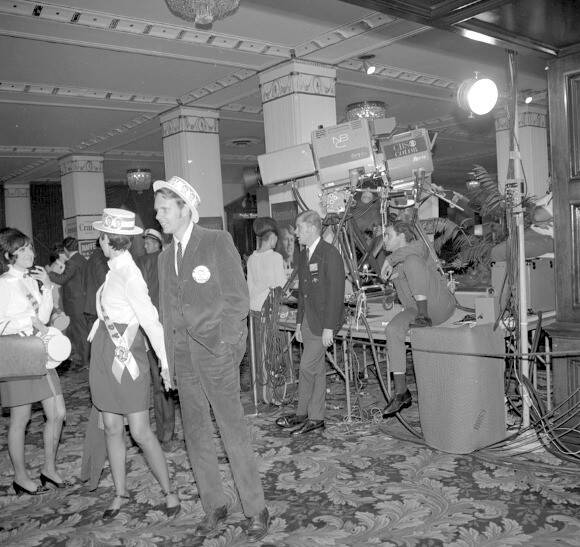
His supporters gathered that night at the Ambassador Hotel in Los Angeles to celebrate. With his pregnant wife, Ethel, at his side, a jubilant Kennedy told the crowd: "We are a great country, an unselfish country, a compassionate country. And I intend to make that my basis for running... So my thanks to all of you and on to Chicago and let's win there."
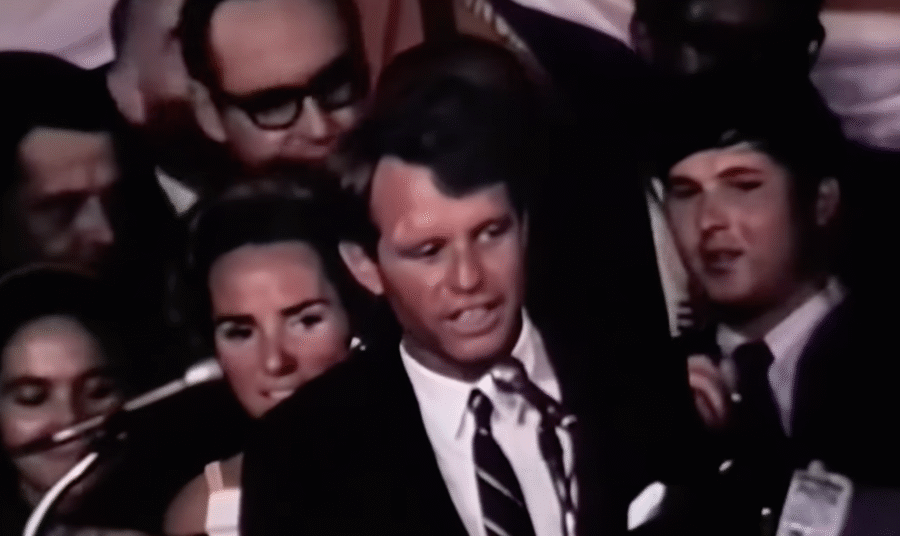
YouTubeRobert F. Kennedy speaking at the Ambassador Hotel. His pregnant wife, Ethel, stands next to him.
Kennedy then left the stage. He planned to take a shortcut through the hotel's kitchens to meet with the press, but he paused to shake hands with the kitchen staff. He was greeting a busboy named Juan Romero when a young, slight man stepped forward from the crowd.
His name was Sirhan Sirhan, and he was holding a gun. Before anyone could react, RFK's assassin lifted his weapon, aimed it at Kennedy, and fired off eight shots.
Three hit the senator, who collapsed to the ground. Two bullets had entered Kennedy's upper back, and the fatal shot had smashed through his skull, just behind his right ear. Still, Kennedy was conscious enough to ask Romero if everyone was OK. Romero assured him that they were, though five other people in the room were wounded.
Kennedy was still alive, but doctors were ultimately unable to save his life. Robert F. Kennedy died roughly 24 hours later, at 1:44 a.m. on June 6, 1968. He was 42 years old.
The Aftermath Of Robert F. Kennedy's Assassination
The assassination of Robert F. Kennedy sent the nation reeling, especially since it came just months after the assassination of Martin Luther King Jr. by James Earl Ray in Memphis. In the end, the Democratic nomination went to Hubert Humphrey, Johnson's vice president, who auspiciously won as anti-war riots broke out in Chicago.
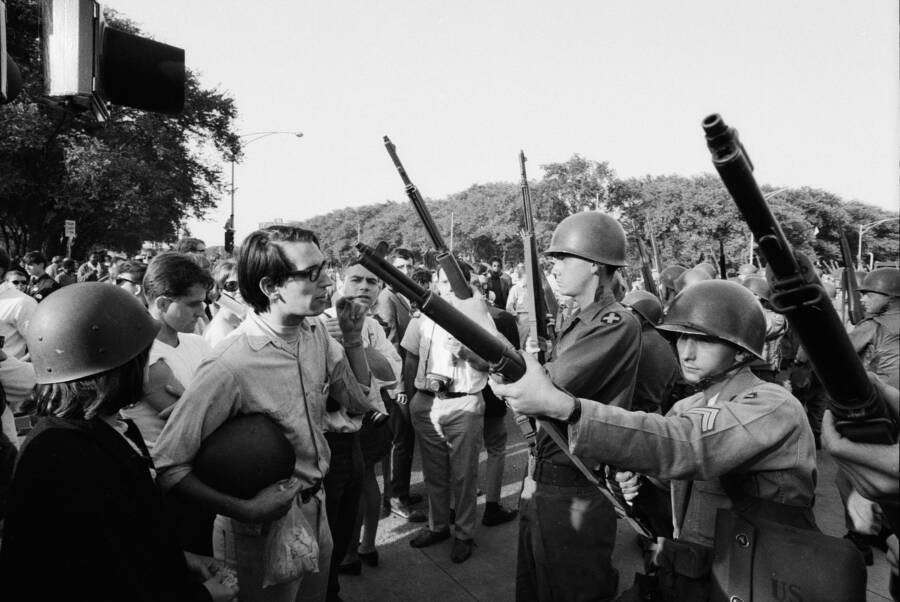
CBS Photo Archive/Getty ImagesProtestors face off with the National Guard outside of the Democratic National Convention in Chicago.
Meanwhile, investigators found that Sirhan Sirhan, who had been born in Palestine, seemingly bore a violent grudge against Kennedy for his stance on Israel. RFK's assassin had written about killing Kennedy in his journals, including entries that read: "RFK must be disposed of" and "Robert Fitzgerald Kennedy must soon die die die die die die die die die die."
At his trial, as reported by The New York Times in 1971, RFK's assassin stated that Kennedy's support for Israel "burned me up; if he were in front of me, the way I felt then, so help me God, he would have died right then and there."
Sirhan was ultimately sentenced to death but is now serving life in prison.
He's also changed his story about the incident: RFK's assassin has since stated that he has no memory of killing Kennedy. His attorney has also claimed that Sirhan was brainwashed, and some, including Kennedy's own son, Robert F. Kennedy Jr., have suggested that Sirhan is innocent. They believe that the story of RFK's assassination has multiple inconsistencies, including the number of shots that people heard on the night of the tragedy.
For now, at least, there's no evidence that anyone but Sirhan Sirhan was involved in Robert F. Kennedy's assassination. And, ultimately, Kennedy's death stands as a sad example of a historical what-if. If he had survived, could Kennedy's idealistic hopes for the United States have come true?
Tragically, we'll never know.
For a closer look at the assassination of RFK, look through the photos in the gallery above.
After learning about RFK's assassination, discover the full story of the assassination of President Abraham Lincoln. Or, go inside the mystery of who killed Malcolm X.