On December 3, 2015, 48-year-old Scott Weiland was found dead on his tour bus in Bloomington, Minnesota, after taking a toxic mix of drugs.
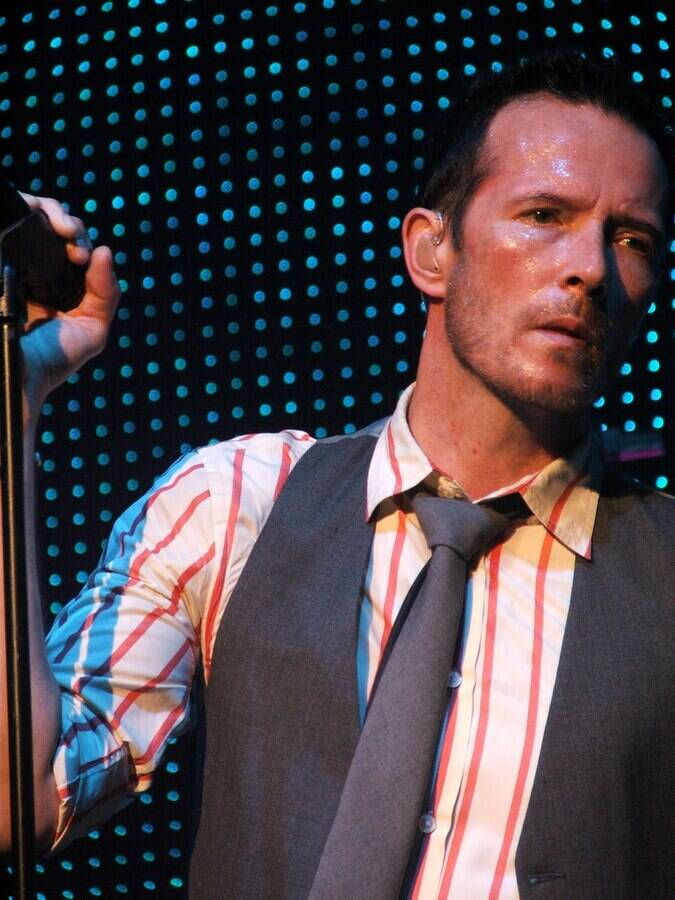
Wikimedia CommonsSinger Scott Weiland was best known as the lead vocalist for Stone Temple Pilots before his tragic death.
The former frontman for the bands Stone Temple Pilots and Velvet Revolver, Scott Weiland was known for his raw talent as a rock singer and his theatrical presence on stage. Whether it was through a microphone or a megaphone, he infused his lyrics with energy and emotions.
Sadly, Weiland was also known for his turbulent personal life. He infamously struggled with heroin addiction during the 1990s, and while he eventually gave that up, he continued to use other substances. In addition, Weiland suffered from bipolar disorder, which led to a number of disturbing bouts of paranoia and mania during his final months alive.
On Dec. 3, 2015, Scott Weiland was found dead on his tour bus in Bloomington, Minnesota. He was just 48 years old at the time, and his demise was later ruled an accident caused by a toxic mix of drugs. It was a heartbreaking end to a successful — yet chaotic — career.
Scott Weiland’s Early Life And Music Career

Wikimedia CommonsScott Weiland, pictured in 1994.
Scott Weiland was born on Oct. 27, 1967 in San Jose, California. His birth father’s last name was Kline, but his parents divorced two years later, so his last name was changed to his stepfather’s by the time he was five.
Shortly after his name change, he and his family moved to Bainbridge Township, Ohio. According to Scott Weiland’s memoir, Not Dead & Not For Sale (published just a few years before his death), he was raped by a high school senior when he was just 12 years old. He later reflected, “This was a memory I suppressed… in rehab, it came flooding back. The dude raped me. It was quick, not pleasant. I was too scared to tell anyone.”
As a teenager, Weiland entered Kenston High School in Ohio, before moving back to California with his family. He then attended Edison High School in Huntington Beach before taking classes at Orange Coast College.
Weiland’s rock music career began in the mid-1980s when he formed a band called Mighty Joe Young alongside bassist Robert DeLeo, guitarist Dean DeLeo, and drummer Eric Kretz. Eventually, the group changed their name after realizing they had been using the existing stage name of another singer.
The name change to Stone Temple Pilots was also partly inspired by the group’s fondness for the STP motor oil logo. They wanted a band name that also had the initials “STP,” and they sometimes even used STP stickers from gas stations to help promote some of their material.
Before long, they were preparing to release their debut album.
A Successful And Chaotic Career With Stone Temple Pilots And Other Bands

Wikimedia CommonsStone Temple Pilots on stage in 2011. Though Scott Weiland was no longer with the band at the time of his death, it’s still the group he’s most closely associated with.
In 1992, Stone Temple Pilots released Core, their first album, and quickly rose to fame in the alternative rock scene. The album peaked at No. 3 on the Billboard 200, and the band’s single “Plush” would later earn the group a Grammy Award for Best Hard Rock Performance With Vocal.
Needless to say, it was a massive success amidst the grunge era. In the aftermath of this release, the band’s fanbase and recognition began to grow.
In 1994, Stone Temple Pilots released their second album Purple, which was also a success. It eventually sold more than six million copies and contained popular hits like “Big Empty,” “Vasoline,” and “Interstate Love Song.”
The following year, Scott Weiland began to explore musical projects outside of Stone Temple Pilots. He formed the band Magnificent Bastards with Victor Indrizzo, Zander Schloss, and Jeff Nolan. However, they only recorded two songs, “Mockingbird Girl,” and a cover of John Lennon’s “How Do You Sleep?”
Before long, Weiland rejoined Stone Temple Pilots for their third album, Tiny Music… Songs from the Vatican Gift Shop, which was released in 1996.
Despite Weiland’s ongoing success with music, however, it soon became clear that he was struggling mightily with drug addiction. He had first tried heroin back in 1993, and he had become increasingly dependent on the drug as his fame rose. “It made me feel safe. It was like the womb,” he later recalled. “I felt completely sure of myself. It took away all the fears.”
Then, in 1995, he was arrested in Pasadena for the possession of heroin and crack cocaine. He received a suspended sentence and probation.
Shortly afterward, he holed up at the Chateau Marmont hotel in Los Angeles. His room happened to be next to Courtney Love, the founder of the band Hole and the widow of the recently deceased Nirvana frontman Kurt Cobain.
“We shot drugs the whole time,” Weiland later remembered. “Most of the time she just walked around in panties. There was never anything that went on between us… Dope was the most important thing.”

Wikimedia CommonsSinger Scott Weiland on stage with Velvet Revolver, another band he was involved with before his death.
In 1999, Stone Temple Pilots released their fourth album, No. 4. Weiland’s issues with substance abuse continued, and he spent five months in jail for violating his parole, which was connected with drug possession charges.
Stone Temple Pilots released another album in 2001, titled Shangri-La Dee Da. But by this point, tensions were said to be rising between the members of the band. By 2003, Stone Temple Pilots had broken up.
During this time, Weiland joined the group Velvet Revolver. The band released their debut album Contraband in 2004. The album was a hit, and the band saw great success in the years that followed.
However, in 2008, just one year after the release of the group’s second album, it was announced that Weiland would no longer be part of the band due to “his increasingly erratic onstage behavior and personal problems.” Weiland checked into rehab that same year, but left just a month later.
Meanwhile, Weiland reconnected with his former bandmates in Stone Temple Pilots and the group soon reunited for a tour. However, tensions rose yet again in the band, and Weiland was kicked out of the group in 2013.
Though Weiland was shocked and angered by his dismissal, he continued to make music. By that point, he had already done some solo work, and he also formed the band Scott Weiland and the Wildabouts, which released the album Blaster in 2015. Sadly, tragedy was just around the corner.
Scott Weiland’s Tragic Death And His Troubled Final Months

Wikimedia CommonsScott Weiland and the Wildabouts performing in 2013.
The Wildabouts were on tour when tragedy struck.
On Dec. 3, 2015, 48-year-old Scott Weiland was found dead on his tour bus in Bloomington, Minnesota. His body was discovered by the band’s tour manager, who later recalled: “I shook his leg and thought, ‘Oh, my God, he’s not moving.’ I went to his shoulders and realized he was stiff.”
Scott Weiland’s death was eventually ruled an accident caused by a toxic mix of drugs, including cocaine, alcohol, and the amphetamine MDA. It was also noted that he suffered from several conditions like atherosclerosis, cardiovascular disease, asthma, and multiple-substance dependence, and that he was on a number of different prescription medications.
It was later revealed that Weiland’s final 10 months were extremely tumultuous — including his close friend’s death, his parents both being diagnosed with cancer, and his estrangement from his teenage children.
Around this same time period, Weiland also struggled with bouts of paranoia and mania that were connected to his bipolar disorder. This led to a number of shocking incidents, including Weiland cursing at his own fans during a meet-and-greet and threatening to assault a reporter.

Wikimedia CommonsScott Weiland is remembered for the impact he had on rock music, but also for his tragic demise.
Many people who saw him during his final months later said that he was clearly in no state to tour, but he was reportedly struggling so much financially due to his addictions, multiple attempts at rehab, and child-support payments that he didn’t feel he could pass up the income.
His former wife Mary Forsberg Weiland, with whom he shared his two children, penned a poignant essay soon after Scott Weiland’s death.
The essay, titled Don’t Glorify This Tragedy, read in part: “We don’t want to downplay Scott’s amazing talent, presence or his ability to light up any stage with brilliant electricity… But at some point, someone needs to step up and point out that yes, this will happen again — because as a society we almost encourage it. We read awful show reviews, watch videos of artists falling down, unable to recall their lyrics streaming on a teleprompter just a few feet away. And then we click ‘add to cart’ because what actually belongs in a hospital is now considered art.”
The essay concluded, “Our hope for Scott has died, but there is still hope for others. Let’s choose to make this the first time we don’t glorify this tragedy with talk of rock and roll and the demons that, by the way, don’t have to come with it. Skip the depressing T-shirt with 1967-2015 on it — use the money to take a kid to a ballgame or out for ice cream.”
After reading about the life and death of Scott Weiland, go inside the tragic stories of the 27 Club. Then, discover the wildest tales of rock star excess that went way too far.