Today, NASCAR is one of America's most popular spectator sports — but the earliest races looked very different.


And if you liked this post, be sure to check out these popular posts:


Car racing is an iconic part of American culture. From the Fast & Furious franchise to Pixar's Cars to racing-themed video games to official racing series, Americans can't get enough of fast cars.
One of the most famous American motorsports organizations, the National Association for Stock Car Auto Racing (NASCAR), had roots in bootlegging before it cemented itself as a legitimate spectator sport. Throughout the decades, NASCAR has seen many highs and lows on the racetracks.
Officially less than 100 years old, NASCAR is still changing to this day. From improved safety measures to updated inclusionary practices, the sport continues to evolve in order to reflect modern-day culture.
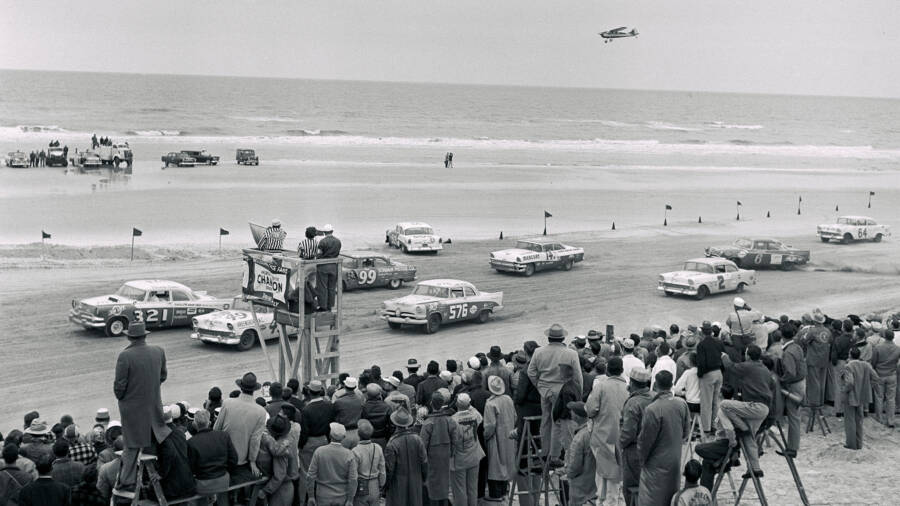
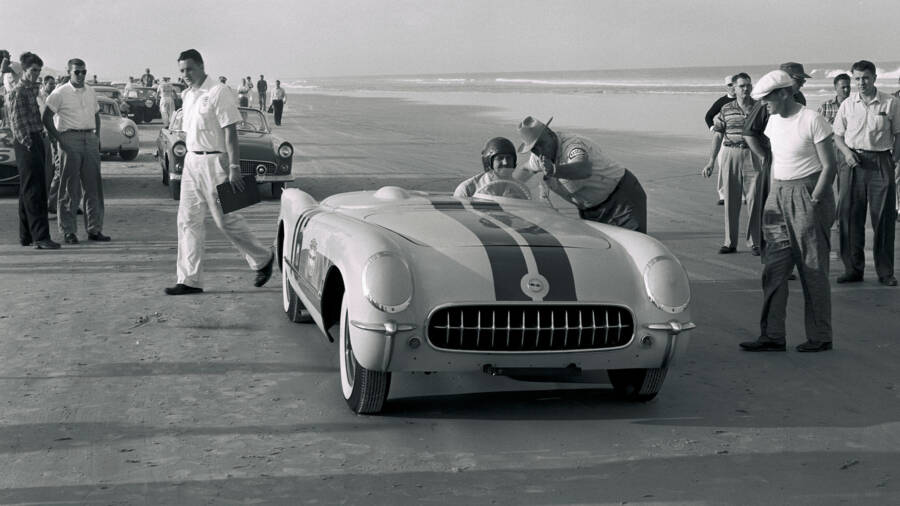
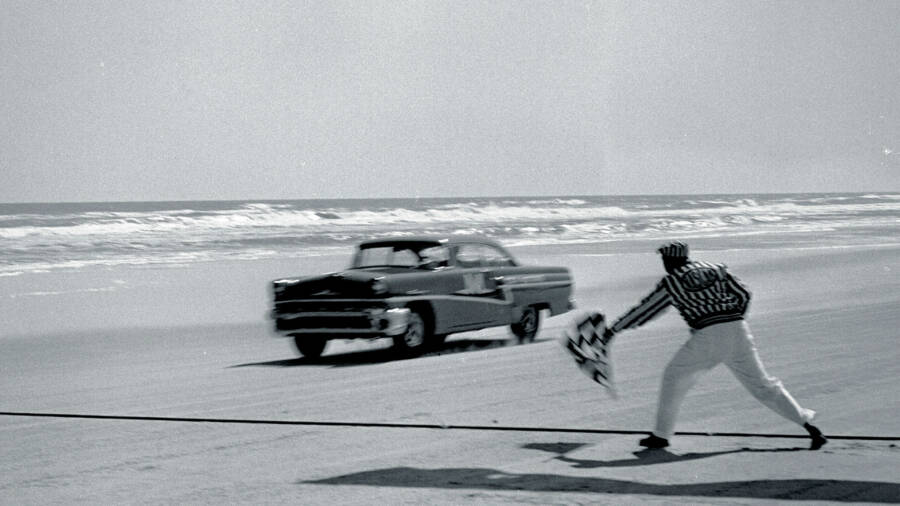
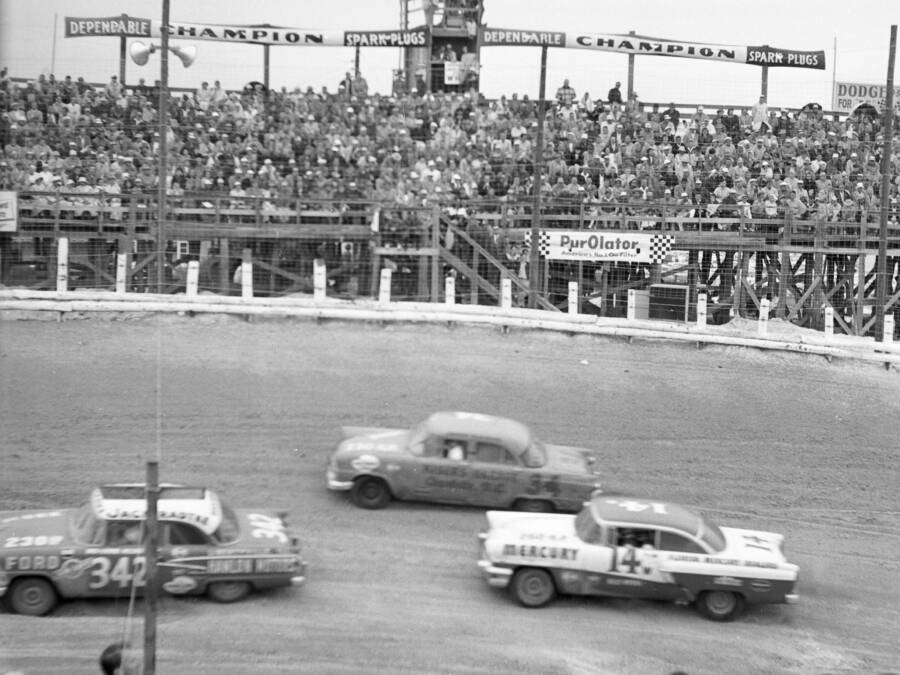
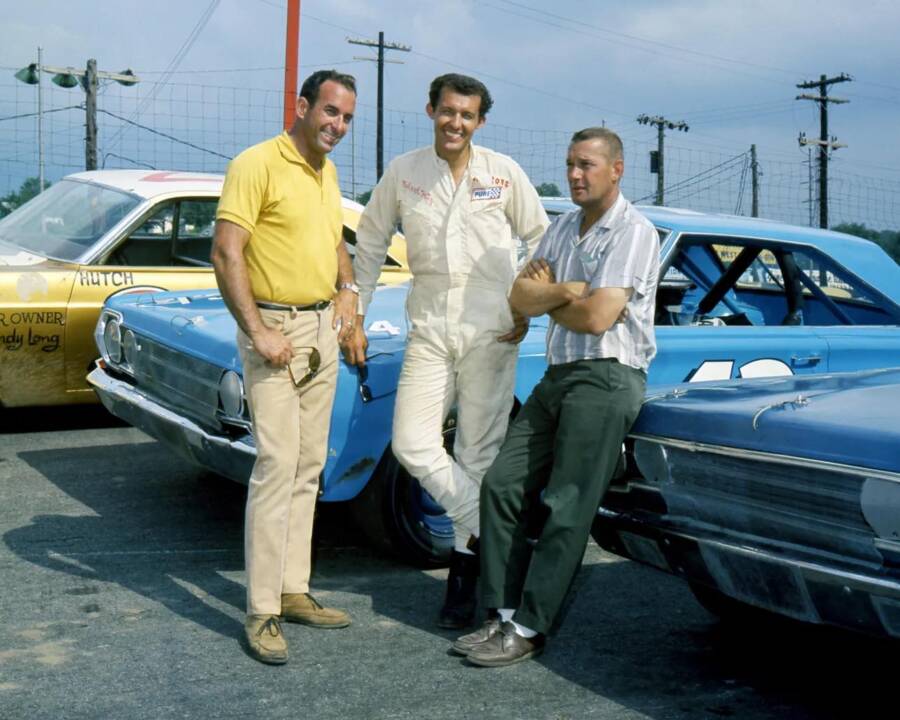
See vintage photos that capture the raucous early years of NASCAR in the gallery above, then learn more about the organization's history below.
Prohibition — And A Widespread Love Of Whiskey — Gave America The Racing Bug
Before the spectator sport captured the attention of the nation, NASCAR's beginnings can be found in the 1920s Prohibition era. Americans didn't stop producing, transporting, selling, or drinking alcohol during this period; instead, they came up with clever ways to keep the booze flowing.
It was especially popular to produce moonshine in the Appalachian region of the U.S. The bootleggers moving the illegal alcohol needed to travel quickly in order to evade police and complete their deliveries unscathed.
So bootleggers used increasingly fast cars to help them distribute their illicit products. They would often make modifications to these vehicles so they could easily increase the cars' speed and carry more moonshine.
"Being in that business, you had to have a very fast car and you had to be able to outrun the revenuers or highway patrol or sheriff or whoever tried to pursue you to try and apprehend you," former bootlegger-turned-NASCAR Hall of Famer Junior Johnson told the St. Louis Post-Dispatch in 1990.
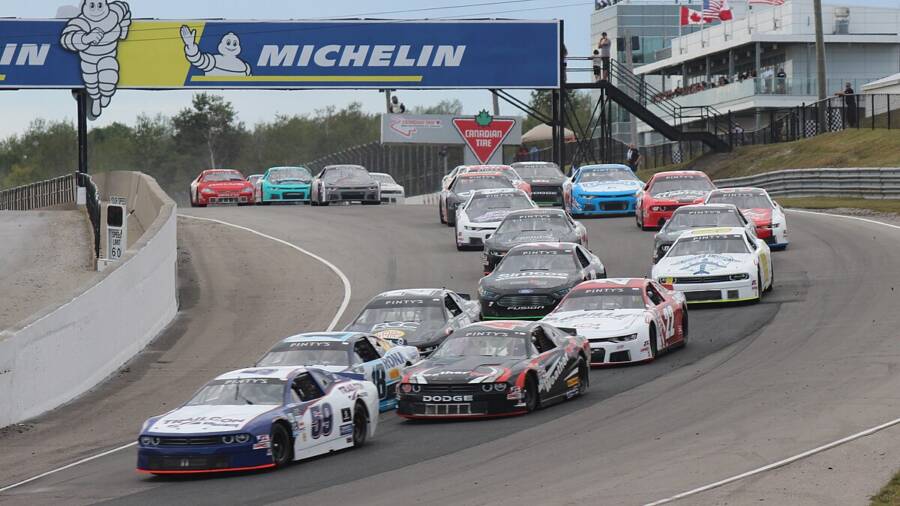
Wikimedia CommonsA modern NASCAR event, as seen in 2021.
Even after Prohibition was repealed in 1933, people continued to sell homemade moonshine, as there were many "dry" counties in Appalachia. Additionally, many impoverished families found it to be one of the best ways to make ends meet during the Great Depression.
"If it hadn't been for whiskey, NASCAR wouldn't have been formed. That's a fact," Johnson told the BBC. Another iconic NASCAR driver, Hall of Famer Curtis Turner, said he got his start with bootlegging at just nine years old.
Eventually, curious onlookers became captivated by the spectacle of these fast cars, so some moonshiners began organizing races at fairgrounds and racetracks, where people were willing to pay money simply to watch bootleggers race their cars. By the 1940s, it was fairly common for races featuring modified, fast cars to be held for the purpose of entertainment.
How NASCAR Got Off The Ground
NASCAR as an organization was founded on Dec. 14, 1947. Bill France Sr., an auto mechanic and race car driver, was the one who put the wheels in motion to form NASCAR during a meeting of drivers, car owners, promoters, and mechanics at the Streamline Hotel in Daytona Beach, Florida.
France had entered various stock-car races in the 1930s, primarily at Daytona. It wasn't until after World War II that France realized that there could be a way to establish a more organized, professional, and regulated form of stock-car racing that allowed a wider audience of people to watch the spectacle, while also ensuring that drivers were paid fairly.
At this time, it wasn't uncommon for race promoters to cheat drivers out of their pay. Some other challenges for drivers were that different racetracks had different rules, and it could sometimes be difficult to determine true champions. So France began speaking with race promoters and drivers alike to figure out how to formally organize and improve stock-car races.
Because of France's efforts, NASCAR was soon officially formed and ran its first race on Feb. 15, 1948, on the beach road course at Daytona. The next year, NASCAR held its first-ever "strictly stock" race on June 19, 1949 at a dirt track known as the Charlotte Fairgrounds Speedway.
Considering the locations where early races were held, NASCAR started out as a largely regional sport, mostly followed by those in the Southeast. But even in the early days, NASCAR drew many enthusiastic onlookers, and eventually became too overcrowded for beach road courses and dirt tracks.
Organizers eventually built a 2.5-mile tri-oval to limit and control the crowd, just in time for the first Daytona 500 to be hosted on Feb. 22, 1959.
Another significant date in NASCAR's early history was Dec. 1, 1963, which marked the first time a race was won by a Black driver, Wendell Scott.
But NASCAR still hadn't quite entered the national spotlight yet.
NASCAR's Many Changes Throughout The Years — And Its Lasting Impact Today
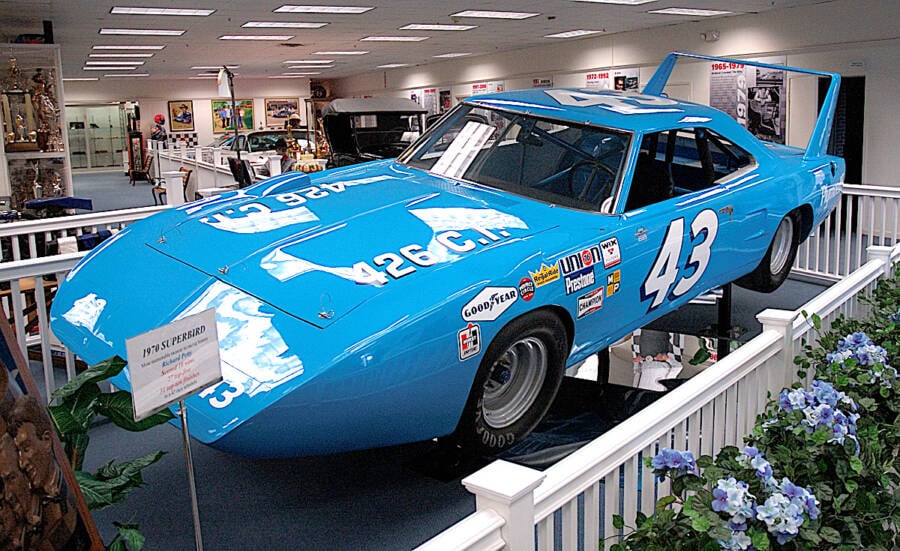
Wikimedia CommonsThe iconic Superbird driven by NASCAR legend Richard Petty.
Starting in 1971, NASCAR got its first title sponsor, R.J. Reynolds Tobacco Co. (RJR). It was a win-win for NASCAR and RJR — as NASCAR needed more money to pay for increasing costs of racing and RJR needed a clever way to advertise their products, as the federal government was restricting the advertisement of cigarettes on television. Their partnership lasted until 2003.
It's widely believed that the 1979 Daytona 500 helped put NASCAR in the national spotlight. Not only was it the first time that a 500-mile NASCAR event was televised by a major network (CBS Sports) from start to finish, but it also treated viewers to an infamous fight that broke out between three racers, Cale Yarborough and brothers Donnie Allison and Bobby Allison.
The fight became even more of a spectacle because of sportscaster Ken Squier's famous commentary that followed: "The tempers, overflowing. They are angry. They know they have lost. And what a bitter defeat."
It sparked so much interest in NASCAR that Bill France Jr. scoffed at the idea of fining the drivers for fighting, suggesting he might give them bonuses.
But as NASCAR's popularity rose across the nation, it didn't take long for some people to acknowledge the dangers of the sport. Eventually, NASCAR began implementing new safety standards to help protect drivers in the event of a catastrophic wreck — especially following the tragic death of iconic NASCAR driver Dale Earnhardt during the 2001 Daytona 500.
Some key safety changes in recent decades have included the requirement of drivers wearing HANS (Head And Neck Support restraint) devices, the replacement of concrete walls at tracks with energy-absorbing SAFER (Steel and Foam Energy Reduction) barriers, the implementation of new roll bars for better rollover protection, and a partnership with American Medical Response to improve the on-track team's medical treatment capabilities.
These safety standards are crucial, especially considering NASCAR's growth as a national phenomenon. Today, it's one of America's most popular spectator sports, with the NASCAR Cup Series being the most elite level of all its three national series of professional racing. Three drivers are now tied for the record for the most championships, with Richard Petty, Dale Earnhardt, and Jimmie Johnson all having won the Cup Series seven times.
For better or worse, NASCAR is also now known for its seemingly endless corporate sponsorships, billion-dollar contracts, and highly customized cars. It's a far cry from the organization's humble roots, but the spectacle of racing itself remains largely the same. And given how many popular movies, TV shows, and video games focus on racing, it's clear that even those who would never race themselves find enjoyment in that spectacle.
After taking a look at NASCAR's wild past, discover these 44 pictures of the 24 Hours of Le Mans. Then, learn about the "King of Cool," Steve McQueen.