A video showing then-and-now comparisons of both the Black Dahlia murder site and the Amityville Horror house is a reminder that some of the most notorious crime scenes in American history are hiding in plain sight.
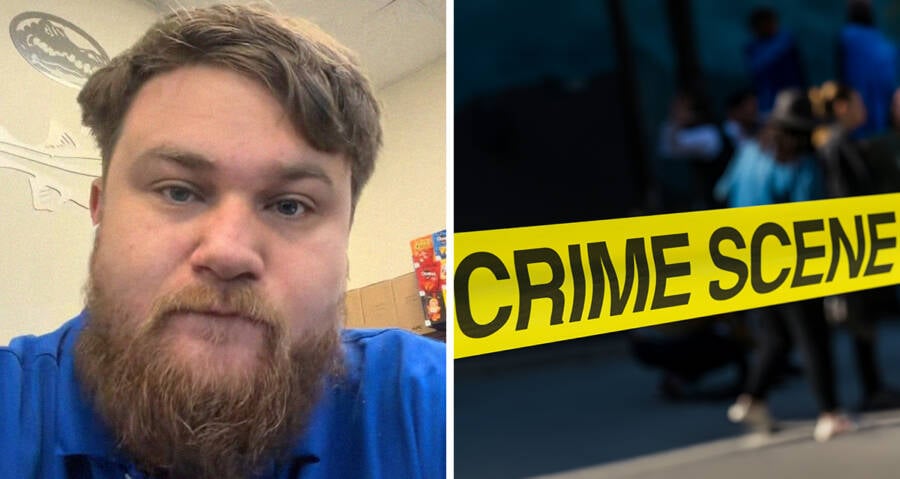
@j_and_d_productions TikTok/JOSHUA COLEMAN UnsplashContent creator @j_and_d_productions showed then-and-now photos of the Black Dahlia crime scene and the Amityville Horror house.
On the surface, a given home on a certain quiet street may look like any other modest house with a trimmed lawn and a car parked in the driveway — so much so that you’d never guess the horrors that could have once happened there. For instance, even though the locations of the “Black Dahlia” crime scene and the “Amityville Horror” house look relatively normal today, these places have positively terrifying histories.
A TikTok from content creator @j_and_d_productions recently racked up 2.4 million views showing these crime scene photos from decades past, followed by present-day images of those same locations.
As the caption reads, “Both look perfectly ‘normal’ today.”
The Black Dahlia Crime Scene: A Vacant Lot That Became Infamous Overnight
On the morning of January 15, 1947, a mother out for a walk with her child in the Leimert Park neighborhood of Los Angeles stumbled upon what she initially thought was a mannequin. In fact, it was the body of 22-year-old Elizabeth Short.
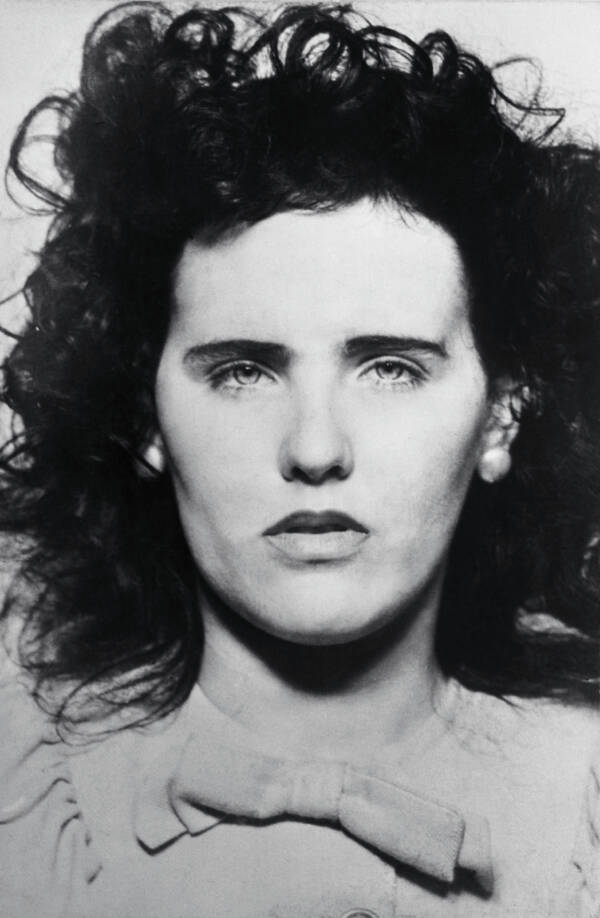
Bettmann/Getty ImagesElizabeth Short, the “Black Dahlia,” was just 22 years old when she was gruesomely murdered in Los Angeles in 1947.
Short had moved to Los Angeles just six months before her death, and had been working as a waitress while hoping to break into acting, despite not having any known acting credits.
The details of her murder remain disturbing to this day.
Her body was severed at the waist, completely drained of blood, and carefully posed in a vacant lot. The killer also slashed the corners of her mouth toward her ears, leaving what is known as a “Glasgow smile.” Not a drop of blood was found at the scene, indicating that she had been killed elsewhere and then dumped there.
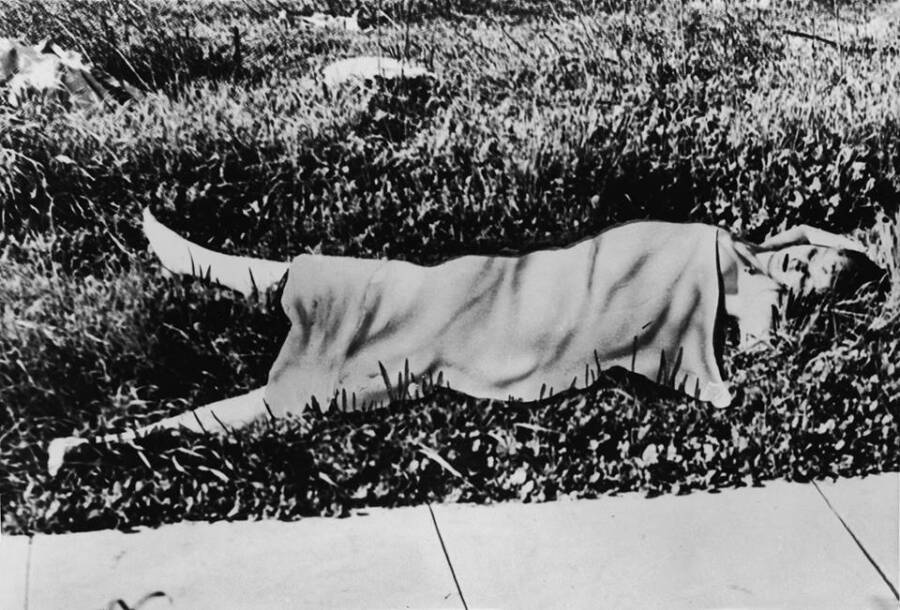
Getty ImagesA sheet covers the horrific mutilation of Elizabeth Short’s body.
The press immediately descended upon the scene, branding her the “Black Dahlia” due to her reported preference for black clothing, and as a reference to the 1946 film noir The Blue Dahlia. What followed was one of the most sensationalized investigations in LAPD history.
At one point, 750 investigators were on the case, interviewing more than 150 potential suspects. Officers heard more than 60 confessions during the initial investigation, but none were considered legitimate.
The case remains open to this day, with more than 500 confessions tallied since. Eighty years later, we still don’t know who killed the Black Dahlia.
The Amityville Horror House: A Suburban Home That Can’t Escape Its Past
On November 13, 1974, 23-year-old Ronald DeFeo Jr. shot and killed six members of his own family — his parents and four siblings — as they slept in their beds in Amityville, New York.
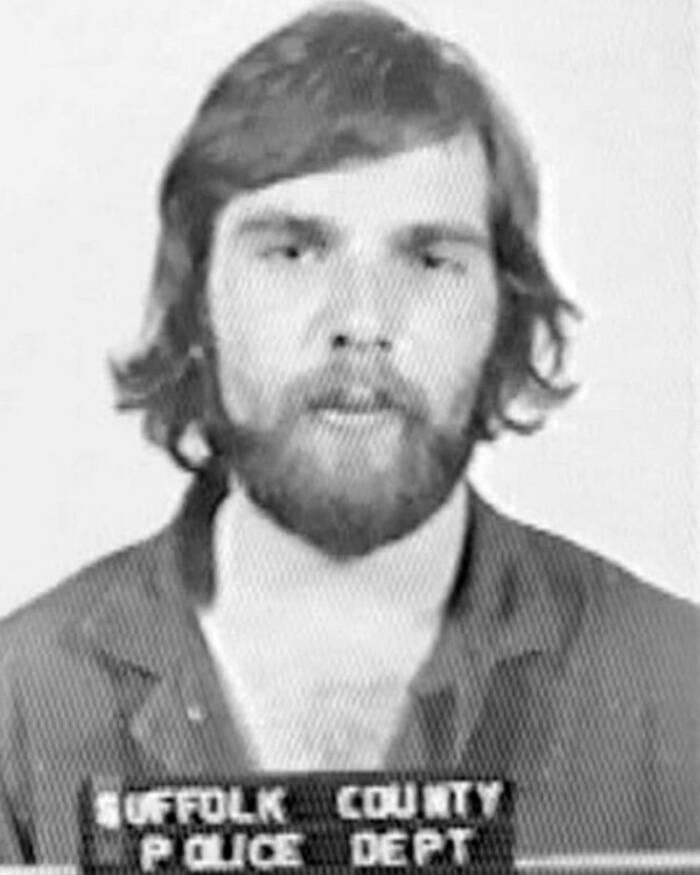
Suffolk County Police DepartmentA mugshot of Ronald DeFeo Jr. taken on November 14, 1974, following his arrest for the Amityville murders.
He confessed and submitted an insanity defense, claiming he had heard voices urging him to kill, but his defense failed. DeFeo was convicted of six counts of second-degree murder and sentenced to six consecutive 25-years-to-life sentences. He died in prison in 2021 at age 69.
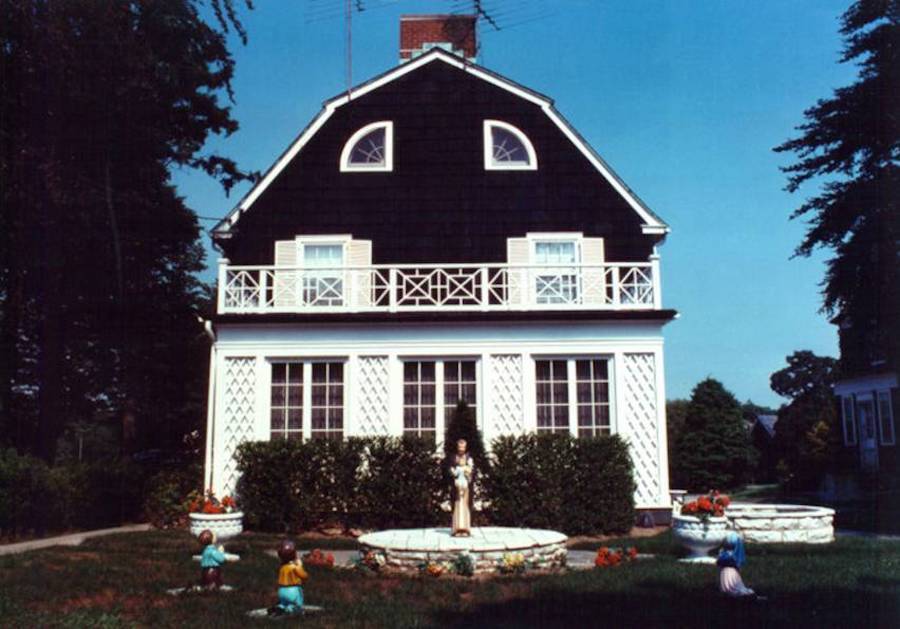
Wikimedia CommonsThe Amityville Horror House, a year before the infamous DeFeo murders took place.
The house where the Amityville murders happened then sat empty for 13 months. In December 1975, George and Kathy Lutz bought it at a reduced price of $80,000 — DeFeo family furniture included. However, the Lutzes lasted just 28 days before fleeing, claiming that they had been terrorized by paranormal activity, including swarming flies, demonic voices, and green slime oozing from the walls.
Their account was the basis of Jay Anson’s 1977 bestseller The Amityville Horror, which was adapted into a blockbuster film two years later. What the book and movie didn’t advertise was that DeFeo’s own defense lawyer, William Weber, later admitted to People that he and the Lutzes had fabricated this haunting story.
“We created this horror story over many bottles of wine,” Weber told People.
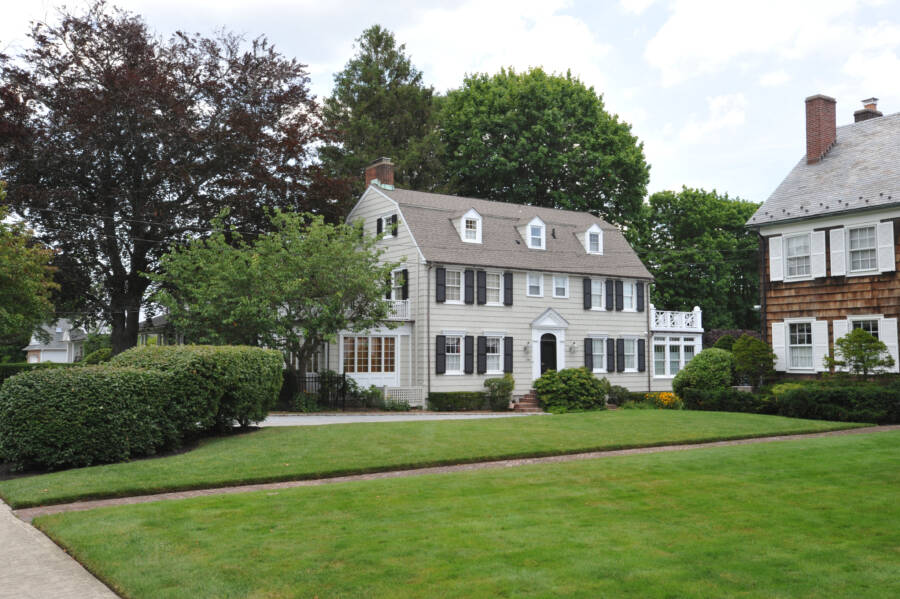
Paul Briden/Alamy Stock PhotoThe house where the Amityville Horror took place, as seen in July 2012.
None of that has stopped the tourists. Subsequent owners have done everything they can to make the Amityville Horror house less recognizable. The dark exterior was repainted in a pale off-white. The swimming pool was filled in. The distinctive quarter-circle third-story windows — rendered on the original movie poster as a pair of fiery orange eyes — were replaced with ordinary square ones. The address was officially changed to 108 Ocean Avenue.
But still, visitors have come, and the town of Amityville has grown weary of the attention.
“We just wish it would go away,” one longtime local told A&E. “The only horror about that house is the fact that a kid killed his whole family there.”
Two Addresses, One Uncomfortable Truth
What the TikTok captures is that the places where terrible things happen aren’t always obvious. Grass grows over a vacant lot. Fresh paint covers old exteriors. New families move in and try to make a home. Life continues.
@j_and_d_productions THEN: In 1947, Elizabeth Short (The Black Dahlia) was found in a vacant lot in Leimert Park. In 1974, the DeFeo tragedy changed 108 Ocean Avenue forever. NOW: The lot on Norton Ave is a quiet residential street, and the iconic “eye” windows of the Amityville Horror house have been replaced to deter onlookers. Both look perfectly “normal” today, but the energy remains. 🕵️♂️ #fyp #foryou #xyzbca #blackdahlia
♬ its just a cigarette and it cannot be that bad – Full Throttlers
After reading about the Black Dahlia and Amityville crime scenes then and now, read about Ed and Lorraine Warren, the ghost hunters who investigated the Amityville Horror. Then, learn the story of Black Dahlia suspect George Hodel.