Victor Lustig, The Con Artist Who ‘Sold’ The Eiffel Tower — Twice
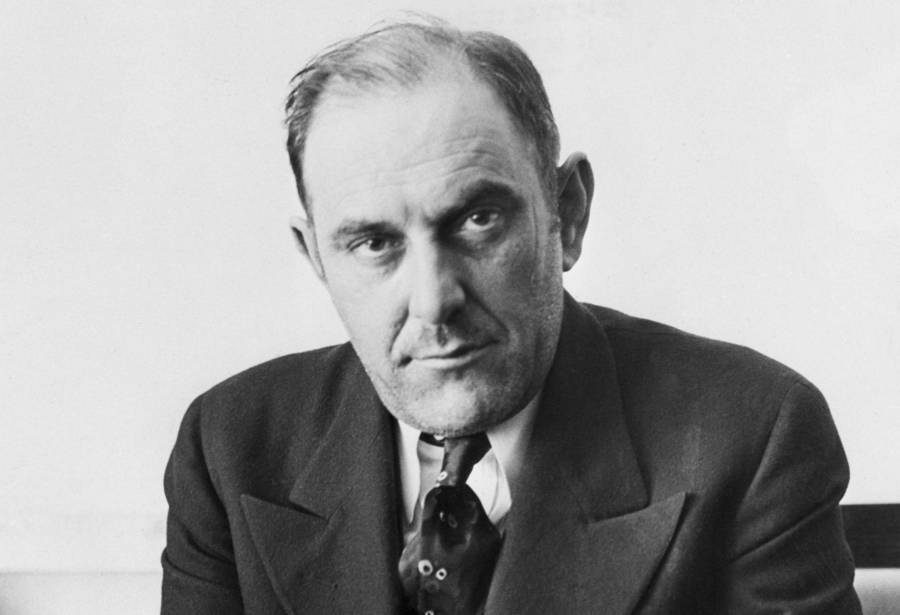
Bettmann/Getty ImagesExpert con man Victor Lustig was dubbed “the Count” by authorities who were on his tail.
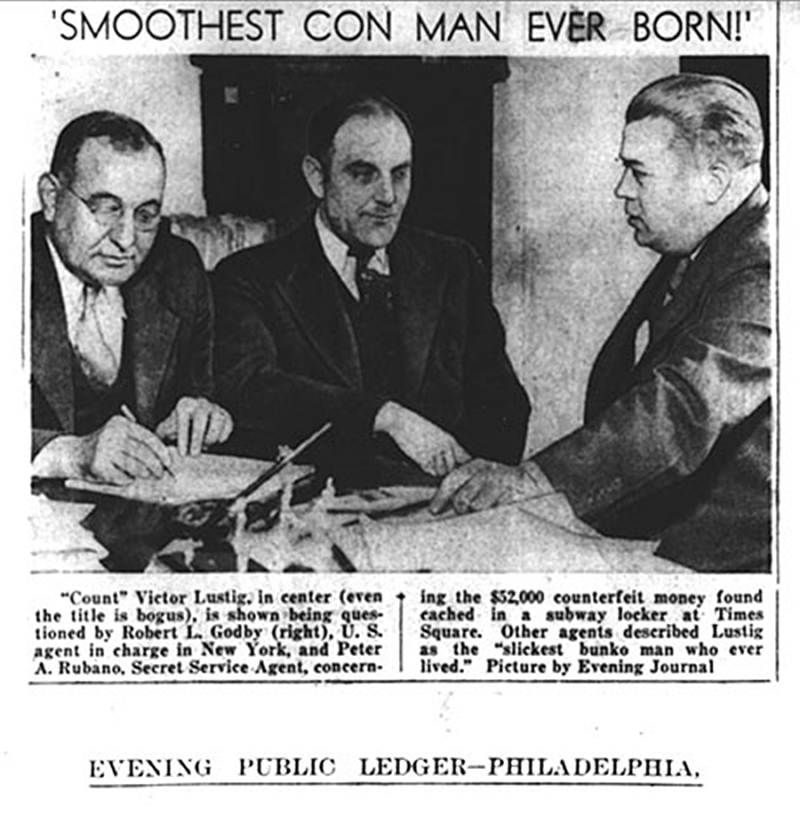
Victor Lustig was a con artist so suave that even when he was being arrested, a Secret Service agent allegedly told him, “You’re the smoothest con man that ever lived.” That agent was right: Lustig would go on to gain notoriety as the con artist who successfully “sold” the Eiffel Tower of France — twice.
Looking at Victor Lustig’s biography, it seemed as though he was destined for a life in the fast lane. He was born on Jan. 4, 1890, in the Austro-Hungarian town of Hostinné, which is now in the modern-day Czech Republic. Even as a child Lustig wandered the streets committing petty thefts and card game scams. But eventually, he outgrew his small schemes.
After dropping out of college at 19 in France, the conman took up a spot aboard ocean liners, which were the preferred mode of travel for the wealthy at the time. With his fluency in multiple languages, his calm demeanor, and perfectly manicured nails, Lustig easily fit in with the rich businessmen on the ships and it was during this time that he devised his first elaborate con: the money box.
Lustig would first chat up some businessmen and then he would slyly reveal his “money box” which he claimed magically produced money. With the help of a fellow scammer named Dan Collins, Lustig would privately do a “demonstration” to his new friends by inserting an authentic hundred-dollar bill into the slot of the machine.
After some “chemical processing,” the machine would spit out two authentic-looking hundred dollar bills.
But the money put out by his “money box” was, of course, counterfeit. Nevertheless, he reaped tens of thousands of dollars by selling the contraption for $10,000 to gullible businessmen.
In 1925, Victor Lustig returned to Paris, France, to carry out his most ambitious con ever: selling the Eiffel Tower. The con man posed as a French government official and sent out letters printed with the French government seal to heads of the country’s scrap metal industry. He claimed that the government was looking for bids to buy the Eiffel Tower and that they were interested in selling it to “the highest bidder.”
“Because of engineering faults, costly repairs, and political problems I cannot discuss, the tearing down of the Eiffel Tower has become mandatory,” Lustig reportedly wrote. His scheme, dubbed by con artist experts as “the big store,” worked — and the bids poured in.
Wikimedia CommonsThe conman’s best-known scam was “selling” the Eiffel Tower — twice.
Lustig went on to commit more big swindles in the U.S. His suave demeanor and sophisticated schemes. In one famous instance, Lustig managed to con his way out of an arrest by a Texas sheriff using the money-box scam. His notoriety grew as he got into counterfeit banknotes, which finally put him on the Secret Service’s radar.
Victor Lustig’s con days came to an end on Sept. 28, 1935, when FBI agents captured him after an intense car chase through Pittsburgh, Pennsylvania. According to the local newspaper, Lustig finally exited the car without a fight, telling the officers, “Well, boys, here I am.”
Lustig was given a 20-year prison sentence at the infamous Alcatraz prison. The smoothest con artist that the American Secret Service had ever seen died in March 1947 after contracting pneumonia behind bars.
Jerome Jacobson, The Ex-Cop Who Conned A Fast Food Giant Out Of McMillions

Wild About Trial/FacebookConman Jerome Jacobson made millions from an elaborate scam using the McDonald’s Monopoly sweepstakes.
Nearly anyone who has bought a meal at McDonald’s knows about the fast-food company’s popular Monopoly marketing campaign. But they’ve probably never heard of Jerome Jacobson, the man who made millions by secretly rigging the game through a national network of co-conspirators. The bizarre and twisted con was the focus of the 2020 HBO documentary McMillions.
Before he carried out the McDonald’s Monopoly scam, which was one of the biggest frauds outside of the finance industry, Jacobson was just a simple man from Ohio. In 1976, he became a police officer in Florida, but his law enforcement dreams were dashed by health problems, including a neurological disorder that left him unfit to work.
Jacobson and his wife Marsha then moved to Atlanta, Georgia, where he secured a job in corporate security. He worked for a firm that handled the accounts of the Dittler Brothers, a publisher that was in charge of printing the game pieces for McDonald’s’ $500 million sweepstakes contest.
The game was popularly known as the McDonald’s Monopoly. To win the game, customers had to find the most valuable McDonald’s Monopoly pieces that were hidden in the packaging of their meals.
Meanwhile, as Jacobson and his wife headed for divorce, he was hired to manage the security for the pieces to the McDonald’s Monopoly game. In fact, the conman found himself in charge of safekeeping all valuable pieces from printing to distribution across countless restaurants. This meant that he had immediate access to game pieces that were worth anywhere between $2,000 and $1 million.
It would be these pieces that became the key to Jacobson’s insane grift.
Jacobson began stealing game pieces to gift to his close family and friends. Once the conman gave them a valuable piece, they would turn it in as if they had accidentally found the game piece on their purchased meal then split the winnings with Jacobson.
Soon, his scam ballooned into a nationwide network of co-conspirators that numbered more than 50 people and included convicts, psychics, a family of Mormons, a member of the Colombo crime family, a man he met in the Atlanta airport, and a gambler and ex-con in Florida named Andrew Glomb who passed out winning game pieces to his network of friends too.
With his earnings, the scam artist bought multiple properties around the country, went on luxury cruises, and filled a garage full of exotic cars. By the end of his decade-long operation, the con man made away with a total of $24 million.
“It was just the excitement, to have the power,” said Andrew Glomb. “Because I like you, I can make you a millionaire.”
But the power wasn’t to last, as all of the con artists were brought down by the FBI in August 2001. Jacobson was charged with conspiracy to commit mail fraud and received 15 years in prison. He also agreed to pay $12.5 million in restitution.
Meanwhile, the conman’s co-conspirators were released on probation and are still working to pay back the money they stole.