Jim Bakker, The Televangelist Conman Who Built An Empire On Sex And Lies

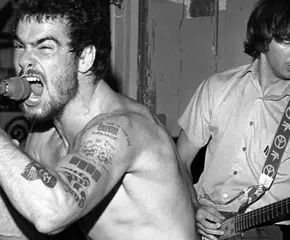
Wikimedia CommonsScam artists Jim Bakker and Tammy Faye amassed a fortune as popular televangelists in the 1970s.
Evangelical super-churches have a long tradition of getting caught in scandals. But perhaps there’s no greater example of this than the case of famous Evangelist preacher Jim Bakker, who created a fortune off of his faithful fanbase — and was nabbed in a sexual affair in 1987.
The religious conman began his journey to televangelist infamy as a co-host on a small Christian television program known as the The PTL Club. That acronym reportedly stands for “Praise The Lord” or “People That Love,” depending on who you ask. It first aired in the 1970s under a small North Carolina station owned by media mogul Ted Turner, who would later found CNN.
Bakker hosted the program with his then-wife, the late Tammy Faye Bakker. As the program gained popularity, the Bakkers’ influence grew in kind. They created a multimillion-dollar Christian cable TV enterprise with 2,000 employees. At its peak, PTL raked in more than $100 million a year.
The couple even built a Christian-themed amusement park named Heritage U.S.A., which drew six million visitors annually. One devout follower described the site as “holy ground.”
According to court documents, prosecutors alleged that the con man also sold “lifetime partnership” vacation plans to his PLT viewers, where they were offered once-a-year vacations to Heritage U.S.A. for the rest of their lives. The catch was that they had to cough up $1,000. His followers dug into their pockets and contributed a total of $158 million over three years.
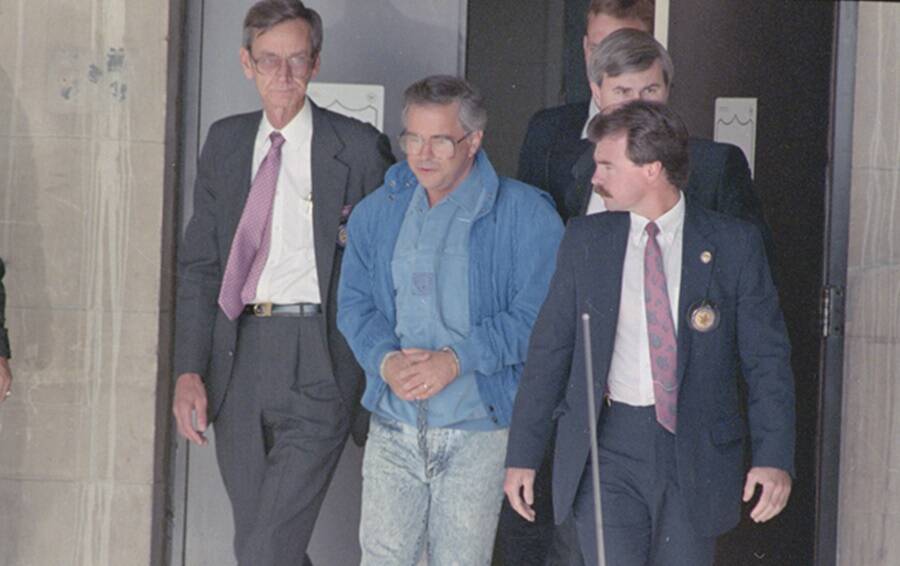
Bettmann/Corbis/Getty ImagesIn 1989, Bakker was sentenced to 45 years in prison for fraud and conspiracy. He served just five.
Jim Bakker, described by one prosecutor as “the biggest conman ever,” met his downfall in 1987 when it came out that the televangelist had a sexual encounter with a former church secretary named Jessica Hahn. What’s more, the church allegedly gave her $265,000 to keep quiet about the affair.
Bakker resigned as president of PTL in the wake of his sex scandal, though he admitted to both the affair and the hush money payment. He claimed that he was “wickedly manipulated by treacherous former friends” who “conspired to betray me into a sexual encounter.” The con artist also said that he authorized the payment to “avoid further suffering or hurt to anyone.”
Two years later, in 1989, the supposedly religious con artist was charged with fraud and conspiracy and was sentenced to 45 years in prison, though in the end he only served five years. Two other of his PTL associates were also charged and received prison sentences.
But that wasn’t the end of the religious con man. After his release from prison, Jim Bakker started a new show, The Jim Bakker Show, with his second wife, Lori. Besides preaching about the end times, Bakker used his show to peddle his most recent grifts.
Among them were extremely expensive “extreme survival warfare” water bottles, cabins in Missouri’s Ozark mountains, which he claimed to followers would be the “safest place to live” when the Apocalypse hits, and a bogus antidote for the coronavirus which he dubbed “Silver Solution.”
The conman went on sabbatical from his grifting after he suffered a stroke in 2020.
Elizabeth Holmes, The Con Artist Who Faked A Medical Breakthrough

David Orrell/CNBC/NBCU Photo Bank/NBCUniversal via Getty ImagesScam artist Elizabeth Holmes was heralded as the “next Steve Jobs” by tech insiders before she was revealed as a fraud.
California’s Silicon Valley is a hotbed for con artists flouting empty promises of “the next big thing.” For years, Elizabeth Holmes, the founder and CEO of the now-defunct company Theranos, was one such scam artist.
During the early 2000s, the then-19-year-old was a bright-eyed student at Stanford University. She came to her professor with an ambitious idea: a patch that could scan a person for infections or disease and release the needed antibiotics. Essentially, she wanted to build a one-stop-shop lab for treatment on a tiny device.
The professor told her the idea was physically impossible, but Holmes was unrelenting and became obsessed with her rapid-testing idea. She quit Stanford to start her own company, Real-Time Cures, which was later renamed Theranos.
Over the years, Elizabeth Holmes focused on building the company’s machine prototypes. Finally, she claimed Theranos was able to build a rapid blood-testing machine that could provide on-the-spot medical results by analyzing a single drop of a patient’s blood.
News of Holmes’ breakthrough machine spread through the Valley like wildfire. Theranos’ profile rose among industry insiders, and investors poured nearly $1 billion into it.
Holmes was heralded as the next big breakout star in tech. She graced the covers of magazines like T: The New York Times Style Magazine and Fortune, and was featured on movers-and-shakers lists like Vanity Fair’s 2015 New Establishment List. She was heralded as “the next Steve Jobs.”
But her machines were a hoax. Holmes had spun a complicated web of lies to create the illusion that they worked. She faked blood test results, lied to investors about the company’s financial prospects, and made false claims about her machine’s capabilities to the press.
She was also reportedly a “tyrannical” boss and fired anyone who tried to question the machine’s legitimacy.
While many con men create elaborate scams to gain wealth, Holmes seemed motivated by her hunger for recognition. The reports into Holmes’ possibly fraudulent business triggered investigations by a number of federal agencies.
“I think she absolutely has sociopathic tendencies. One of those tendencies is pathological lying,” said John Carreyrou, a Wall Street Journal reporter who broke the news about Holmes’ web of deceit through his bombshell reports.
“I think she’s someone that got used to telling lies so often, and the lies got so much bigger, that eventually the line between the lies and reality blurred for her.”
After investigations into Theranos came to light, Forbes magazine whittled Holmes’ previous estimated net worth of $4.5 billion down to zero. By September 2018, Theranos was shut down.
The scam artist faced a number of charges from several federal agencies including wire fraud by the Department of Justice. Meanwhile, Carreyrou’s 2018 book, Bad Blood: Secrets and Lies in a Silicon Valley Startup, which chronicled the rise and fall of con artist Elizabeth Holmes, was adapted into the HBO documentary The Inventor: Out for Blood in Silicon Valley.