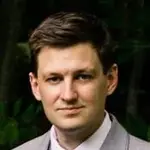
From August Pfeiffer, a gay German man, to Józefa Głazowska, a 12-year-old Polish girl who underwent vicious medical experiments, see the heartbreaking portraits of 33 Holocaust victims.
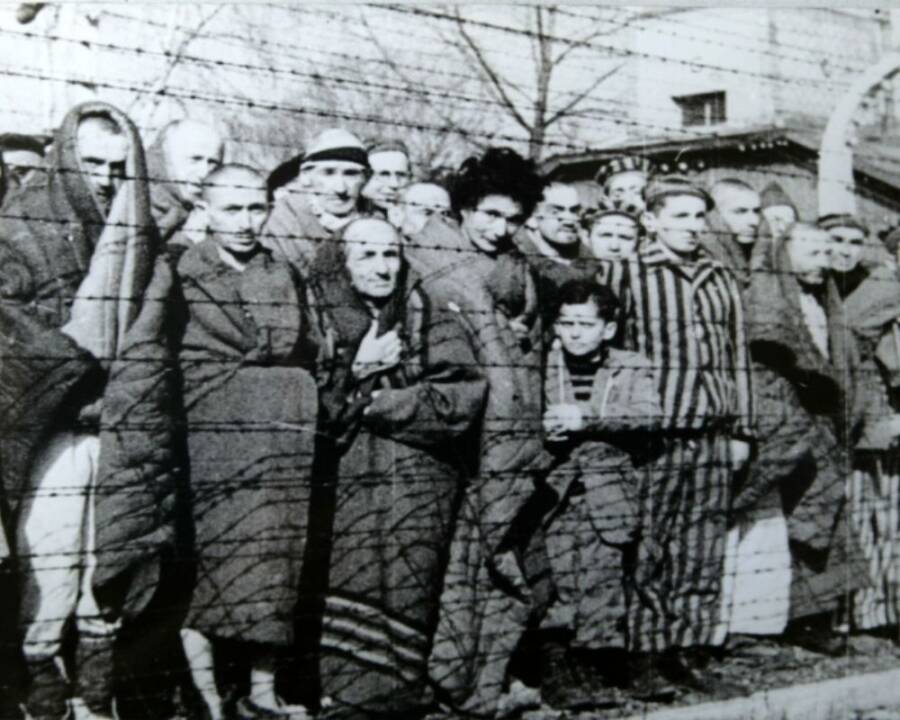
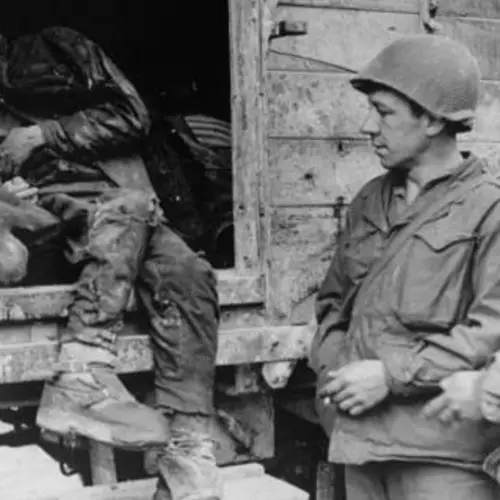
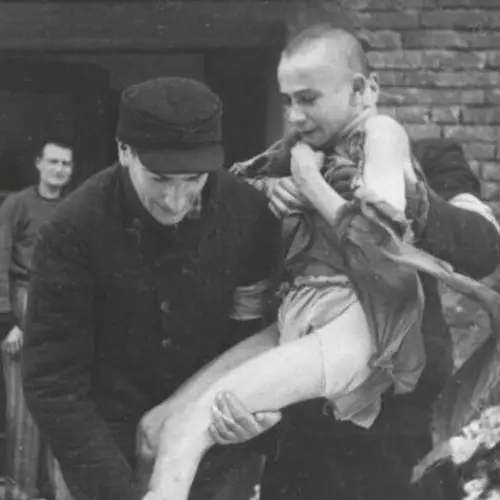
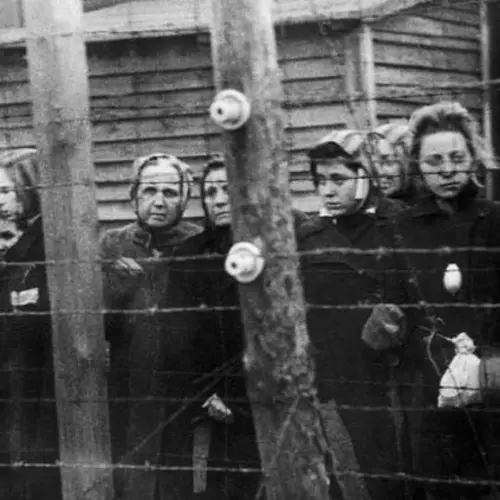
Public DomainHolocaust survivors as seen during the liberation of Auschwitz in January 1945.
In 1933, Adolf Hitler rose to power as the Chancellor of Germany, and he quickly enacted a series of antisemitic laws. By 1945, approximately 11 million Holocaust victims had lost their lives at the hands of the Nazi regime, and millions more had suffered unfathomable horrors in concentration camps or been forced to flee their homeland.
More than six million Jewish people died under Hitler, along with five million Polish citizens, Soviet war prisoners, Jehovah’s Witnesses, gay men, political opponents, people with disabilities, and anyone else deemed unacceptable to Aryan ideals.
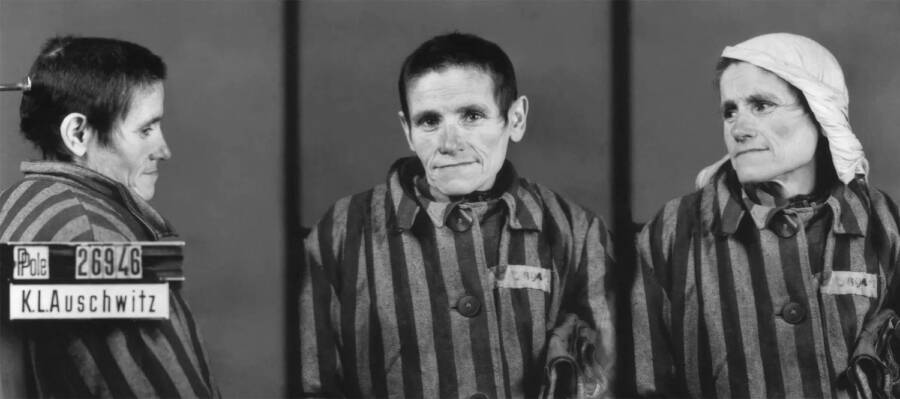
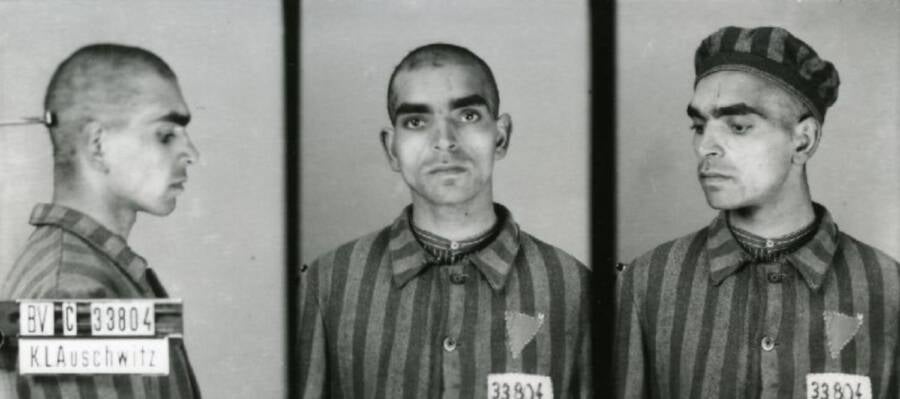
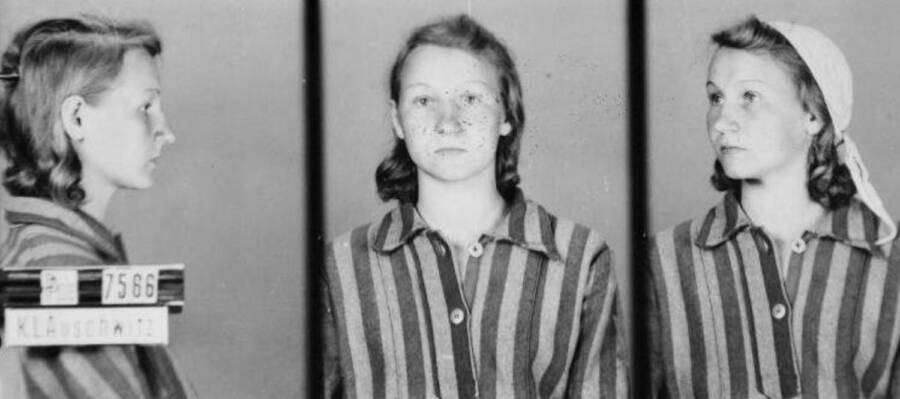
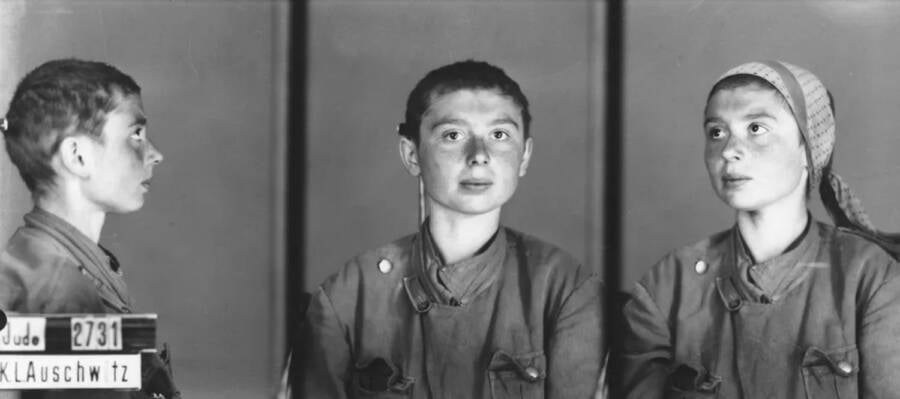
The faces of many of these Holocaust victims were captured by photographers for their official files at concentration camps like Auschwitz. Some of them were systematically exterminated in gas chambers or via lethal injection. Others managed to escape or survive until the camps were liberated in the final days of World War II.
All of them have heartbreaking stories that reveal the true depravity of the masterminds behind the genocide and the Nazi men and women who helped them execute these crimes against humanity.


And if you liked this post, be sure to check out these popular posts:
She died in Auschwitz on Dec. 10, 1942.Public Domain


The Horrifying Background Of The Holocaust
After Adolf Hitler was appointed Chancellor of Germany in January 1933, he lost no time enacting the legislation that would set the Holocaust in motion. Within two months, the first concentration camp, Dachau, had opened. While it was initially intended for political opponents, Dachau eventually became the site of countless atrocities.
By April, the first laws against Jewish citizens had been passed, prohibiting them from holding government positions. The following year, Hitler became the president of Germany, though he immediately abolished the office and named himself Führer instead.
Over the next few years, Jewish people had their German citizenship revoked, were required to register their property, and were prohibited from marrying Aryans. Then, in November 1938, Nazi mobs destroyed synagogues, looted Jewish-owned businesses, and sent some 30,000 Jewish men to concentration camps in an attack that became known as Kristallnacht, or the "Night of Broken Glass."
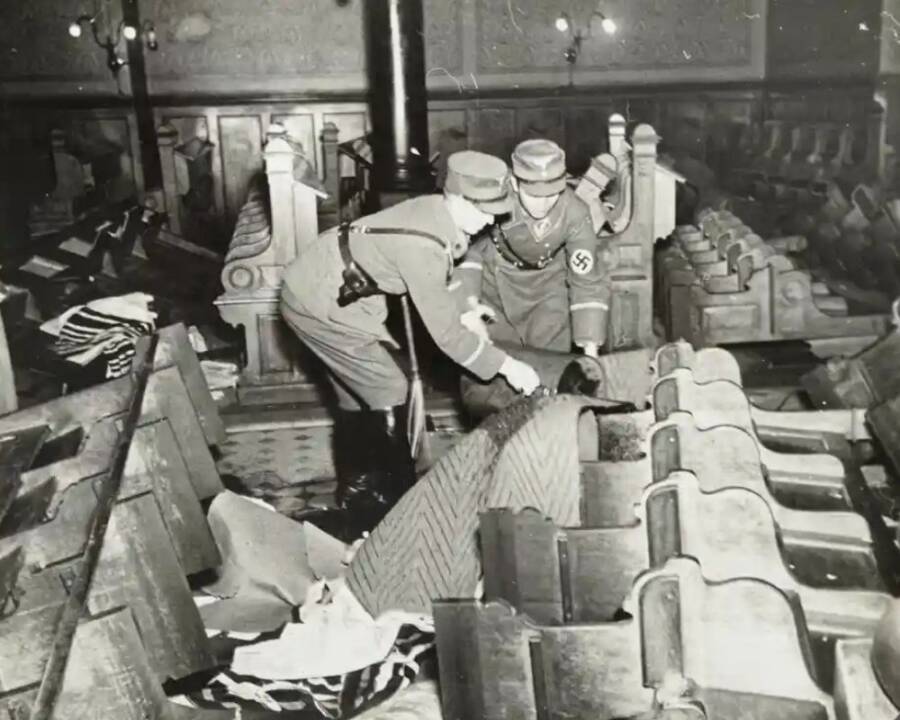
Public DomainNazi soldiers pour gasoline on the pews of a Jewish synagogue during Kristallnacht.
Within two years, Jewish people were required to wear the Star of David on their clothing, the first prisoners had been transported to Auschwitz, and the "Final Solution" extermination program had begun.
The genocide was in full swing.
The Disturbing Fates Of Jewish Holocaust Victims
Between 1941 and 1945, an estimated 2.7 million Jewish Holocaust victims were murdered in gas chambers at Chełmno, Belzec, Sobibor, Treblinka, and Auschwitz-Birkenau, according to the United States Holocaust Memorial Museum.
Children, pregnant women, and the elderly were typically executed immediately upon their arrival at these killing centers, while able-bodied men and women were kept alive to do hard labor.
One of these victims was Arek Hersh, a Jewish boy who witnessed the horrors of the Holocaust at just 11 years old, when Germany invaded his home country of Poland. His cousin was beaten to death in front of him, and Arek was forced into a labor camp to help build a new railroad.
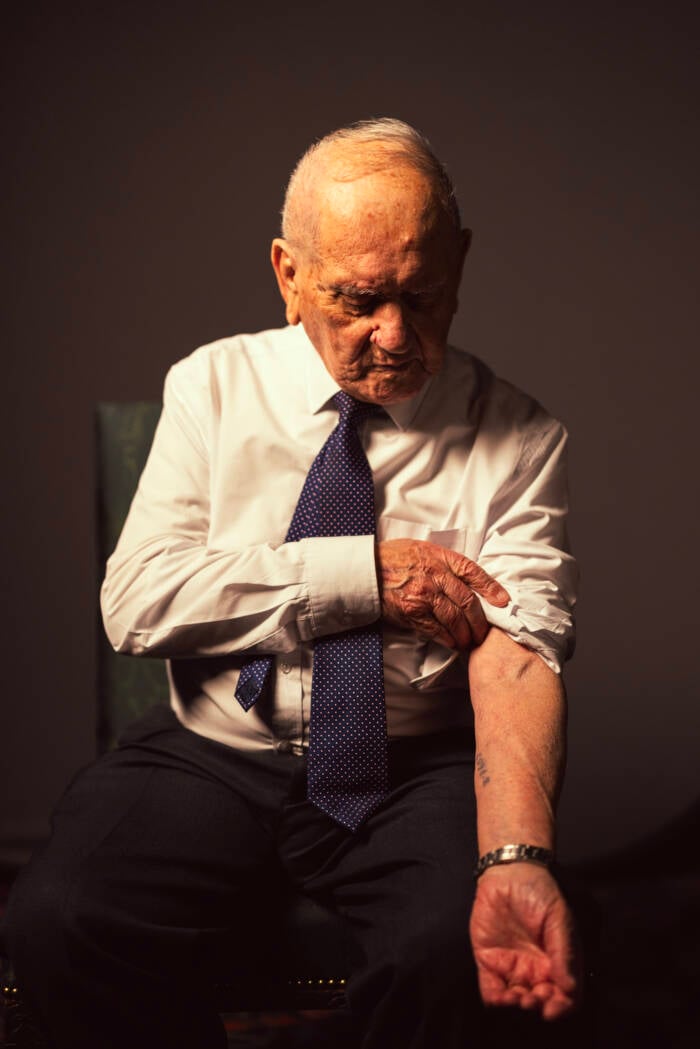
Number 10 Downing Street/FlickrArek Hersh reveals the number tattooed on his arm while he was imprisoned at Auschwitz.
Soon after he returned to his town in 1942, the remaining Jewish residents were gathered into a public square. Out of 1,400 men, women, and children, 150 of them were considered fit to work. Arek was among them. The rest were transported to Chełmno and executed, including the boy's entire family.
Arek lived in a Jewish ghetto for the next two years, but he was eventually sent to Auschwitz. When he saw his friends placed in a line with sick prisoners, he panicked and sneaked into a second line — a decision that saved his life. His friends were sent directly to the gas chamber, and 15-year-old Arek spent the next few months working various jobs before he was forced to join a death march to Germany just days before the liberation of Auschwitz.
Arek Hersh survived his ordeal, but many other prisoners his age never made it out of the camp's gates.
Child Victims Of The Holocaust
While the Holocaust was mainly intended as a way to eliminate Germany's Jewish population, at least five million non-Jewish victims also lost their lives. After invading Poland in 1939, the Nazis set out to destroy the country's culture and eliminate any citizens who resisted their takeover.
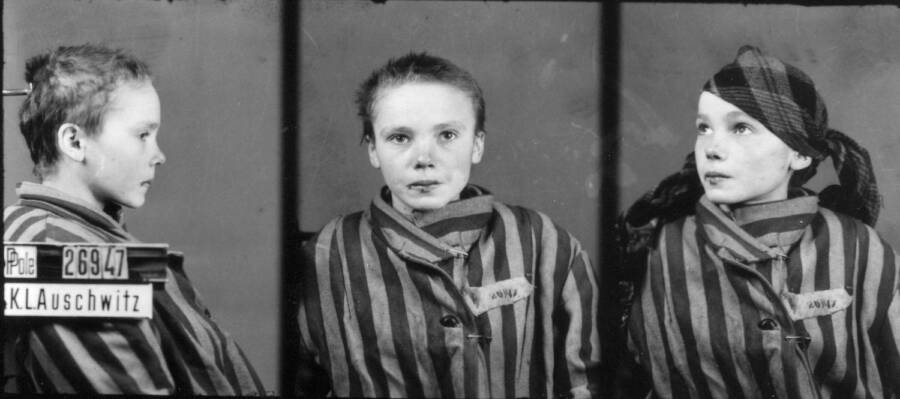
Czesława Kwoka was a 14-year-old Roman Catholic girl from Wólka Złojecka who was sent to Auschwitz in 1942. Upon her arrival, she was photographed by Wilhelm Brasse, a fellow prisoner from Poland who was ordered to document inmates for their files. "She was so young and terrified," Brasse recalled during a 2005 interview, as reported by the Mirror. "The girl didn't understand why she was there and she couldn't understand what was being said to her."
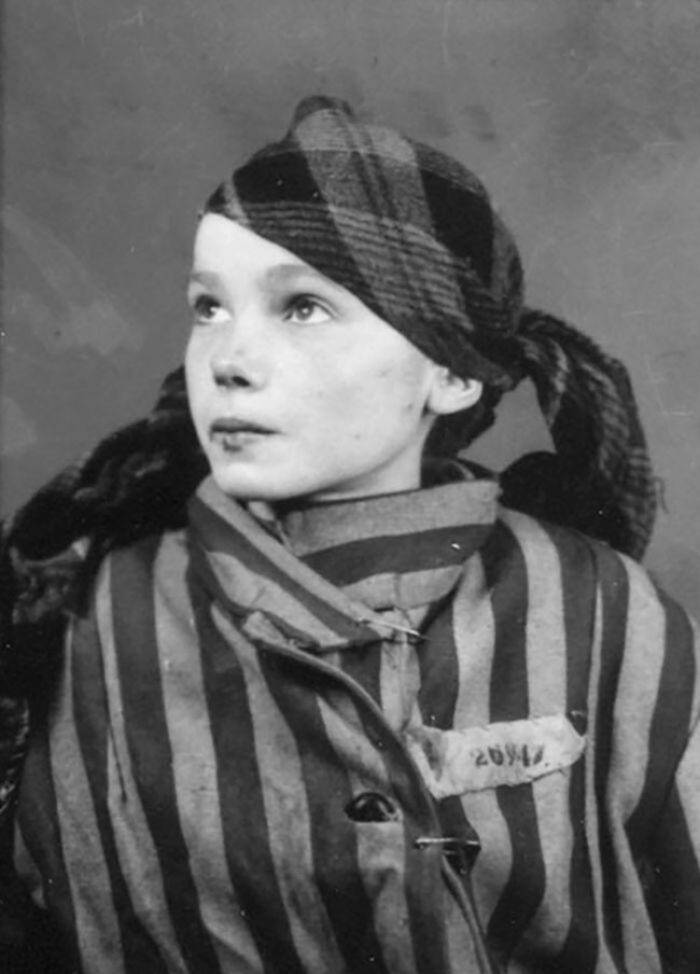
Public DomainCzesława Kwoka's injured lip is visible in her Auschwitz portrait.
The German guards beat Czesława when she didn't comprehend their instructions. When it was her turn to sit for her picture, she wiped the blood from her lip before Brasse snapped the photo. "To tell you the truth, I felt as if I was being hit myself," Brasse said, "but I couldn't interfere. It would have been fatal for me."
By March 1943, Czesława was dead. She was likely executed with a phenol injection to the heart. Iwan Rebałka faced a similar fate. The 17-year-old boy was arrested as a Russian political prisoner in 1942 and transported to Auschwitz. Seven months later, Nazi guards killed more than 80 teenagers via phenol injection in a single evening, and Iwan was among them.
Then, there was Józefa Głazowska, another Polish girl whose family was removed from their home country so ethnic Germans could settle there. Her mother was killed in a gas chamber at Auschwitz, but the 12-year-old girl was kept alive to be used as a guinea pig in medical experiments. She was likely purposely infected with malaria or typhus, though she managed to survive until the end of the war.
The medical trials faced by Holocaust victims like Józefa were only some of the brutal acts that took place within the walls of Nazi concentration camps.
The Tortures Faced By Concentration Camp Prisoners
While 2.7 million Jewish people were systematically put to death during the Holocaust, millions of other victims perished while performing hard labor, were shot or beaten to death by guards, or succumbed to illnesses exacerbated by starvation, filth, and lack of medical treatment.
Vasyl Bandera, a member of the Organization of Ukrainian Nationalists, was arrested in 1941 and sent to Auschwitz the following year. According to Local History magazine, Bandera was brutally tortured during his time at the concentration camp.
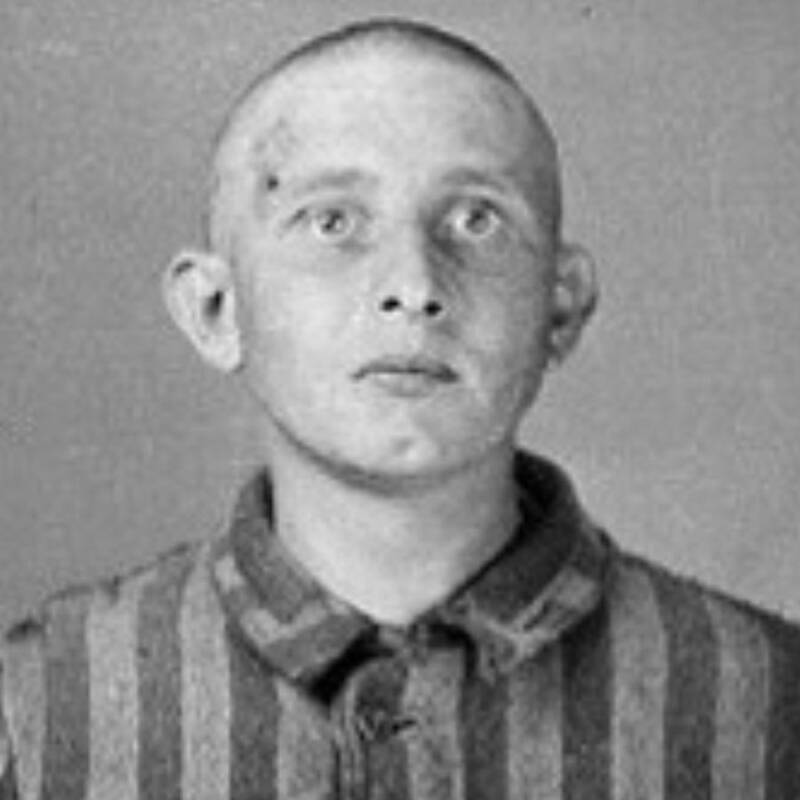
Public DomainVasyl Bandera died shortly after arriving at Auschwitz in 1942.
As his fellow prisoner Petro Mirchuk later recalled, "They dragged him into the cellar while he was working, still covered in cement, and threw him — clothed — into a barrel of water. Then they scrubbed his face and head with a red brush. After that, they forced him to continue working, running with a wheelbarrow and carrying cement, before dragging him back to the cellar to be 'washed' again."
Bandera died the next day.
That's what makes these photos of Holocaust victims so powerful. These were the last pictures taken of many of these people before they faced unthinkable deaths. They serve as a final reminder of living, breathing human beings who were far more than just a statistic.
After looking through these photos of Holocaust victims, read about Ilse Koch, the "Bitch of Buchenwald" who was one of the biggest monsters of the Holocaust. Then, learn about nine heroes of the Holocaust.