A talented guitarist, Mick Taylor helped lead the Rolling Stones to one of the band's greatest eras in the early 1970s. So why did he abruptly quit after just five years?
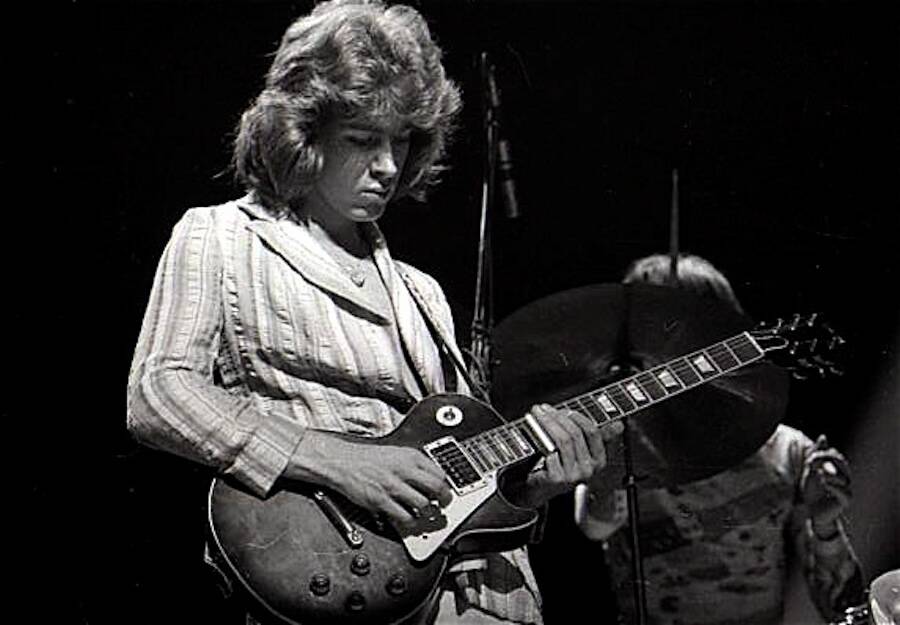
Dina Regine/Wikimedia CommonsMick Taylor performing with the Rolling Stones in the early 1970s.
In 1969, the Rolling Stones were unraveling. Brian Jones, a founding member of the band, had been let go, and he was later tragically found dead in his pool at age 27. Meanwhile, the Stones had a massive free concert coming up in London’s Hyde Park, with hundreds of thousands of fans expected to attend. They knew they needed a new guitarist.
Who they found was a 20-year-old named Mick Taylor.
Taylor didn’t walk into the Stones with the expectation of joining the band. He thought he was there to help them with session work. Instead, he soon found himself onstage, playing beside Mick Jagger and Keith Richards as the band transformed their concert into a memorial of sorts for Jones.
Over the next five years, Taylor helped shape what many fans consider one of the Stones’ greatest eras. Then, he suddenly left the band.
From Local Gigs To Legendary Blues
Mick Taylor was born on Jan. 17, 1949 to a working-class family in Welwyn Garden City, England and grew up in Hatfield. From an early age, he was interested in music. He first picked up a guitar at just nine years old, and by his early teens, his talent was already drawing attention in local bands.
Influenced by blues musicians, Taylor developed a playing style well beyond his young years. His reputation grew, but nothing about his early success hinted at just how abruptly his life was about to change.
That moment arrived at a John Mayall & The Bluesbreakers concert. Eric Clapton, who was scheduled to perform that night, never showed up. Seeing an opportunity, a teenage Taylor approached the band and asked to fill in.
The musicians took a chance on him. Once Taylor stepped onstage, it was clear he belonged. Taylor recalled, “I wasn’t thinking that this was a great opportunity… I just really wanted to get up on stage and play the guitar.”
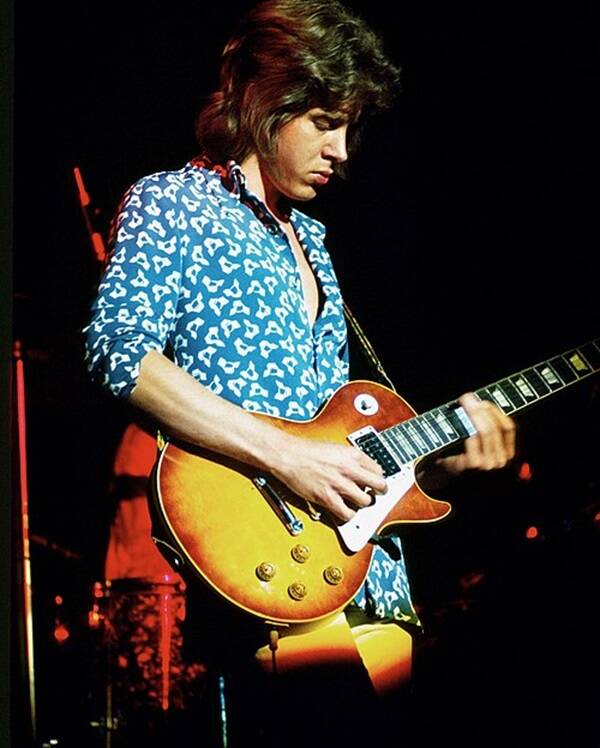
Creative Commons/Larry RogersMick Taylor, pictured onstage with the Rolling Stones at Winterland in San Francisco in 1972.
It wasn’t just a one-time opportunity either. When John Mayall & The Bluesbreakers found themselves in need of a guitarist again, they reached out to Taylor, remembering how well he played before.
This paved the way for Taylor’s immersion into the rock ‘n’ roll lifestyle, staying with John Mayall & The Bluesbreakers until 1969, even though the band was known for its constantly changing lineup.
Even with this impressive success, it was clear to Taylor that this band was only a small step in the direction of where he wanted to be.
Mick Taylor’s Introduction To The Rolling Stones
By 1969, the Rolling Stones were searching for a new guitarist. Brian Jones, a founding member of the band, had grown increasingly unreliable amidst his substance abuse and erratic behavior, and he was officially kicked out. While some fans assumed that the Stones might turn to a well-known star to replace Jones, the band was looking for something different.
Recommended through a mutual connection, Taylor auditioned and was hired. According to Guitar World, just two days before Taylor’s live debut with the band, Jones was found dead at the bottom of his swimming pool at the age of just 27. The circumstances were mysterious, as the cause of death was initially listed as drowning, then changed to “death by misadventure.” Meanwhile, some suspected that he had actually been murdered.
Despite the tragedy of Jones’ untimely demise, the show went on. Taylor stepped onstage with the Rolling Stones for the first time at a free concert in London’s Hyde Park on July 5, 1969. What should have been a fresh start for him instead became a public farewell to the man he had replaced. At just 20 years old, Taylor found himself carrying the weight of the band’s past.
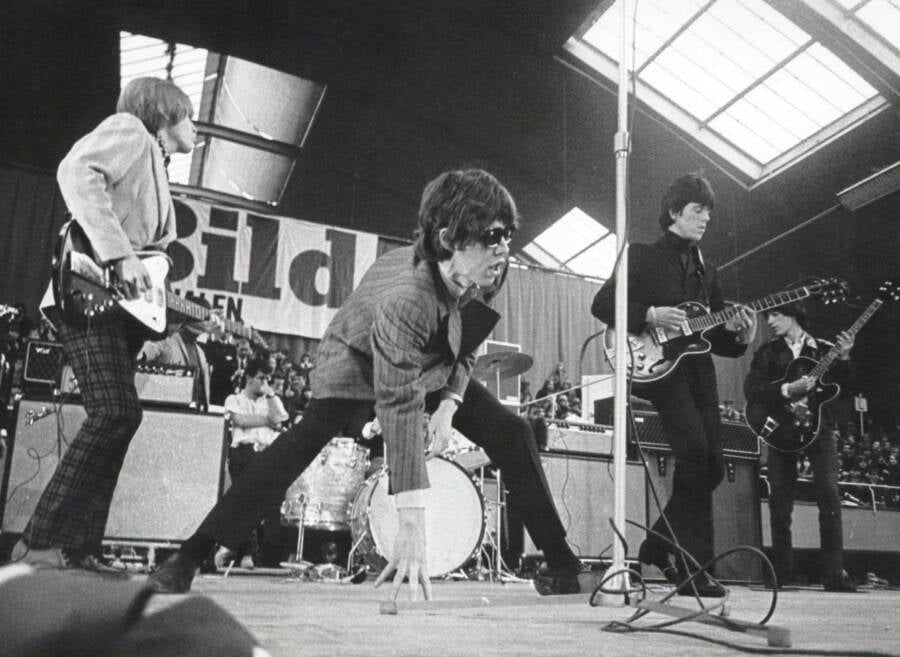
ingen uppgift/Wikimedia CommonsMick Taylor was hired to replace Brian Jones, the Rolling Stones’ original guitarist.
Offstage, Taylor soon became fully immersed in the wild lifestyle that defined the Rolling Stones. He also experienced the chaos that came along with it, like a concert that was meant to be a West Coast version of Woodstock — but instead turned tragically violent.
On Dec. 6, 1969, the Stones performed at the Altamont Speedway Free Concert, and fatefully, they had chosen the Hells Angels as their security for the night. A young Black man named Meredith Hunter was fatally stabbed by a Hells Angel during the set. As everyone watched in horror, the band played on, aware of the altercation but apparently unaware of the death.
The Stones said they continued playing out of fear there would be a massive riot if they stopped, a decision that proved controversial. While some blamed the Stones for the chaos that led to the tragedy, others accepted their explanation and waited to see what they’d do next in the music world.
The Rolling Stones’ Historic Era With Mick Taylor — And His Sudden Exit From The Band
With his impressive skill on the slide guitar and his gift for enhancing songs, Mick Taylor played a key role in some of the Stones’ most acclaimed albums, including Let It Bleed, Sticky Fingers, and Exile on Main Street.
His talents also paired well with the other band members. As bandmate Keith Richards recalled, “We did the most brilliant stuff together, some of the most brilliant stuff the Stones ever did. Everything was there in his playing — the melodic touch, a beautiful sustain, and a way of reading a song.”
Taylor’s bandmate Mick Jagger also acknowledged that Taylor made a “big contribution” to the band, and said he had a “very fluent, melodic approach.”
Behind the scenes, however, tensions were beginning to grow.
Taylor had joined the Rolling Stones expecting more regular touring and steady work than he had before. Instead, he entered a band that functioned more like a lifestyle, with stretches of inactivity and constant indulgence.
Meanwhile, he became frustrated over his lack of songwriting credits, especially since he felt he had made major contributions to songs like “Sway” and “Moonlight Mile.” He also had creative frustrations with Richards.
Significantly, he also began to question his involvement in the rock ‘n’ roll lifestyle, as he had developed serious issues with drug addiction.
All this culminated in Taylor telling Jagger at a party in December 1974 that he was leaving the Rolling Stones. After saying this, Taylor abruptly walked out. The decision reportedly came as a huge shock to the band, especially since they were just about to return to the studio. Taylor later remembered that Jagger “tried to persuade me to stay, but I told him I was fed up and how my drug problems were beginning to worry me.”
Jagger also suggested that Taylor could try taking a six-month break, rather than making a permanent exit. But Taylor refused.
The band replaced Taylor with Ronnie Wood, whose style fit their image and energy. Yet many fans and even the Stones themselves have acknowledged that something was lost when Taylor walked away.
Life After The Rolling Stones
Mick Taylor was only in his mid-20s when he left the Rolling Stones, an age when many musicians are still fighting to be noticed. He continued to play guitar, collaborating with other artists and releasing solo albums, but he never reached the same commercial success that he had with the Stones.
Meanwhile, Taylor’s personal life struggled. His relationship with his wife Rose fell apart, and the two divorced. By 1990, he was still battling addiction, and he even enrolled at a methadone clinic in Los Angeles.
“I joined the line of junkies,” he said. “I was a virtual down and out… I decided to go back to England to find a cure, however painful.”

Joshua Knowlton Berry/Wikimedia CommonsMick Taylor performing at the Iridium NYC in 2012, continuing his guitar legacy long after his time with the Stones.
Eventually, Taylor became sober, continuing to play the guitar and sometimes re-emerging in interviews to reflect on his time with the Stones.
“By 1974, I felt I’d gone as far as I could with the band,” he remembered. “I didn’t think they’d stay together. The records were doing well, but the band was falling apart — it was in chaos.” But even though the band ultimately persevered, Taylor stands by his decision to exit when he did.
“People are always asking me whether I regret leaving the Rolling Stones,” he said. “I make no bones about it — had I remained with the band, I would probably be dead. I was having difficulties with drug addiction and couldn’t have lasted. But I’m clean now and have been for years.”
However, Taylor has rejoined the Rolling Stones onstage for the band’s 50th anniversary shows and other tour dates. Keith Richards welcomed his return: “We have the added beauty of keeping Mick Taylor with us as well this time.”
Though Taylor’s time with the Stones was short, he helped shape some of the band’s best music and left carrying both the glory and the scars with him.
After learning about Mick Taylor, read about Anita Pallenberg, the muse of the Rolling Stones. Then, check out some photos of history’s greatest musicians just before they made it big.