As seen in Narcos, Hélmer "Pacho" Herrera was one of the leaders of the powerful Cali Cartel who went head-to-head with Pablo Escobar and his Medelllín Cartel.
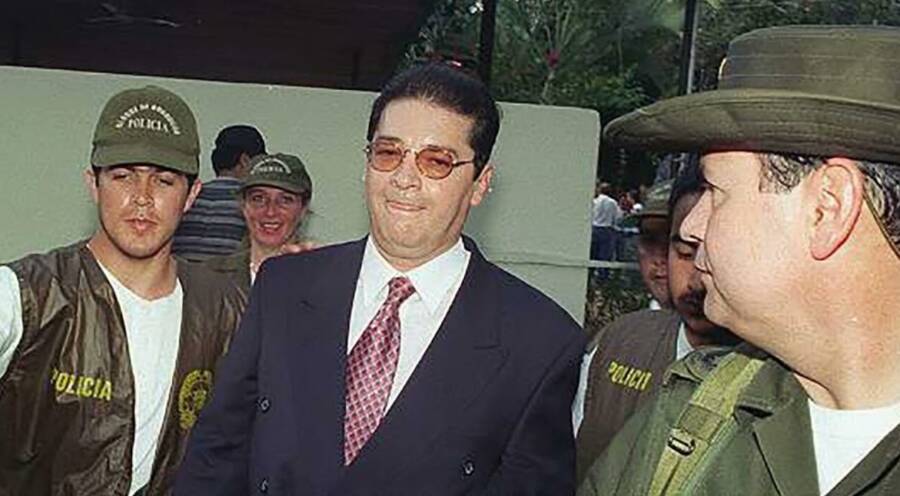
YouTubePacho Herrera after surrounding to Colombian authorities in 1996.
As one of the Cali Cartel’s four main leaders, Pacho Herrera helped create a sprawling narcotics empire that, at its peak, controlled around 80 percent of the global cocaine supply. Under his guidance, the Cali Cartel cemented the city of Cali as the epicenter of the world’s drug trade.
He proved to be a brilliant strategist, a ruthless enforcer, and a man capable of controlling the lucrative New York market, which is why the cartel’s founders accepted Herrera – despite widespread prejudices about Herrera’s homosexuality. This acceptance bought Herrera’s loyalty for life. Power, he had come to realize, was the only thing that truly mattered.
And the cartel’s bet paid off. The same ruthless efficiency and strategic acumen that had enabled Herrera to gain a foothold in the criminal underworld ultimately proved to be instrumental in the cartel’s bloody war against Pablo Escobar and his Medellín Cartel. Herrera allegedly helped finance Los Pepes, a paramilitary group that fought Escobar, and helped bring about Escobar’s downfall and death in 1993.
But ultimately, Pacho Herrera would not escape justice, either.
How Pacho Herrera Made His Name With The Cali Cartel
Little is known about Pacho Herrera’s early life. He was born Francisco Hélmer Herrera Buitrago on August 24, 1951, and grew up near the city of Palmira in Colombia. After high school, he moved to New York City, where he worked as a jewelry broker. Before long, Herrera also started selling cocaine.
According to the Drug Enforcement Agency, Herrera was arrested in 1975 and 1979 for selling cocaine. But this was just the start of his criminal career.
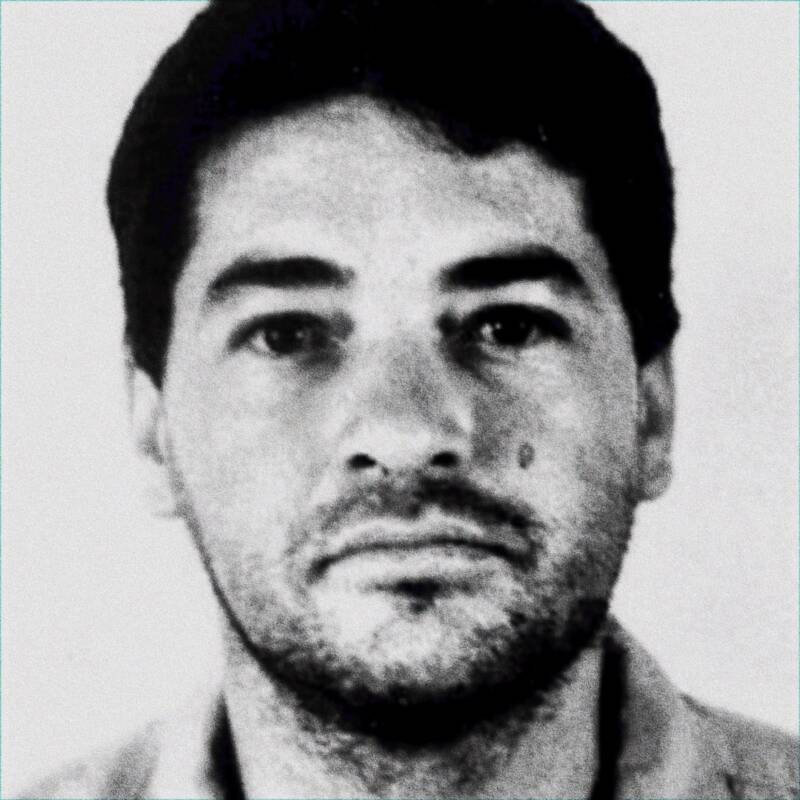
Wikimedia CommonsAn undated mugshot of Francisco Hélmer Herrera Buitrago, known best as Pacho Herrera.
After his second arrest, Pacho Herrera made his way back to Colombia. By his own estimation, he entered the global drug trade in 1983. At this time, he joined up with the Cali Cartel, which had been established by Gilberto Rodríguez Orejuela, Miguel Rodríguez Orejuela, and José Santacruz Londoñoin in the 1970s. There, Herrera would quickly rise through the ranks, even though he was openly gay in a time of great prejudice.
As his influence grew, so did his responsibilities. Herrera soon became one of the cartel’s four principal leaders.
“He was the youngest and most physically fit of the four godfathers, unmarried, and openly homosexual,” journalist William Rempel wrote in At the Devil’s Table: The Untold Story of the Insider Who Brought Down the Cali Cartel. “He was noted for a wardrobe of fashionable sportswear and for stylishly decorated homes. Pacho had the empathetic manner of a priest, but he also ran the cartel’s most brutal wing of hired guns.”
And soon, the Cali Cartel would run up against another powerful drug ring in Colombia — the Medellín Cartel, run by drug lord Pablo Escobar.
The Rise And Fall Of Pacho Herrera And The Cali Cartel
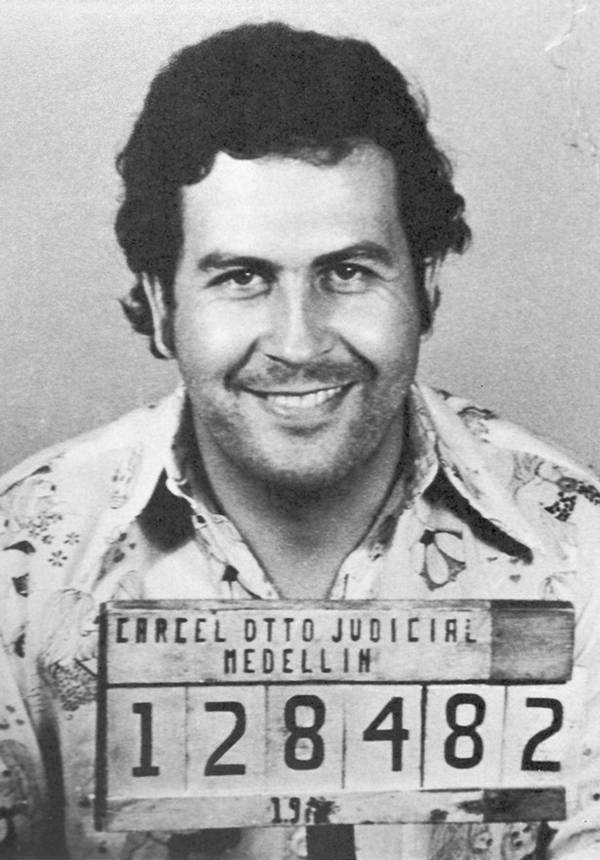
Wikimedia CommonsPablo Escobar
It didn’t take long for the Cali Cartel and the Medellín Cartel to butt heads. Selling the same product — cocaine — they competed for shares of the market.
According to reporting from The New York Times in 1988, the two groups also fought over territory. For example, the Cali Cartel had long operated in New York City — but the Medellín Cartel wanted its share of the New York market. The cartels also disagreed on how to operate within Colombia itself.
And so, by by the late 1980s, the Cali and Medellin cartels were in the middle of an all-out war.
In February 1988, a car bomb exploded in a building owned and occupied by Escobar and his family. They narrowly escaped, and Escobar soon took revenge by targeting Herrera. In September 1990, Escobar sent a squad of killers to assassinate Herrera as he watched a soccer game in Candelaria. The gunmen killed 18 people, but Herrera escaped. He escaped again in 1991, when gunmen ambushed Herrera at a resort, leaving several people dead.
Though it was never proven, many suspect that Pacho Herrera also became heavily involved in financing Los Pepes, a paramilitary death squad that aimed to kill Pablo Escobar. According to PBS, the Cali Cartel also began to secretly share information about Escobar’s movements with the Colombian police and the DEA.
Before long, the Escobar found his grip on power slipping. In 1993, the drug kingpin was killed in a shootout with the authorities.
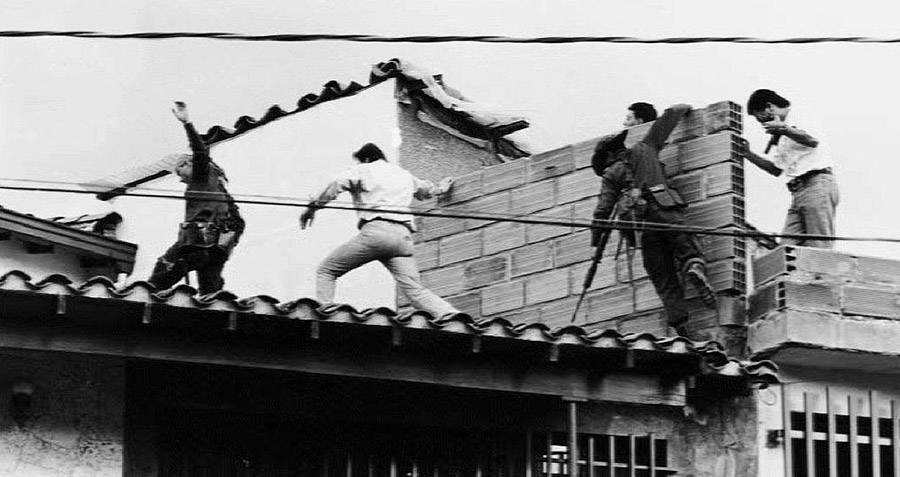
JESUS ABAD-EL COLOMBIANO/AFP/Getty ImagesPolice storming Pablo Escobar’s estate, Hacienda Nápoles, shortly before he was killed.
After his death, the Cali Cartel cornered the market on cocaine trafficking, at one point supplying 80 percent of all cocaine in the world. Before long, the cartel was pulling in $8 billion a year.
But the downfall of the Medellín Cartel also brought the end of the Cali Cartel, which was increasingly targeted by the Colombian government and the United States. Herrera, the last of the four godfathers of the cartel still at large, watched as his empire crumbled around him.
“Until last month, Helmer Herrera Buitrago could relax in his penthouse bathtub while monitoring on closed circuit television who was coming and going from his private 14-story office and residential tower here,” The New York Times reported in 1995. “To cruise around town, he could choose from a fleet of 70 cars, including a bullet-proofed Mazda equipped with louvers to allow his bodyguards to fire machine pistols at pursuers. But hard times have fallen on this slender, mustachioed Colombian, whose personal empire allegedly includes much of the cocaine trade in New York and New Jersey.”
Facing inevitable capture and a potential life sentence in the United States, Pacho Herrera chose to negotiate a surrender with Colombian authorities in September 1996.
This is more or less depicted accurately in the Netflix series Narcos – but how much did the show actually get right?
How The Real-Life Pacho Herrera Compares With His Portrayal On Narcos
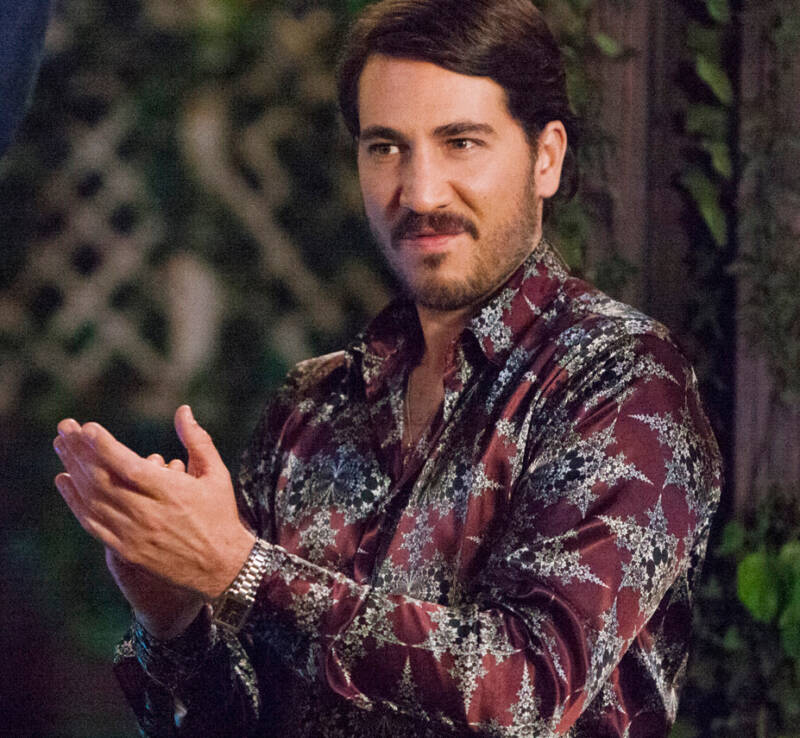
NetflixPacho Herrera as depicted on Narcos.
Narcos has always been a blend of truth and fiction. According to showrunner Eric Newman, the split between the two is “about 50-50.”
But the eshow gets many things about Pacho Herrera right. In real life, Herrera was a calculating criminal with a gift for running an illegal trafficking operation. He developed one of the most sophisticated and profitable money-laundering operations in the Cali Cartel, according to the DEA.
As to his sexuality, there is some dispute over the matter. According to Rempel, he was openly gay. Other writers have made similar claims. However, Herrera kept his personal life quiet.
Meanwhile, his death is portrayed more or less accurately on the show.
While serving a prison sentence in Cali following his surrender, Herrera began spending much of his time playing soccer. He was playing soccer with his fellow inmates on Nov. 6, 1998, when a man who had identified himself as a lawyer named Rafael Angel Uribe Serna approached him. The two men seemed to know each other — the BBC reported that Serna hugged Herrera — but then Serna opened fire, fatally wounding the drug lord.
The shooter’s exact motives remain uncertain, but a prominent theory suggests the hit had been put on him by a rival drug lord named Wilber Varela, who was seeking to take control of what remained of the Cali Cartel. In any case, it’s safe to say that Pacho Herrera made plenty of enemies in his time as a drug lord.
As noted on Narcos, “Vendettas in the drug game never end.”
After learning about Pacho Herrera, read about fellow Narcos subject Felix Gallardo. Then, learn the story of George Jung, the drug smuggler who inspired the movie Blow.