Wassailing, The Predecessor Of Christmas Caroling
Before crowds of happy carolers went door to door singing “We Wish You a Merry Christmas,” pagans gathered together to dance and sing in celebration of the winter solstice.
This tradition, known as wassailing, originally took place in fields to awaken the apple tree spirits in hopes of a good harvest. However, it transformed over the centuries into something similar to modern caroling.
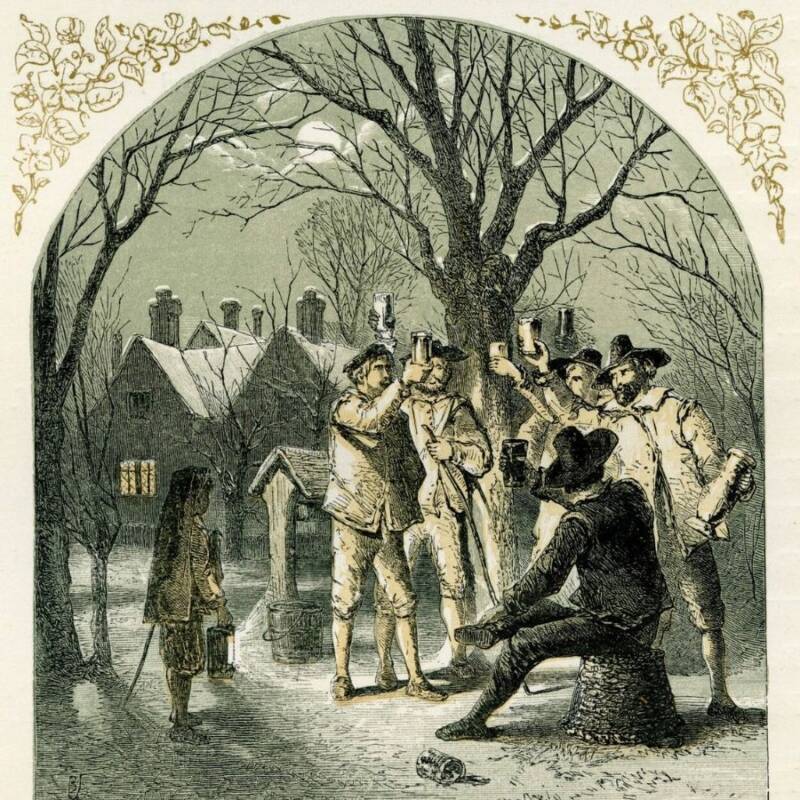
Public DomainAn 1872 illustration by Myles Birket Foster of men wassailing in a grove of apple trees.
People would prepare a large vessel of a mulled ale mixture called wassail and carry it around to homes in their village. At each house, they would sing and swap riddles in exchange for food or coins. Then, they would share their drink with the residents.
By the Middle Ages, wassailing had lost its pagan connections, but the tradition endured — largely as an excuse to drink alcohol. Groups became so rowdy that officials in England used their revelry as a reason to prohibit Christmas celebrations altogether in the 1640s.
This ban didn’t last long, but the pagan Christmas tradition was never quite the same. By the Victorian era, efforts to make the holiday more centered on children resulted in the emergence of the much tamer caroling we’re used to today.