Pagan Christmas Traditions: Kissing Under The Mistletoe
Mistletoe has become part of the iconography of modern Christmas. In addition to its prevalence in holiday decor, the evergreen plant is the center of a tradition that encourages couples who find themselves standing beneath a sprig to share a kiss.
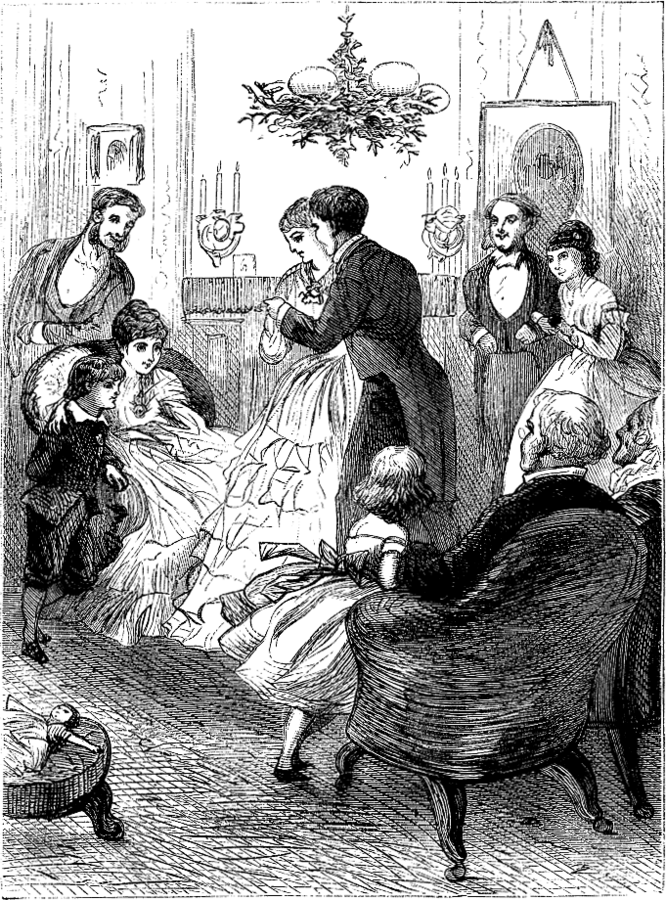
Public DomainAn 1873 illustration of a couple kissing beneath mistletoe.
The greenery has been an important aspect of winter celebrations for millennia. Ancient Druids saw mistletoe as sacred because it grew off of revered oak trees but remained green long after the other leaves had fallen. For this reason, it became associated with vitality and fertility.
In Naturalis Historia, written around 77 C.E., Pliny the Elder described a ritual the Druids carried out involving the plant:
After due preparations have been made for a sacrifice and a feast under the tree, they hail it as the universal healer and bring to the spot two white bulls, whose horns have never been bound before. A priest clad in a white robe climbs the tree and with a golden sickle cuts the mistletoe, which is caught in a white cloth… They believe that a potion prepared from mistletoe will make barren animals to bring forth.”
While the Druids connected the mistletoe to fertility, it was Norse mythology that attached the act of kissing to the plant.
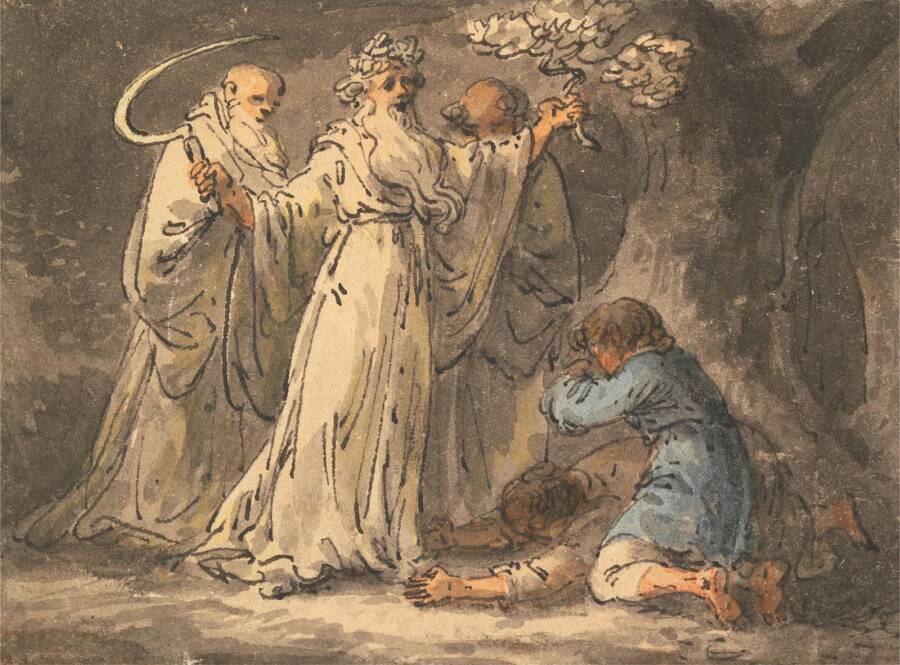
Public DomainBritish painter Julius Caesar Ibbetson’s depiction of Druids cutting mistletoe.
According to legend, Odin and Frigg, the Norse goddess of love, had a son named Baldr who was prophesied to die. In an attempt to thwart his fate, Frigg asked every plant and animal on Earth not to harm him. However, she forgot to appeal to the mistletoe.
Loki then crafted an arrow out of the evergreen and used it to kill Baldr. The other gods resurrected him, however, and to celebrate, Frigg declared that mistletoe was a symbol of love and promised to kiss anyone who walked beneath it. This pagan Christmas tradition continues to this day.