The Pre-Christian Origins Of Christmas Trees
Christmas trees are one of the most recognizable symbols of the holiday — but they’re also one of the most pagan Christmas traditions.
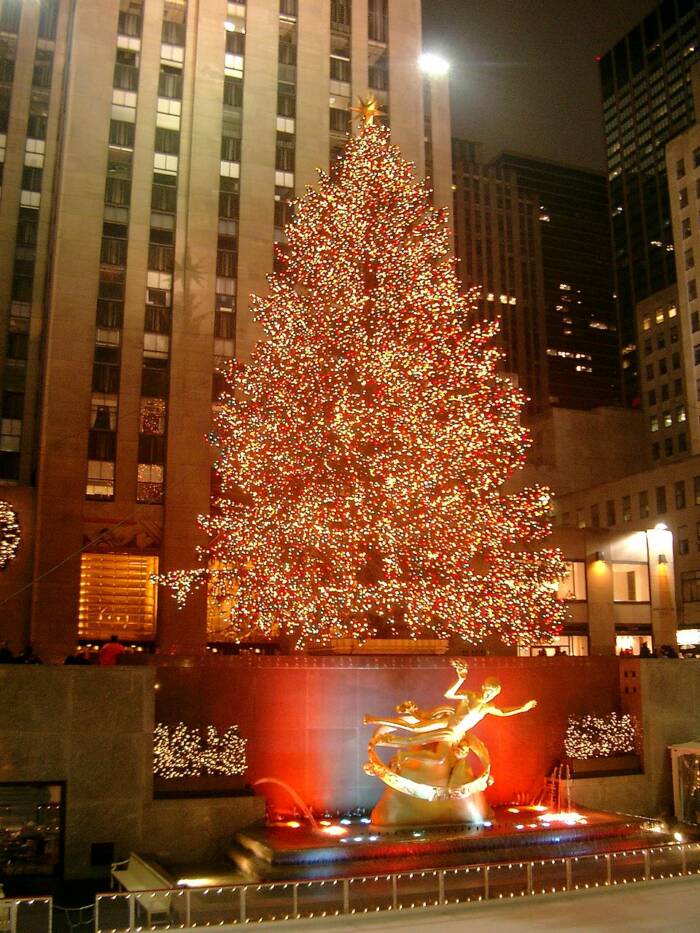
Lechhansl/Wikimedia CommonsThe Rockefeller Center Christmas tree in 2002.
Like holly, ivy, and mistletoe, evergreen trees were important to ancient winter solstice celebrations because they didn’t drop their leaves in the winter like other plants. The use of spruce, pine, and fir trees in various festivities can be traced back to northern Europe, where they were abundant.
It was common for pagans to use boughs from these trees to decorate their homes, not just for aesthetics, but for spiritual protection. Norse legend stated that Odin led a “Wild Hunt” across the skies during the winter, bringing misfortune to anyone who witnessed it. So, people stayed inside when they were able, and they filled their homes with evergreens for additional protection.
According to the writings of Hildegard von Bingen, a 12th-century German nun and medical writer, “Spirits of the air hate, and avoid more than in other areas, any place where there is fir tree wood. Magic thrives less and is less prevalent there than in other places.”
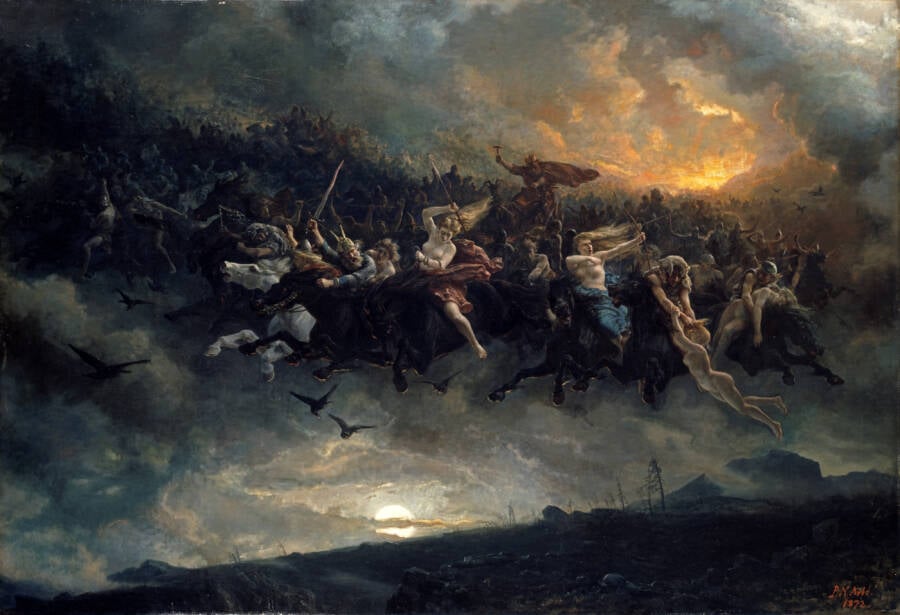
Public DomainAn 1872 depiction of Odin’s Wild Hunt by Norwegian artist Peter Nicolai Arbo.
Like other pagan Christmas traditions, the practice of decorating with evergreen trees became associated with Christian celebrations over time. In fact, Protestant reformer Martin Luther is said to have popularized placing lights on trees after he was inspired by the stars in the night sky.
And today, Christmas trees — adorned with strings of lights and colorful baubles — are a quintessential staple of the holiday season.