Trekking guides, helicopter operators, and Kathmandu hospitals have been implicated in a vast scheme that involves unnecessarily evacuating hikers from Mount Everest, then submitting falsified records to insurance companies in order to split the payout.
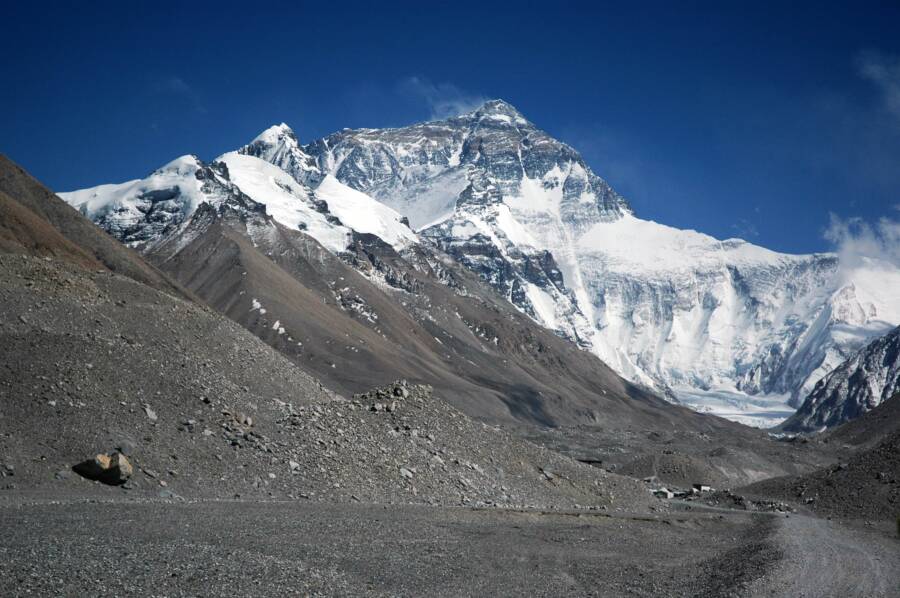
Public DomainOf 4,782 medical evacuations from Mount Everest between 2022 and 2025, 317 were found to have been fake rescues.
The Nepal Police’s Central Investigation Bureau (CIB) has uncovered an alleged insurance fraud scheme involving hikers on Mount Everest. Between 2022 and 2025, trekking guides reportedly fabricated medical emergencies for clients and had them needlessly evacuated to local hospitals by helicopter. All of the perpetrators involved then split the insurance payouts in a scam that generated more than $20 million.
At least 317 of these fake rescues purportedly took place over a three-year period. The conspiracy involves fraudulent paperwork, unnecessary medical treatments, and even one alleged case of a guide “poisoning” a client with baking powder to mimic symptoms of altitude sickness. The CIB is now vowing to crack down on this scheme, stating that it has “gravely damaged and degraded” Nepal’s reputation.
Inside The Elaborate Mount Everest Insurance Scam
Each year, tens of thousands of tourists make the trek to Mount Everest’s Base Camp, and countless others hike lower-elevation trails nearby.
While it’s not uncommon for climbers to fall ill from altitude sickness on Everest, the most lethal cases occur in the mountain’s “Death Zone,” which sits at around 26,000 feet. Indeed, the mountain is littered with the bodies of climbers who have succumbed to a lack of oxygen, hypothermia, or deadly natural disasters.
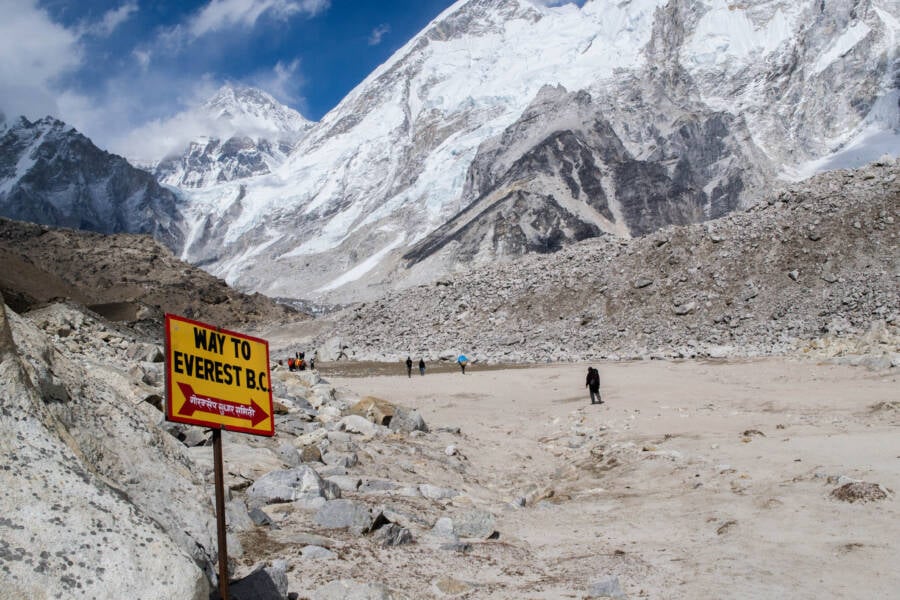
Daniel Oberhaus/Wikimedia CommonsWhile only around 1,000 people attempt to summit Mount Everest each year, tens of thousands of other hikers make the trek to Base Camp.
However, the hikers involved in this scam weren’t seasoned mountaineers like Edmund Hillary or Beck Weathers. And the perpetrators weren’t the Sherpas who are renowned for leading dangerous expeditions to Everest’s peak.
This recent investigation by the CIB has revealed dozens of unnecessary medical evacuations for casual hikers with mild symptoms of altitude sickness. Typically, guides would simply advise these clients to rest, stay hydrated, and slowly descend from Everest. But in some cases, according to the CIB, trekking guides convinced hikers that they would die if they weren’t immediately rescued by helicopter.
So far, 32 individuals have been charged in connection with this elaborate scam. A statement by the CIB harshly condemned the practice, calling it “detrimental to Nepal’s nationality, self-respect, independence, and international reputation.”
How Fabricated Medical Documents And Falsified Helicopter Manifests Fueled The Kathmandu Conspiracy
As reported by the Kathmandu Post in March 2026, trekking guides, helicopter operators, and Kathmandu hospitals allegedly conspired to file claims with hikers’ travel insurance agencies for unnecessary evacuations and medical treatments. The hospitals raked in millions of dollars in payouts, which they then split with the guides who referred the patients and the helicopter companies who transported them.
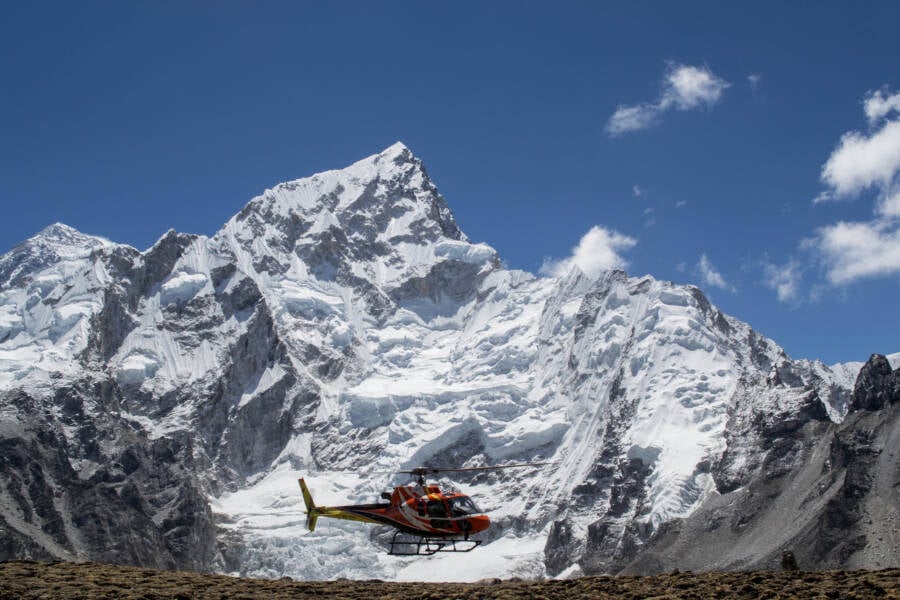
Daniel Oberhaus/Wikimedia CommonsA helicopter takes off from Mount Everest’s Base Camp in 2016.
At least three medical facilities treated these patients, allegedly performing unnecessary CT scans and then falsely reporting their conditions to insurers. One office assistant reportedly admitted that he attached his own X-ray report from a year prior to an insurance claim, and some patients’ discharge summaries included digital signatures from physicians who hadn’t treated them — sometimes without the doctors’ knowledge.
In one case, CCTV footage showed patients drinking beer nearby at the same time their medical records claimed they were undergoing treatment.
Per the Kathmandu Post, Dr. Girwan Raj Timilsina from Shreedhi International Hospital told investigators, “My hospital has also given commission from its earnings to trekking companies and rescue companies to promote business.”
Likewise, paperwork from several helicopter companies has revealed falsified flight manifests. In one case, a single helicopter allegedly carried four passengers but submitted separate claims to the patients’ insurance companies as if they had been transported individually, greatly inflating the payout.
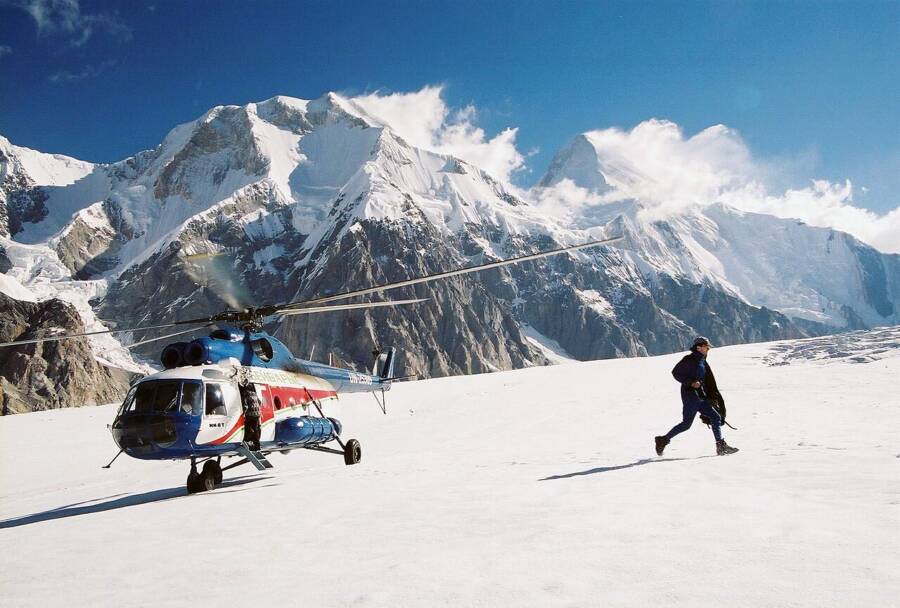
Wikimedia CommonsWhen helicopters are deployed to Mount Everest during rescue operations, it can later prove difficult for insurance companies to discern the specifics of what actually occurred.
Typically, travel policies require insurers to be notified before major claims like helicopter evacuations, but scammers took advantage of the remoteness of the Himalayas to delay claim verifications until after the transports had already taken place, giving them more time to falsify their documentation.
While some reports have gone so far as to claim that trekking guides “poisoned” their clients, only one such case has been confirmed so far: A guide allegedly mixed baking powder into a hiker’s food to induce gastric symptoms that could be mistaken for altitude sickness. In several other instances, guides may have encouraged their clients to drink too much water, leading to low sodium levels that could exacerbate mild altitude sickness.
Still, the CIB is taking these claims seriously. The agency previously investigated similar reports of fraud in 2018 and introduced a series of reforms, but, as CIB chief Manoj Kumar KC told the Kathmandu Post, “The scam continued due to lax punitive action. When there is no action against crime, it flourishes. The insurance scam too flourished as a result.”
This time, authorities plan to put an end to the scheme before it damages Nepal’s tourism industry permanently.
After reading about the Mount Everest insurance fraud scheme, go inside the most haunting deaths that have occurred on the world’s highest mountain. Then, learn about George Everest, the namesake of Mount Everest — who actually never laid eyes on the landmark itself.