Low oxygen levels, frigid temperatures, high winds, and frequent avalanches make Mount Everest's Death Zone one of the world's most lethal places.
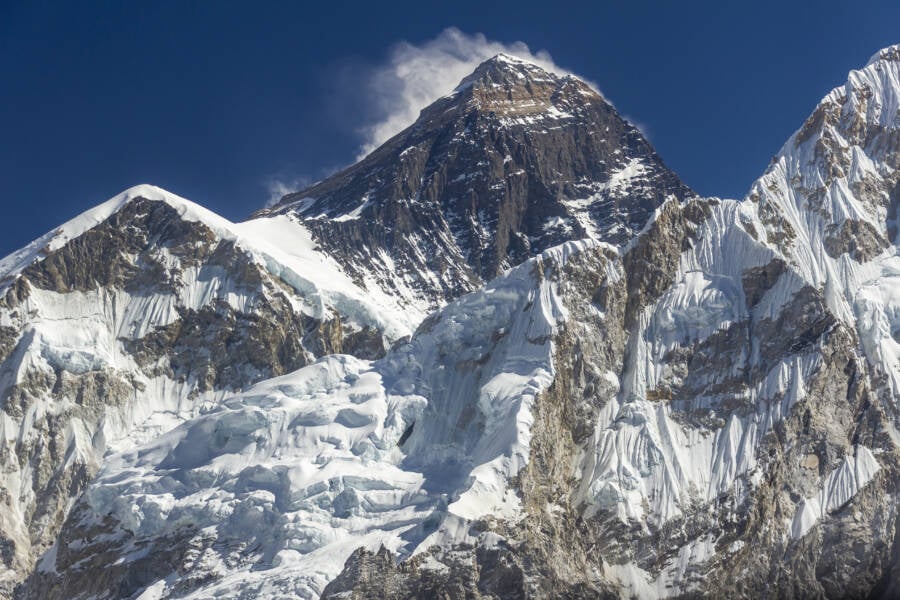
Bijay Chaurasia/Wikimedia CommonsMount Everest’s Death Zone begins at an elevation of about 26,200 feet.
Every year, as many as 1,000 climbers attempt to reach the peak of the world’s highest mountain. But to get there, they have to survive Mount Everest’s “Death Zone.”
Everest’s summit towers 29,032 feet above sea level, and everything above an elevation of 26,200 feet — or 8,000 meters — is considered the Death Zone. Oxygen levels are low, temperatures are frigid, and the dangers are countless.
More than 300 people have died while climbing Everest, many of them in the Death Zone. Some perished from hypothermia, others from hypoxia, and still more from avalanches, blizzards, falls, and other accidents and natural disasters.
Many of these bodies still remain on the mountain as a chilling reminder to other climbers about how dangerous Mount Everest’s Death Zone really is.
Inside The ‘Death Zone’ Of Mount Everest
Climbers who wish to scale the world’s highest mountain have a tough route ahead of them. The hike to Base Camp alone takes over a week, and then climbers must spend several more weeks acclimatizing to the high altitude. They continually ascend to higher camps and then return to Base Camp, passing through dangerous spots like the avalanche-prone Khumbu Icefall and the steep and icy Lhotse Face.
Then, they make their summit push. After reaching Camp IV at the South Col, the ridge between the peaks of Everest and Lhotse — the fourth-highest mountain on Earth — they venture into the Death Zone. This lethal section of Mount Everest begins at an elevation of 26,200 feet, just above the South Col.
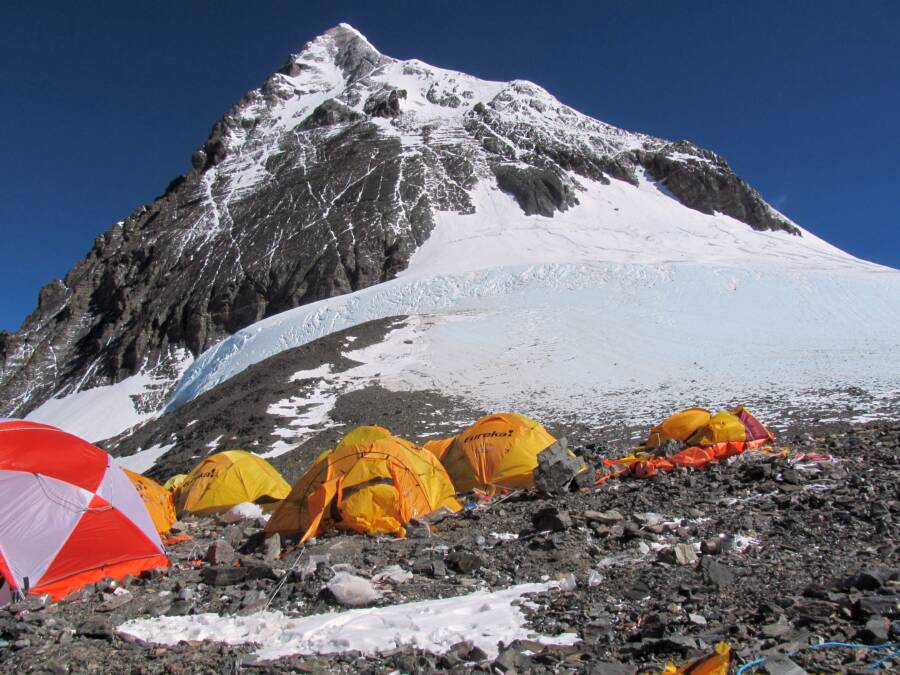
Tirthakanji/Wikimedia CommonsCamp IV sits on the South Col, just before the Death Zone begins.
The human body can only survive at such high altitudes for about 24 hours before it begins to break down — and that’s with supplemental oxygen. Climbers must leave Camp IV, reach Everest’s peak, and return within that time period or face devastating consequences.
“It’s a living Hell,” climber Dave Carter told PBS in 1998. “The only way to describe it is an utter exhaustion. You really don’t care if you die or if you just sit down and don’t go any further.”
“It’s just hard work,” agreed mountaineer David Breashears. “Everything about being at altitude is hard. We go up with the best technology available to us, the best training. And you can still end up frozen to death at 27,500 feet. That’s what makes Everest Everest.”
So, what exactly is it about Mount Everest’s Death Zone that’s so lethal?
The Effects Of High Altitude On The Human Body
The air in the Death Zone of Mount Everest has just one-third the amount of oxygen as the air at sea level. When the human body doesn’t get enough oxygen, conditions like high-altitude pulmonary edema can develop. Fluid accumulates in the lungs and blood vessels become constricted, leading to shortness of breath and extreme fatigue.
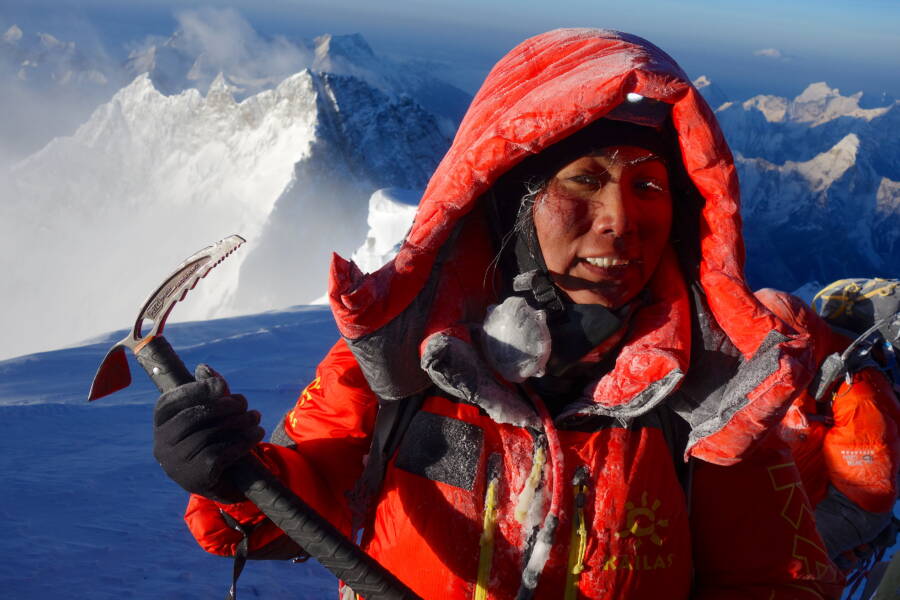
Kanchhi Dolma Hyolmo/Wikimedia CommonsNepali guide Kanchhi Dolma Hyolmo atop the summit of Mount Everest in 2012.
A similar illness, high-altitude cerebral edema, impacts the brain and causes a decline in mental function, drowsiness, and ultimately loss of consciousness. Climbers suffering from cerebral edema may become confused and make poor decisions — which can quickly lead to dangerous situations on Everest.
“Judgement becomes impaired, a person becomes confused,” mountaineer Peter Hackett explained to PBS. “They don’t even know where they are as it gets worse. People hallucinate.”
Low oxygen levels are just one of the threats in Mount Everest’s Death Zone. Temperatures stay well below freezing, so frostbite can develop rapidly. Indeed, many of the mountain’s past victims froze to death.
Then, there are the natural disasters.
Tragedies In Mount Everest’s Death Zone
On May 10, 1996, three groups attempted to summit Mount Everest. Because nobody else had reached the peak yet that year, their ascent was delayed as their Sherpas installed ropes and ladders. What’s more, several climbers had little experience, which also slowed their progression up the mountain.
As a result, many of the expedition members didn’t reach the summit until well after noon. When a blizzard blew in that evening during their descent, they were still within the Death Zone.
Visibility was quickly reduced to nearly zero. The fixed ropes were covered in snow, leaving the groups with no way to safely continue down the mountain. During this extended amount of time in Mount Everest’s Death Zone, some climbers ran out of oxygen, while others succumbed to exposure.
By the following day, eight people were dead, including Tsewang Paljor, who froze to death after summiting with other members of the Indo-Tibetan Border Police. His corpse may be the infamous “Green Boots,” a body used as a macabre landmark for other climbers at an elevation of 27,890 feet.
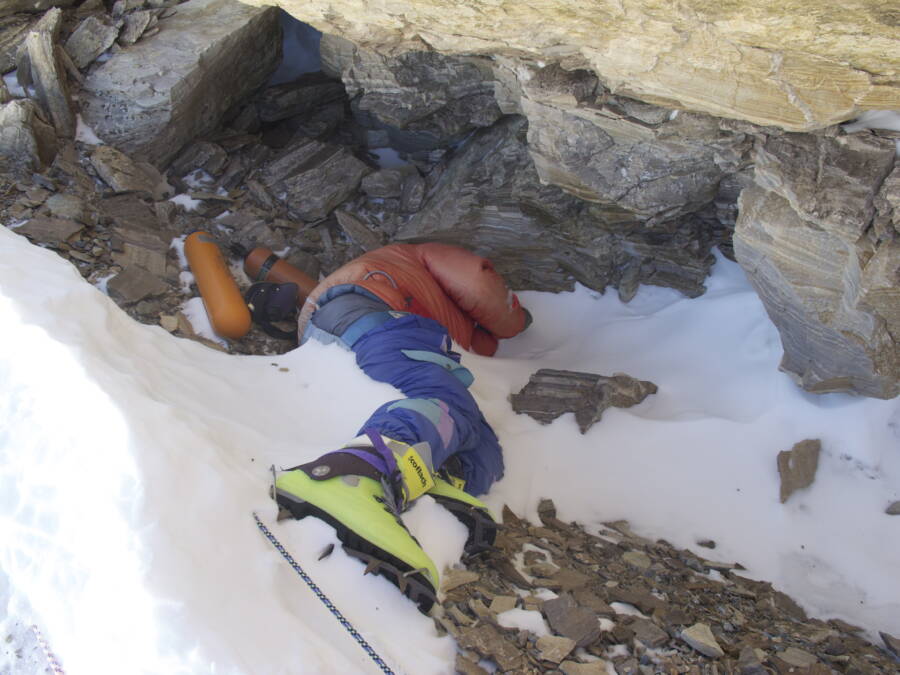
Maxwelljo40/Wikimedia CommonsThe corpse known as “Green Boots” is likely the body of Tsewang Paljor, who perished in the 1996 Mount Everest disaster.
The 1996 Mount Everest disaster also nearly claimed the life of Beck Weathers, who was left for dead but shocked the survivors from his group when he stumbled back into camp.
Two years later, Francys Arsentiev also perished in the Death Zone of Mount Everest just after becoming the first American woman to summit the world’s highest mountain without using supplemental oxygen. While this accomplishment put her name in the record books, it also slowed her descent. Arsentiev was too exhausted to make it back to camp and had to spend the night in the Death Zone.
She died the next morning, and her husband also lost his life while searching for help. Arsentiev’s corpse became known as “Sleeping Beauty.”
As the number of climbers who attempt to summit Mount Everest each year increases, so do the dangers. In May 2024, dozens of people were lined up on the final ridge before the peak when disaster struck.
With a sudden rumble, some of the snow beneath their feet slid down the steep mountainside. “It felt like an earthquake,” Nepali guide Vinayak Jaya Malla told Outside magazine. “There was a huge noise and everybody jumped back away from the cornice. I cried out because the mountain under us was shaking, but nobody could hear me. Everyone was terrified.”
Several climbers started falling — and only some of them were clipped into a safety rope. Two men plunged down the Kangshung Face, a nearly vertical wall of rock and ice.
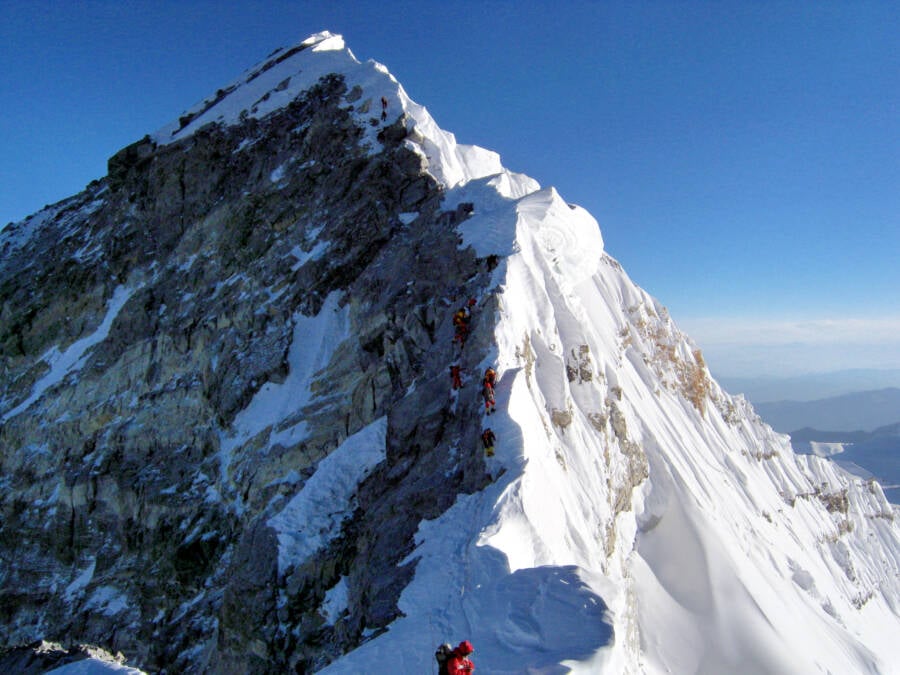
MagentaGreen/Debasish Biswas Kolkata/Wikimedia CommonsClimbers ascend the final ridge before the peak of Mount Everest. 2010.
American climber Mark Baumgartner recalled, “I was like holy sh—t — those people aren’t stopping. Two people were sliding to their deaths. And it was silent.”
There was nothing anyone could do. As Malla noted, “In the Death Zone, search and rescue isn’t always possible. Besides, there wasn’t any point as they were definitely dead.”
Their bodies still haven’t been recovered. And even if they were found, moving the corpses of fallen climbers is nearly impossible. Helicopters cannot reach the Death Zone, and other mountaineers risk losing their own lives while trying to retrieve the dead.
As such, Mount Everest’s Death Zone isn’t just an obstacle on the way to the top of the world’s highest mountain — it’s the final resting place of hundreds of hopeful climbers.
After learning what makes Mount Everest’s Death Zone so dangerous, go inside the story of Hannelore Schmatz, the first woman to ever die on Everest. Then, read about George Everest, the namesake of the famous mountain who never even laid eyes on the landmark.