Henri Charrière’s Escape From Devil’s Island
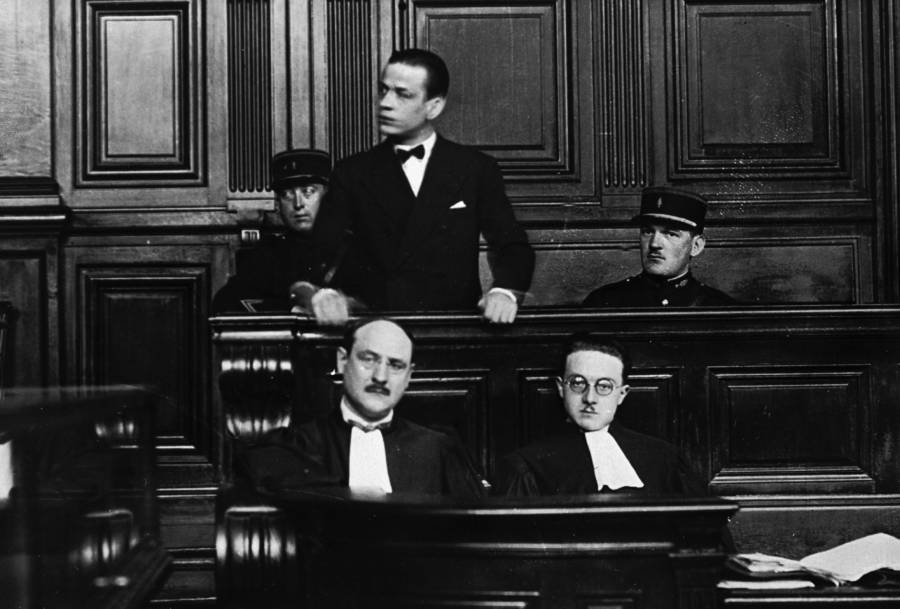
Roger Viollet Collection/Getty ImagesHenri Charrière standing trial in France, c. 1930.
Born in Saint-Étienne-de-Lugdarès, France, in 1906, Henri Charrière served briefly in the navy before turning to crime. Nicknamed “Papillon” due to the butterfly tattoo on his chest, he was a decent safecracker and certainly a gangster. But whether he committed the murder for which he was imprisoned remains debated.
As chronicled in Charrière’s autobiography Papillon and its 1973 Hollywood adaptation, he was convicted of murdering Paris pimp Roland Legrand in 1931. He claimed to have been set up as the fall guy by a crooked justice system but was ultimately sentenced to 10 years of hard labor in Cayenne, French Guiana.
Known as “Devil’s Island,” the penal colony of Cayenne sat about seven miles off the mainland coast and housed inmates of all stripes between 1852 and 1953. Some 40 percent of all prisoners sent there died. Charrière was desperate to escape — and did just that in November 1933 after befriending inmates Joanes Clousiot and Andre Maturette.
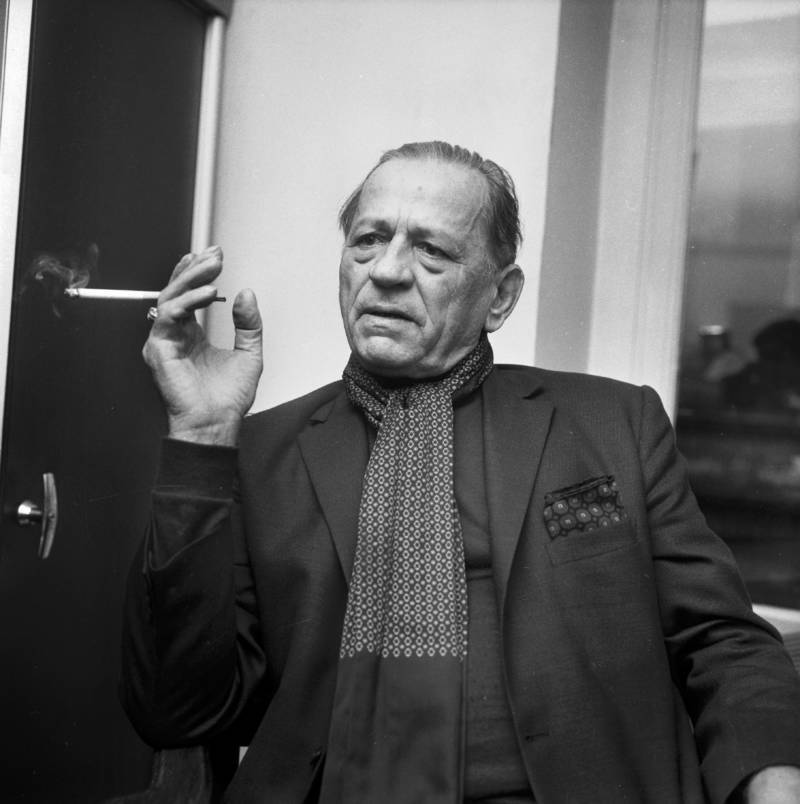
J. Cuinieres/Roger Viollet/Getty Images
Charrière’s autobiography was adapted into a feature film starring Steve McQueen.
The three men made a run for it, grabbing an open boat and drifting for nearly 2,000 miles over the course of five days before being shipwrecked in Colombia. After briefly being recaptured, Charrière was able to evade authorities under the cover of a fortuitous storm — and make his way north to the Guajira Peninsula.
Charrière claimed in his book that he spent months in the northern Colombian region and was hosted by an Indigenous tribe in the jungle. But soon, he was captured once again. Punished with two years of solitary confinement, Charrière would attempt to escape at least seven more times.
For the authorities, guards were virtually unnecessary. Swimming to the mainland would see an inmate eaten by sharks or drown, whereas failure and recapture would lead to solitary confinement. Charriére was undaunted by those dangers, as he made a raft from coconuts in 1944 and took to sea yet again from Devil’s Island.
Charrière landed on the Guyana coast only to be imprisoned for a year. Ultimately, however, he was granted citizenship upon release and made his way to Venezuela — where he wrote one of the most famous prison escape autobiographies ever written.
Alexander Solonik’s Epic Prison Escape
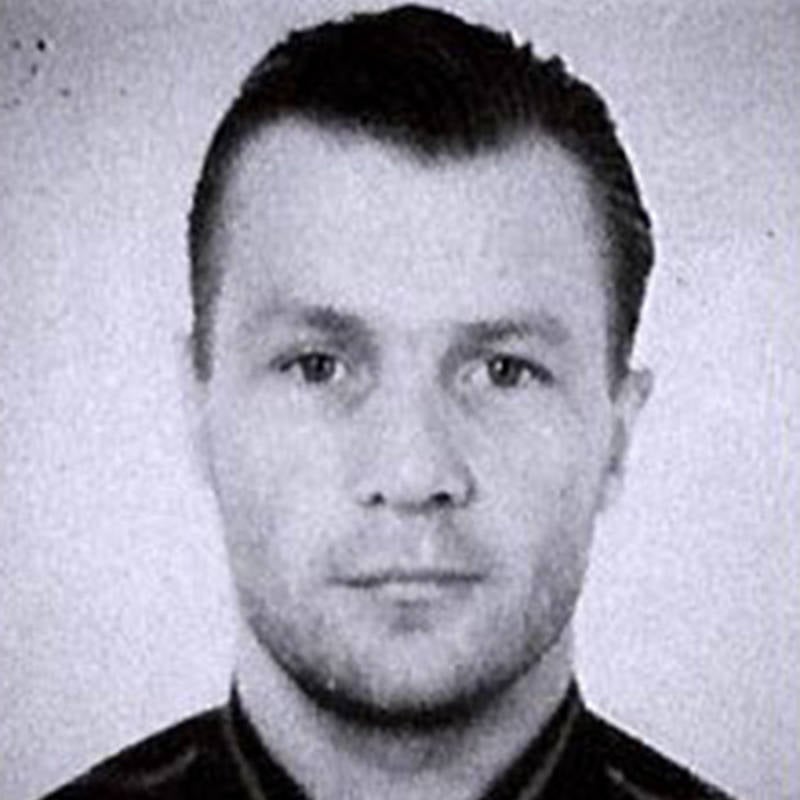
Wikimedia CommonsAlexander Solonik was the only person to escape from Matrosskaya Tishina and remain at large.
Alexander Solonik was as mysterious as he was deadly. A former policeman, he was an expert marksman and proficient in martial arts. He may or may not have been in the Soviet special forces, but he undoubtedly became a contract killer for the Russian mob. While that landed him in prison, it also got him out of it.
An imposing hitman with monickers like the “Russian Jackal” and “Alexander the Great,” Solonik was paid thousands per kill and never disclosed the identity of his clients. Born in 1960, he mastered that job while assassinating high-ranking NATO officials for the U.S.S.R. during the Cold War.
He also joined the police force but was fired within six months for displaying cruelty towards prisoners. Solonik was ultimately arrested for rape shortly after. But his career as a prison escapist began before he was even sentenced, as he jumped out the second-story courtroom window and fled to Siberia. It was soon clear that even iron bars wouldn’t hold him.
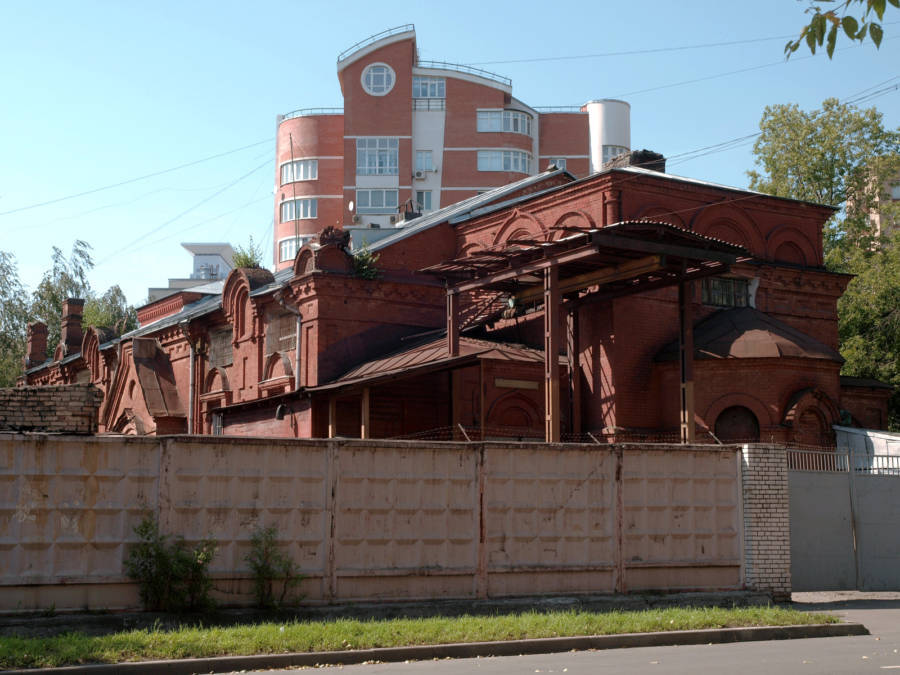
Wikimedia CommonsThe Matrosskaya Tishina detention center in Moscow.
Arrested at a salon while trying to get cosmetic surgery, Solonik was imprisoned for two years before he escaped through the facility’s ventilation system in April 1990. Subsequently employed by the Russian mob as a hitman thereafter, he was arrested and imprisoned in Matrosskaya Tishina detention center in Moscow after being wounded in a 1995 shootout.
Rewarded by the mob for refusing to cooperate with police, they set up an escape fund of $500,000 for Solonik. Bribing one of the guards, they organized a rope, climbing gear, and guns for Solonik to scale the prison walls and escape into a waiting BMW in June 1995.
Solonik had left behind nothing but a dummy in his cell bed. While both he and the guard, later identified as police sergeant Sergey Menshikov, vanished without a trace, Solonik’s fate caught up with him soon enough. With 43 hits under his belt and no more luck to gamble with, he fled to Greece in 1997.
Determined to eliminate any loose ends, the mob hired one of Solonik’s friends to find and kill him. A fellow contract killer, Sasha Soldat, found Solonik in a lavish mansion near Athens — where he strangled him to death. Ultimately, Alexander Solonik was the only inmate to ever escape Matrosskaya Tishina successfully.