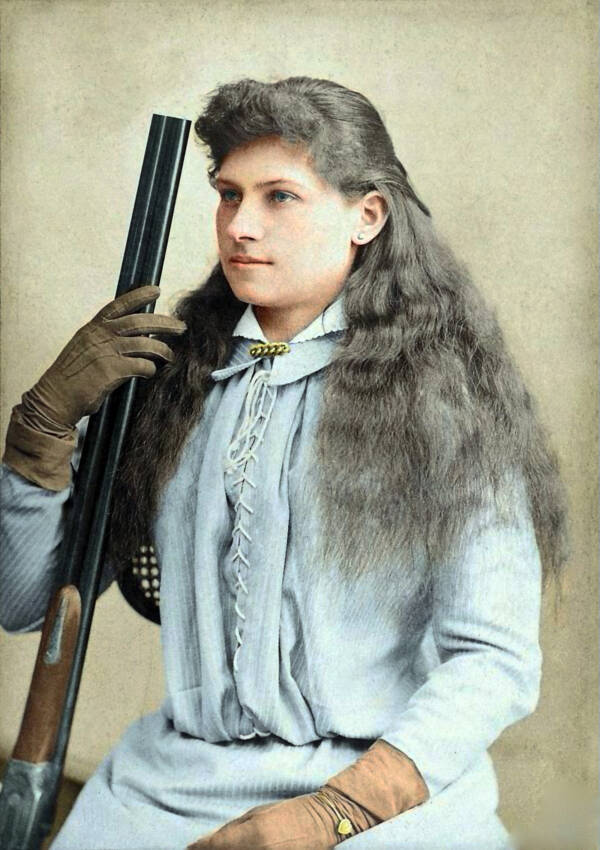
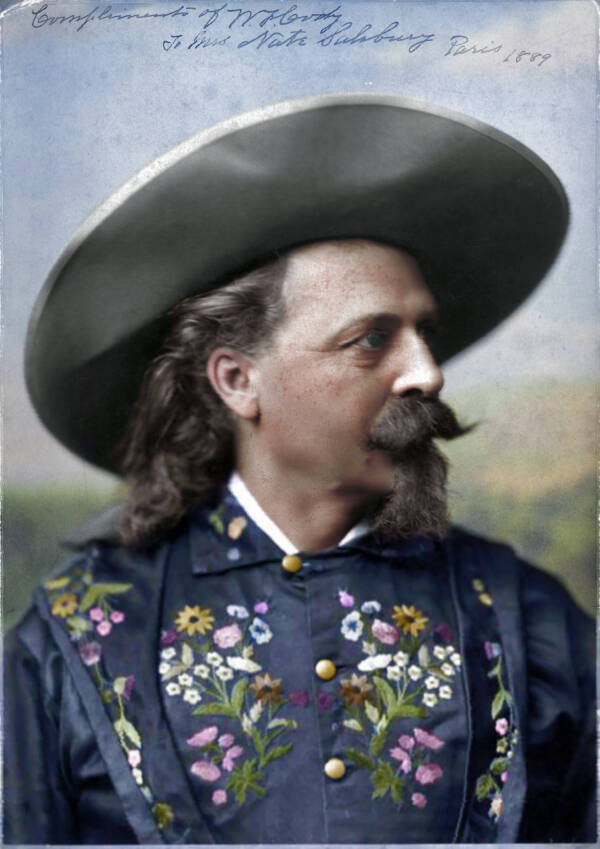
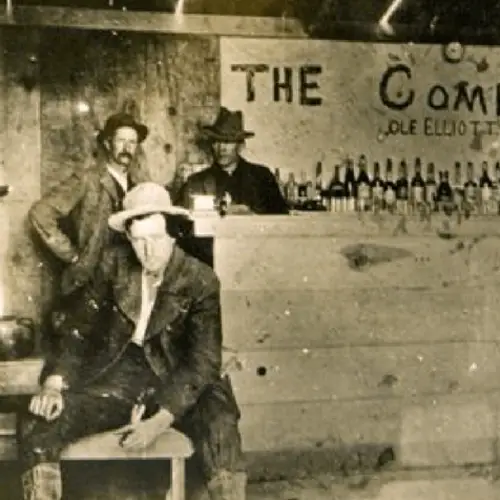
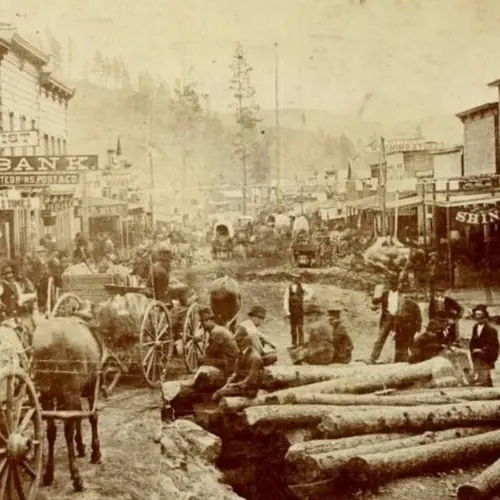
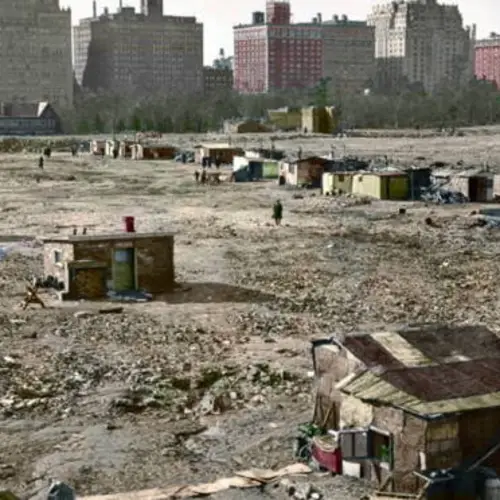
Annie Oakley (1860 - 1926) was the stage name of Ohio's Phoebe Ann Moses, whose skill with a gun was discovered when she beat a traveling marksman in a shooting competition at the age of 15. She ultimately became a famous sharpshooter in her own right thanks to her ability to thrill audiences with her daring feats. Wikimedia Commons
2 of 46
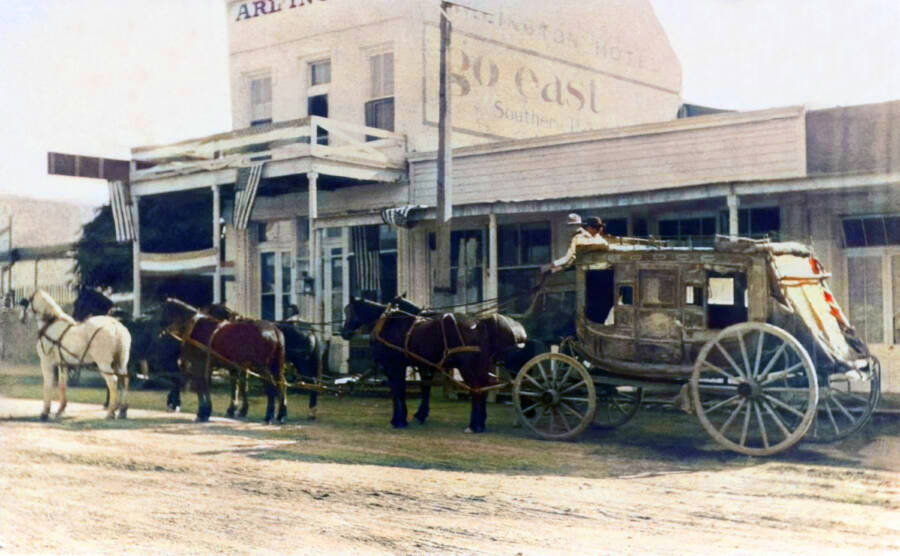
A stagecoach sits in the town of Tombstone, Arizona, circa 1882. Tombstone was founded in 1879 by prospectors and remains legendary in Wild West history for the infamous shootout at the O.K. Corral.Underwood Archives/Getty Images
3 of 46
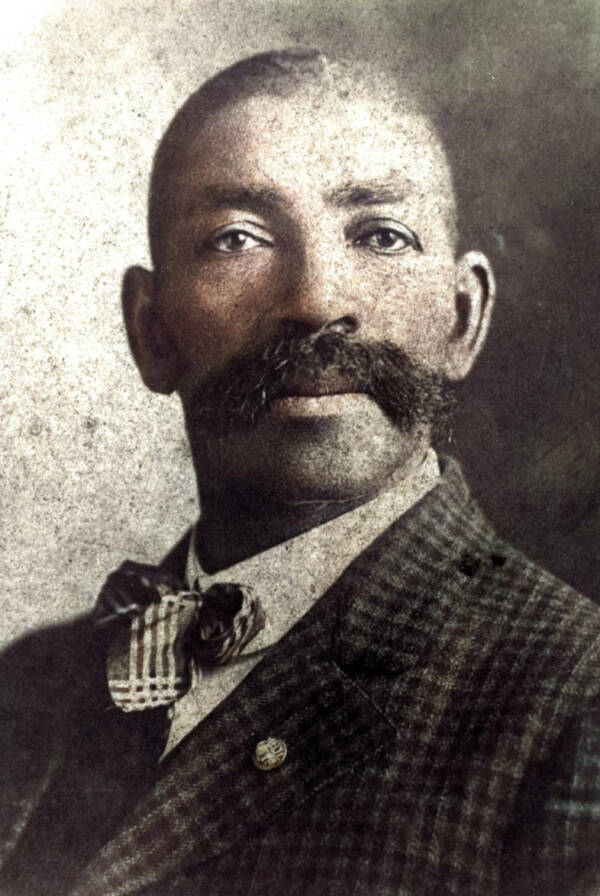
Bass Reeves (1838 - 1910) was a formerly enslaved man who rose to become the first Black Deputy U.S. Marshal west of the Mississippi River. He is credited with making more than 3,000 arrests during his career. Reeves also killed 14 outlaws in self-defense, but preferred to bring criminals in alive whenever possible to face trial.Wikimedia Commons
4 of 46
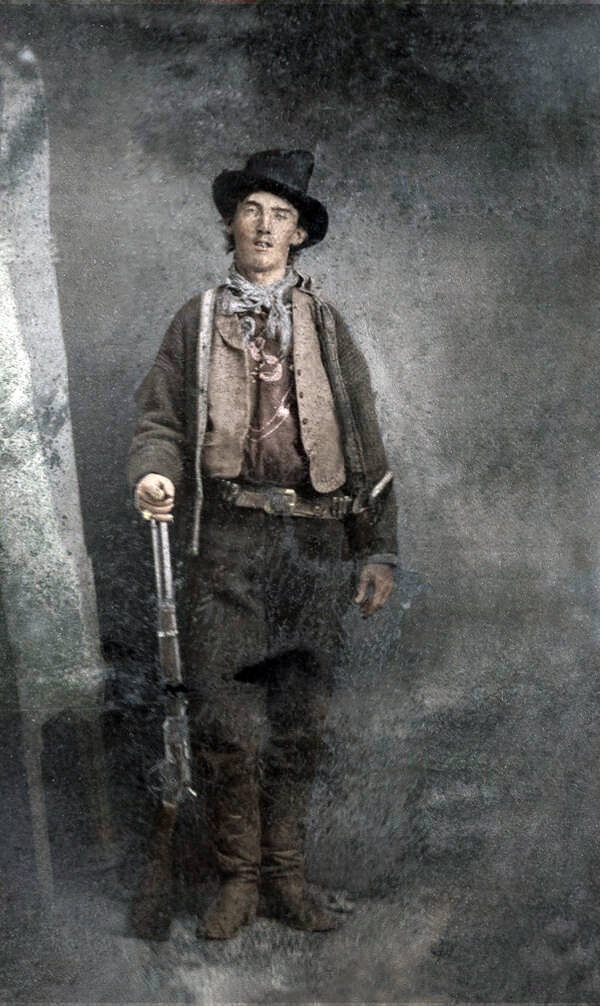
Arguably one of the Wild West's most famous outlaws, Billy the Kid (born Henry McCarty, 1859 - 1881), left the Irish slums of New York City to make a name for himself in the West. After several brushes with the law, including a number of murders, Billy the Kid became part of the Lincoln County Regulators, a deputized posse in New Mexico whose attempt to bring the killers of ranch-owner John Tunstall to justice became known as the Lincoln County War. It was during this period that Billy the Kid became famous nationwide for killing as many as 21 men, though the real number was likely much lower. The law finally caught up with Billy the Kid, however, when he was shot and killed in 1881 at the age of 21.Wikimedia Commons
5 of 46
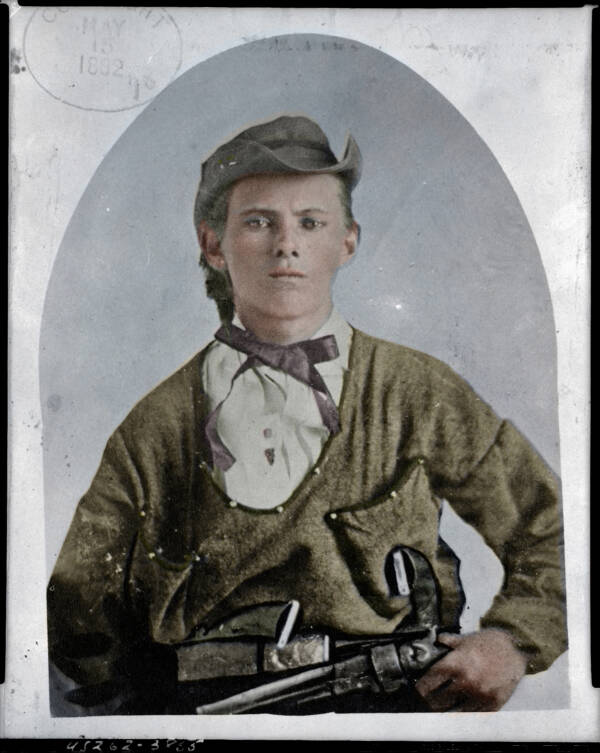
At 17, Jesse James (1847-1882) left his native Missouri to fight as a Confederate guerrilla in the Civil War. After the war, he returned to his home state and led one of history’s most notorious outlaw gangs. Despite being romanticized in Eastern newspapers which portrayed James as a modern day Robin Hood, there is no evidence that he ever shared the proceeds of his theft with anyone outside his gang.Library of Congress
6 of 46
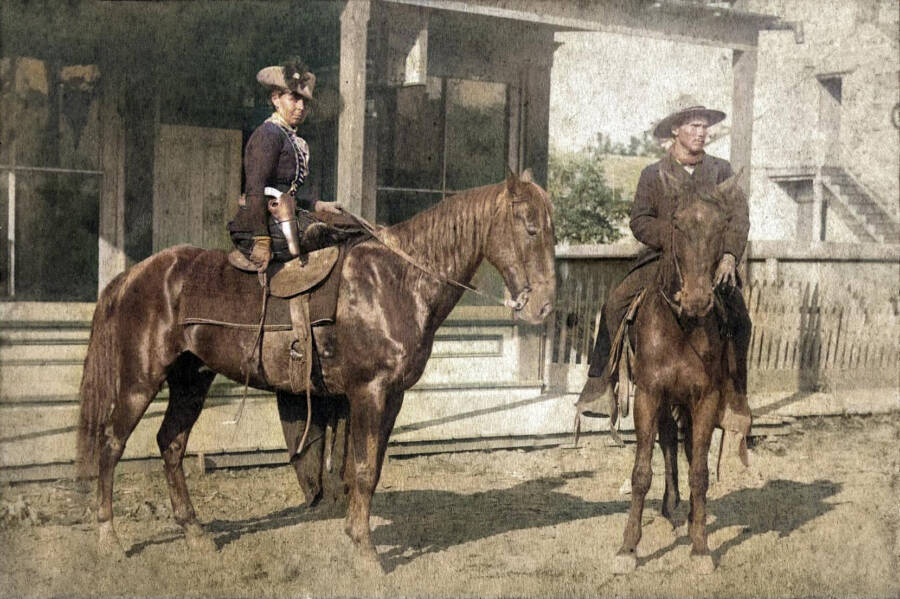
Outlaw Belle Starr (1848 - 1889) after her arrest by Deputy U.S. Marshal Charles Barnhill (right), in 1886. Starr's story was widely publicized at the time by the National Police Gazette, who dubbed her the "Bandit Queen."Wikimedia Commons
7 of 46
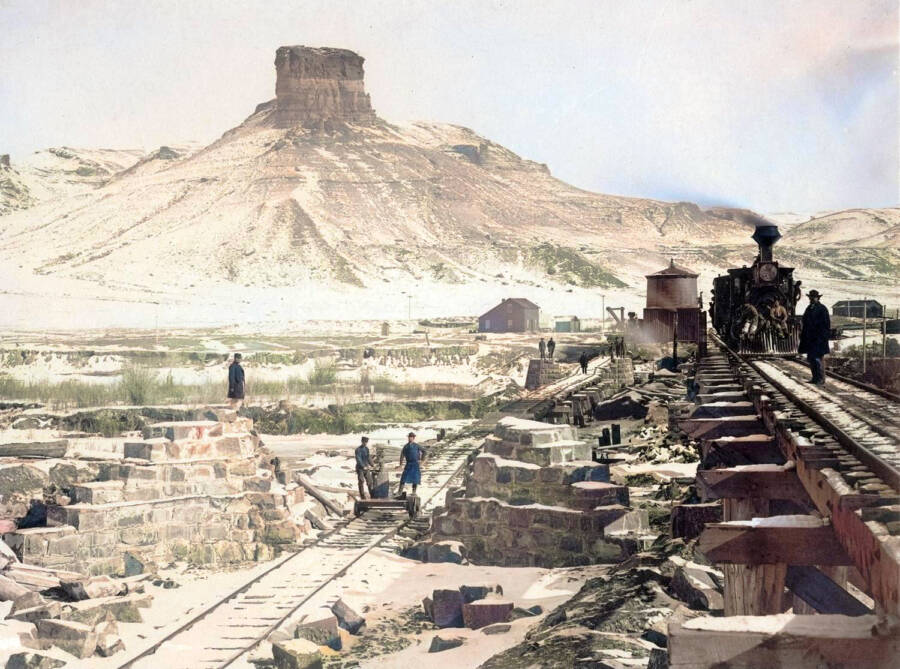
Construction of a railroad bridge in Green River Valley, Wyoming, with Citadel Rock in the background. Circa 1868.Getty Images
8 of 46
Pinkerton's Detective Agency mugshot of Laura Bullion (1876 - 1961), taken in 1893. Bullion was an outlaw with Butch Cassidy's Wild Bunch gang in the 1890s, and participated in the Great Northern train robbery, for which she was sentenced to five years in prison in 1901. After her release, she lived in Memphis, Tennessee and tried, unsuccessfully, to scratch out an honest living as a seamstress and interior designer. Bullion died in poverty in 1961.Wikimedia Commons
9 of 46
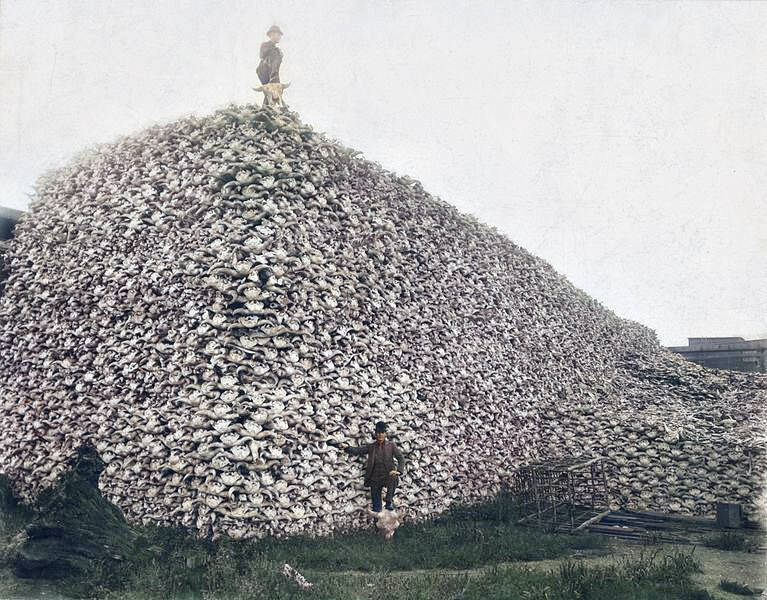
A mound of bison skulls circa 1870s, taken during the U.S. Army's drive to put an end to the resistance from the Native tribes of the western United States. Believing that hunting bison was a critical source of both food and social unity for these tribes, the U.S. Army encouraged the mass, indiscriminate slaughter of buffalo herds wherever they were found to deprive the Native tribes of their communal hunting practices as well as the food that they depended on to survive.
Where there had once been as many as 60 million bison roaming the Great Plains, by the end of the 19th century only an estimated 300 remained when Congress stepped in and outlawed the slaughter of the only remaining bison herd in Yellowstone National Park. Today, the number of bison has rebounded to about 200,000.Wikimedia Commons
10 of 46
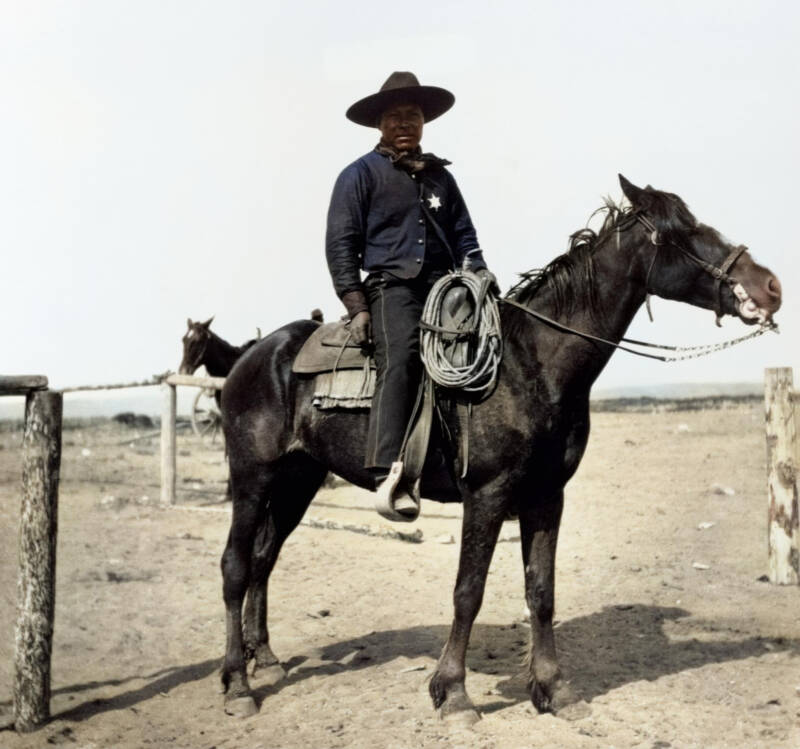
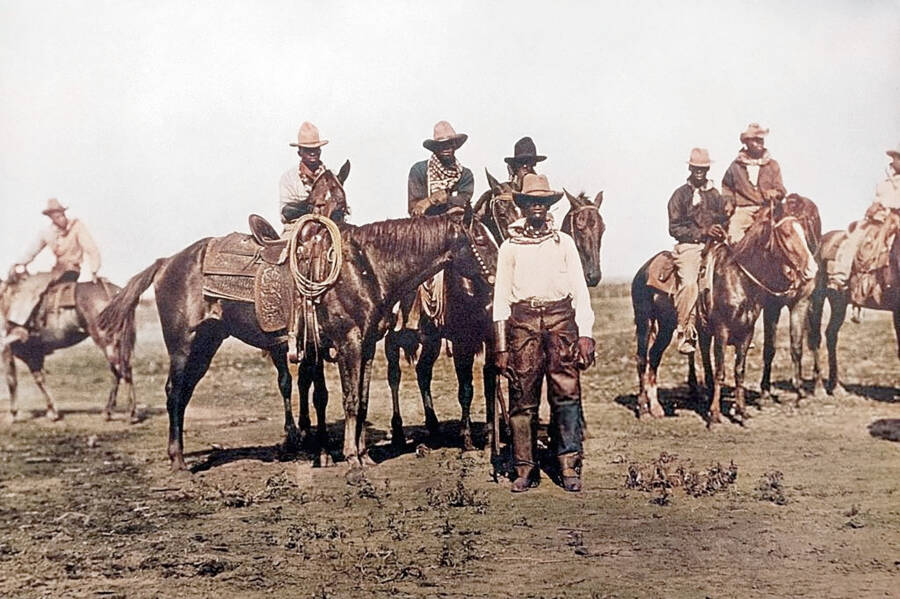
In this 1903 photo, a Black sheriff in Pocatello, Idaho sits astride his horse. As many as one in four cowboys in the Wild West were Black, though their stories have often been ignored in favor of those of white settlers.
"Right after the Civil War, being a cowboy was one of the few jobs open to men of color who wanted to not serve as elevator operators or delivery boys or other similar occupations," said William Loren Katz, scholar of African-American history. Wikimedia Commons
11 of 46
Indeed, after the Civil War the American West was in large part settled by formerly enslaved people. They sought to both distance themselves from their past and to seek a better future.Wikimedia Commons
12 of 46
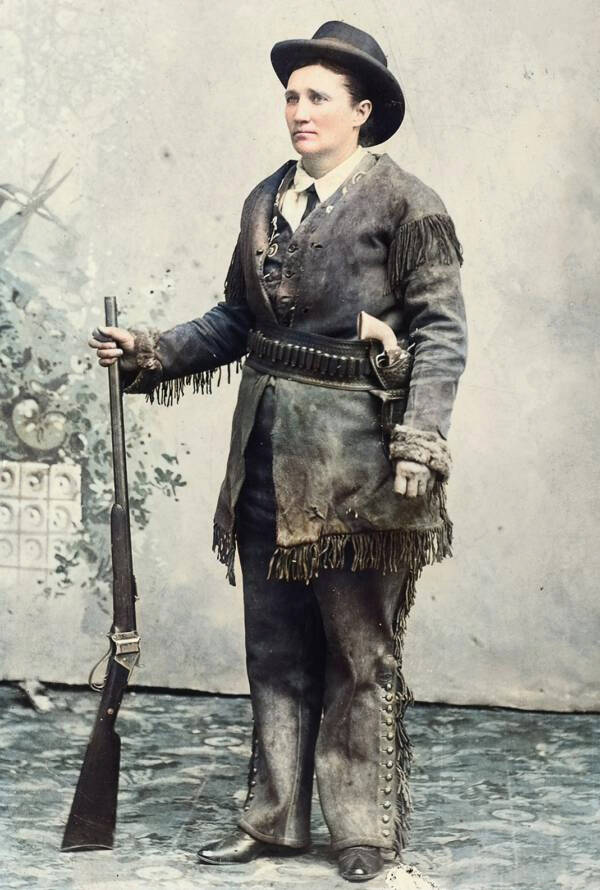
Calamity Jane (born Martha Jane Canary, 1852 - 1903), was a famous frontierswoman and scout known for her generous spirit on the one hand and her daredevil persona on the other. She was also an acquaintance of Wild Bill Hickok, to whom she may have been married at some point (accounts vary). Wikimedia Commons
13 of 46
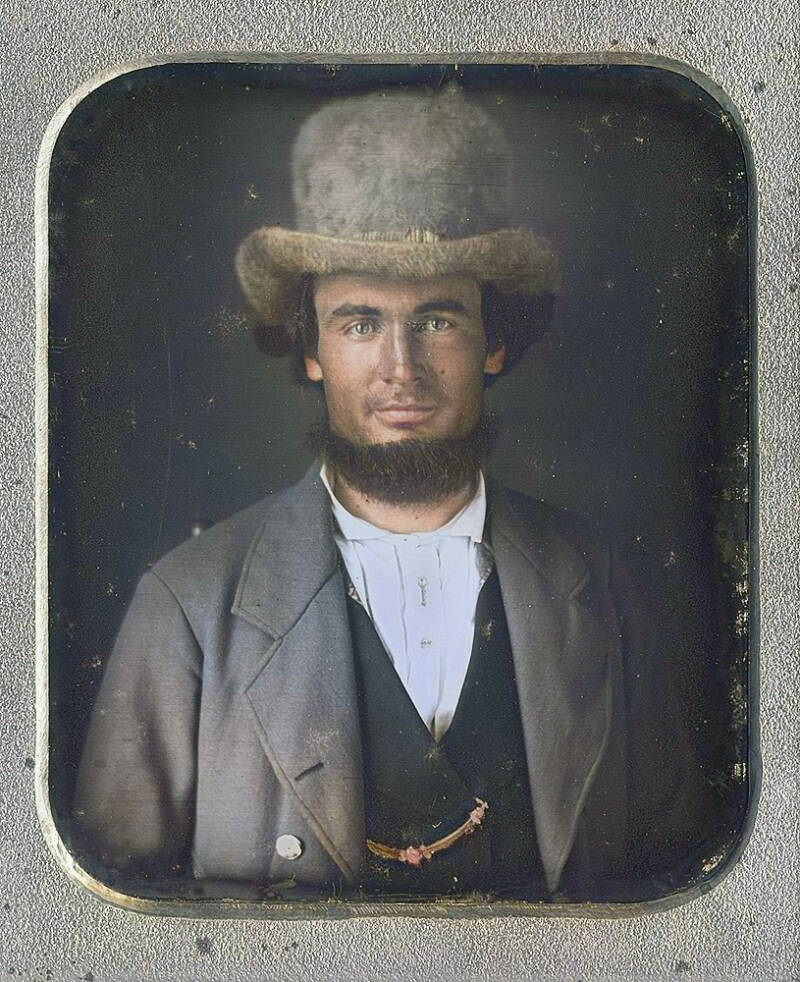
A photo of an unnamed prospector in California in 1881. Following the 1849 gold rush and its subsequent bust a few years later, a group of prospectors found silver in the mountains that they described as "calico-colored." With a mine set-up soon after, Calico, California, as it was known from then on, became one of the largest suppliers of silver in California during the 1880s. When the Silver Purchase Act was passed, the price of silver plummeted, and Calico, California was entirely abandoned in 1907.Public Domain
14 of 46
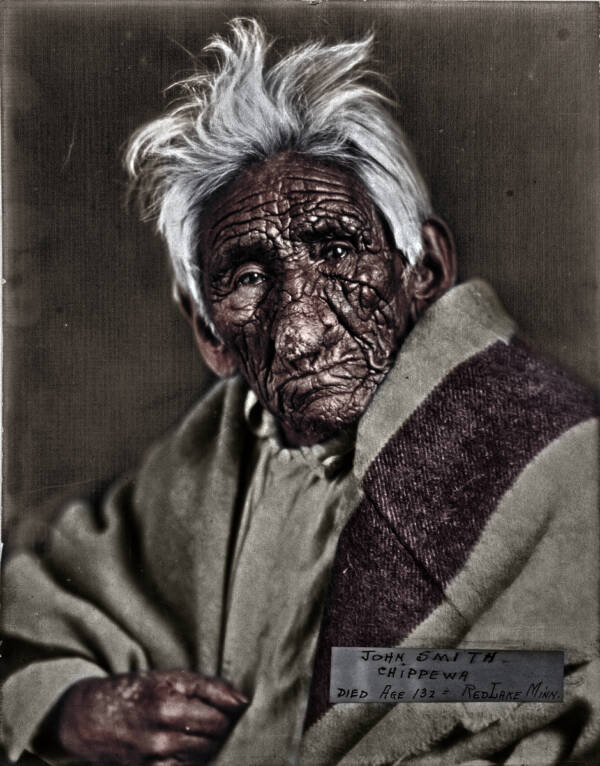
Chief John Smith, also called Kahbe Nagwi Wens — which, when translated to English, means "Wrinkle Meat" —was a Native American from the Chippewa tribe in Cass Lake, Minnesota. Reportedly between 132 and 138 years old when he died, he was probably in fact just under 100 when he died of pneumonia in 1922.Wikimedia Commons
15 of 46
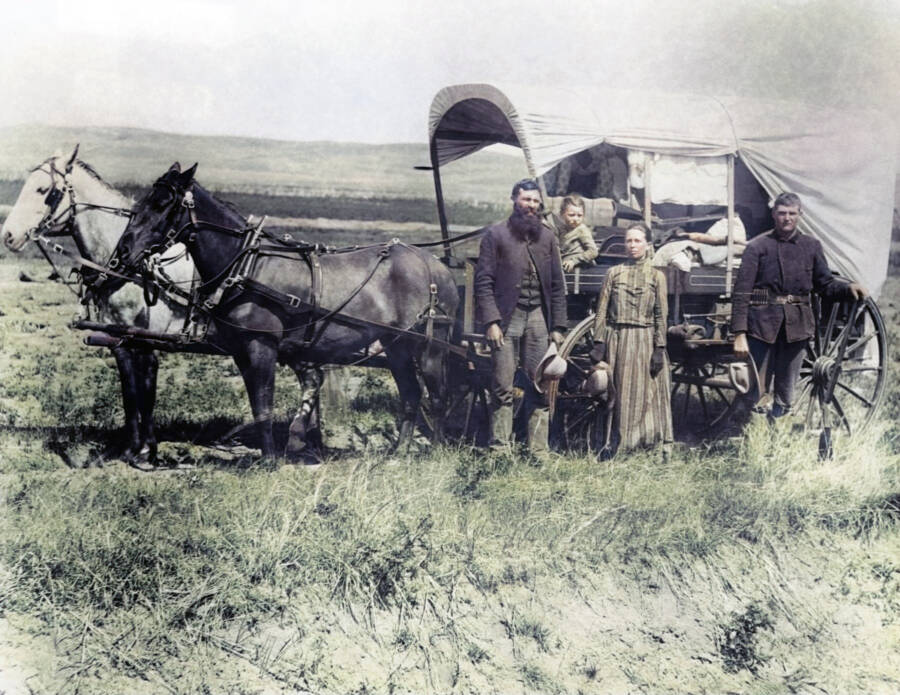
A covered wagon, commonly used by settlers to transport their families and possessions as they moved west in search of land on which to settle. Such wagons were a common sight in the mid to late 1800s as more and more people headed into the American frontier to carve out a new life for themselves.National Archives
16 of 46
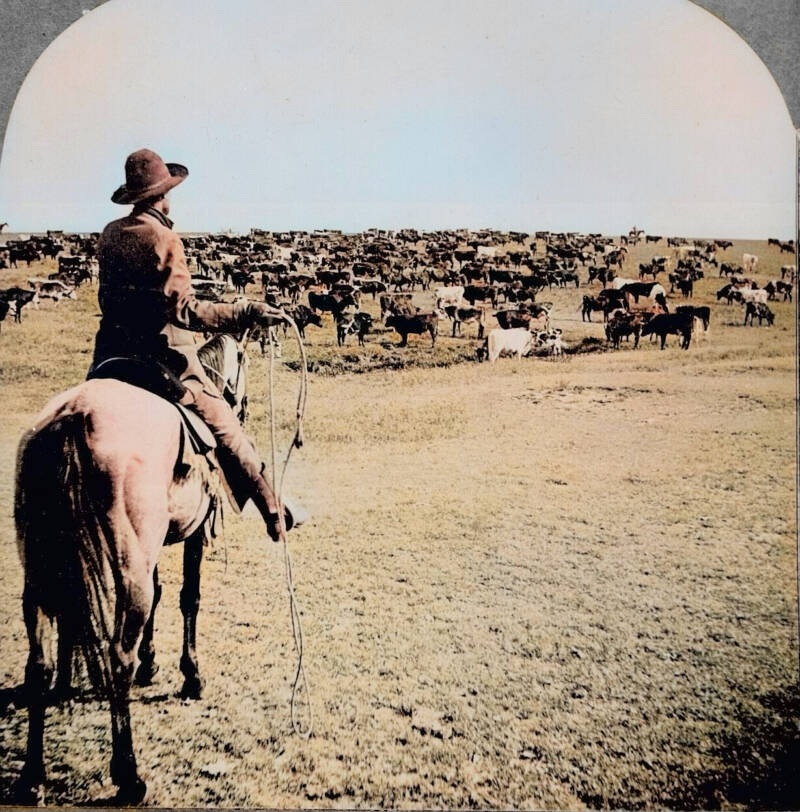
A cowboy getting his lasso ready as he drives a herd of cattle across Kansas in 1902.National Archives
17 of 46
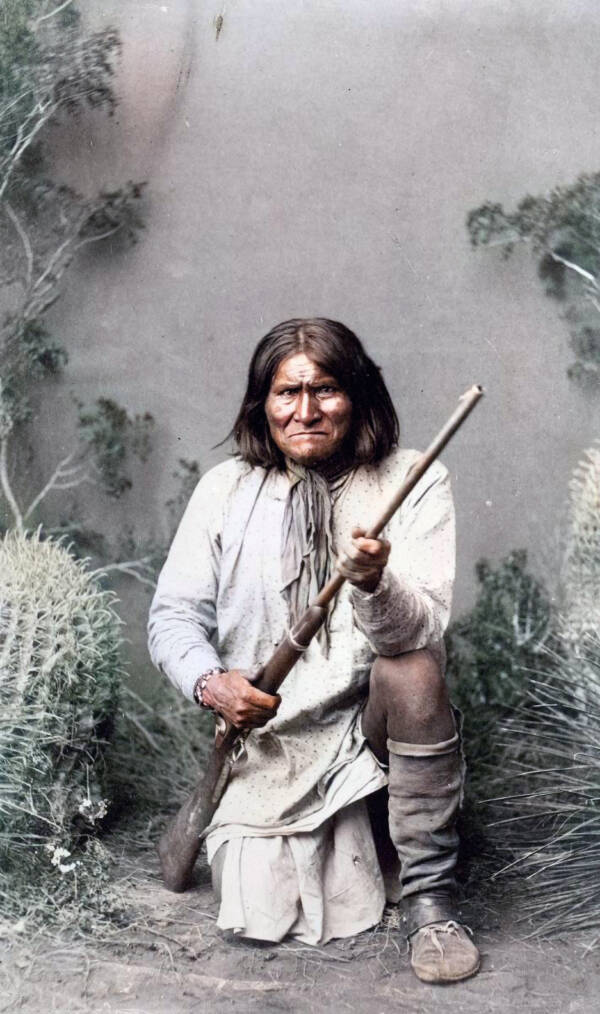
Famous Apache leader Geronimo (1829 - 1909), who fought both U.S. and Mexican Army forces along the U.S.-Mexico border regions for much of the second half of the 19th century.
Though he was captured several times, his final surrender in 1886 made him a U.S. prisoner of war for the rest of his life. He would often be the centerpiece of U.S. propaganda, including during parades and photo shoots, such as this one, done in 1887. Geronimo used these events to support himself financially after his confinement to a reservation in Arizona.Wikimedia Commons
18 of 46
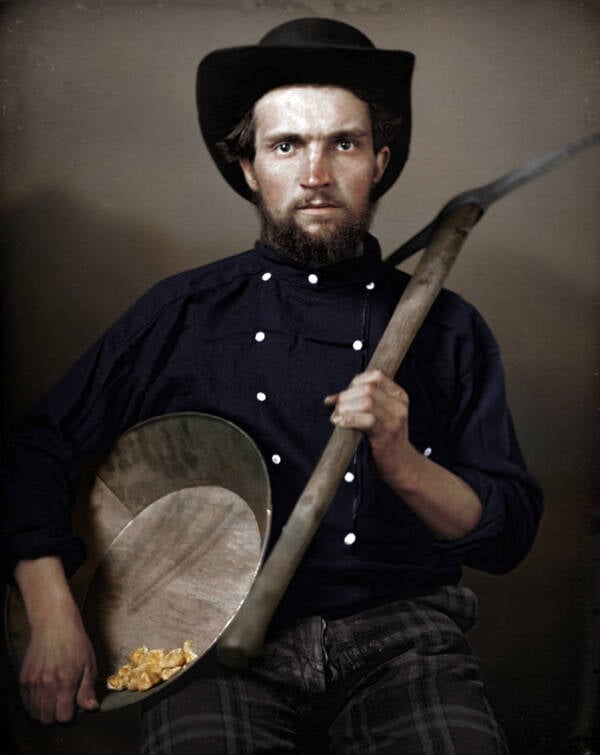
A portrait of an unidentified gold miner in California taken around 1851, during the Gold Rush that began in 1848 and forever changed the landscape of California and the western United States.Canadian Photography Institute/NGC/Ottawa
19 of 46
Mugshot of famous outlaw Butch Cassidy, taken in 1894.Wikimedia Commons
20 of 46
Chinese immigrant labor in the western United States was essential to the development of industry in the West — and led to racist resentment from white settlers, prompting the first major anti-immigrant laws in the United States to prevent further immigration from Asia.University of California
21 of 46
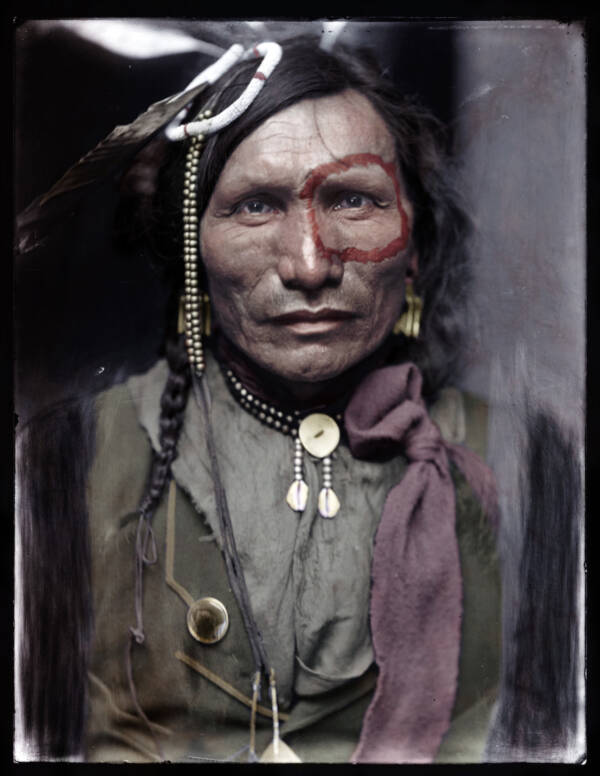
Iron White Man, a Sioux Indian from Buffalo Bill's Wild West Show. Library of Congress
22 of 46
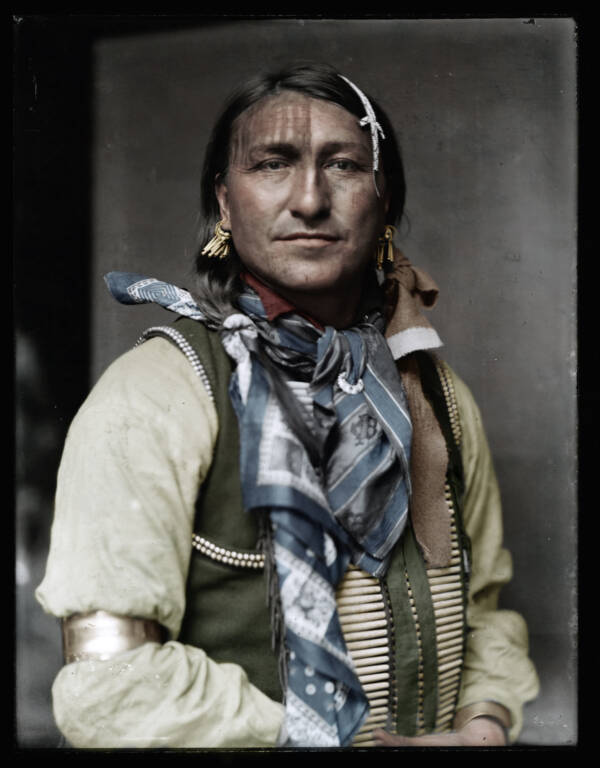
Joe Black Fox, another Sioux Indian from Buffalo Bill's Wild West Show.Library of Congress
23 of 46
Prostitution in the Old West was as commonplace as it was in many other places at the time, but the relative freedom of the frontier enabled many prostitutes to rise to become the owners of their own brothels.John van Hasselt/Sygma/Getty Images
24 of 46
Judge Roy Bean (1825 - 1903), the "law west of the Pecos," held court inside his saloon in the desert of southwest Texas. Eccentric to the core, he is often portrayed in films, television, and novels as a so-called "hanging judge," but he only ever sentenced two men to death, one of whom escaped custody before he could be hanged.University of Texas at Arlington
25 of 46
The Klondyke Dance Hall and Saloon, built for the Alaska Yukon Pacific Exposition in Seattle, Washington in 1909, had to be temporarily closed down for being "too realistic."University of Washington Libraries
26 of 46
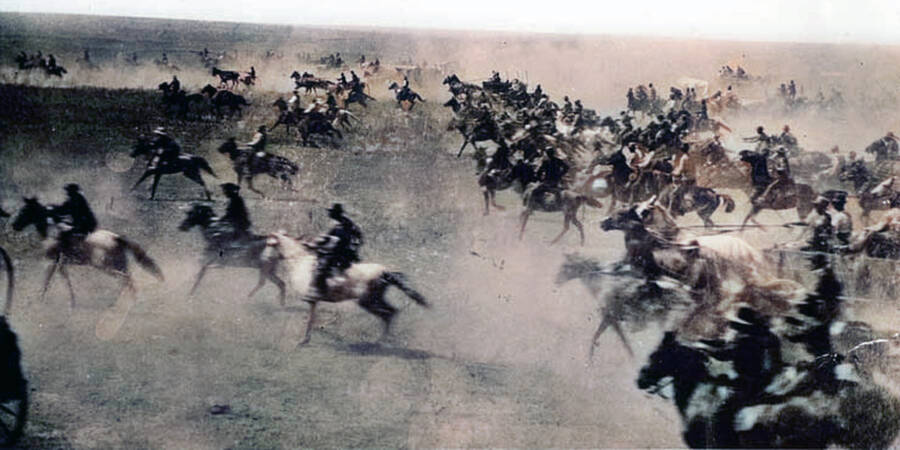
The Oklahoma Land Rush began at noon on April 22, 1889, with about 50,000 people taking part in the opening up of two million acres of land in Oklahoma. Arranged in lots of up to 160 acres apiece, settlers could stake their claim to a lot at no cost to themselves, but they were required to live on the land they claimed and "improve" it.
The land had been promised by treaty to the dislocated Native tribes from other U.S. states, but like most Indian Treaties, the U.S. government violated it in the name of Manifest Destiny.Wikimedia Commons
27 of 46
Mugshot of James Collins, a 23-year-old tailor who was arrested for burglary in Omaha, Nebraska in 1897.History Nebraska
28 of 46
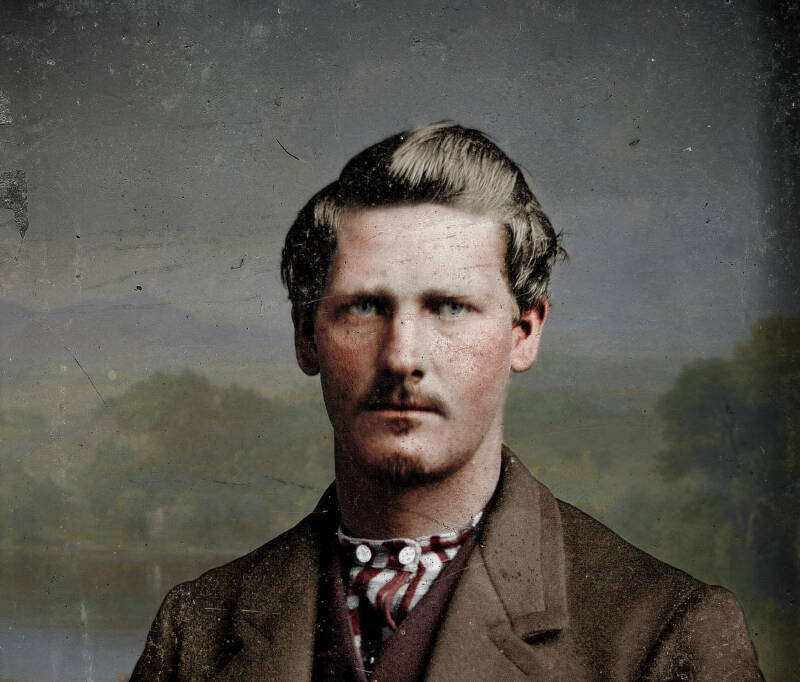
A young Wyatt Earp (1848 - 1929) circa 1870, when he was just 21. Earp was a deputy marshal of Tombstone, Arizona under his brother, Sheriff Virgil Earp, and a legendary participant of the Gunfight at the O.K. Corral. He claimed to have brought down more than a dozen outlaws in his career, but also faced several murder charges from surviving outlaws who claimed that Earp and his posse shot outlaws who were attempting to surrender. He was never indicted on any of these charges.Wikimedia Commons
29 of 46
After Tombstone, Wyatt Earp (seen here in his final years) would go on to try his hand at several different business ventures, including running a brothel. Instagram
30 of 46
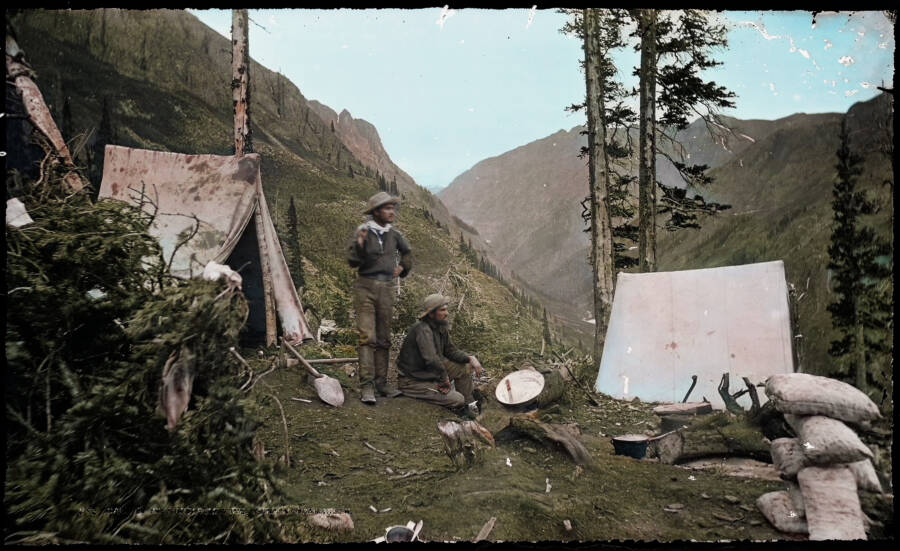
A miner's camp set up along the side of a mountain in San Juan Country, Colorado.National Archives
31 of 46
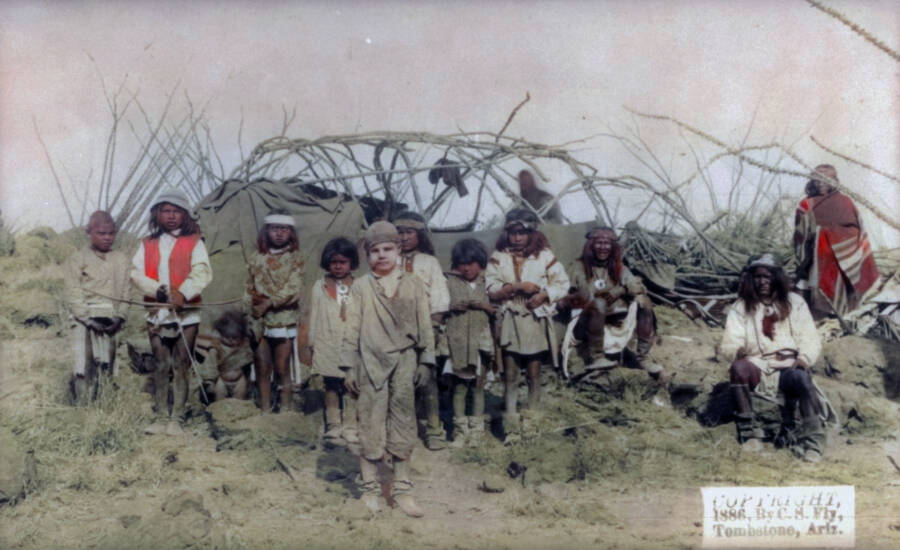
An abducted child, Jimmy McKinn, among his Apache captors. When the 11-year-old McKinn was rescued, he bitterly fought against his being returned to his family, wanting instead to remain with the Apaches.Wikimedia Commons
32 of 46
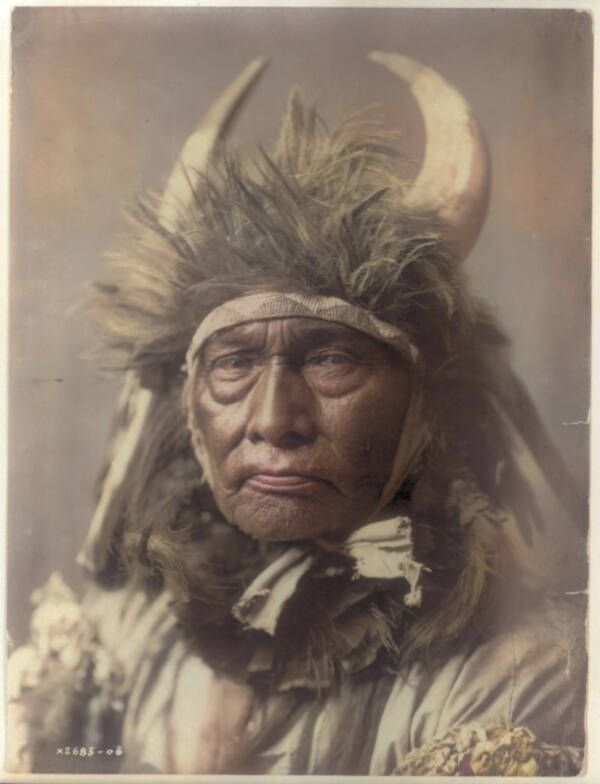
Bull Chief, of the Apsaroke (Crow) tribe, circa 1908. As a warrior, Bull Chief led many raiding parties into white settlements in the 1870s, but after the westward expansion of the United States overtook his people, he was forced to move to a Crow reservation. Wikimedia Commons
33 of 46
A Navajo man in full ceremonial regalia, complete with mask and body paint, in 1904.Edward Curtis/Library of Congress
34 of 46
Olive Ann Oatman (1837 - 1903) was kidnapped in present-day Arizona in 1851 by an unknown Native American tribe. They later sold her to the Mohave tribe, which kept her for five years and tattooed her face with blue pigment. After being released and returned to a white settlement, she told her story in a popular "memoir" of her time in captivity.Wikimedia Commons
35 of 46
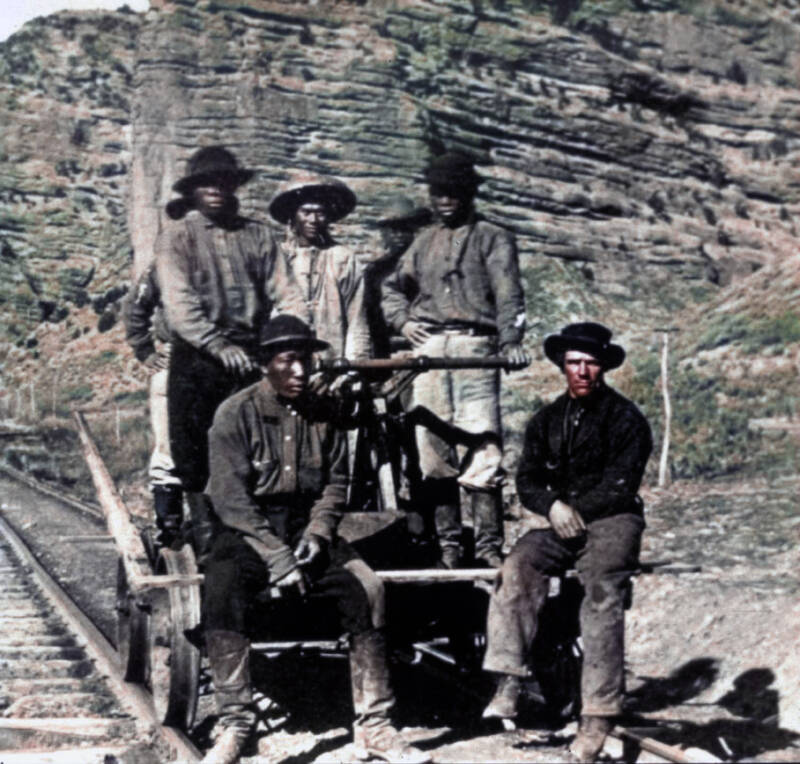
Chinese workers were initially hired for manual labor on the railroad, but were found to be highly capable of more skilled work and were soon working as tracklayers, masons, and even foremen of other railroad laborers. Their immigration to the United States would prompt one of the U.S.'s most infamous anti-immigrant backlashes in its history.Denver Public Library
36 of 46
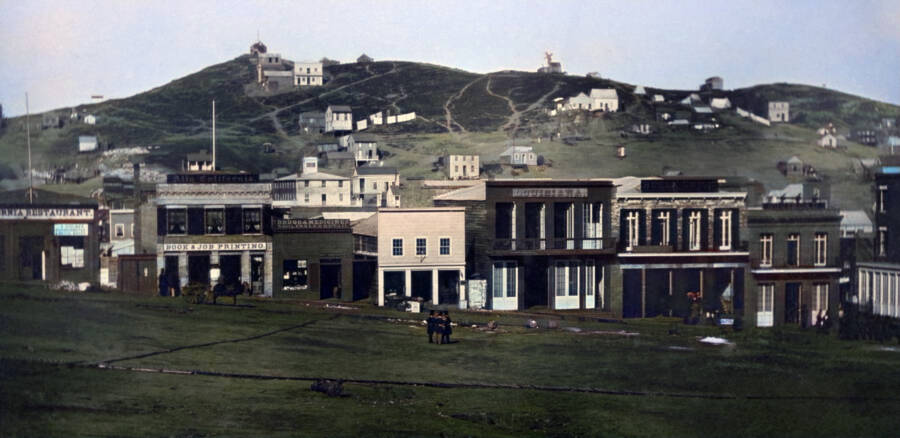
A picture of Portsmouth Square in San Francisco, California, 1851, during the Gold Rush. Library of Congress
37 of 46
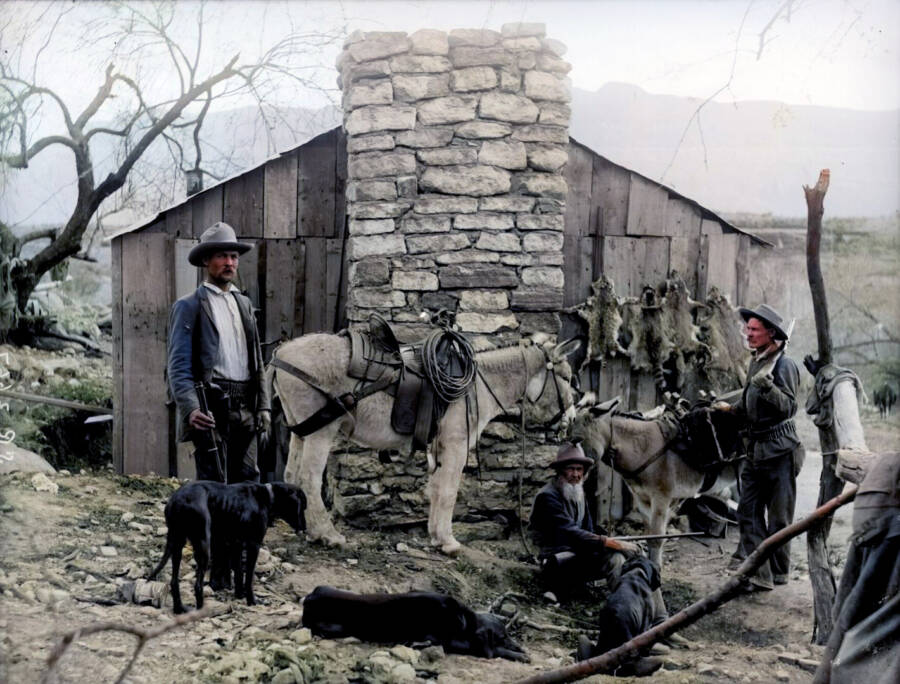
Trappers and hunters in the Four Peaks country of Brown's Basin, Arizona territory.National Archives
38 of 46
Mugshot of a woman named Goldie Williams after her arrest for vagrancy in Omaha, Nebraska in 1898.History Nebraska
39 of 46
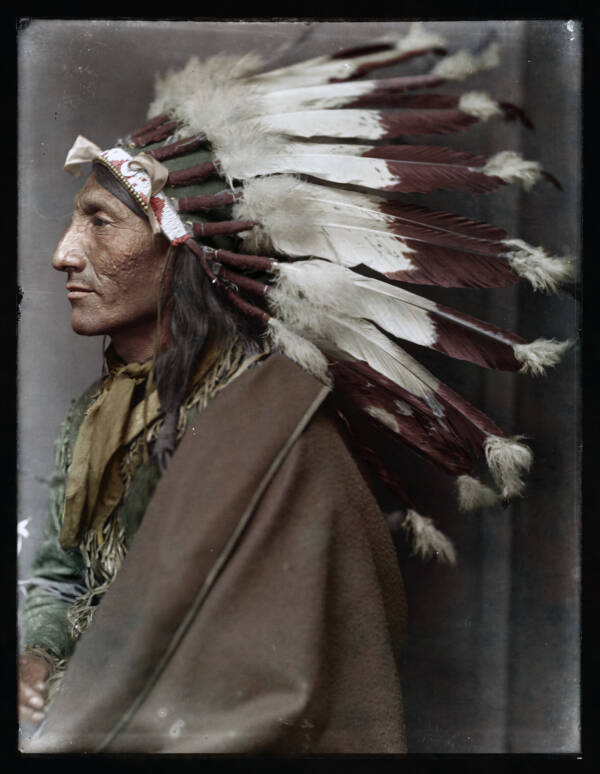
Whirling Hawk, a member of the Sioux tribe performing with Buffalo Bill's Wild West show.Gertrude Käsebier/National Museum of American History
40 of 46
Whirling Horse, a member of the Sioux tribe performing with Buffalo Bill's Wild West show.Gertrude Käsebier/National Museum of American History
41 of 46
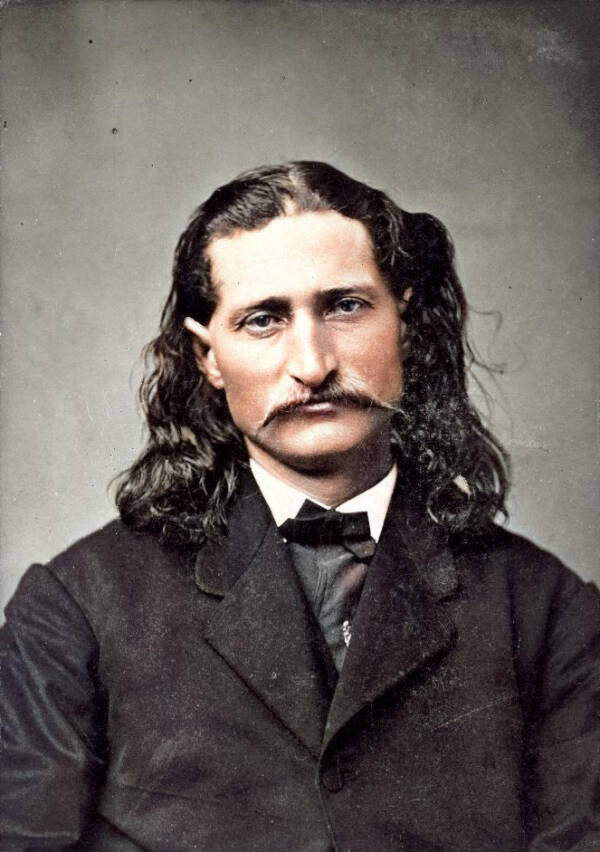
James Butler Hickok (1837 - 1876), known as Wild Bill, was a legendary folk hero of the American West for his time as a soldier, lawman, gunslinger, performer, and actor. Though his legend was largely fabricated (most of it by himself), Hickok is known to have killed several men in gunfights during his lifetime.Wikimedia Commons
42 of 46
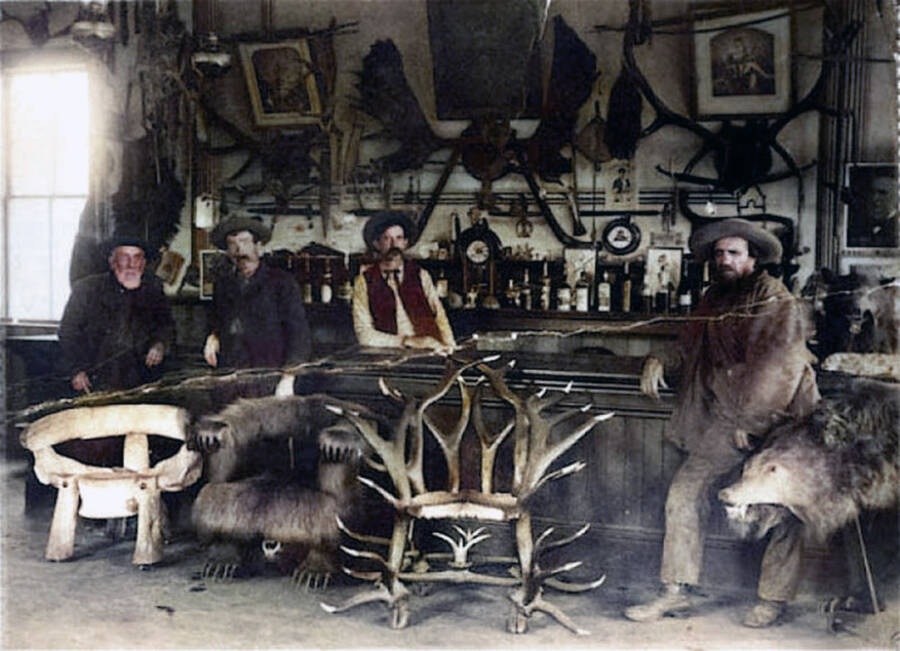
Inside the Table Bluff Hotel and Saloon in Humboldt County, California. 1889.Wikimedia Commons
43 of 46
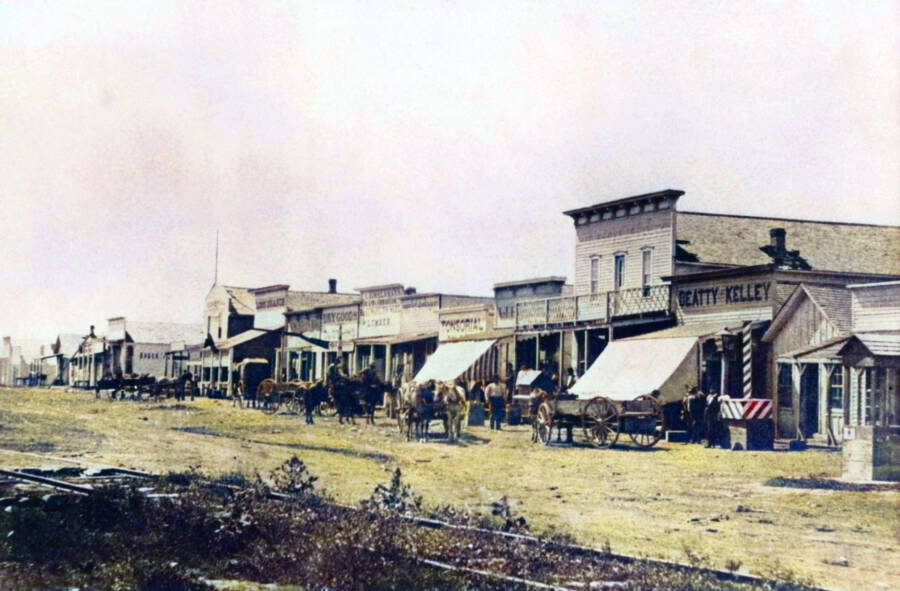
Few places are as tied to the mythologizing of the American West as Dodge City, Kansas. Seen here in an 1878 photo, Dodge City was one of the major terminals for cattle drives, which meant a lot of young, amped-up cowboys with guns crossed paths in and around Dodge City — and it took equally-tough lawmen to keep the peace.Wikimedia Commons
44 of 46
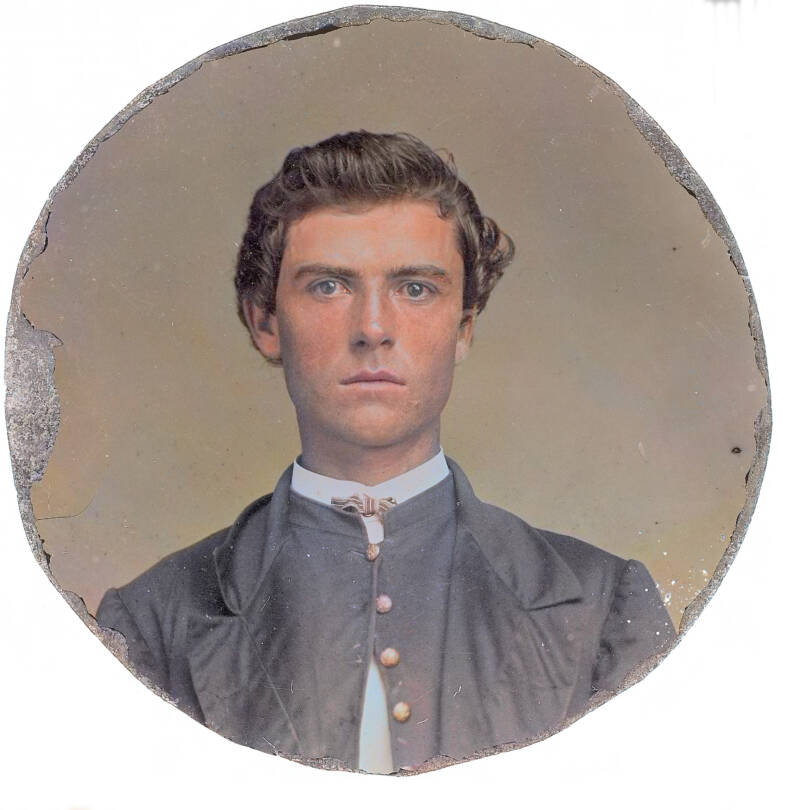
William "Buffalo Bill" Cody (1846 - 1917) in an 1865 picture, when the famous performer was only 19 years old. Wikimedia Commons
45 of 46
When Buffalo Bill died in 1917, he was laid to rest in Golden, Colorado with mourners coming from far and wide to pay their respects to the greatest showman in the Wild West.Denver Public Library
45 Colorized Wild West Photos That Bring The American Frontier To Life
View Gallery
The Old West was defined by outlaws and sheriffs, cowboys and buffalos, Native Americans and settlers, and booming frontier towns. It was an era of saloons, wide open prairies, gold mines, and gunfights. And most of it was captured on camera, as these Wild West photos show.
Indeed, the era known as the Old West lasted from roughly the 1860s until the end of the 19th century, a time when photography was becoming more and more widespread. As such, photographers who poured west alongside settlers, prospectors, and outlaws were able to capture scenes and people.
They took portraits of lawmen like Bass Reeves and Wyatt Earp, and outlaws like Jesse James and Billy the Kid. They captured Native Americans, cowboys, stunning natural vistas, and the early days of modern cities like San Francisco. In other words, they captured the soul of the Old West.
And these Wild West photos, which have been artfully colorized, show the stunning vitality of life on the American frontier like never before.
The People And Places Captured In Old West Photos
Throughout the 19th century, white settlers in the United States moved increasingly west. Aided by the transcontinental railroad, which was completed in May 1869, they traveled to the frontier in search of land, gold, and fresh starts. And many of these settlers, as well as the Native Americans who already populated the region, remain captivating to this day.
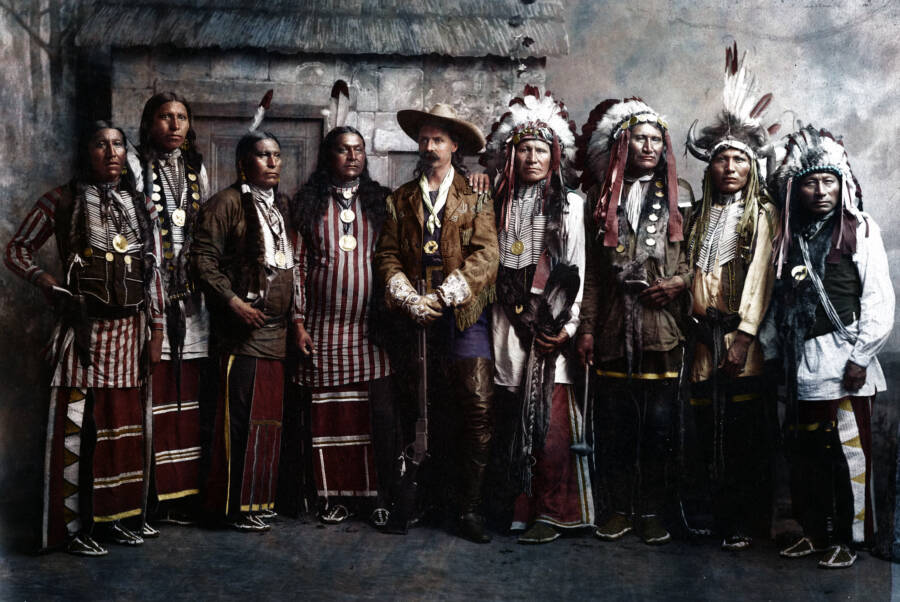
One such figure was Buffalo Bill. Born William F. Cody, Buffalo Bill was a rider with the Pony Express, a Union soldier in the Civil War, and, most famously, a showman whose performances captured the spirit of the Old West. His Buffalo Bill's Wild West show, found in 1883, offered a heavily romanticized and dramaticized version of the Old West filled with cowboys, Native Americans, and performers like the famous sharpshooter Annie Oakley.
McCracken Research Library, Buffalo Bill Center of the WestAn 1886 picture of William "Buffalo Bill" Cody with several of his Pawnee and Sioux performers, taken in Staten Island, New York. Buffalo Bill's Wild West troupe toured the world, captivating audiences with a heavily-romanticized story about the American West.
But while Buffalo Bill offered a curated version of the Old West to the curious outside world, many figures lived in the real thing. One such man was Deputy U.S. Marshal Bass Reeves, an formerly enslaved man who became one of the most formidable lawmen in the country. His exploits were so legendary that some even think that he inspired the Lone Ranger.
Another Old West lawman who became a frontier legend was Wyatt Earp, a participant in one of the most infamous moments in Wild West history: the gunfight at the O.K Corral. Earp was joined by another Wild West legend, Doc Holliday, as they faced off against a group of outlaws in Tombstone, Arizona.
Indeed, the Wild West was rife with infamous outlaws, and the collection of Old West pictures above includes their portraits as well. One of the most notorious Old West outlaws was Billy the Kid, a murderer, thief, and fugitive who killed at least four men (he claims to have killed 21, one for every year he lived) before he was killed by Sheriff Pat Garrett in New Mexico in 1881.
But though the white settlers who poured west saw the land as an untapped resource, it had actually been occupied for centuries by Native Americans. Their portraits were taken too, and the collection above includes images of Chief John Smith (also called Kahbe Nagwi Wens) who was purportedly in his 130s when he died, the famous Apache leader Geronimo, and a number of Sioux Native Americans who performed alongside Buffalo Bill.
The Old West was certainly defined by the men and women who populated the region. But it's also remembered for its landscapes, cityscapes, and short-lived mining towns.
Much of the fascination that people still hold for the Wild West comes from sepia-tinged photos handed down through the generations. However, these faded prints can create a sense of distance between that time and the modern world. It's often easy to forget that the people in these photographs were real, breathing people and that what we see in photos were actual places and events full of life, drama, great joy, and great tragedy.
When these photographs are colorized, however, these images take on a new life — and become more real to many of us than ever before.
Public DomainA group of homesteaders in Nebraska stand alongside their covered wagon in 1866. Black and white photos often create a feeling of distance between the past and the present.
In color, no longer does Billy the Kid look like a figure confined to the dusty pages of a history book. Instead, his youth and ruthlessness becomes more clear. Similarly, colorized photos of Geronimo bring out the determination in his eyes, showing him as a flesh-and-blood man — not a caricature — who fought for the survival of his people and their way of life.
Likewise, colorized photos can bring out the exhaustion in a gold prospector's eyes; it suddenly becomes more easily to imagine the desperation and wild hope that drove this man halfway across the country in search of a better life.
Meanwhile, photos of Black cowboys, Chinese railroad workers, and female outlaws like Belle Starr are stark reminders that the Wild West was a diverse scene. The story of the Wild West is not story of white men taming a wild land, after all, but a story of every kind of person forging their own way in a rapidly changing world.
In the end, colorized Old West photos like the ones above tell the tale of this era as it actually happened. Every picture is a testament to the gritty determination and fierce stoicism needed to live a life in a harsh land, a land that would have faded largely into myth if not for the camera.
All That's Interesting is a U.S.-based digital publisher that employs subject-level experts to produce our articles. Each article is written by a staff member or a highly-vetted freelancer, and is reviewed by at least one editor. For licensing and permission inquiries, visit Wright's Media.
Become a member to help support our work and enjoy our site ad-free.
Based in Brooklyn, New York, John Kuroski is the editorial director of All That's Interesting. He graduated from New York University with a degree in history, earning a place in the Phi Alpha Theta honor society for history students. An editor at All That's Interesting since 2015, his areas of expertise include modern American history and the ancient Near East. In an editing career spanning 17 years, he previously served as managing editor of Elmore Magazine in New York City for seven years.
A senior staff writer for All That's Interesting since 2021 and co-host of the History Uncovered Podcast, Kaleena Fraga graduated with a dual degree in American History and French Language and Literature from Oberlin College. She previously ran the presidential history blog History First, and has had work published in The Washington Post, Gastro Obscura, and elsewhere. She has published more than 1,200 pieces on topics including history and archaeology. She is based in Brooklyn, New York.
Citation copied
COPY
Cite This Article
Kuroski, John. "45 Colorized Wild West Photos That Bring The American Frontier To Life." AllThatsInteresting.com, April 4, 2026, https://allthatsinteresting.com/old-west-photos. Accessed July 11, 2026.